Effective At-Home Cracked Heels Night Routine for Soft Feet
Walking around with dry, cracked heels can be more than just a cosmetic concern. For many, it is a source of discomfort and even pain that makes every step a reminder of neglected self-care. We often spend so much time focusing on our facial skincare routines or hair health that our feet, the very foundation of our daily movement, get left behind. If you have been hiding your feet in closed shoes or feeling self-conscious about rough skin, it is time to embrace a simple, minimalist approach to foot restoration. You do not need an expensive spa appointment or a bag full of high-end chemicals to see a difference. With a few basic household items and a consistent nighttime rhythm, you can transform your feet from sandpaper-rough to petal-soft while you sleep.
Understanding Why Heels Crack and How to Stop It
Before diving into the routine, it is helpful to understand why this happens in the first place. The skin on our heels is naturally thicker and drier than the skin on the rest of our body. Because there are no oil glands in this area, the skin relies solely on sweat glands for moisture. Factors like standing for long periods, wearing open-back sandals, or even walking barefoot on hard floors can cause the skin to lose its elasticity. When the skin becomes too dry and under pressure, it begins to split, creating those tell-tale cracks known as fissures.
The goal of a dedicated night routine is to provide the intense hydration that your feet cannot produce on their own. By focusing on a ritual that happens right before bed, you give the products several hours to sink deep into the dermal layers without being rubbed off by walking or socks. This overnight window is the secret weapon for anyone looking to repair deep cracks and maintain healthy, smooth skin throughout the year.
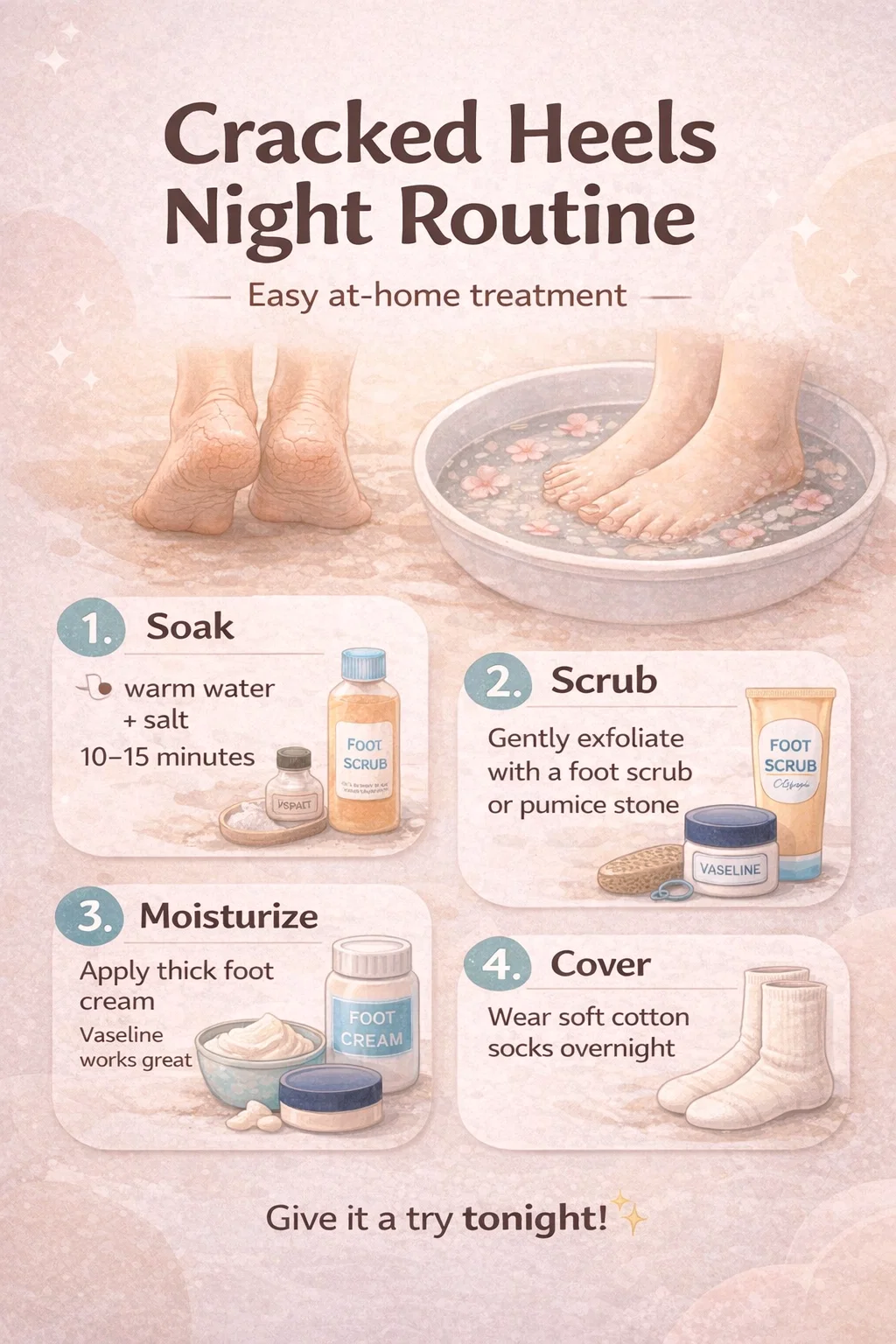
Step One: The Power of the Warm Water and Salt Soak
The first step in any effective foot transformation is preparation. You cannot effectively moisturize skin that is hard and calloused because the product simply sits on the surface. Starting with a 10 to 15 minute soak in warm water mixed with salt is essential. Warm water helps to soften the keratinized skin cells, making them much easier to remove in the next step. The addition of salt, whether it is sea salt or Epsom salt, acts as a natural antiseptic and helps to reduce any swelling or inflammation from a long day on your feet.
How to Set Up Your Soaking Station
Find a comfortable spot where you can sit back and relax. Fill a basin or a large bowl with water that is comfortably warm but not hot. Add about half a cup of salt and stir until it dissolves. For an extra touch of relaxation, you might consider adding a few drops of lavender or eucalyptus oil, though plain salt works perfectly well for the minimalist approach. Submerge your feet completely and let the water do the heavy lifting. This is a great time to listen to a podcast, read a chapter of a book, or simply practice some deep breathing. This step is not just about the physical benefit; it is the beginning of your wind-down process for the night.
Step Two: Gentle Exfoliation and Scrubbing
Once your skin is soft and pruned from the soak, it is time to remove the dead skin cells that are causing the roughness. This is where a foot scrub or a pumice stone comes into play. It is important to remember the word gentle. Many people make the mistake of scrubbing too hard or using sharp tools to cut away callouses, which can actually signal the body to produce even thicker skin as a protective measure. Instead, use a pumice stone in light, circular motions over the heels and any other rough patches.
Choosing the Right Tools for Your Skin
If your heels are particularly sensitive or the cracks are deep, a physical scrub made of sugar or salt and oil might be a better choice than a stone. The goal is to buff away the top layer of dead cells so that your moisturizer can actually reach the living skin underneath. If you use a pumice stone, make sure it is wet before you start, and never use it on dry skin. After a few minutes of light scrubbing, rinse your feet in the warm water and pat them dry with a soft towel. You will notice an immediate difference in the texture of your skin, but the most important part is still to come.
Step Three: Deep Moisturizing with Thick Creams and Occlusives
Now that your feet are clean, soft, and slightly damp, they are in the perfect state to absorb moisture. This is the core of the routine. For cracked heels, a lightweight lotion simply will not cut it. You need a thick, heavy-duty foot cream or an ointment. Look for ingredients like urea, which helps to break down thickened skin, or glycerin, which pulls moisture into the skin. If you prefer a more minimalist or natural approach, a simple tub of Vaseline or petroleum jelly is one of the most effective tools available.
The Secret to Lasting Hydration
Apply a generous amount of your chosen cream or Vaseline to your entire foot, focusing heavily on the heels. Do not be afraid to use more than you think you need. Massage the product in thoroughly to stimulate circulation. Because petroleum jelly is an occlusive, it creates a physical barrier that prevents water from evaporating from your skin. When applied to damp skin, it locks in all that hydration from your soak, forcing it to stay put and nourish the deeper layers of the epidermis. This is the step that truly repairs the cracks and prevents new ones from forming.
Step Four: The Overnight Cover Strategy
The final step ensures that all that hard work does not end up on your bedsheets. Putting on a pair of clean cotton socks is the best way to seal the deal. The socks keep the moisturizer against your skin and create a warm environment that helps the cream penetrate even further. Cotton is the preferred fabric because it is breathable, allowing your skin to stay comfortable without overheating or sweating excessively throughout the night.
Consistency is the Key to Success
While you will likely see a significant improvement after just one night, the real magic happens when this becomes a habit. For severe cracks, you may want to perform this routine every night for a week. Once your feet have reached a healthy state, you can transition to a maintenance schedule of two or three times a week. Keeping your socks on overnight might feel strange at first if you aren’t used to it, but the results in the morning are well worth the adjustment. When you wake up and remove the socks, you will find that your heels feel significantly softer and more supple.
Simple Habits for Long-Term Foot Health
Beyond the nighttime routine, there are a few daily habits you can adopt to keep your feet in top shape. First, try to stay hydrated by drinking plenty of water, as skin health starts from the inside out. Second, evaluate your footwear. Shoes that provide proper cushioning and support can reduce the pressure on your heels that leads to cracking. Avoid wearing flip-flops or open-backed shoes for long walks, as these allow the heel to expand sideways and increase the likelihood of skin splitting.
Dietary Support for Better Skin
Believe it or not, what you eat can also impact the health of your feet. Foods rich in Vitamin E, Vitamin C, and Zinc support skin repair and collagen production. Including things like nuts, seeds, citrus fruits, and leafy greens in your diet can provide the nutrients your body needs to maintain a strong skin barrier. When you combine a healthy lifestyle with a dedicated topical routine, you are attacking the problem from every angle.
A Final Word on Foot Self-Care
Taking care of your feet is an act of gratitude for everything they do for you. This cracked heels night routine is designed to be a peaceful, effective way to reclaim your comfort. It is about more than just aesthetics; it is about preventing pain and ensuring you can move through your day with ease. By following these four simple steps soak, scrub, moisturize, and cover you are giving your feet the specialized attention they deserve. So, grab a basin, find your favorite pair of cotton socks, and start your journey toward softer, healthier feet tonight. You will be surprised at how much better you feel when you finally give your foundation the care it needs.