DIY Natural Fabric Softener Recipe with Vinegar Baking Soda for Soft Laundry
Discovering the secret to perfectly soft, fresh-smelling laundry does not require a trip to the chemical aisle of your local supermarket. In fact, the most effective solution might already be sitting in your pantry. If you are tired of the overpowering artificial scents and the waxy buildup left behind by commercial liquid softeners, it is time to embrace a more natural approach. This DIY natural fabric softener recipe, passed down through generations, combines the cleaning power of white vinegar with the softening properties of baking soda to give you salon-quality laundry results at a fraction of the cost.
Why Switch to Homemade Fabric Softener
Most commercial fabric softeners work by coating the fibers of your clothes in a thin layer of chemicals, often including quaternary ammonium compounds. While this makes the fabric feel slippery and soft to the touch, it also reduces the absorbency of your towels and can irritate sensitive skin. By making your own softener at home, you have complete control over the ingredients. You are essentially eliminating synthetic fragrances and harsh preservatives, replacing them with simple, biodegradable components that are safe for your family and the environment.
The beauty of this specific recipe lies in its simplicity. White vinegar acts as a natural descaler, breaking down the minerals in hard water that often make clothes feel stiff. Baking soda helps to regulate the pH level of the wash water, ensuring that detergent works more effectively while also neutralizing odors. Together, they create a powerhouse duo that leaves fabrics feeling breathable and truly clean.
The Essential Ingredients List
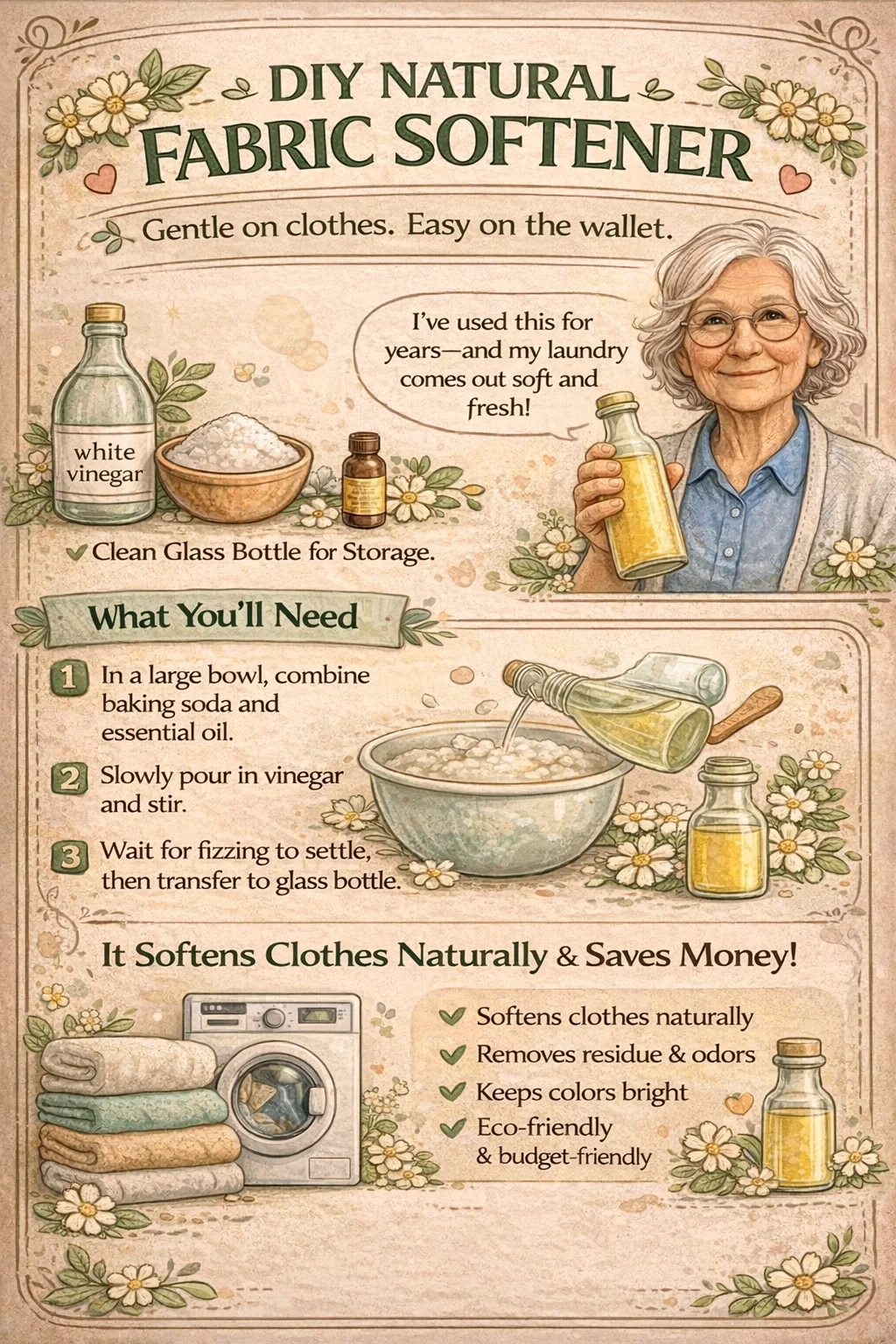
To get started with this old-fashioned wisdom, you only need a few basic supplies. Most of these can be bought in bulk to save even more money over time. Here is what you will need to gather:
- 1 Gallon of White Vinegar: This serves as the base of your softener and is the primary agent for removing soap residue.
- 2 Cups of Baking Soda: This provides the softening effect and helps brighten your whites and colors.
- 30 Drops of Essential Oil: This is optional but highly recommended. Lavender, lemon, or eucalyptus oils provide a wonderful, natural scent without the toxins of synthetic perfumes.
- A Large Mixing Bowl: You will need plenty of space for the chemical reaction between the vinegar and soda.
- 1 Clean Glass Bottle: A sturdy glass container is best for long-term storage to keep the essential oils potent.
Step-by-Step Instructions for the Perfect Blend
Creating this softener is a simple process, but it requires a bit of patience during the mixing phase because of the natural fizzing reaction that occurs when acid meets base.
Step 1: Prep Your Base
Start by placing your two cups of baking soda into a large mixing bowl. If you are using essential oils, this is the best time to add them. Drop the oils directly onto the baking soda and use a wooden spoon to incorporate them. This helps the scent distribute evenly throughout the final liquid rather than just floating on top.
Step 2: The Vinegar Pour
This is the part where you need to go slowly. Begin pouring the gallon of white vinegar into the bowl with the baking soda. You will immediately notice a vigorous fizzing action. This is the carbon dioxide being released. Pour a little bit at a time, stir gently, and wait for the bubbles to subside before adding more vinegar. If you pour too fast, you will end up with a volcano on your kitchen counter.
Step 3: Letting it Settle
Once all the vinegar has been added, let the mixture sit for a few minutes. You want the fizzing to settle completely so that the liquid becomes clear and stable. Give it one final stir to ensure no clumps of baking soda remain at the bottom of the bowl.
Step 4: Bottling and Storage
Carefully transfer the mixture into your clean glass bottle using a funnel. Label the bottle clearly so everyone in the household knows what it is. Store it in a cool, dry place near your washing machine. Because this recipe uses a full gallon of vinegar, one batch will last for dozens of loads.
How to Use Your Natural Softener
Using a natural alternative is slightly different from using the thick, blue liquids you might be used to. Because this formula is water-thin, it works best when diluted further and added at the right time. For a standard load of laundry, mix half a cup of your homemade softener with half a cup of water. This ensures it distributes evenly through the drum.
The most important tip is to add this mixture during the final rinse cycle only. Adding it too early in the wash cycle will cause it to be washed away by the detergent, rendering it less effective. Most modern HE (High Efficiency) washers have a dedicated fabric softener dispenser that releases the liquid at the perfect moment. This recipe is perfectly safe for both standard top-loaders and high-efficiency front-loading machines.
Health and Practical Benefits of Going Natural
The benefits of this DIY solution extend far beyond just saving a few dollars at the grocery store. It is a holistic choice for your home maintenance and your personal well-being.
Gentle on Sensitive Skin
Many people suffer from mysterious skin rashes or eczema that are actually triggered by the heavy perfumes and dyes in commercial laundry products. This vinegar-based softener is hypoallergenic and leaves no irritating residue on your clothes, making it the perfect choice for baby clothes, bedding, and those with delicate skin.
Removing Soap Residue and Odors
Over time, laundry detergent can build up in the fibers of your clothes, making them feel heavy and sometimes developing a musty smell. The acetic acid in the white vinegar cuts through this buildup, stripping away the old soap and neutralizing odors at the source. Instead of masking smells with perfume, you are actually removing them.
Keeping Colors Bright and Whites White
Baking soda is a natural whitener and brightener. It helps to lift stains and prevents the dingy grey look that can affect white cottons over time. Additionally, the vinegar helps to set colors in new garments, preventing them from bleeding and fading in the wash.
Eco-Friendly and Budget-Friendly Living
In an era where we are all trying to reduce our environmental footprint, this recipe is a major win. Plastic jugs from commercial softeners are a significant source of household waste. By reusing a single glass bottle and buying your vinegar and baking soda in bulk or in recyclable cardboard, you significantly reduce your plastic consumption. Furthermore, the ingredients themselves are biodegradable and do not harm aquatic life when they go down the drain.
From a financial perspective, the cost per load is incredibly low. A gallon of white vinegar and a box of baking soda costs just a few dollars and can replace several expensive bottles of name-brand softener. This is old-fashioned wisdom that truly pays off in the modern world.
Final Thoughts on Natural Laundry Care
Transitioning to a natural home does not have to happen all at once. Small changes, like switching your fabric softener, can make a massive difference in the quality of your life and the longevity of your wardrobe. Your towels will feel fluffier, your gym clothes will smell fresher, and you will have the peace of mind that comes from knowing exactly what is touching your skin every day. Give this simple recipe a try and you will likely find yourself wondering why you ever used the chemical-laden alternatives in the first place. It is easy on your clothes, easy on your wallet, and as the old saying goes, it is loved by grandmas for a reason. Happy washing!