
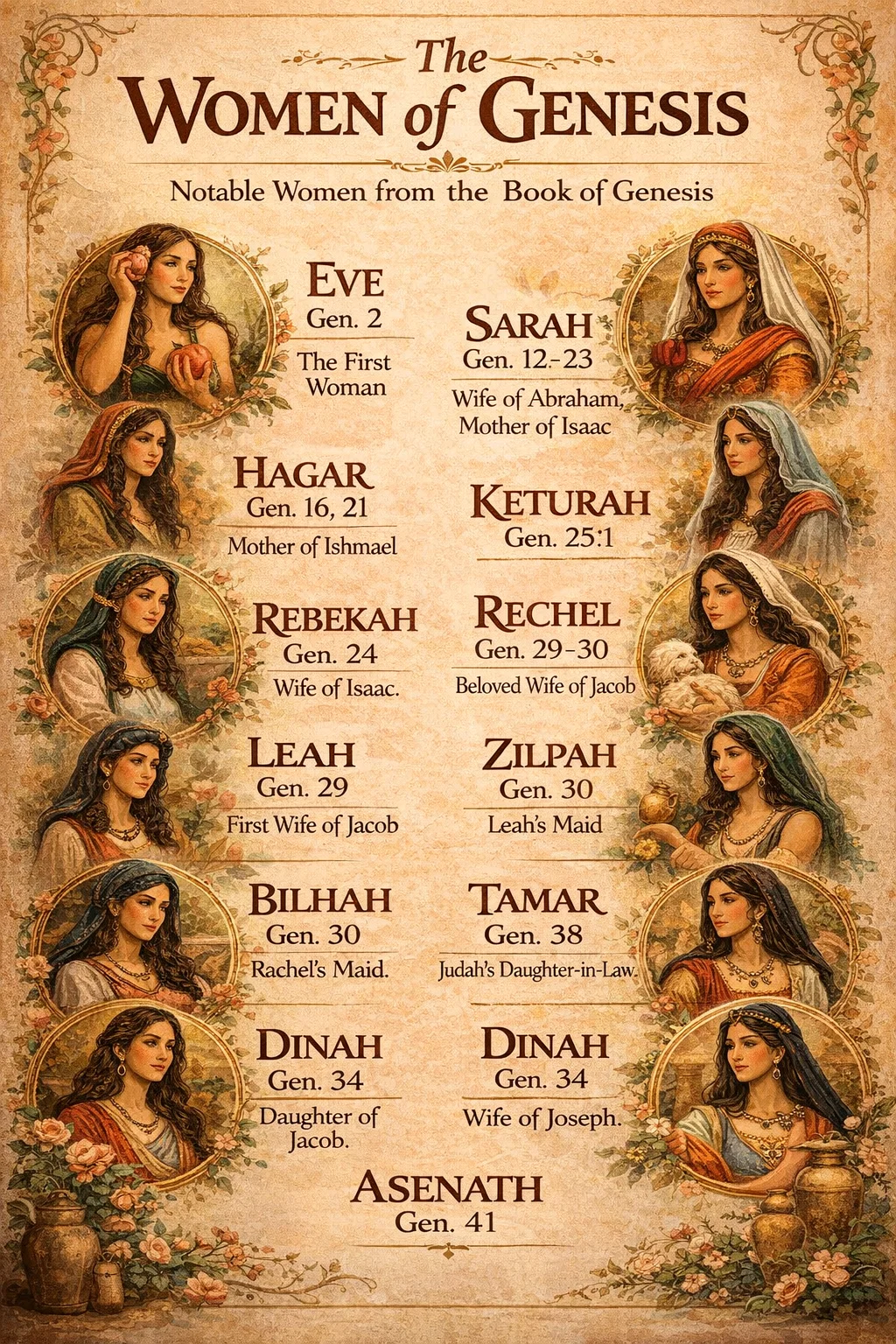
Women of Genesis Biblical Study Guide to Eve, Sarah, Rachel Key Women in the Bible
The Book of Genesis serves as the foundational narrative for many of the worlds major religions, providing a rich tapestry of creation, covenant, and the complex beginnings of humanity. While much of the historical focus has centered on the patriarchs, the image of the scroll titled Women of Genesis highlights an essential truth: the story of faith is inextricably linked to the women who navigated these ancient landscapes. From the dawn of time with Eve to the influential role of Asenath in Egypt, these figures were not merely background characters. They were catalysts of change, holders of divine promises, and architects of the future. By exploring their lives, we gain a more profound understanding of the human experience and the divine plan.
The Matriarchs: Pillars of the Covenant
The journey through Genesis is largely the story of a specific family chosen to carry a divine blessing. At the heart of this family are the matriarchs, whose strength and faith were tested in extraordinary ways. Sarah, the wife of Abraham, stands as the first mother of the covenant. Her journey from skepticism to the joy of motherhood at an advanced age reminds us that the impossible is often just the beginning of a larger story. She managed the complexities of a nomadic life while holding onto a promise that seemed logically unattainable.
Following in her footsteps was Rebekah, a woman of decisive action. When she encountered Abrahams servant at the well, her hospitality and willingness to leave her home for a distant land set the stage for the next generation. Rebekah was not a passive observer; she was deeply attuned to the spiritual destiny of her sons, Esau and Jacob, and she took bold steps to ensure that the blessing followed the path she believed was intended by the divine. Her story illustrates the power of intuition and the weight of parental influence in biblical history.
The Complex Sisterhood of Leah and Rachel
One of the most human and emotionally resonant chapters of Genesis involves the sisters Leah and Rachel. Their lives were intertwined through marriage to Jacob, leading to a period of intense competition and profound longing. Leah, though feeling unloved, was incredibly fruitful, bearing many of the sons who would become the heads of the tribes of Israel. Rachel, the beloved wife, faced the long and painful struggle of infertility before finally giving birth to Joseph and Benjamin. This narrative does not shy away from the pain of sibling rivalry or the complexities of ancient social structures, yet it shows how both women were instrumental in building the house of Israel.
Beyond the Main Lineage: Maidservants and Mothers
The visual guide reminds us that the story of Genesis includes voices that are often marginalized. Hagar, the Egyptian maid of Sarah, occupies a unique place in the narrative. In the wilderness, she became the first person in scripture to give God a name: El Roi, the God who sees me. Her experience speaks to those who feel discarded or invisible, proving that the divine gaze extends to every individual, regardless of their status. Her son Ishmael also received a promise of greatness, showing the breadth of the narrative reach in Genesis.
Similarly, Bilhah and Zilpah played crucial roles in the expansion of Jacobs family. Though they were maidservants to Rachel and Leah, they were the biological mothers of four of the twelve tribes of Israel. Recognizing their contribution is vital for a holistic view of biblical history. Their lives remind us that every person, regardless of their social standing or how they are categorized by others, plays a part in the unfolding of history.
Turning Points and Bold Actions
As we move further into the book of Genesis, we encounter women who stepped into the spotlight during moments of crisis or transition. Tamar is a standout figure whose story is found in Genesis 38. Faced with injustice and the threat of her lineage ending, she took matters into her own hands with a daring and controversial plan. Her inclusion in the genealogy of later biblical figures, including King David, underscores the theme that the divine can work through unconventional and even scandalous circumstances to bring about justice and the fulfillment of a lineage.
The Influence of Potiphars Wife and Asenath
In the final chapters of Genesis, the setting shifts to Egypt. Here we meet two very different women. Potiphars wife is often remembered as the temptress who caused Josephs imprisonment. Her story serves as a narrative foil to Josephs integrity, representing the external pressures and moral challenges one faces in a foreign land. On the other hand, Asenath, the daughter of an Egyptian priest and the wife of Joseph, represents the integration of the family of Israel into the wider world. As the mother of Manasseh and Ephraim, she helped bridge the gap between the traditions of her ancestors and the new reality of life in the Egyptian empire.
The First Woman and the Mother of All Living
No discussion of the women of Genesis would be complete without Eve. As the first woman, her story is one of ultimate beginnings and the first encounter with moral choice. Often analyzed through the lens of the fall, her name actually means life or living. She is the mother of all living, the one who first experienced the joys and sorrows of parenthood. Eve represents the curiosity, the struggle, and the resilience inherent in the human condition. Her presence at the beginning of the scroll sets the stage for every woman who follows, each navigating their own garden of choices and consequences.
Practical Lessons from Ancient Stories
Studying these women provides more than just historical knowledge; it offers practical wisdom for modern life. We can find inspiration in their various attributes and experiences:
- Resilience: Many of these women faced barrenness, displacement, and grief, yet they continued to move forward.
- Faith: Whether it was Sarah waiting for a child or Rebekah traveling to a new land, faith was the engine of their lives.
- Agency: Women like Tamar and Rebekah showed that taking initiative is often necessary to see justice done or promises fulfilled.
- Identity: Hagars encounter with God reminds us that our identity is seen and known by the divine, even when the world ignores us.
Deepening Your Bible Study
To truly appreciate the depth of these characters, it is helpful to go beyond the summary charts. When you read their specific chapters in Genesis, look for the following details:
- What are the specific challenges this woman faces in her cultural context?
- How does she interact with the men in the story, and where does she show independent thought?
- What are the direct words she speaks? In many cases, their dialogue reveals their core character and faith.
- How does her story contribute to the larger theme of the covenant?
Conclusion: A Legacy That Continues
The Women of Genesis are not just figures of the past; they are the spiritual ancestors of millions. Their lives were messy, complicated, and filled with both triumph and tragedy, making them deeply relatable even thousands of years later. By keeping their stories alive, we honor the full spectrum of the biblical narrative and recognize that the foundations of faith were built by both men and women. As you look at the visual guide of these figures, let it be an invitation to dive deeper into the text, to ask difficult questions, and to find your own place within this enduring story. Whether you are seeking strength, guidance, or a better understanding of history, the women of Genesis have much to teach us about what it means to live a life of purpose and faith. Save these stories in your heart and let them inspire your own journey through the chapters of life.