
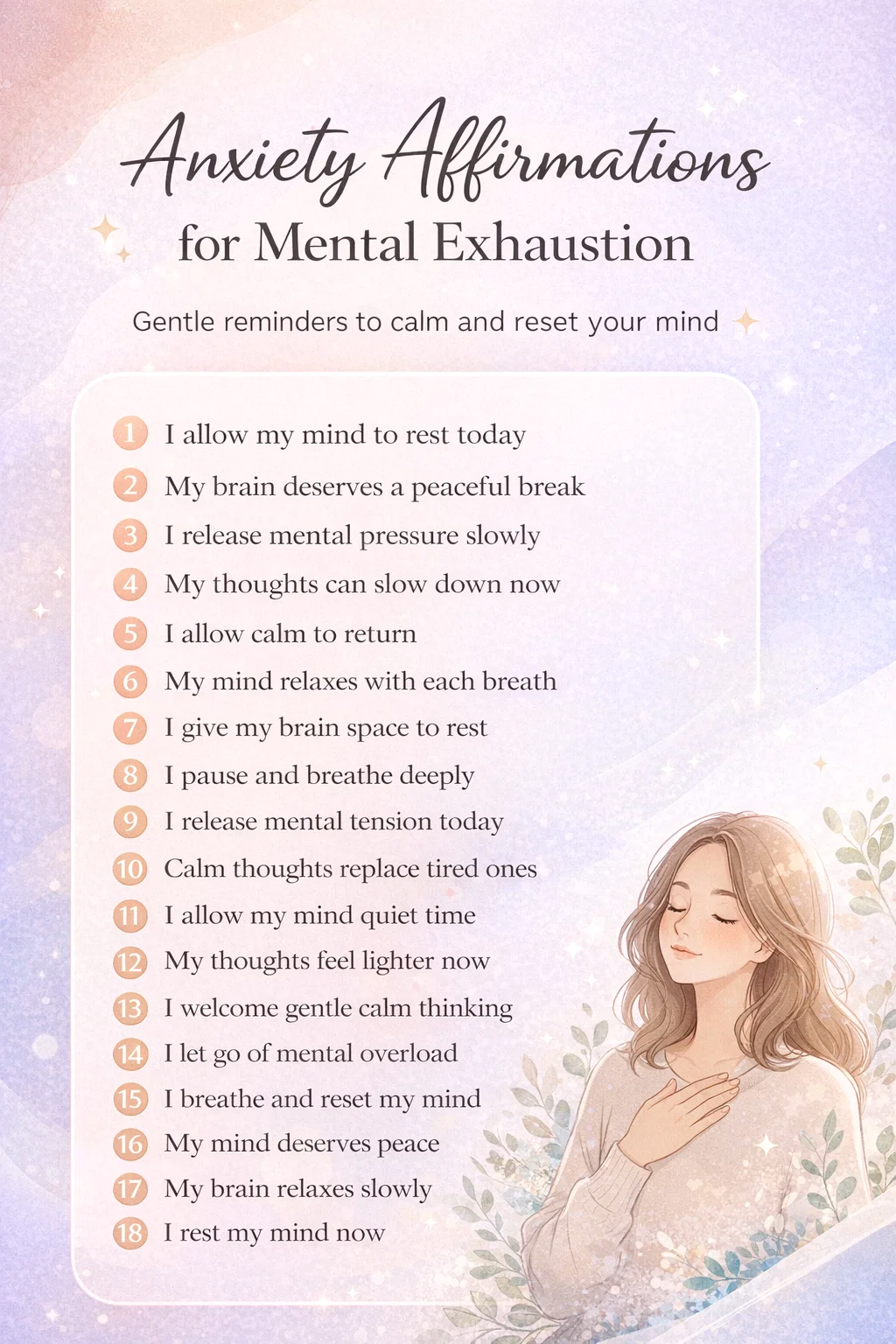
20 Affirmations for Anxiety and Mental Exhaustion Calming Mindset Tips
In our fast paced world, mental exhaustion has become a common experience for many. We often push ourselves to the limit, juggling professional responsibilities, personal commitments, and the constant stream of information from our digital devices. When the weight of the world feels too heavy, our minds can become cluttered with anxious thoughts, leaving us feeling drained and unable to find peace. This is where the power of targeted affirmations comes into play, offering a gentle way to soothe a tired brain and restore a sense of internal balance.
Mental fatigue is more than just being tired. It is a state of cognitive overload where even the smallest tasks feel monumental. When you reach this point, your nervous system is often stuck in a loop of high alertness, making it difficult to relax even when you have the time to do so. By using specific phrases designed to address anxiety and exhaustion, you can begin to rewire your response to stress, signaling to your body and mind that it is finally safe to let go and recover.
Understanding the Connection Between Anxiety and Mental Burnout
Anxiety and mental exhaustion often feed into one another in a challenging cycle. When we are anxious, our brains spend a significant amount of energy scanning for potential problems, overthinking past interactions, or worrying about future events. This constant activity consumes our mental reserves at an accelerated rate. Eventually, this leads to burnout, a state where our emotional and cognitive batteries are completely depleted.
When you are mentally exhausted, your ability to regulate emotions decreases. This means that small stressors that you might normally handle with ease suddenly feel like major crises. This heightened sensitivity can trigger even more anxiety, creating a loop that feels impossible to break. Affirmations serve as a circuit breaker in this cycle. They provide a focused, positive thought to cling to, preventing the mind from spiraling further into fatigue and worry.
The Science of Affirmations for Brain Health
It might seem simple, but repeating positive statements has a profound impact on the brain’s neuroplasticity. Our thoughts create neural pathways. When we constantly think stressful thoughts, those pathways become well worn and easy for the brain to follow. Affirmations help us build new pathways centered on calm and self compassion. By intentionally choosing words that prioritize rest and safety, we encourage the brain to move out of the fight or flight response and into the rest and digest state.
20 Powerful Affirmations for Mental Rest
When you are in the thick of mental exhaustion, you do not need complex philosophy. You need simple, direct, and soothing words. Here is a breakdown of how these specific affirmations work to heal a tired mind.
- I allow my mind to rest today: This is a powerful act of permission. Often, we feel guilty for not being productive. This statement validates your need for stillness.
- My brain deserves a peaceful break: Shifting the perspective from laziness to worthiness changes how you view downtime.
- I release mental pressure slowly: You do not have to fix everything at once. This encourages a gradual let go.
- My thoughts can slow down now: A direct command to the racing mind that the workday or the worry period is over.
- I allow calm to return: Calm is our natural state; this affirmation helps remove the barriers we have built against it.
Creating a Safe Space for Your Thoughts
Mental safety is the foundation of recovery. If your mind feels like a dangerous place filled with “what ifs” and self criticism, you will never truly feel rested. Using affirmations like My mind is safe to relax helps to build an internal sanctuary. When you repeat these words, you are practicing self parenting, providing yourself with the comfort and security that your exhausted brain is craving.
How to Practice Affirmations for Maximum Impact
Simply reading a list of affirmations is a great start, but integrating them into a mindful practice can significantly boost their effectiveness. When you feel the familiar fog of exhaustion setting in, try these techniques to ground yourself.
The Power of Breath and Repetition
Pairing your affirmations with deep breathing is one of the fastest ways to calm the nervous system. As you inhale, think of a phrase like I breathe and reset my mind. As you exhale, imagine the tension leaving your body. The physical act of breathing deeply provides the physiological proof to your brain that it is okay to slow down, while the affirmation provides the mental framework.
Visualizing Mental Lightness
As you use the affirmation My thoughts feel lighter now, try to visualize your worries as heavy stones being set down on the ground. Imagine your mind becoming an open, airy space. Visualization adds a sensory layer to the affirmation, making the transition from a state of “heavy” exhaustion to “light” peace feel more tangible and real.
Overcoming the Guilt of Doing Nothing
One of the biggest hurdles to recovering from mental exhaustion is the societal pressure to always be “on.” We are taught that our value is tied to our output. This mindset makes rest feel like a failure. However, a brain that is never allowed to rest will eventually stop functioning effectively. You cannot pour from an empty cup, and you cannot think clearly with an empty mind.
Using affirmations like I give my brain space to rest is a way to combat this guilt. It reframes rest as a necessary part of the human experience rather than a luxury. When you prioritize your mental health, you are actually becoming more resilient in the long run. Rest is not an obstacle to productivity; it is the fuel for it.
Daily Habits to Support a Calmer Mind
While affirmations are a fantastic tool for acute moments of stress, building a lifestyle that supports mental wellness is key to preventing total exhaustion. Combining your positive self talk with these habits can create a lasting sense of peace.
- Digital Detox: Give your brain a break from the constant dopamine hits and information overload of social media. Even thirty minutes of phone free time can make a difference.
- Gentle Movement: Activities like yoga or a slow walk in nature help move stagnant energy through the body without adding more stress to the mind.
- Hydration and Nutrition: Your brain is a physical organ that requires fuel. Dehydration can actually mimic the symptoms of anxiety and fatigue.
- Journaling: If your mind feels full, dumping those thoughts onto paper can help you release mental tension today, just as the affirmation suggests.
The Role of Quiet Time
We often fill every silence with podcasts, music, or television. However, true mental recovery often happens in the silence. Affirming I allow my mind quiet time encourages you to sit with yourself without distractions. In the beginning, this might feel uncomfortable because the thoughts you have been avoiding might surface. But by using your affirmations, you can meet those thoughts with calm and eventually find the stillness you need.
Conclusion: Your Journey to Mental Clarity
Recovering from mental exhaustion is not a linear process. Some days will feel easier than others, and there will be moments when the anxiety feels louder than your affirmations. The key is consistency and self compassion. By keeping these twenty affirmations close at hand, you are giving yourself a toolkit for the moments when the world feels like too much.
Remember that you are allowed to slow down. You are allowed to take up space without being productive. Your mind is a precious resource, and it deserves the same care and attention you give to your physical health. Start today by choosing just one affirmation that speaks to your current state. Repeat it, believe it, and let it guide you back to a place of peace. You have the power to reset your mind, one breath and one thought at a time.