
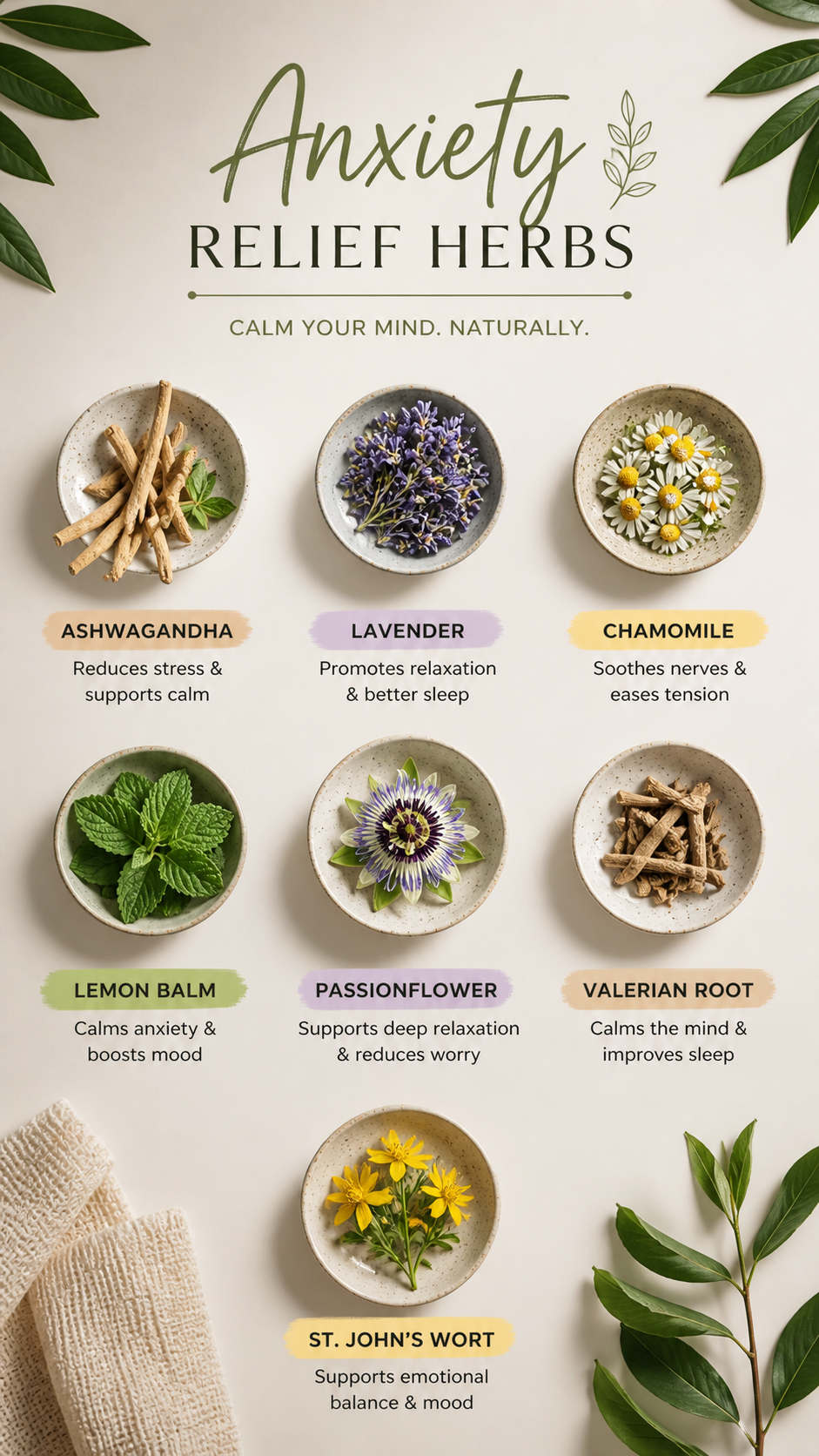
7 Anti-Anxiety Herbs to Reduce Stress Naturally Ashwagandha, Chamomile
Natural support for stress and anxious feelings has become one of the most popular topics in holistic wellness, and for good reason. Many people are looking for gentle, plant-based ways to create calmer routines, sleep better, and feel more grounded during busy days. Herbs such as ashwagandha, valerian root, chamomile, lavender, passionflower, and St. John’s wort are often discussed for their traditional calming properties, while CBD oil is commonly explored as part of modern wellness conversations.
This guide explores anti-anxiety herbs, how they are commonly used, what benefits people look for, and how to approach them safely. While herbs can be supportive, they are not a replacement for professional mental health care, especially if anxiety feels intense, ongoing, or disruptive.
Key Takeaways
- Anti-anxiety herbs are often used to support relaxation, sleep, and emotional balance.
- Chamomile, lavender, and passionflower are popular gentle options for calming routines.
- Ashwagandha is commonly associated with stress response and adaptogenic wellness.
- Valerian root is often used in bedtime routines because of its relaxing reputation.
- Some herbs can interact with medications, so safety matters before starting anything new.
What Are Anti-Anxiety Herbs?
Anti-anxiety herbs are plants, roots, flowers, or plant-derived products traditionally used to promote calmness, relaxation, and resilience during stressful moments. They may be enjoyed as teas, capsules, tinctures, essential oils, or topical products depending on the herb and its intended use.
Many of these herbs are connected to ancient wellness practices, folk remedies, and herbal traditions. Today, they are often used as part of broader self-care routines that may include better sleep habits, movement, breathwork, journaling, therapy, nutrition, and mindful rest.
Important: Herbs may feel natural, but natural does not automatically mean risk-free. Some calming herbs can cause drowsiness, affect hormones, interact with antidepressants or sedatives, or be unsafe during pregnancy. Always check with a qualified healthcare professional if you take medication or have a health condition.
Ashwagandha for Stress Support
Ashwagandha is one of the most recognized herbs in the wellness world. It is often described as an adaptogen, meaning it is commonly used to support the body’s response to stress. Many people are drawn to ashwagandha when they want help feeling more balanced during demanding seasons of life.
This herb is typically taken as a capsule, powder, or tincture. Some people add ashwagandha powder to smoothies, warm milk, or evening drinks, although the taste can be earthy and slightly bitter.
Best For
- Daily stress support
- Feeling more grounded
- Supporting calm routines during busy periods
- People interested in adaptogenic herbs
Ashwagandha may not be the right choice for everyone. People with thyroid conditions, autoimmune conditions, pregnancy, or medication use should be especially cautious and seek professional guidance first.
Valerian Root for Sleep and Relaxation
Valerian root is commonly associated with sleep support. It has a long history of use in nighttime herbal blends and calming supplements. People often turn to valerian when stress makes it difficult to unwind before bed.
Unlike lighter herbs such as chamomile, valerian can feel more sedating for some people. Its aroma is also quite strong, which is why many prefer capsules over tea. It is often found in sleep-focused formulas alongside passionflower, lemon balm, hops, or lavender.
Pro Tip: If you are trying a relaxing herb for the first time, start on an evening when you do not need to drive, work late, or wake up unusually early. This helps you understand how your body responds without added pressure.
Chamomile: A Gentle Classic for Calm
Chamomile is one of the most familiar calming herbs. Its soft floral flavor makes it a favorite for evening tea, cozy bedtime rituals, and quiet moments after a long day. Chamomile is often chosen by people who want a mild and approachable herbal option.
Many people associate chamomile with comfort. A warm cup of chamomile tea can become more than just a beverage. It can signal to the mind and body that it is time to slow down. This ritual effect can be especially helpful for people who feel tense after screen time, work stress, or overstimulation.
Simple Ways to Use Chamomile
- Drink chamomile tea 30 to 60 minutes before bed.
- Blend chamomile with lavender for a floral calming tea.
- Use chamomile as part of a screen-free evening routine.
- Pair it with journaling, reading, or gentle stretching.
Anyone with allergies to plants in the daisy family should be cautious with chamomile. It may also interact with certain medications, so it is worth checking before regular use.
CBD Oil and Modern Stress Relief
CBD oil has become a major topic in natural stress relief and wellness. CBD, short for cannabidiol, is a compound derived from hemp. It is often marketed for relaxation, mood support, and calming routines, although effects can vary widely from person to person.
CBD products may come in oils, gummies, capsules, creams, or beverages. Quality matters greatly because the market can be inconsistent. Anyone interested in CBD should look for reputable brands, third-party testing, clear ingredient labels, and legal guidance based on their location.
CBD may interact with medications and may not be appropriate for everyone. It is especially important to speak with a healthcare professional if you take prescription medication, have liver concerns, are pregnant, or are breastfeeding.
Why This Matters
The best herbal support is not just about choosing the strongest option. It is about matching the herb to your lifestyle, your stress patterns, your sleep needs, and your personal safety profile.
St. John’s Wort for Mood Support
St. John’s wort is often discussed in relation to mood and emotional wellness. It has a long history of traditional use and is commonly found in supplements aimed at supporting a brighter outlook.
However, St. John’s wort requires extra caution. It is known for interacting with many medications, including some antidepressants, birth control pills, blood thinners, and other prescriptions. Because of this, it should never be casually combined with medication without professional advice.
Important: St. John’s wort can be powerful and is not suitable for everyone. If you take any prescription medication, speak with a healthcare provider before using it.
Lavender for Restlessness and Better Sleep Routines
Lavender is loved for its soothing scent and beautiful purple flowers. It is commonly used in aromatherapy, herbal teas, bath products, pillow sprays, and relaxation blends. For many people, lavender creates a calming sensory experience that helps soften the transition from a busy day to a restful evening.
Lavender is especially helpful as part of a routine. A few drops of lavender essential oil in a diffuser, a lavender bath soak, or a cup of lavender tea can make a space feel peaceful. The scent itself often becomes associated with rest, which can support consistency over time.
Lavender Routine Ideas
- Diffuse lavender while reading before bed.
- Add dried lavender to a relaxing herbal tea blend.
- Use a lavender pillow spray as part of a sleep ritual.
- Combine lavender with deep breathing for a calming reset.
Essential oils should be used carefully. They should not be swallowed unless guided by a qualified professional, and they should usually be diluted before applying to skin.
Passionflower for Calm and Nervous Tension
Passionflower is another well-known herb in the calming category. It is often used in teas and supplements designed for relaxation, sleep support, and nervous tension. The flower is visually striking, but its wellness reputation is what makes it especially popular in herbal blends.
Passionflower is commonly paired with valerian root, lemon balm, chamomile, or lavender. This makes it a good option for people who enjoy multi-herb formulas rather than using one herb at a time.
Because passionflower may cause drowsiness, it is usually better suited for evening use or quiet moments when alertness is not required.
How to Choose the Right Calming Herb
Choosing an anti-anxiety herb depends on what kind of support you want. Someone who feels wired at bedtime may choose valerian or passionflower. Someone who wants a gentle daily ritual may prefer chamomile or lavender. Someone interested in resilience during stressful seasons may explore ashwagandha.
Match the Herb to the Goal
- For bedtime: Chamomile, valerian root, lavender, or passionflower.
- For daily stress support: Ashwagandha or calming tea rituals.
- For mood-focused support: St. John’s wort, with professional guidance.
- For modern wellness routines: CBD oil, with attention to quality and safety.
Pro Tip: Keep a simple wellness journal when trying a new herb. Track the herb, dose, time of day, sleep quality, mood, stress level, and any side effects. Patterns are easier to notice when you write them down.
Safe Ways to Add Herbs to Your Routine
Herbs work best when they are part of a thoughtful routine. Instead of adding several new products at once, try one at a time. This makes it easier to understand what helps and what does not.
Start with gentle options and pay attention to how your body responds. Tea can be a simple entry point for herbs like chamomile and lavender. Capsules or tinctures may feel more convenient, but they can also be more concentrated.
Helpful Safety Tips
- Read labels carefully and follow suggested serving sizes.
- Avoid combining multiple sedating herbs with alcohol or sleep medication.
- Check for medication interactions before using St. John’s wort, CBD, valerian, or ashwagandha.
- Choose reputable brands with transparent sourcing and testing.
- Stop using any herb that causes uncomfortable side effects.
Herbal Support Works Best With Lifestyle Foundations
Herbs can be helpful, but they are only one part of a calm lifestyle. The strongest results often come from combining herbal support with habits that reduce stress at the root.
Simple changes can make a meaningful difference. Try getting morning sunlight, reducing caffeine later in the day, creating a consistent bedtime, taking short walks, practicing slow breathing, and setting boundaries around screens. These habits support the nervous system in ways that herbs alone cannot replace.
A Simple Evening Calm Routine
- Dim the lights one hour before bed.
- Make a cup of chamomile or lavender tea.
- Put your phone away or switch to a low-stimulation activity.
- Write down tomorrow’s top priorities to clear mental clutter.
- Practice slow breathing for five minutes.
This kind of routine helps your body recognize that the day is winding down. Over time, consistency can become one of the most powerful calming tools.
Common Mistakes to Avoid With Anti-Anxiety Herbs
One common mistake is expecting instant results from every herb. Some may feel noticeable quickly, especially relaxing teas or sedating herbs, while others are used more consistently over time. Another mistake is assuming more is better. Higher amounts can increase the chance of side effects.
It is also important not to mix too many calming products. Combining valerian, passionflower, lavender, CBD, and sleep supplements at once can make it difficult to know what is working and may increase drowsiness.
Finally, herbs should not be used to ignore serious anxiety symptoms. If anxiety causes panic attacks, insomnia, avoidance, physical symptoms, or difficulty functioning, professional support can be life-changing.
At a Glance
- Chamomile and lavender are gentle favorites for relaxation.
- Valerian and passionflower are often used for nighttime calm.
- Ashwagandha is popular for stress response support.
- St. John’s wort and CBD need extra attention due to interactions.
- Herbs work best alongside healthy sleep, movement, and stress habits.
Conclusion: Build a Calming Routine That Fits Your Life
Anti-anxiety herbs can be a beautiful part of a natural wellness routine. From chamomile tea at night to lavender aromatherapy, ashwagandha for stress support, valerian root for bedtime relaxation, and passionflower for nervous tension, each herb offers a different path toward calm.
The key is to choose thoughtfully, start slowly, and prioritize safety. A calming routine should feel supportive, not complicated. When paired with good sleep habits, mindful pauses, gentle movement, and professional guidance when needed, herbal remedies can become part of a grounded lifestyle that helps you feel more balanced day by day.
Tags
Anti-Anxiety Herbs Natural Stress Relief Herbal Remedies Chamomile Tea Ashwagandha Lavender Holistic Wellness