Appalachian Hot Toddy Recipe Old-Time Winter Drink for Colds Coughs
When the wind begins to howl through the trees and the frost settles deep into the valley, there is a specific kind of warmth that only a time honored tradition can provide. For generations, people living in the Appalachian Mountains have relied on simple, honest ingredients to get through the harshest winter months. The Appalachian Hot Toddy is more than just a beverage; it is a piece of cultural heritage served in a mug. This classic old time winter warmer has been the go to remedy for everything from a shivering chill to a stubborn seasonal cough, and today, it remains just as effective and comforting as it was a century ago.
The Heart of Appalachian Comfort
To understand the Appalachian Hot Toddy, you have to understand the landscape it comes from. Life in the mountains historically required resilience and resourcefulness. When the nearest doctor was miles away across rugged terrain, families turned to their pantry and their still. This drink represents a blend of necessity and pleasure, combining the medicinal properties of honey and hot water with the spirituous kick of local whiskey or bourbon.
Unlike modern cocktails that often prioritize complex syrups and exotic garnishes, the Appalachian version stays true to its roots. It is unpretentious, straightforward, and incredibly effective at raising the spirits. It is the kind of drink you prepare while wrapped in a wool blanket, listening to the crackle of a wood stove.
Why Whiskey and Bourbon Matter
The base of any good toddy is the spirit. In the Appalachian tradition, this usually means a high quality bourbon or a smooth corn whiskey. These spirits were historically produced in the region and were valued for their ability to provide immediate warmth. Bourbon, with its notes of oak, vanilla, and caramel, adds a depth of flavor that complements the sweetness of the honey. When mixed with hot water, the alcohol helps to open up the blood vessels, creating that signature internal glow that defines a true winter warmer.
Deconstructing the Ingredients
One of the beauties of this recipe is its flexibility. While the core components remain the same, the specific choices you make can change the character of the drink entirely. Let us look at what makes this specific Appalachian blend so special.
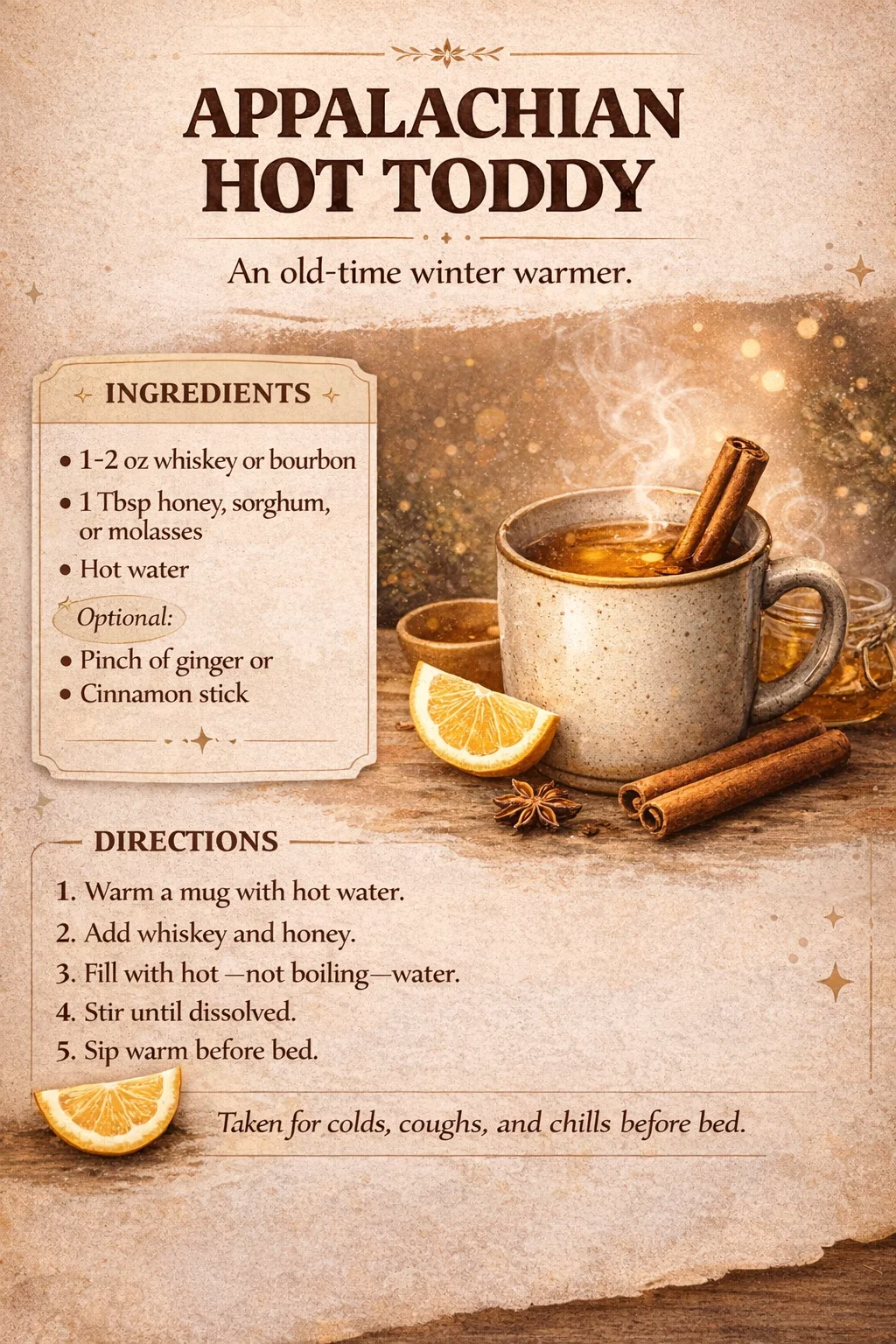
- Whiskey or Bourbon: Use 1 to 2 ounces depending on your preference. A bolder bourbon will stand up well against the spices, while a lighter whiskey makes for a smoother sip.
- Honey, Sorghum, or Molasses: This is where the regional flavor really shines. While honey is the standard, many mountain families used sorghum or molasses. These alternatives offer a deeper, more earthy sweetness that feels incredibly rustic and satisfying.
- Hot Water: The key here is to use hot, but not boiling, water. Boiling water can scald the honey and dissipate the alcohol too quickly. You want a temperature that is soothing to the throat and easy to sip.
- Optional Spices: A pinch of ginger or a cinnamon stick can transform the drink. Ginger adds a spicy bite that is great for digestion, while cinnamon provides that classic holiday aroma.
The Role of Sorghum and Molasses
If you want a truly authentic Appalachian experience, try substituting the honey with sorghum syrup. Sorghum was a staple crop in the mountains because it was easier to grow than sugar cane. It has a unique, slightly tangy sweetness that is less cloying than honey. Molasses is another fantastic option, especially during the deep winter, as its high mineral content and rich flavor profile provide a sense of hardiness that fits the season perfectly.
Step by Step Preparation Guide
Making a Hot Toddy is a ritual. It is not something to be rushed. The process of preparing the mug and stirring the ingredients is part of the therapy. Follow these steps to ensure you get the perfect balance every time.
Step 1: Prep Your Vessel
Always start by warming your mug. Pour some hot water into your favorite ceramic cup and let it sit for a minute. This ensures that when you mix your drink, the temperature stays consistent for as long as possible. A cold mug will instantly sap the heat from your toddy, ruining the experience.
Step 2: Combine the Base
Discard the warming water and add your whiskey and your choice of sweetener. If you are using honey, try to find raw, local honey. Not only does it taste better, but it often contains local pollens that many believe help with seasonal allergies. If you are using a cinnamon stick, add it now so the heat can begin to draw out the oils.
Step 3: The Gentle Pour
Fill the rest of the mug with hot water. Again, make sure it is just below the boiling point. As you pour, you will notice the steam rising, carrying the scent of the bourbon and the sweetness of the syrup. This is the moment the kitchen starts to smell like a cozy mountain cabin.
Step 4: The Dissolve
Stir the mixture gently but thoroughly. You want to make sure the honey or sorghum is completely incorporated into the liquid. If it sits at the bottom, your first sips will be too thin and your last sips will be too sweet. A well stirred toddy is consistent from start to finish.
The Medicinal History of the Toddy
While we enjoy the Hot Toddy today for its flavor, it has a long history as a folk remedy. In the days before over the counter cough syrups, this was the primary treatment for the common cold. The logic behind it is actually quite sound. The steam helps to clear the nasal passages, the honey coats a sore throat, and the alcohol acts as a mild sedative to help the patient get the rest they need to recover.
Sipping Before Bed
The tradition of drinking a toddy before bed is deeply ingrained in Appalachian culture. It was often referred to as a nightcap with a purpose. By warming the body from the inside out, it helps to relax the muscles and prepare the mind for sleep. When you have the chills or a nagging cough that keeps you awake, this simple mixture can be a godsend. It is a natural, gentle way to find relief without relying on harsh chemicals.
Customizing Your Winter Warmer
While the recipe provided in the image is a perfect starting point, there is plenty of room for experimentation. Depending on what you have in your pantry, you can tweak the flavors to suit your mood.
Add a Citrus Twist
While not strictly in the basic ingredient list, a squeeze of lemon is a very common addition. The acidity of the lemon cuts through the sweetness of the honey and the richness of the bourbon, brightening the entire drink. It also adds a boost of Vitamin C, which never hurts during flu season.
The Power of Ginger
As mentioned in the optional ingredients, ginger is a powerhouse. If you are feeling particularly under the weather, use a fresh slice of ginger instead of a pinch of ground ginger. The heat from the fresh root is invigorating and can help settle an upset stomach.
Creating the Perfect Atmosphere
The Appalachian Hot Toddy is best enjoyed in a specific environment. It is not a party drink; it is an introspective drink. To get the most out of your experience, consider the following setting:
Turn down the bright overhead lights and opt for a warm lamp or the glow of a fireplace. Put on some soft acoustic music, perhaps some bluegrass or folk to honor the roots of the drink. Find your most comfortable chair and a thick book. This is your time to slow down and embrace the quiet of the winter season.
Conclusion: A Tradition Worth Keeping
In our fast paced, modern world, there is something deeply grounding about returning to the basics. The Appalachian Hot Toddy reminds us that we do not always need complicated solutions to feel better. Sometimes, all it takes is a few simple ingredients, a bit of warmth, and a moment of stillness. Whether you are using it to fight off a cold or simply to celebrate the beauty of a snowy evening, this drink is a testament to the enduring wisdom of mountain life. So, the next time the temperature drops, reach for the bourbon and the honey, and raise a mug to the old time ways. Save this recipe, share it with a friend, and keep the tradition of the winter warmer alive for years to come.