Calming Lavender Tea Recipe DIY Sleep-time Herbal Tea Guide
There is something inherently magical about the ritual of brewing a cup of tea. It is more than just a drink; it is a pause button for the soul. In our fast paced world, finding a moment of genuine stillness can feel like a luxury, but the secret to reclaiming that peace might be sitting right in your herb garden or pantry. If you have been tossing and turning at night or feeling the weight of a stressful day on your shoulders, a homemade cup of calming lavender tea might be exactly what you need to reset your internal clock and soothe your mind.
The Therapeutic Power of Lavender
Lavender has been cherished for centuries, not just for its intoxicating fragrance but for its profound medicinal properties. From the ancient Romans who used it in their baths to the herbalists of the Middle Ages who recognized its ability to calm the spirit, lavender has earned its place as the queen of relaxation herbs. When we talk about herbal tea, lavender stands out because it targets both the mind and the body simultaneously. It contains linalool, a natural compound known to reduce anxiety and lower blood pressure, making it a powerhouse for anyone seeking a natural sedative.
How Lavender Promotes Deep Rest
The primary reason people reach for lavender tea is its legendary ability to improve sleep quality. Unlike synthetic sleep aids that can leave you feeling groggy the next morning, lavender works with your body’s natural chemistry. It helps to slow down the nervous system, signaling to your brain that it is time to transition from the chaos of the day into a state of rest. By sipping this purple hued infusion about thirty minutes before bed, you create a sensory bridge to dreamland. The warmth of the liquid, the floral aroma, and the active compounds work in harmony to help you fall asleep faster and stay in a deeper state of REM sleep.
Relieving Physical Tension and Muscle Ease
We often carry our stress in our bodies. You might notice your shoulders creeping up toward your ears during a long meeting or a tightness in your chest when your to do list gets too long. Lavender acts as a natural antispasmodic. This means it helps to relax the muscles and ease the physical manifestations of tension. Whether it is a tension headache or general muscle soreness, the soothing properties of lavender tea can help melt that tightness away, allowing you to feel physically lighter and more comfortable.
Crafting the Perfect Sleep Time Cup
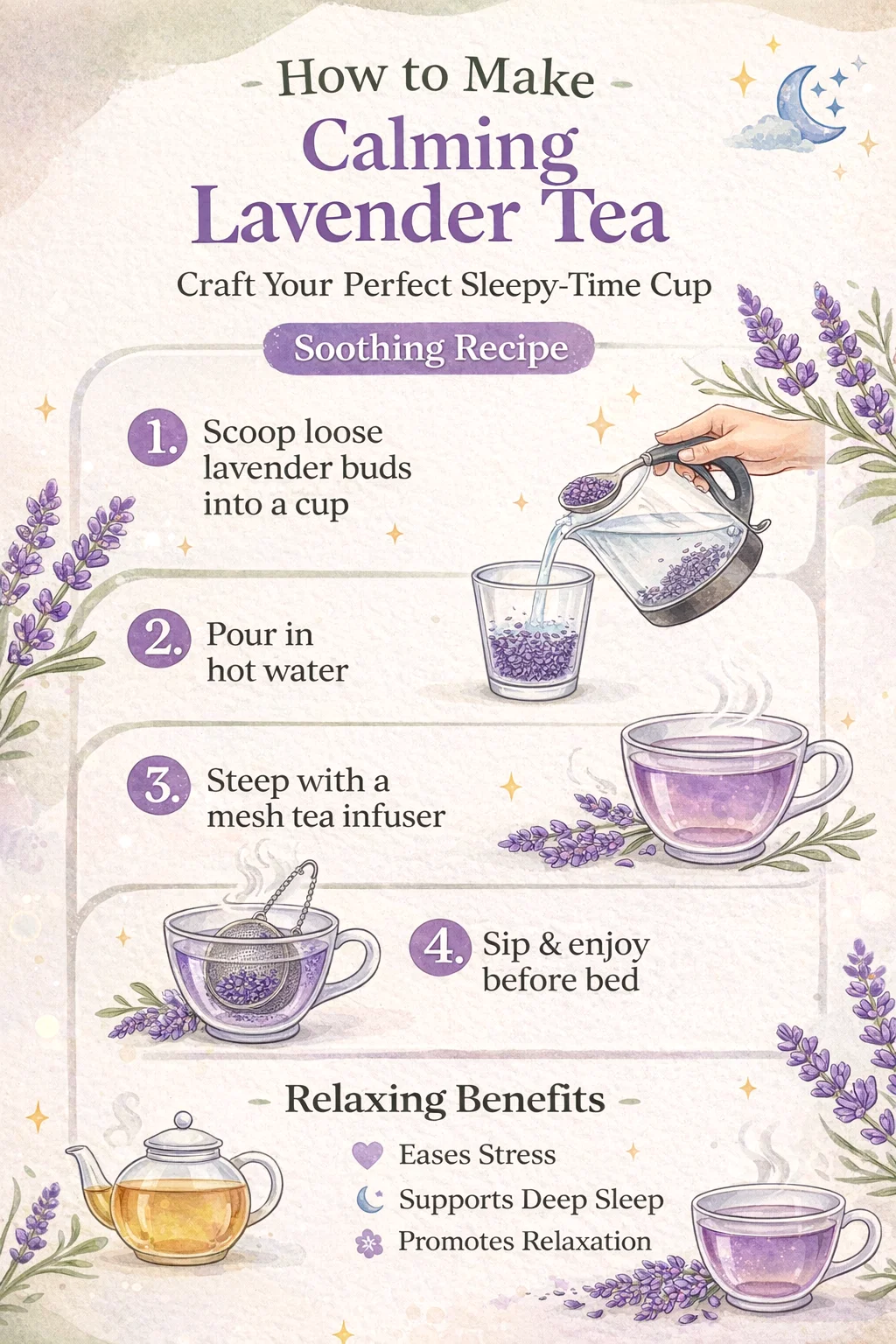
Creating your own herbal tea at home is a rewarding DIY project that ensures you are getting the freshest, highest quality ingredients. Many store bought tea bags contain “tea dust” or fannings, which lack the essential oils found in whole lavender buds. By following a simple, mindful process, you can craft a brew that is both potent and delicious. The image provided outlines a beautiful four step process that anyone can master in their own kitchen.
Step One: Selecting Your Lavender Buds
The foundation of a great cup of tea is the quality of the lavender. You want to look for culinary grade dried lavender buds. These are specifically harvested and processed for consumption, ensuring they are free from the perfumes or chemicals often found in craft store lavender. Using loose buds allows the water to circulate freely around the flower, extracting the maximum amount of flavor and benefit. Start with about one to two teaspoons of buds per cup, depending on how strong you like your floral notes.
Step Two: The Importance of Water Temperature
When you are ready to brew, the temperature of your water is crucial. You want to bring your water to a boil and then let it sit for just a moment before pouring. Pouring boiling water directly onto delicate lavender buds can sometimes scorch them, leading to a bitter or soapy aftertaste. Aim for water that is just under a rolling boil. As you pour the water over the buds, you will notice the aroma immediately fills the room. This is the beginning of your aromatherapy session.
Step Three: The Role of the Mesh Tea Infuser
Using a mesh tea infuser or a glass teapot with a built in strainer is the most efficient way to brew loose leaf herbal tea. It keeps the buds contained so you don’t end up with a mouthful of flowers, but it provides enough space for the buds to expand as they hydrate. This expansion is where the magic happens, as the hot water draws out the essential oils and the beautiful light purple or golden hue of the tea. Let the tea steep for about five to seven minutes. If you leave it too long, it may become overly strong, so find the sweet spot that works for your palate.
Customizing Your Herbal Brew
While lavender is incredible on its own, it also plays very well with other herbs. You can think of your lavender tea as a base for a more complex wellness tonic. If you want to enhance the sedative effects, try mixing in some dried chamomile flowers or valerian root. If you prefer a bit of sweetness, a teaspoon of raw honey or a few leaves of stevia can balance the floral notes perfectly. For a refreshing twist, a slice of lemon or a sprig of mint can add a bright layer to the earthy, floral profile of the lavender.
The Visual Experience of Tea Making
Part of why DIY herbal tea is so effective for stress relief is the visual and tactile experience. Watching the clear water transform into a soft lavender tint in a glass mug is hypnotic. Using beautiful teaware, like the glass teapot and delicate cups shown in the guide, turns a simple task into a ceremony. When we treat our tea making as a ritual rather than a chore, we are practicing mindfulness. We are present in the moment, noticing the steam rising and the scent blooming, which in itself is a form of therapy.
Making Notes for Best Results
To get the most out of your lavender basins or infusions, consistency is key. Drinking herbal tea is a cumulative practice. While one cup will certainly help you relax tonight, making it a regular part of your evening routine will train your body to recognize the scent and taste as a signal for sleep. Additionally, pay attention to the “making notes” mentioned in the guide. Ensuring you have the right application of loose buds for each cup will prevent the tea from being too weak or too overpowering. It is all about finding that perfect balance for your personal needs.
Storage and Freshness Tips
To keep your DIY tea ingredients fresh, store your dried lavender buds in an airtight container, away from direct sunlight and moisture. A dark pantry or a cupboard is ideal. Properly stored lavender can retain its potency for up to a year. If you notice the scent fading, it might be time to refresh your supply. You can even use the older buds to create small sachets for your pillowcase, extending the lavender experience throughout the night.
Conclusion: Your Path to a Calmer Night
In a world that never seems to stop, taking the time to brew a cup of calming lavender tea is a radical act of self care. It is a simple, affordable, and natural way to support your mental and physical health. By following the recipe of using loose lavender buds, hot water, and a mesh infuser, you are not just making a drink; you are crafting a tool for better sleep and deep relaxation. So, the next time you feel the stress of the world closing in, head to your kitchen, put the kettle on, and let the gentle power of lavender lead you back to peace. Your body and mind will thank you for the much needed rest.