Crispy Homemade Funnel Cakes Recipe Easy Fair Food Dessert at Home
There is something undeniably nostalgic about the scent of frying dough and powdered sugar wafting through the air. For many of us, that aroma immediately transports us to summer nights at the county fair, walking along the boardwalk, or enjoying a local carnival. While these events only come around once a year, the craving for a warm, crispy funnel cake can strike at any moment. The good news is that you do not need a professional concession stand or a deep fryer to recreate this iconic treat. With a few simple ingredients from your pantry and a little bit of technique, you can whip up golden, lattice like cakes right in your own kitchen.
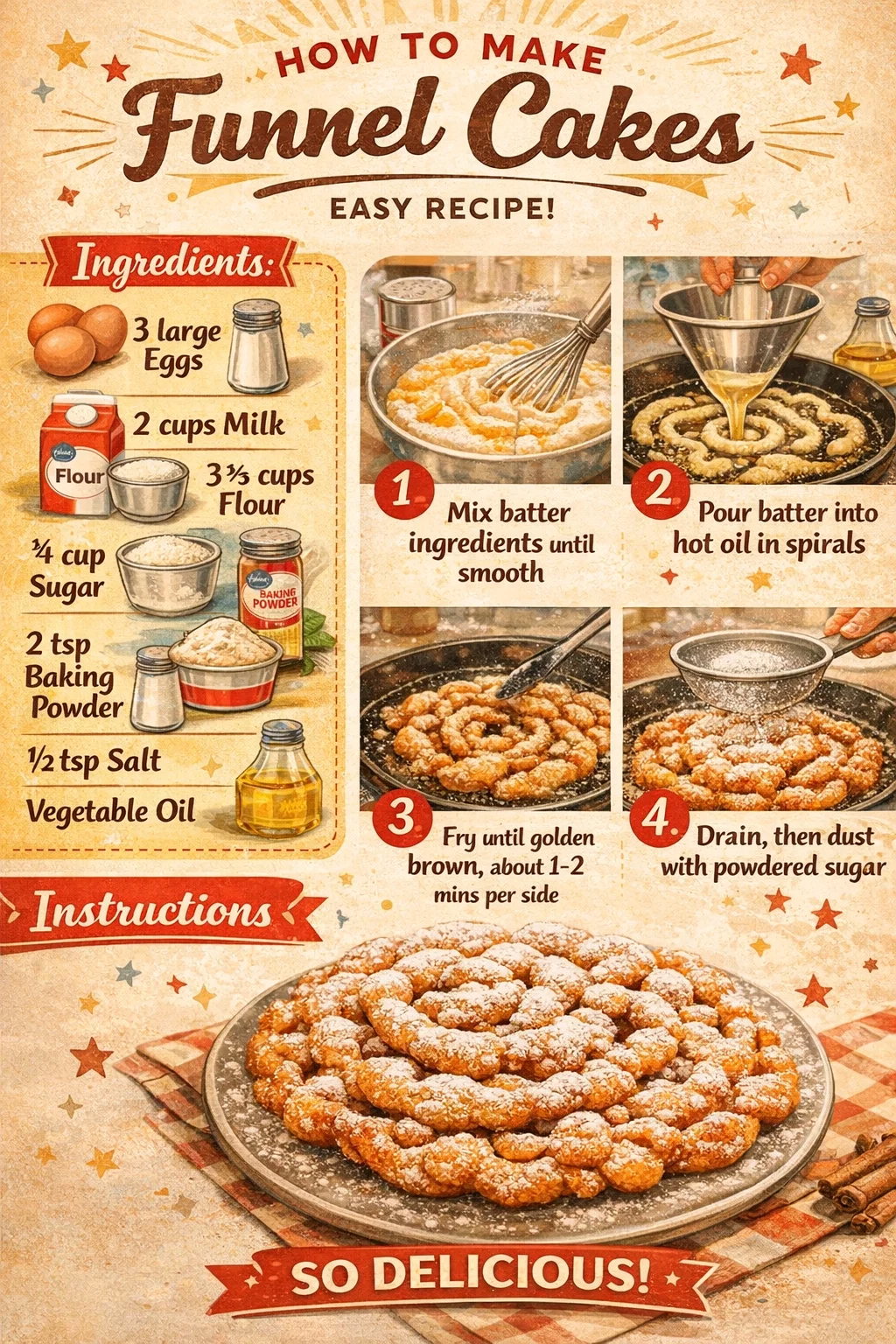
The image of a vintage recipe card reminds us that the best treats are often the simplest ones. Funnel cakes are essentially a fried pourable batter, a culinary tradition that has roots in various cultures but became a staple of American Pennsylvania Dutch cuisine. The beauty of the funnel cake lies in its texture, featuring a crunchy exterior that gives way to a soft, doughy center. In this guide, we are going to dive deep into the art of making the perfect funnel cake, exploring the science of the batter, the secrets to the perfect fry, and creative ways to top your creations.
The Essential Ingredients for a Perfect Batter
The foundation of any great funnel cake is the batter. It needs to be thin enough to flow through a funnel but thick enough to hold its shape once it hits the hot oil. Most recipes rely on basic staples that you likely already have in your cupboard. Let us break down what each ingredient brings to the table.
Flour and Leavening Agents
All purpose flour is the standard choice here because it provides just enough gluten to give the cake structure without making it tough. To get that signature airy puff, baking powder is crucial. As the batter hits the oil, the heat activates the baking powder, creating tiny gas bubbles that expand and create a light, porous texture. Without it, your funnel cake would be dense and heavy rather than light and crisp.
Eggs and Milk
Eggs serve as the binder and provide a rich flavor. They also contribute to the golden color of the finished product. Milk is the primary liquid used to reach the desired consistency. Some bakers prefer using whole milk for a richer taste, while others might use buttermilk for a slight tang that cuts through the sweetness of the toppings. The key is to whisk these wet ingredients thoroughly with the sugar before adding your dry components to ensure a smooth, lump free mixture.
The Role of Sugar and Salt
While the topping provides most of the sweetness, a small amount of sugar in the batter helps with the browning process through caramelization. A pinch of salt is equally important because it enhances all the other flavors. It balances the sweetness and ensures the dough itself is flavorful rather than bland.
Mastering the Frying Technique
Frying can be intimidating for home cooks, but the funnel cake is a great entry point. You do not need a massive vat of oil. A heavy bottomed skillet or a cast iron pan works perfectly. The goal is to maintain a steady temperature so the batter cooks through without burning on the outside.
Choosing the Right Oil
You want an oil with a high smoke point and a neutral flavor. Vegetable oil, canola oil, or peanut oil are the best candidates. Avoid using olive oil or butter, as they will burn at the temperatures required for frying and impart a flavor that does not pair well with powdered sugar.
The Magic Temperature
The secret to a non greasy funnel cake is the temperature of the oil. Ideally, you want to stay between 350 and 375 degrees Fahrenheit. If the oil is too cool, the batter will sit in it and soak up the fat, resulting in a soggy mess. If it is too hot, the outside will burn before the inside is cooked. Using a candy thermometer is the best way to monitor this, but you can also test it by dropping a small bead of batter into the pan. If it sizzles and floats to the top immediately, you are ready to go.
The Pouring Process
As the name suggests, a funnel is the traditional tool for this job. However, you can also use a squeeze bottle or a measuring cup with a spout. The technique involves plugging the bottom of the funnel with your finger, filling it with batter, and then releasing it over the center of the pan. Move your hand in a circular and crisscrossing motion to create that iconic webbed look. The overlapping strands are what hold the cake together as it fries.
Step by Step Guide to Frying
- Prepare your station: Have a plate lined with paper towels ready to catch the cakes and drain excess oil.
- Pour the batter: Start in the center and move outward in spirals. Make sure the strands touch each other so the cake stays in one piece.
- Watch for bubbles: The cake will puff up quickly. Use tongs or a slotted spatula to gently check the underside.
- The Flip: Once the edges are golden brown, usually after about 60 to 90 seconds, carefully flip the cake over to cook the other side.
- Drain and Cool: Lift the cake out and let it rest on the paper towels for just a moment before moving it to a serving plate.
Creative Toppings Beyond Powdered Sugar
While the classic dusting of powdered sugar is hard to beat, the funnel cake is a versatile canvas for all sorts of flavors. If you want to take your dessert to the next level, consider these gourmet topping ideas.
Fresh Fruit and Whipped Cream
For a refreshing twist, top your warm cake with macerated strawberries, fresh blueberries, or sliced peaches. A dollop of homemade whipped cream adds a cool, creamy element that contrasts beautifully with the warm, crunchy dough. This turns a simple snack into a sophisticated plated dessert.
Chocolate and Nutella Drizzles
Chocolate lovers can drizzle melted dark chocolate or warmed Nutella over the top. For an extra crunch, add some crushed hazelnuts or toasted almonds. If you really want to go all out, a sprinkle of sea salt over the chocolate creates a wonderful sweet and savory balance.
Cinnamon Sugar and Caramel
If you enjoy churros, you will love a funnel cake tossed in cinnamon sugar. Drizzle some warm salted caramel over the top for a decadent, sticky treat that feels like a true indulgence. This combination is particularly popular during the autumn months.
The Ice Cream Sundae Style
Why choose between a funnel cake and an ice cream sundae? Place a scoop of vanilla bean ice cream right in the center of the cake while it is still hot. The ice cream will begin to melt into the crevices of the dough, creating a delightful mix of temperatures and textures. Top with sprinkles and a cherry for the full carnival experience.
Common Mistakes and How to Avoid Them
Even though the process is straightforward, a few common pitfalls can ruin a batch of funnel cakes. Understanding these will help you achieve consistent results every time.
Lumpy Batter
If your batter has lumps, they will clog the funnel and lead to uneven cooking. Always sift your dry ingredients and whisk the batter until it is completely smooth. If you are struggling with lumps, you can even pulse the batter in a blender for a few seconds to ensure a perfectly liquid consistency.
Crowding the Pan
It is tempting to try and make multiple cakes at once, but this will drop the oil temperature too quickly. Cook one cake at a time to ensure each one has enough space to expand and fry evenly. This also gives you better control over the flipping process.
Over Mixing the Dough
While you want the batter to be smooth, you should avoid over working it. Too much mixing can develop the gluten, which might make your funnel cakes chewy instead of crisp. Whisk just until the ingredients are combined and the large lumps are gone.
The Cultural Significance of Fair Foods
Funnel cakes are more than just a sweet treat; they are a symbol of community and celebration. Most of the foods we associate with fairs and festivals are designed to be eaten with our hands while walking around and taking in the sights. They are communal foods, often shared among friends and family.
There is a psychological comfort in these traditional recipes. They remind us of simpler times and the joy of a special occasion. By making funnel cakes at home, you are not just making a snack; you are creating an experience for your loved ones. It is a fun activity to involve children in, letting them watch the batter transform in the pan and choosing their own toppings.
Conclusion
Mastering the homemade funnel cake is a rewarding skill for any home baker or dessert enthusiast. It is a testament to how humble ingredients like flour, eggs, and milk can be transformed into something truly magical with the right technique. Whether you stick to the classic powdered sugar or experiment with wild new toppings, the result is always a hit.
Next time you find yourself missing the atmosphere of a summer fair, head to the kitchen instead of waiting for the next carnival to roll into town. With a little bit of practice, you will be pouring perfect golden spirals that taste even better than the ones from the concession stand. So, heat up that oil, grab your funnel, and get ready to enjoy one of the most beloved treats in culinary history.