
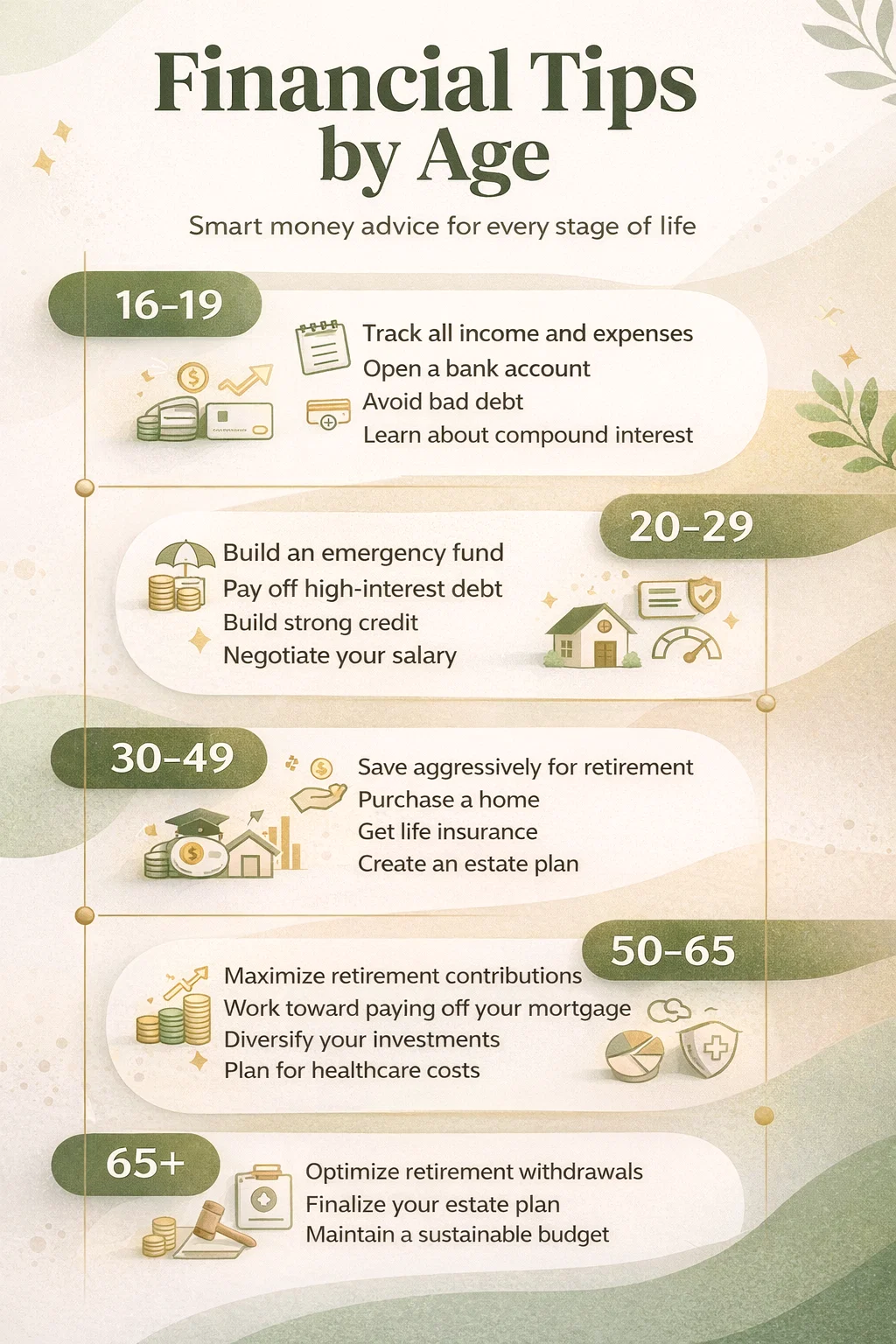
Financial Tips by Age The Ultimate Life Roadmap for Success
Navigating the world of personal finance can often feel like trying to find your way through a dense forest without a map. Most of us are taught how to earn money, but very few are taught how to manage it across the different seasons of life. The truth is that your financial priorities at nineteen should look drastically different from your goals at fifty. Understanding this evolution is the key to moving from financial stress to true financial freedom. This guide breaks down the essential milestones for every decade, providing you with a strategic roadmap to build wealth, protect your assets, and eventually enjoy a worry-free retirement.
The Foundation: Financial Milestones for Ages 16 to 19
The late teens are arguably the most critical years for shaping your relationship with money. This is the stage where habits are formed. Instead of focusing on massive accumulation, the goal here is literacy and discipline. By mastering the basics now, you set yourself up for a lifetime of compound growth rather than a lifetime of playing catch up.
Building the Habit of Tracking
At this age, every dollar counts. The most important skill you can learn is awareness. By tracking every cent that comes in from part-time jobs or allowances and every cent that goes out for snacks or subscriptions, you develop an intuitive understanding of your cash flow. This prevents the common trap of wondering where your money went at the end of the month.
Education and Compound Interest
While formal education is important, investing in practical skills and financial knowledge pays the highest dividends. Understanding compound interest at eighteen is like finding a superpower. It is the concept that your money earns money, and then that new money earns even more money. The earlier you start, the less heavy lifting you have to do later in life. Additionally, this is the time to avoid bad debt. Staying away from high-interest consumer loans or unnecessary credit card balances before you even start your career is a massive head start.
The Growth Phase: Navigating Your 20s
Your twenties are often characterized by entry-level salaries and high aspirations. This decade is about building the infrastructure of your financial life. It is the time to transition from just saving money to strategically deploying it.
The Safety Net and Employer Benefits
The first priority for any young professional is the emergency fund. Life is unpredictable, and having three to six months of expenses tucked away in a high-yield savings account ensures that a car repair or a job transition doesn’t turn into a financial catastrophe. Once that safety net is in place, it is time to look at your workplace benefits. If your employer offers a retirement match, that is essentially a 100 percent return on your investment. Not taking advantage of a full match is like leaving a portion of your salary on the table every single month.
Credit Scores and Salary Negotiation
This is also the decade to focus on your creditworthiness. A strong credit score will save you tens of thousands of dollars in interest when you eventually buy a home or a car. Pay your bills on time and keep your credit utilization low. Simultaneously, learn the art of negotiation. Your lifetime earnings are heavily influenced by your starting salary. Researching market rates and confidently asking for what you are worth during your twenties creates a higher baseline for every raise and promotion that follows.
The Accumulation Years: Thriving in Your 30s and 40s
As you enter your thirties and forties, your financial life typically becomes more complex. You might be juggling a mortgage, a growing family, and peak career responsibilities. This period is about aggressive growth and long-term protection.
Aggressive Retirement and Home Equity
During these two decades, you should aim to hit specific retirement benchmarks. A common rule of thumb is to have one time your annual salary saved by thirty and three times by forty. If you are behind, this is the time to tighten the budget and increase your contributions. This is also the prime season for homeownership. Whether you are buying your first home or looking to accelerate the payoff of an existing mortgage, building equity is a powerful way to stabilize your long-term housing costs and grow your net worth.
Protecting Your Legacy
Wealth management is not just about growth; it is about protection. If you have dependents, life insurance is non-negotiable. It provides a safety net that ensures your loved ones are taken care of if the unthinkable happens. Furthermore, this is the stage to get serious about estate planning. Creating a will or a trust isn’t just for the ultra-wealthy. It is a fundamental step in ensuring your assets are distributed according to your wishes and that your family avoids unnecessary legal hurdles during a difficult time.
The Pre-Retirement Shift: Strategy for Ages 50 to 65
As retirement approaches the horizon, the focus shifts from pure accumulation to preservation and preparation. You are in the home stretch, and your moves now will determine the quality of your golden years.
Maximizing Catch-Up Contributions
The government recognizes that many people need a final push as they approach retirement. Once you hit age fifty, you are eligible for catch-up contributions in accounts like 401ks and IRAs. This allows you to shield more of your income from taxes while boosting your nest egg. This is also the ideal window to achieve mortgage freedom. Entering retirement without a monthly housing payment drastically reduces the amount of income you need to draw from your investments.
Diversification and Healthcare Planning
In your fifties, your risk tolerance should naturally decrease. It is time to diversify your portfolio to protect against market volatility. You want to ensure that a sudden downturn right before you retire doesn’t derail your plans. Additionally, you must start planning for healthcare costs. Understanding Medicare options and potentially looking into long-term care insurance can prevent medical bills from eroding your savings later on. This is the stage where you transition from thinking about how much you can grow to how much you can safely spend.
The Golden Years: Managing Wealth After 65
Retirement is not the end of your financial journey; it is a new chapter of management. The goal now is to make your money last as long as you do while maintaining the lifestyle you worked so hard to achieve.
Sustainable Budgets and Tax Efficiency
The biggest challenge in retirement is the withdrawal strategy. You need to optimize your withdrawals from different accounts—taxable, tax-deferred, and tax-free—to minimize your tax burden. Working with a professional to create a sustainable budget ensures that you don’t overspend in the early, active years of retirement and run out of funds later. It is all about finding that perfect balance between enjoying your wealth and preserving it.
Gifting and Finalizing the Plan
For many, the final stage of the roadmap involves tax-efficient gifting. Whether you want to help your grandchildren with college tuition or support a cause you care about, doing so strategically can reduce your taxable estate. You should also regularly review and finalize your estate plan to reflect any changes in your family or your assets. This provides total clarity for your heirs and ensures your financial legacy is handled exactly as you envisioned.
Actionable Steps for Every Stage
Regardless of where you land on this timeline, there are certain universal principles that apply to everyone. Consistency is always more important than intensity. Small, regular contributions to a savings account in your twenties will often outperform large, sporadic investments in your fifties.
- Review Monthly: No matter your age, sit down once a month to look at your accounts.
- Automate Everything: The best way to ensure you save is to have the money leave your paycheck before you ever see it.
- Stay Informed: Tax laws and investment options change. Make financial learning a lifelong hobby.
- Seek Professional Advice: As your wealth grows, the cost of a financial advisor is often far less than the cost of a major mistake.
Conclusion: Your Journey to Financial Peace
Financial success is rarely the result of a single lucky break. Instead, it is the cumulative effect of making the right moves at the right time. By following this decade-by-decade roadmap, you take the guesswork out of your future. You move from a place of reacting to financial crises to a place of proactive wealth building. Remember that it is never too late to start. If you missed a milestone in your twenties, start doubling down today. The best time to plant a tree was twenty years ago, but the second best time is right now. Take these tips, apply them to your current life stage, and start building the secure, prosperous future you deserve.