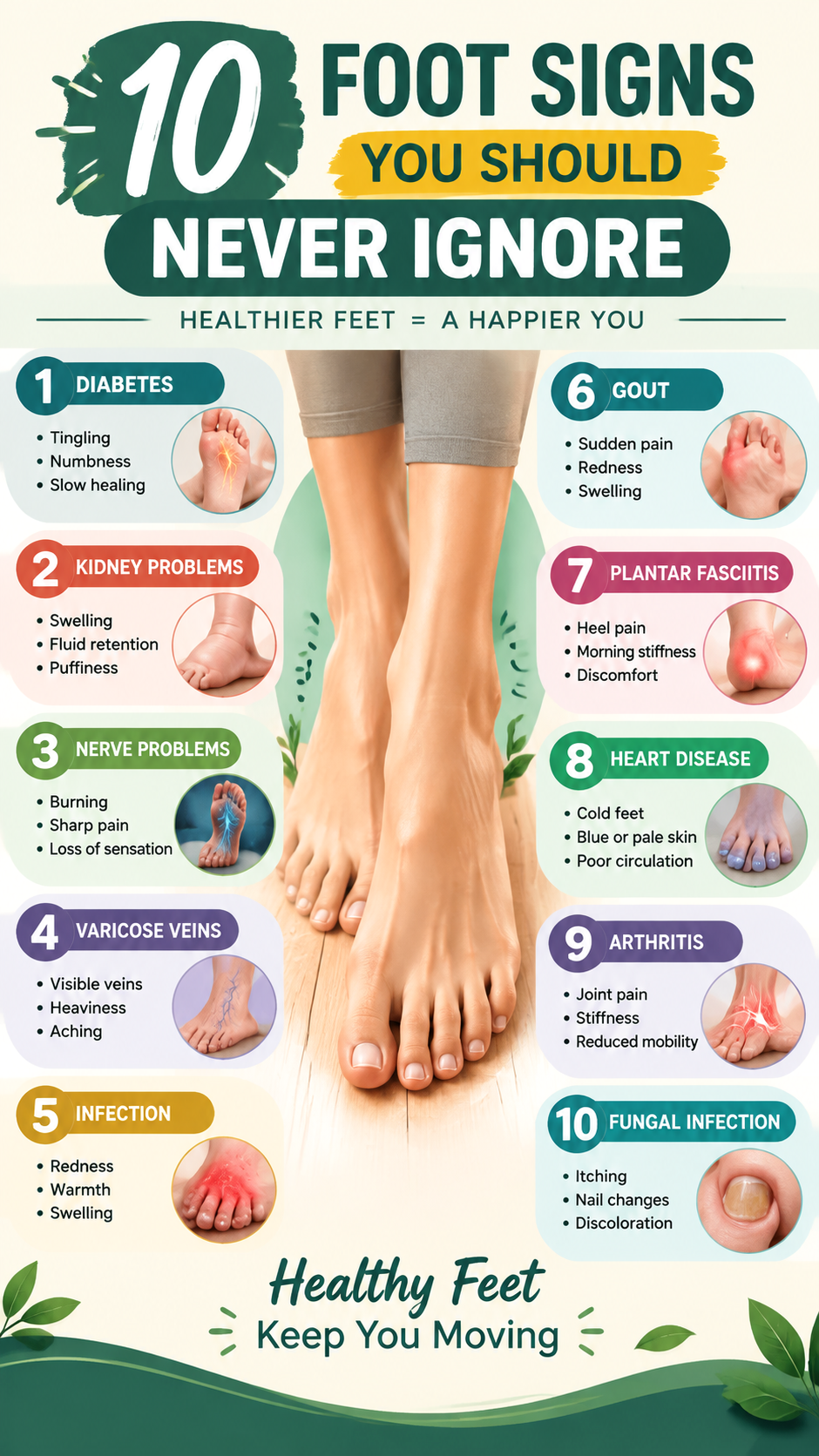
10 Foot Signs You Should Never Ignore for Your Health and Wellness
Your feet do more than carry you through each day. They can also provide valuable clues about your overall health and wellness. Changes like swelling, discomfort, numbness, skin changes, or unusual sensations may be easy to overlook, but paying attention to these signs can help you take better care of your body.
This guide explores important foot warning signs that should not be ignored, what they may indicate, and simple ways to support better foot health. Whether you are focused on preventive care, healthy aging, or understanding your body better, learning to recognize these changes is an important step toward long-term wellness.
Key Takeaways
- Foot symptoms can sometimes reflect changes happening throughout the body.
- Persistent pain, swelling, or numbness should be monitored carefully.
- Healthy footwear and daily foot care can support comfort and mobility.
- Early awareness can help prevent minor issues from becoming more serious.
- Regular health checkups are important when unusual symptoms appear.
Why Your Feet Can Reveal Important Health Clues
Your feet contain a complex network of bones, joints, nerves, blood vessels, skin, and muscles. Because they are constantly supporting your body weight, they can show signs of stress, circulation changes, inflammation, or other health concerns.
Many people ignore foot symptoms because they seem minor at first. A little tingling, occasional swelling, or mild discomfort may feel like a normal part of a busy lifestyle. However, repeated or worsening symptoms deserve attention.
Important: Your feet can sometimes act as early warning signals. Not every symptom means there is a serious problem, but noticing changes early allows you to make informed decisions about your health.
Common Foot Signs You Should Pay Attention To
1. Tingling, Numbness, or Burning Sensations
A feeling of pins and needles, reduced sensation, or burning in the feet can be uncomfortable and distracting. These sensations may occur after pressure on a nerve, but frequent or persistent symptoms may need closer attention.
Nerve-related discomfort can affect balance, walking comfort, and daily activities. Keeping track of when symptoms appear, how long they last, and whether they are getting worse can provide useful information during a health discussion.
2. Foot and Ankle Swelling
Swelling around the feet and ankles can happen after standing for long periods, intense activity, or wearing uncomfortable shoes. However, ongoing swelling may be a sign that your body is experiencing fluid balance or circulation changes.
Simple habits such as elevating your feet, staying active, and choosing comfortable footwear may help support healthier feet. If swelling continues or appears suddenly, it is worth discussing with a healthcare professional.
3. Sudden Toe or Joint Pain
Sudden pain in the toes or joints can interrupt movement and make everyday tasks uncomfortable. Pain that appears quickly, especially with redness or swelling, may require attention.
Foot discomfort can come from many sources, including injuries, inflammation, footwear issues, or joint stress. Understanding the pattern of pain helps identify the right approach for care.
4. Heel Pain and Morning Discomfort
Heel pain is a common complaint that can make the first steps of the day uncomfortable. Some people notice stiffness after waking up or after sitting for a long time.
Supportive shoes, stretching routines, and proper foot care habits can often improve comfort. Paying attention to recurring heel problems can help protect mobility.
5. Changes in Skin Color, Temperature, or Appearance
The appearance of your feet can provide useful information. Redness, unusual warmth, pale skin, blue tones, or noticeable changes in texture should not always be dismissed.
Healthy feet usually maintain consistent skin condition and temperature. Regularly checking your feet can help you notice changes before they become more difficult to manage.
Foot Conditions Often Linked With These Symptoms
Circulation and Vein-Related Concerns
Visible veins, feelings of heaviness, or tired legs may be connected with circulation patterns. Many people experience these issues after long periods of standing or sitting.
Movement, hydration, and comfortable positioning can support healthy circulation. If symptoms become frequent or uncomfortable, professional guidance can help determine possible causes.
Joint Stiffness and Arthritis Symptoms
Stiffness, reduced flexibility, and joint discomfort may affect walking patterns and overall activity levels. Caring for your feet helps maintain independence and comfort as you move through daily life.
Fungal and Nail Changes
Itching, nail discoloration, or changes in nail texture can be signs that your feet need extra care. Keeping feet clean and dry, changing socks regularly, and avoiding prolonged moisture can support healthier skin and nails.
How To Support Better Foot Health Every Day
Healthy feet benefit from consistent care. Small daily habits can make a noticeable difference in comfort, mobility, and confidence.
- Choose shoes that provide proper support and enough room for your toes.
- Wash and dry your feet regularly, especially between the toes.
- Trim nails carefully and monitor any unusual changes.
- Stretch your feet and ankles to maintain flexibility.
- Stay active to support circulation and strength.
When Should You Seek Professional Advice?
Many foot problems are manageable with proper care, but some symptoms should not be ignored. Consider seeking professional advice when you notice ongoing pain, sudden changes, loss of sensation, unusual swelling, or symptoms that interfere with normal movement.
Remember: Early attention is one of the best tools for protecting your feet. Listening to your body and responding to changes can help maintain comfort and overall wellness.
Quick Points
- Check your feet regularly for changes.
- Do not ignore persistent pain or numbness.
- Wear supportive footwear for daily activities.
- Healthy habits help protect foot comfort.
Conclusion: Listen To What Your Feet Are Telling You
Your feet play an essential role in your health, movement, and quality of life. Paying attention to signs like swelling, discomfort, numbness, skin changes, and unusual sensations can help you stay more aware of your body.
Foot care is not only about treating problems when they appear. It is also about prevention, awareness, and creating simple habits that support long-term wellness. Give your feet the attention they deserve, and they can continue supporting you every step of the way.
Tags
Foot Health
Healthy Feet
Foot Care Tips
Wellness Tips
Healthy Lifestyle
Foot Pain Awareness