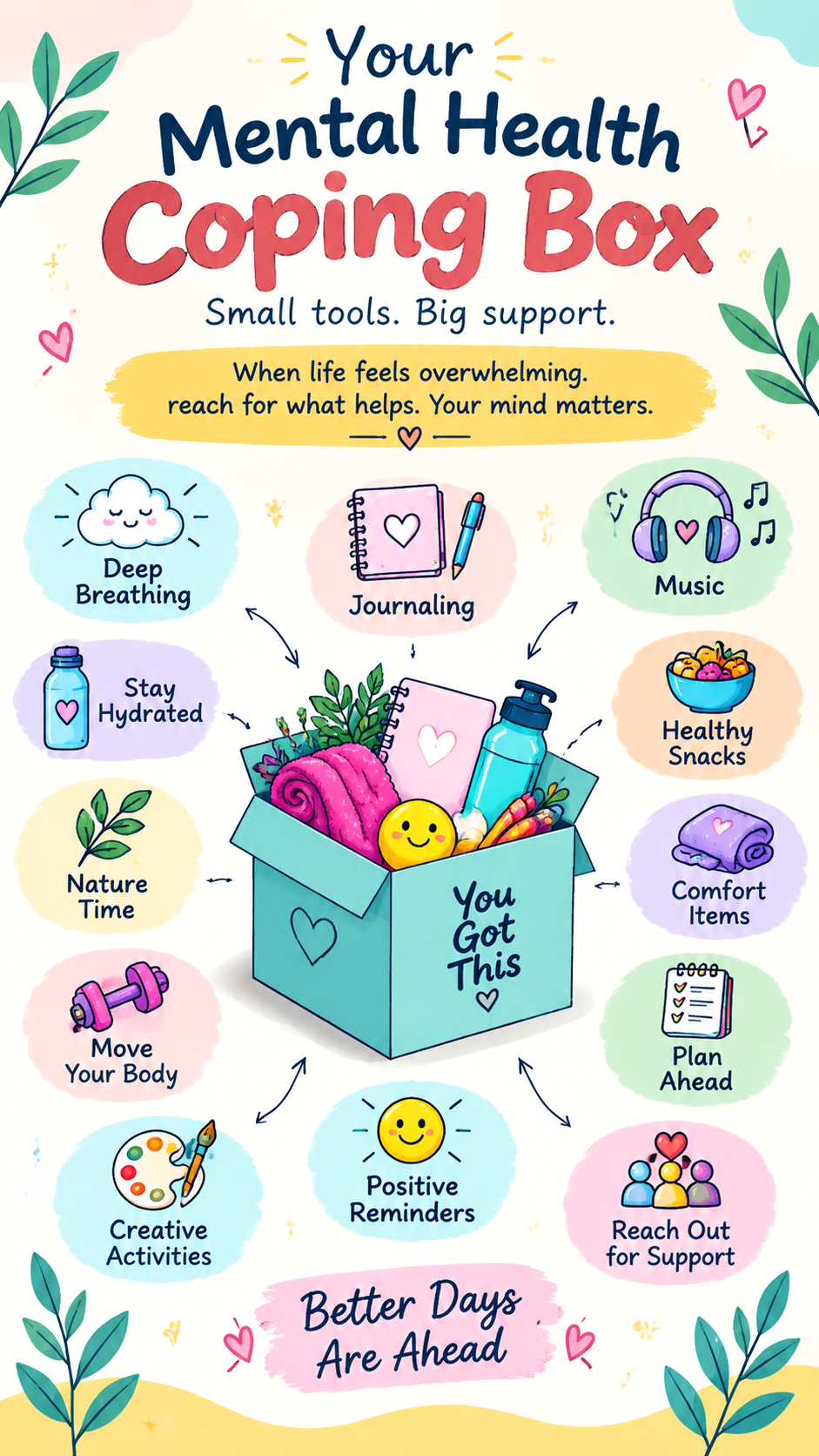
Mental Health Coping Box Ideas 35 Self-Care Essentials for Stress Relief and Anxiety
When stress, anxiety, or overwhelming emotions begin to build, having a few comforting tools within reach can make it easier to pause, regroup, and decide what you need next. A mental health coping box, also known as a self-soothing kit or emotional wellness box, is a collection of meaningful items that can help you feel grounded, engage your senses, and navigate difficult moments with greater care.
Creating a personal coping box is a simple, practical way to prepare for challenging days. It might contain a favorite snack, a soft blanket, a small notebook, calming music, positive affirmations, fidget toys, or photographs of places that make you feel safe. You can also include a written safety plan and contact information for trusted people who can offer support when you need it.
Key Takeaways
- A mental health coping box keeps personalized self-care tools together in one convenient place.
- Sensory items, grounding activities, and comforting objects can help you manage moments of stress.
- Positive reminders, favorite photos, and encouraging messages can provide emotional reassurance.
- A written safety plan and trusted contacts can make it easier to reach out for support.
- Your coping box should reflect your preferences, needs, budget, and comfort level.
- These tools complement professional mental health care rather than replace it when additional support is needed.
What Is a Mental Health Coping Box?
A mental health coping box is a small collection of items chosen to help you respond to difficult emotions. Instead of searching for something comforting when you already feel overwhelmed, you prepare a selection of helpful resources ahead of time.
The idea is personal and flexible. One person might find comfort in music and creative activities, while another might prefer a soft toy, a refreshing drink, or a quiet place to write. There is no universal list of essentials because different people respond to stress in different ways.
A coping box can be physical, such as a decorated cardboard box or storage container, or digital, such as a folder on your phone containing calming playlists, encouraging notes, photographs, and useful contacts.
The goal is not to eliminate every uncomfortable feeling. Instead, your coping box gives you accessible options for pausing, practicing self-care, and choosing a helpful next step.
Who Can Benefit From a Self-Soothing Kit?
A coping box may be useful for adults, teenagers, students, caregivers, and anyone who wants to build a more intentional self-care routine. It can be particularly helpful when you are dealing with everyday stress, emotional exhaustion, difficult transitions, frustration, or moments when concentrating feels challenging.
Some people also use personalized coping kits as part of a broader mental health support plan developed with a qualified professional. If you are already working with a therapist or counselor, you can ask which grounding exercises and coping strategies may be appropriate for your circumstances.
Essential Items to Include in Your Mental Health Coping Box
Start with a few items that you already enjoy using. You do not need to purchase everything on a long checklist. The most useful coping box is one that feels approachable, personal, and easy to use.
1. Sensory Tools for Grounding and Comfort
Sensory tools offer simple ways to redirect your attention toward the present moment. They can be especially helpful when your thoughts feel scattered or you want a practical activity to focus on.
- Fidget toys: Keep a stress ball, textured ring, fidget spinner, or other small tactile object nearby.
- Grounding stones: Choose smooth stones or another object with an interesting texture that feels comfortable in your hand.
- Kaleidoscope or prism: Colorful patterns and changing light can offer a gentle visual distraction.
- Bubbles: Blowing bubbles encourages you to slow down and pay attention to a simple activity.
- Soft fabric: Include a small blanket, plush toy, or piece of fabric with a texture you enjoy.
- Bubble wrap: If you find the texture and popping sensation satisfying, keep a small piece for occasional use.
Experiment with different textures and activities to discover what feels supportive. Some people prefer soft and smooth objects, while others enjoy repetitive movement or more noticeable sensory feedback.
2. Comfort Items That Help You Feel Safe
Familiar objects can make a self-care space feel more welcoming. Their value often comes from the positive associations you have with them rather than their cost or appearance.
- A small stuffed animal: Choose a favorite plush toy or another object that brings a sense of familiarity.
- Comfortable clothing: Add cozy socks, a soft hoodie, or another comfortable item.
- A favorite book: Choose a comforting story, a collection of poems, or a book you enjoy revisiting.
- Personal photographs: Include pictures of loved ones, pets, memorable experiences, or peaceful places.
- A favorite drink: Keep tea bags or another shelf-stable drink option if it is suitable for you.
These items can serve as reminders that you are allowed to slow down and take care of yourself. Even one familiar object may be enough to make your coping routine feel more personal.
3. Positive Affirmations and Encouraging Reminders
When emotions run high, it can be difficult to remember a more balanced perspective. Short written reminders can give you something encouraging to read without requiring much effort.
Create a set of affirmation cards with statements that feel believable and supportive. You might write them on index cards, decorate them with colorful markers, or place them inside a small envelope.
Consider including reminders such as:
- I can take this one step at a time.
- I do not have to solve everything today.
- My feelings are real, and they can change.
- It is okay to ask for help.
- I have made it through difficult moments before.
- Rest is a valid part of taking care of myself.
- I can choose the next small step instead of figuring everything out at once.
Choose words that match your personality. If overly cheerful affirmations feel unrealistic, try neutral statements such as, “This moment is difficult, and I can focus on what I need right now.”
4. Journaling Supplies and Creative Activities
Writing and art can offer structured ways to express thoughts and occupy your attention. Keep a small notebook and a favorite pen in your coping box so you can begin without gathering supplies.
- A small notebook: Write down feelings, worries, questions, or things you appreciate.
- Coloring materials: Include a coloring book, colored pencils, crayons, or washable markers.
- Art supplies: Try a small sketchbook, watercolors, or simple craft materials.
- Puzzles: Choose a word search, jigsaw puzzle, or another activity suited to your energy level.
- Visual reminders: Add a picture of a favorite destination, a meaningful quote, or a personal goal.
You do not need to create something beautiful or finish an entire activity. The purpose is to give yourself a manageable task and a way to express yourself without pressure.
5. Calming Music and Audio Resources
Music can influence mood, attention, and the atmosphere around you. A personal coping playlist can include songs that help you relax, feel understood, or regain a sense of motivation.
Consider creating different playlists for different situations. One might feature gentle instrumental music, another might contain familiar favorite songs, and a third could include nature sounds or guided relaxation exercises.
If you use headphones, include them in your kit or keep them somewhere easy to find. You can also save your favorite playlists for offline listening if that option is available.
Pay attention to your response. A song that feels comforting one day might feel distracting on another, so allow your playlist to change with your needs.
6. Snacks, Hydration, and Simple Comforts
Basic physical needs can be easy to overlook when you are busy or emotionally overwhelmed. A few practical supplies can help you remember to pause and check in with yourself.
- Water bottle: Keep drinking water accessible, especially when you have been busy for a long time.
- Favorite snacks: Include suitable, shelf-stable options that you enjoy and can safely store.
- Herbal tea bags: Choose a familiar caffeine-free tea if you enjoy warm drinks and can prepare one safely.
- Scented lotion: A familiar lotion can provide a pleasant texture and scent if your skin tolerates it.
- Small comfort items: Include lip balm, tissues, or another everyday essential that helps you feel cared for.
Choose food and drink items according to your dietary needs, allergies, and storage conditions. Replace anything that expires, and keep perishable products out of a box that will remain at room temperature.
Important: Your coping box should support your individual needs rather than become another task to complete perfectly. Start with three to five useful items, test them in everyday situations, and keep the ones that genuinely help. A small, well-chosen kit is often more practical than a large collection you rarely use.
Include a Safety Plan and Important Contacts
A mental health coping box can hold more than comfort items. It can also serve as a convenient place for information that helps you make decisions and connect with support when you are struggling.
Create a Personal Safety Plan
A written safety plan can help you identify warning signs, coping strategies, supportive people, and options for professional assistance. Keep the language clear and practical so you can follow it when concentrating is difficult.
Your plan might include:
- Early warning signs: Notice changes in your thoughts, feelings, behavior, or routines that suggest you may need additional support.
- First coping steps: List a few activities you can try independently, such as moving to a quieter space, holding a grounding object, or listening to a familiar song.
- Trusted contacts: Write down the names and current phone numbers of people you feel comfortable contacting.
- Professional resources: Include relevant therapist, counselor, healthcare provider, or local support service details.
- Urgent support options: Identify the appropriate local emergency service or crisis resource for your location.
Store the information securely and review it periodically to ensure the details remain current. If you already have a safety plan from a mental health professional, use that plan as your guide.
Make Reaching Out Easier
Sometimes, knowing whom to contact is not enough. It can help to prepare a short message you can send when finding the right words feels difficult.
For example, you might write: “I’m having a difficult moment and could use some support. Are you available to talk or stay with me for a little while?”
Keep this message in your notebook or phone, along with the contact details of people who have agreed to support you. Respect their availability while remembering that you can seek help from another trusted person or a professional resource when needed.
Why This Matters
Comfort objects and grounding exercises can help you manage a difficult moment, but they are not substitutes for urgent or professional support. If you feel unsafe, may hurt yourself, or cannot keep yourself safe, contact local emergency services or an appropriate crisis service and reach out to someone who can help you immediately.
How to Use Your Coping Box During Stressful Moments
Having a coping box is a useful first step, but it also helps to know how you want to use it. A simple routine makes it easier to choose an activity without feeling overwhelmed by too many options.
Step 1: Pause and Notice What You Need
Before reaching for an item, take a moment to notice what is happening. Are you feeling restless, tense, sad, frustrated, disconnected, or mentally exhausted? You do not need to identify the perfect word. Simply noticing that you are struggling can be a useful starting point.
If possible, move to a place where you feel reasonably comfortable and safe. Give yourself permission to pause rather than immediately trying to fix everything.
Step 2: Choose One Simple Activity
Pick one item that seems appropriate for the moment. You might hold a smooth stone, color a small picture, read an affirmation, or listen to a familiar song.
Try not to turn coping into a long checklist. One small activity is enough to begin. If it feels uncomfortable or unhelpful, choose something else.
Step 3: Try a Grounding Exercise
Grounding exercises direct your attention toward your surroundings or physical sensations. One commonly used technique is the five-senses exercise.
- Name five things you can see around you.
- Notice four things you can physically feel, such as your feet touching the floor or your hands resting on a surface.
- Identify three sounds you can hear.
- Notice two scents, if available and comfortable.
- Identify one taste or another neutral physical sensation.
You can adapt the exercise to suit your environment and sensory preferences. If a particular sense feels uncomfortable or distracting, skip it and focus on something else.
Step 4: Check In With Yourself Again
After trying an activity, ask yourself whether anything has changed. You might feel calmer, remain uncomfortable, or discover that you need a different kind of support.
There is no requirement to feel better immediately. The purpose is to respond to yourself with care and recognize what might help next.
If the distress continues or becomes more intense, consider contacting a trusted person or using your professional support plan. You do not have to manage every difficult experience alone.
How to Build a Coping Box on a Budget
You can create a meaningful self-soothing kit without buying expensive wellness products. Many useful items are already available at home, and the most important part is selecting things that suit you.
Use What You Already Have
Start by looking around your home for practical supplies. An unused storage box, an old pencil case, or a clean gift box can become your container.
- Use scrap paper or index cards for affirmations.
- Print photographs you already love or save them on your phone.
- Choose a book, notebook, or coloring page you already own.
- Reuse a clean fabric pouch to hold small sensory objects.
- Create a calming playlist using music you already have access to.
- Write down supportive contacts on a small card.
Personalize the Box
Decorating the container can make the project feel enjoyable. Add stickers, colored paper, encouraging words, or small drawings. You might choose a calming color palette or use bright colors that make you smile.
The finished box does not need to look like a professional craft project. A simple container with a few meaningful items can be just as useful as an elaborate arrangement.
Pro Tip: Organize your coping box by need rather than by appearance. Small labels such as “grounding,” “comfort,” “creative activities,” and “people who can help” make it easier to find an appropriate resource when you have limited energy.
Customize Your Coping Box for Different Situations
A flexible coping box can evolve as your needs change. You may want different items for home, school, work, or travel.
For Home
A home coping box can include larger comfort items, art supplies, cozy clothing, a favorite book, and materials for a relaxing activity. Keep it somewhere accessible but private enough that you can use it comfortably.
For School or Work
A portable kit can fit inside a backpack, desk drawer, or small pouch. Consider a pocket-sized notebook, a discreet fidget item, a grounding card, headphones, and a list of supportive contacts.
Choose items that are appropriate for your environment and will not interfere with your responsibilities. Even a single reminder card can make your coping strategy easier to access.
For Travel
A travel-friendly coping kit can contain a small sensory object, comfortable earbuds, a few affirmation cards, tissues, and essential contact information. Keep any medication in its appropriate packaging and follow the relevant storage and travel instructions.
Before packing liquids, scented products, snacks, or other restricted items, check applicable travel requirements and your personal sensitivities.
Common Coping Box Mistakes to Avoid
A coping box should make self-care easier, not create additional pressure. A few simple adjustments can help you get more value from the items you choose.
- Adding too many items: A crowded box can make choosing an activity feel difficult. Begin with a small selection and expand gradually.
- Choosing items because they are trendy: Popular wellness products are not automatically useful for everyone. Focus on your personal preferences.
- Expecting immediate results: Coping tools may provide comfort or help you focus, but their effects vary from person to person and situation to situation.
- Forgetting to update contact information: Review your safety plan and make sure phone numbers and resources remain current.
- Ignoring sensory sensitivities: Strong scents, bright lights, certain textures, or noisy objects may feel unpleasant. Choose alternatives that suit you.
- Relying on the box for every situation: Some challenges require help from a trusted person, healthcare professional, or emergency service.
It is also worth reviewing the contents occasionally. Remove expired snacks, replace used supplies, and change items that no longer feel comforting. Your coping box should reflect who you are now, not who you were when you first created it.
A Simple Mental Health Coping Box Checklist
If you are ready to put your own kit together, use this checklist as a starting point. Select only the items that fit your needs, and add other ideas whenever you discover something helpful.
- A storage box, basket, pouch, or small container.
- A favorite sensory object, such as a stress ball or grounding stone.
- A comforting item, such as a plush toy or soft fabric.
- Affirmation cards or positive reminders.
- A small notebook and favorite pen.
- Coloring supplies or a simple puzzle.
- Personal photographs or pictures of peaceful places.
- A calming music playlist and headphones, if useful.
- Water and suitable shelf-stable snacks.
- Tea bags or another preferred comfort drink.
- A written grounding exercise.
- A safety plan and contact details for trusted people.
You can keep this checklist in your notebook and update it as you discover which tools work best for you. There is no need to finish the entire list at once.
Quick Points: Your Coping Box at a Glance
- Choose items that feel personally comforting or useful.
- Include sensory tools, creative activities, and encouraging reminders.
- Keep trusted contacts and a practical safety plan accessible.
- Use one item at a time and notice how it affects you.
- Refresh your kit regularly and seek additional help when needed.
Conclusion: Small Steps Can Support Brighter Days
Building a mental health coping box is a simple way to make self-care more personal, practical, and accessible. By bringing together sensory tools, comforting objects, creative activities, positive affirmations, and supportive contact information, you create a collection of resources you can turn to when life feels overwhelming.
Remember that your box does not need to be expensive, perfectly organized, or filled with dozens of products. Begin with a few items you already enjoy. Add a notebook with encouraging reminders, a favorite photograph, a grounding object, or a calming playlist. Over time, pay attention to what helps you feel more present, comfortable, or ready to take your next step.
Most importantly, give yourself permission to adapt your coping routine. Some days you may want quiet music and a cozy blanket. On other days, you might prefer drawing, walking, talking to a trusted person, or seeking professional guidance. Each of these choices can be part of a thoughtful approach to emotional wellness.
Small steps matter. Create a coping box that reflects your needs, keep it somewhere accessible, and use it as a reminder that you deserve care and support. Save these mental health coping box ideas for later, and start building your own personalized self-soothing kit whenever you feel ready.
Tags
Mental Health Coping Box
Self-Soothing Kit
Self-Care Ideas
Stress Management
Grounding Techniques
Emotional Wellness
Anxiety Coping Skills
Mindfulness Activities