7-Day Get Your Life Together Challenge Reset Your Routine, Habits Mindset
Feeling overwhelmed by clutter, unfinished tasks, inconsistent routines, or the feeling that your days are slipping away? A 7-day get your life together challenge is a simple, motivating way to reset your space, organize your schedule, improve your mindset, and build healthier daily habits without trying to change everything overnight. Instead of making a long list of resolutions that quickly become overwhelming, you will focus on one meaningful area of your life each day.
This seven-day life reset is designed to help you create a cleaner environment, establish a better routine, strengthen your confidence, organize your responsibilities, and make more time for the things you love. Each day includes practical tasks you can complete at your own pace, making this challenge ideal for anyone who wants a fresh start, a more productive lifestyle, or a little extra motivation to get back on track.
Key Takeaways
- Reset one area of your home to create a cleaner, calmer environment.
- Build a realistic daily routine that includes planning, productivity, and self-care.
- Practice positive self-talk and develop a healthier mindset.
- Improve your habits through small, consistent actions rather than drastic changes.
- Organize your responsibilities, reduce distractions, and focus on meaningful goals.
- Finish the week with a clearer idea of the lifestyle you want to create.
What Is the 7-Day Get Your Life Together Challenge?
The 7-day get your life together challenge is a short personal reset that breaks self-improvement into seven manageable steps. Each day focuses on a different part of your lifestyle, from decluttering your surroundings to creating routines, improving your habits, and making progress toward your goals.
The idea is simple: you do not need to reorganize your entire life in one afternoon. Instead, you make small improvements that build on one another. A tidy bedroom can make your morning feel calmer. A written daily plan can help you prioritize your responsibilities. A healthier bedtime routine can make it easier to wake up feeling prepared for the day.
By focusing on one theme at a time, you can avoid the pressure of attempting a complete transformation all at once. You can also adapt the challenge to your schedule, energy level, and personal priorities.
Who Should Try This Life Reset?
This challenge is useful if you have been feeling disorganized, struggling to maintain healthy habits, procrastinating on important tasks, or simply craving a fresh start. It can also be helpful at the beginning of a new month, after a busy season, before returning to school or work, or whenever your usual routine stops working for you.
You do not need to be especially productive, naturally organized, or highly motivated to begin. The challenge is designed to help you create structure gradually, even if you are starting from scratch.
Day 1: Reset Your Space
Your environment can influence how comfortable, focused, and prepared you feel throughout the day. When clothes pile up, surfaces become cluttered, or everyday items are difficult to find, even simple tasks can feel more complicated. That is why the first day of your life reset focuses on creating a cleaner, more peaceful space.
You do not need to deep-clean your entire home. Choose one area that would make the biggest difference to your daily life, such as your bedroom, desk, bedside table, wardrobe, or study corner.
Your Day 1 Checklist
- Declutter one small area of your home.
- Organize your desk, bedside table, or bedroom.
- Put away clothes and return misplaced items to their proper places.
- Remove unnecessary objects from frequently used surfaces.
- Add one simple detail that makes the space feel inviting, such as fresh flowers, soft lighting, or a favorite decorative item.
How to Make Decluttering Easier
Set a timer for 15 to 20 minutes and work on one clearly defined area. Start by collecting rubbish, removing dishes, and putting away items that belong somewhere else. Then decide what you genuinely need to keep within reach.
Try not to pull everything out of your wardrobe or empty every drawer unless you have enough time to finish. Completing one small area is more satisfying than creating a bigger mess that you do not have the energy to resolve.
Important: Your goal is not to create a perfectly styled room. It is to make your space easier to use and more comfortable to live in. A small, maintainable improvement is more valuable than a dramatic cleanup that is difficult to repeat.
Day 2: Build a Better Daily Routine
Day two is all about creating a daily routine that supports your responsibilities and personal well-being. When your days feel unpredictable, it can be difficult to find time for work, studying, exercise, relaxation, and the small tasks that keep life running smoothly.
A realistic routine gives your day a basic structure. It does not mean planning every minute or waking up at an extremely early hour. Instead, it means deciding which habits matter most and choosing when you are most likely to complete them.
Your Day 2 Checklist
- Choose a consistent wake-up time that suits your schedule.
- Write down your main responsibilities for the day.
- Schedule dedicated time for work, studying, or important projects.
- Include breaks, meals, and a little time for yourself.
- Create a simple evening routine to prepare for tomorrow.
Create a Routine You Can Actually Follow
Begin with three daily anchors: a morning habit, a focused work period, and an evening habit. For example, you might drink a glass of water after waking up, spend 30 minutes on an important task, and prepare your clothes or workspace before bed.
Once those habits feel manageable, add other activities gradually. If your schedule changes frequently, create a flexible routine based on the order of tasks rather than exact times.
Remember that a good routine should support your life, not make you feel guilty whenever something unexpected happens. Leave room for rest, changing priorities, and real-life responsibilities.
Day 3: Train Your Mindset
Getting your life together involves more than organizing your belongings and managing your calendar. Your mindset also matters. The way you speak to yourself can influence how you approach mistakes, respond to challenges, and continue working toward your goals.
If you frequently tell yourself that you are lazy, incapable, or always behind, even a small setback can feel like proof that you cannot improve. Day three encourages you to replace harsh self-criticism with more balanced, constructive thinking.
Your Day 3 Checklist
- Practice speaking to yourself with patience and encouragement.
- Write down three things you appreciate about your life.
- Identify one habit or situation that regularly drains your energy.
- Spend a few minutes visualizing a realistic personal goal.
- Replace one negative thought with a more balanced statement.
Practice Positive Self-Talk
Positive self-talk does not mean pretending everything is perfect. It means acknowledging difficulties without turning them into judgments about your entire character.
- Instead of “I never get anything done,” try “I can choose one task and start there.”
- Instead of “I am terrible at routines,” try “I am learning what works for me.”
- Instead of “I have wasted too much time,” try “I can make a useful choice with the time I have today.”
Consider keeping a small journal where you record your thoughts, wins, and lessons. You can use it to notice patterns and recognize progress that might otherwise go unnoticed.
Why This Matters
A fresh start becomes easier to maintain when your expectations are realistic. You are allowed to make mistakes, adjust your plans, and move at your own pace. Focus on becoming a little more consistent and supportive of yourself rather than trying to become a completely different person in one week.
Day 4: Get Organized
Once your environment, routine, and mindset have received some attention, it is time to organize the information and responsibilities competing for your attention. Day four focuses on reducing mental clutter by creating simple systems for your notes, digital files, goals, and everyday tasks.
Disorganization is not always about physical mess. An overflowing inbox, scattered documents, forgotten deadlines, and too many unfinished lists can make it difficult to know what deserves your attention first.
Your Day 4 Checklist
- Organize your notes, notebooks, or important documents.
- Sort digital files into a few clearly named folders.
- Write down your current goals and responsibilities.
- Remove unnecessary files, duplicate notes, or unused shortcuts.
- Keep the tools and information you use regularly easy to access.
Use a Simple Organization System
For digital organization, create broad folders such as Work, Personal, Finance, Learning, and Projects. Adjust the categories to match your actual needs instead of building a complicated system with dozens of subfolders.
For everyday tasks, use one central to-do list rather than scattering reminders across multiple apps, notebooks, and sticky notes. Review the list each morning and select a manageable number of priorities.
If you have several goals, separate them into categories such as personal growth, health, relationships, and career or education. This makes it easier to see what matters without trying to work on every goal simultaneously.
Day 5: Improve Your Daily Habits
Day five is dedicated to the small behaviors that influence how you feel and function each day. Healthy habits do not need to be complicated, expensive, or time-consuming. Often, the most useful starting point is choosing a few basic actions you can repeat consistently.
Think about your current lifestyle. Are you drinking enough water, moving your body regularly, eating balanced meals, taking breaks from screens, and allowing yourself time to rest? Choose one or two areas where a small improvement would make the biggest difference.
Your Day 5 Checklist
- Keep water nearby and drink regularly throughout the day.
- Include nourishing foods in your meals.
- Move your body through walking, stretching, dancing, or another enjoyable activity.
- Take short breaks from unnecessary screen time.
- Choose a consistent bedtime routine that supports adequate rest.
Make Healthy Habits Easier to Maintain
One of the simplest ways to build a habit is to connect it to something you already do. For example, stretch after brushing your teeth, prepare a water bottle while making breakfast, or take a short walk after lunch.
You can also prepare your environment in advance. Keep comfortable walking shoes near the door, place a book beside your bed, or prepare the ingredients for tomorrow’s breakfast. Small adjustments reduce the effort required to get started.
Pro Tip: Choose consistency over intensity. A short walk you enjoy and repeat is a more practical starting point than an ambitious exercise plan that leaves you exhausted or discouraged. Build gradually, and adjust your habits to your needs and abilities.
Day 6: Boost Your Productivity
By day six, you have started creating a calmer environment, a more supportive routine, and better habits. Now it is time to use those foundations to make meaningful progress on your responsibilities and personal goals.
Productivity is not about staying busy every minute. It is about directing your attention toward the tasks that matter most while leaving enough space for breaks, relationships, and rest.
Your Day 6 Checklist
- Choose three important tasks to prioritize.
- Break a large project into smaller, specific actions.
- Try the Pomodoro technique or another focused work method.
- Silence unnecessary notifications during concentration time.
- Celebrate a completed task or another small sign of progress.
Try the Pomodoro Technique
The Pomodoro technique is a simple time-management method that alternates focused work periods with short breaks. A common approach is to work for 25 minutes, take a five-minute break, and repeat the cycle. After several cycles, take a longer break if your schedule allows.
Use the method for studying, writing, organizing files, completing household tasks, or making progress on a personal project. If 25 minutes feels too long, begin with 10 minutes of focused effort instead.
Before starting, define exactly what you want to accomplish. “Work on my project” is vague, while “write the introduction” gives you a clear target. Specific tasks are easier to begin and easier to mark as complete.
Focus on Progress, Not Perfection
Choose your three priorities based on deadlines, importance, and available energy. If you finish them early, you can move on to other tasks. If an unexpected responsibility appears, adjust the list instead of treating the entire day as a failure.
Remember that rest supports sustainable productivity. Taking a break when you need one is not the opposite of getting things done. It is part of creating a routine you can maintain over time.
Day 7: Create a Life You Love
The final day is about connecting your new routines and habits to the bigger picture. Getting organized and becoming more productive can be helpful, but your life should not revolve entirely around completing tasks. It should also include enjoyment, meaningful relationships, curiosity, and activities that make you feel like yourself.
Use day seven to reflect on what you have learned, recognize your progress, and identify the changes you want to carry into the next week.
Your Day 7 Checklist
- Do something you genuinely enjoy.
- Spend some time outdoors or in a place that helps you feel refreshed.
- Connect with friends, family, or other people who matter to you.
- Reflect on the progress you made during the challenge.
- Write down a few goals or habits you want to continue next week.
Define What a Good Life Means to You
It is easy to become distracted by other people’s routines, productivity systems, homes, and lifestyles. However, a life that looks organized from the outside is not necessarily the life that makes you happiest.
Ask yourself a few thoughtful questions. What do you want more time for? Which relationships would you like to nurture? What makes your ordinary days feel enjoyable? Which responsibilities need more structure, and where could you give yourself more freedom?
Write down your answers without worrying about whether they sound impressive. Your goals might include spending more time with loved ones, learning a new skill, saving money, improving your living space, or making room for a creative hobby.
Use those answers to guide your next steps. The purpose of this challenge is not to create a picture-perfect life in seven days. It is to begin building a lifestyle that reflects your priorities and supports your well-being.
How to Stay Consistent After the 7-Day Challenge
Completing a seven-day challenge can create momentum, but the real value comes from maintaining the habits that work for you. You do not need to repeat every task daily or follow a strict schedule forever. Instead, choose a few practical systems that make your life easier.
Create a Weekly Reset Routine
Set aside 20 to 30 minutes once a week to review your space, schedule, and priorities. Choose a time that fits your life, such as Sunday afternoon or Monday morning.
- Clear your main workspace and put away misplaced items.
- Review upcoming appointments, deadlines, and commitments.
- Choose your most important goals for the week.
- Plan a few meals or prepare items you will need.
- Schedule time for rest, hobbies, and relationships.
A weekly reset helps you notice small problems before they become overwhelming. It also gives you a regular opportunity to adjust your plans when your needs change.
Track Habits Without Becoming Obsessed
A habit tracker can help you see how often you complete the behaviors you want to maintain. You can use a notebook, calendar, simple checklist, or digital app. Keep the system easy enough that updating it takes only a moment.
Choose two or three habits to track at first. For example, you might track a short daily walk, a 10-minute evening tidy, and a brief planning session. Once these feel natural, you can decide whether to introduce another habit.
If you miss a day, simply continue when you can. A missed checkmark does not erase your previous effort, and you do not need to wait for Monday or the beginning of a new month to start again.
Make Your Environment Work for You
Good systems reduce the number of decisions you need to make. Keep frequently used items in convenient places, create a designated spot for essentials, and remove unnecessary obstacles from your routines.
For example, preparing your bag the night before can make mornings less stressful. Keeping your planner on your desk can remind you to review your priorities. Placing a laundry basket where clothes usually accumulate can make tidying easier.
Look for small adjustments that solve recurring problems instead of relying on motivation alone. When your environment supports your intentions, following through often becomes more manageable.
Common Mistakes to Avoid During Your Life Reset
A life reset should help you feel more capable, not create another set of expectations to worry about. Keep these common mistakes in mind as you work through the challenge.
Trying to Change Everything at Once
It can be tempting to redesign your entire schedule, overhaul your diet, declutter every room, and begin several new habits at the same time. However, making too many changes can leave you feeling exhausted before the week is over.
Follow the daily focus and give yourself permission to leave unrelated tasks for another time. Small improvements create a stronger foundation than an unrealistic plan.
Creating a Routine That Is Too Strict
A schedule with no flexibility can become difficult to maintain when work, family, or unexpected events interrupt your plans. Leave room for adjustments and focus on the most important habits rather than filling every hour.
Your routine should fit your actual circumstances. It is perfectly reasonable to create different versions for busy days and quieter days.
Comparing Your Progress With Others
Social media can provide useful inspiration, but it can also make you feel as though everyone else has a perfectly organized home, productive morning routine, and unlimited motivation. Remember that you are seeing selected moments rather than the full picture of another person’s life.
Use ideas that genuinely help you, and ignore routines that do not suit your schedule, budget, preferences, or energy. Your progress should be measured against your own goals, not someone else’s highlight reel.
Giving Up After One Difficult Day
Some days will be easier than others. You might skip a habit, lose focus, or discover that your original plan needs adjusting. None of these experiences means the challenge has failed.
Instead of abandoning your efforts, identify what made the task difficult and find a simpler way to approach it. If a 30-minute workout feels unrealistic, try a short walk. If a full room cleanup feels overwhelming, clear one surface. Make the next step smaller until it feels possible.
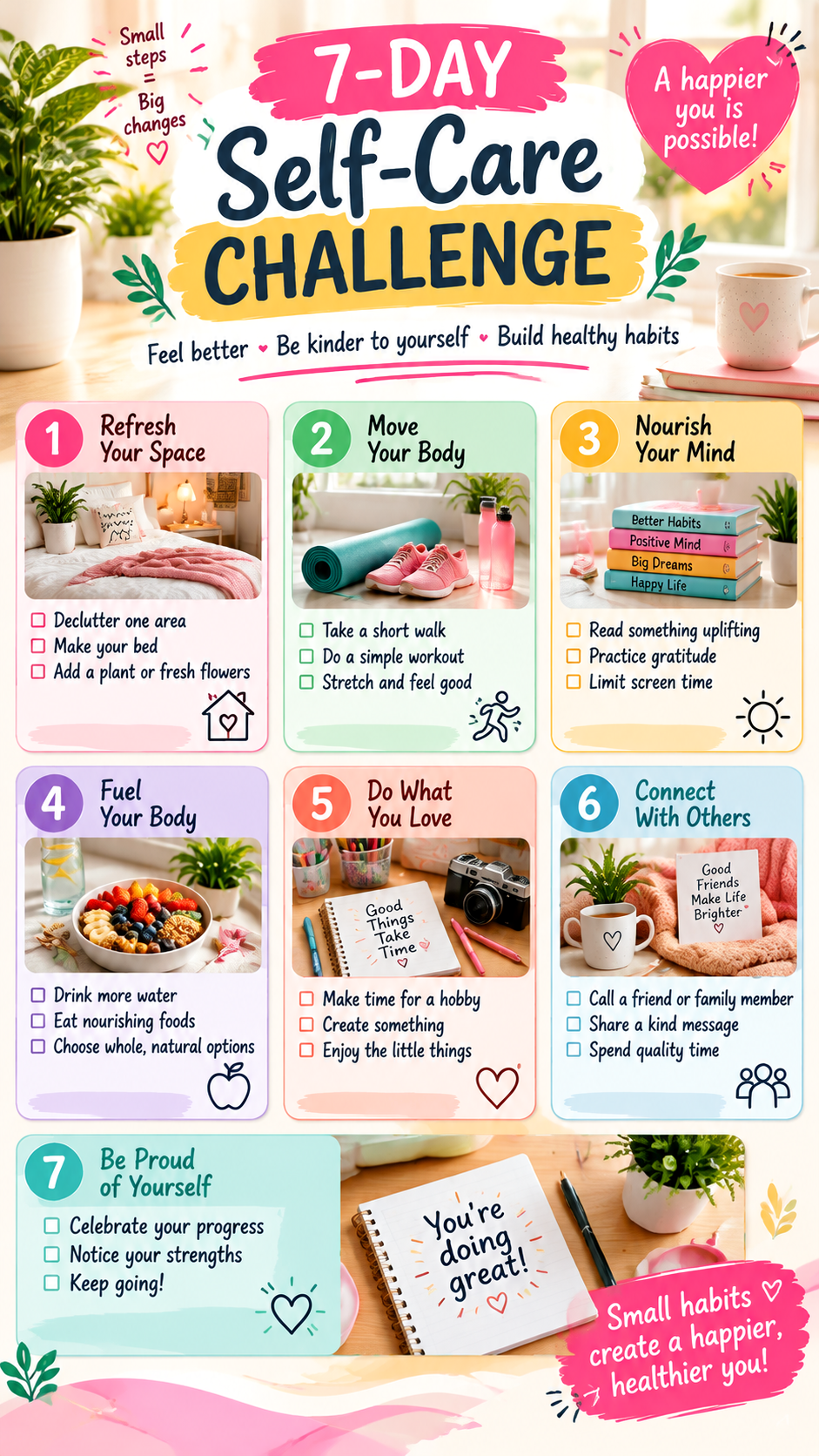
7-Day Get Your Life Together Challenge at a Glance
Your Quick Reset Plan
- Day 1: Reset your space by decluttering and organizing one area.
- Day 2: Build a better routine with realistic daily anchors.
- Day 3: Train your mindset through gratitude and positive self-talk.
- Day 4: Organize your notes, digital files, and personal goals.
- Day 5: Improve your habits with movement, hydration, balanced meals, and rest.
- Day 6: Boost productivity by prioritizing important tasks and reducing distractions.
- Day 7: Create a life you love by reflecting, connecting, and planning what comes next.
Conclusion: Small Changes Can Make a Big Difference
The 7-day get your life together challenge is an invitation to create a fresh start through practical, manageable changes. By dedicating each day to a different area of your life, you can begin to build a cleaner environment, a more supportive routine, a healthier mindset, and a clearer approach to your responsibilities.
You do not need to complete every task perfectly or transform your entire lifestyle in one week. Start with what you can manage, celebrate the progress you make, and adjust the challenge to suit your needs. Even a few minutes spent organizing your space, planning your day, or taking care of yourself can be a meaningful step forward.
Your next step is simple: Choose a day to begin, gather whatever supplies you need, and focus on the first task. You can save this challenge as a checklist and return to it whenever you need a reset. Most importantly, remember that getting your life together is not about becoming perfect. It is about creating everyday habits and systems that help you feel more organized, confident, productive, and connected to the life you want to live.
A Little Reminder
You do not have to do it all today. Take one small step, give yourself credit for showing up, and keep building from there. Little changes can make a big difference over time.
Tags
7-Day Challenge
Get Your Life Together
Life Reset
Daily Habits
Productivity Tips
Home Organization
Self-Care Routine
Personal Growth