10 Simple Confidence Building Tips to Feel More Confident Every Day
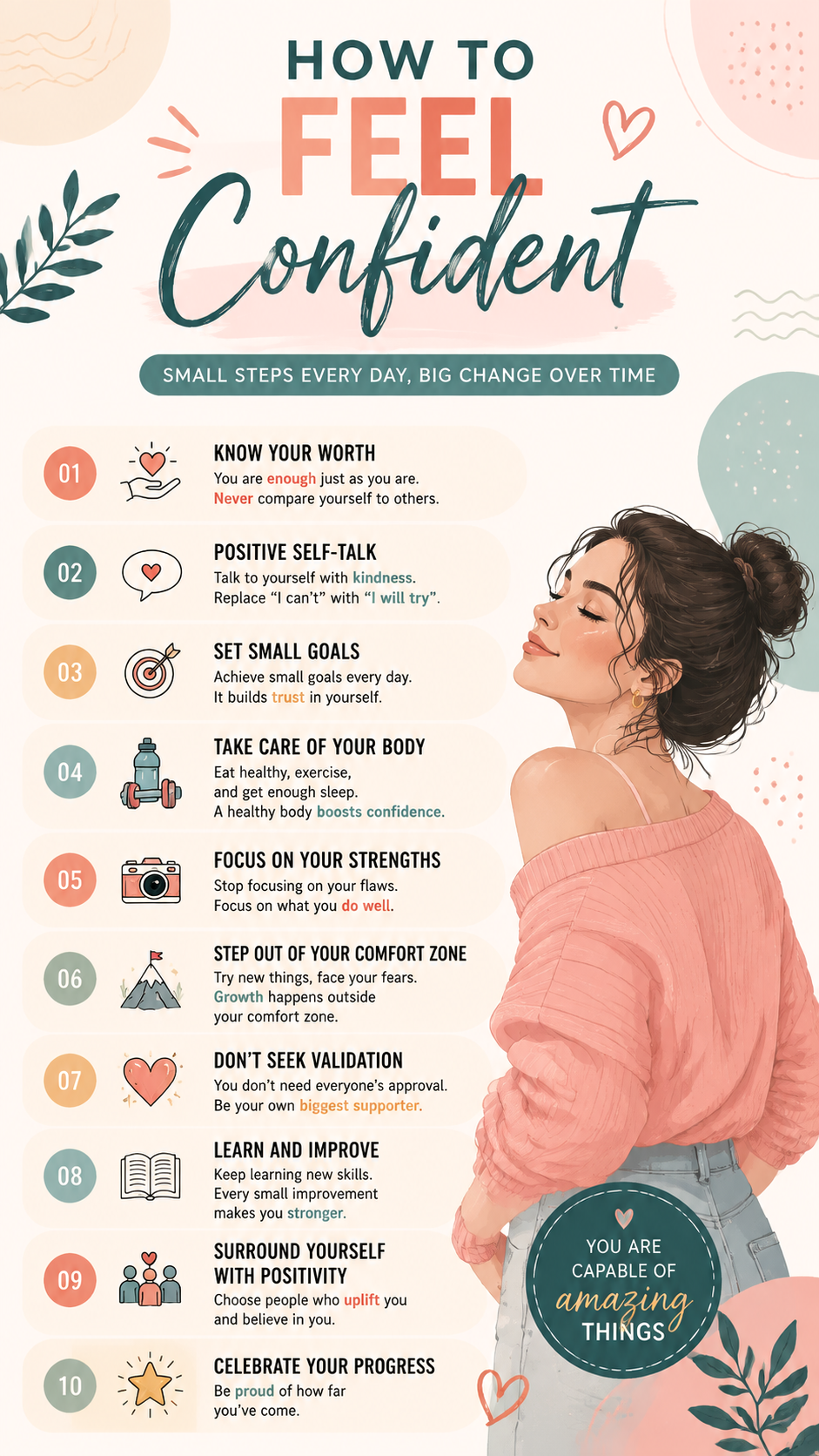
Feeling confident every day does not mean being fearless, perfect, or comfortable in every situation. Real confidence grows through small choices that help you trust yourself, recognize your worth, and become more comfortable with who you are. The good news is that confidence can be strengthened through simple daily habits. By practicing positive self-talk, setting realistic goals, caring for your body, focusing on your strengths, and celebrating your progress, you can gradually build a healthier and more confident mindset.
Confidence is not something you have to wait for. It can begin with one small action today. Whether you want to improve your self-esteem, feel more comfortable socially, become more positive, or simply believe in yourself a little more, these practical confidence-building tips can help you create meaningful change.
Key Takeaways
- Recognize your worth instead of constantly comparing yourself with others.
- Use kinder, more encouraging self-talk when facing challenges.
- Set small goals that create momentum and build trust in yourself.
- Take care of your body through healthy habits, movement, and adequate rest.
- Step outside your comfort zone gradually and learn from each experience.
- Celebrate progress rather than waiting until everything feels perfect.
1. Know Your Worth
One of the strongest foundations of self-confidence is understanding that your value does not depend on being better than someone else. Comparison can quickly make you overlook your own qualities, accomplishments, personality, and progress.
Instead of asking whether you measure up to another person, ask yourself what makes you unique. Think about the qualities you appreciate in yourself, the challenges you have overcome, and the things you contribute to the lives of people around you.
Important: Confidence becomes stronger when you stop treating someone else’s success as evidence that you are falling behind. Your journey has its own pace, strengths, and milestones.
2. Practice Positive Self-Talk
The way you speak to yourself can influence how you approach everyday challenges. If your inner dialogue constantly tells you that you are incapable, unattractive, awkward, or destined to fail, it becomes harder to act with confidence.
Positive self-talk does not require pretending that everything is easy. Instead, it means replacing unnecessarily harsh thoughts with realistic and supportive ones. When you catch yourself thinking, “I can’t do this,” try saying, “I will try and learn from the experience.”
Simple Confidence Affirmations
- I am worthy of respect and kindness.
- I can learn from mistakes without judging myself.
- I do not have to be perfect to make progress.
- I trust myself to handle challenges one step at a time.
- I am allowed to grow at my own pace.
Choose one encouraging statement and repeat it whenever self-doubt appears. With regular practice, supportive self-talk can become a more natural response.
3. Set Small, Achievable Goals
Large goals can feel overwhelming, especially when you are already struggling with self-doubt. Small goals are often more useful because they give you opportunities to experience success and build evidence that you can rely on yourself.
Choose one manageable goal for the day. It could be completing an important task, organizing part of your space, learning something new, taking a walk, speaking up during a conversation, or spending a few minutes working on a personal project.
Every completed goal becomes a small reminder that your actions matter. Over time, these small wins can strengthen self-trust and create momentum.
Try the Small-Win Method
- Choose one realistic goal.
- Write it down so it feels concrete.
- Complete it without demanding perfection.
- Acknowledge the accomplishment.
- Choose another small step when you are ready.
4. Take Care of Your Body
Confidence is closely connected to how you care for yourself. Healthy daily habits can support your energy, mood, and sense of well-being, making it easier to show up for yourself throughout the day.
Focus on simple basics such as eating nourishing meals, staying active in ways you enjoy, getting enough rest, and giving yourself time to recharge. You do not need an extreme routine to feel better. Consistency is often more valuable than perfection.
Movement can also provide a useful confidence boost because it gives you a chance to focus on what your body can do rather than judging how it looks. A walk, stretch, workout, dance session, or another enjoyable activity can become part of a positive self-care routine.
Pro Tip: Treat self-care as a form of self-respect rather than another item on a perfectionist checklist. Small, sustainable habits are easier to maintain and celebrate.
5. Focus on Your Strengths
It is easy to notice weaknesses because the mind often gives mistakes more attention than everyday successes. Confidence grows when you deliberately recognize what you do well.
Make a list of your strengths. Consider qualities such as creativity, patience, determination, kindness, organization, communication, curiosity, reliability, or willingness to learn. Your strengths do not have to be extraordinary to be valuable.
When something goes well, take a moment to acknowledge why it worked. This simple practice can help you build a more balanced view of yourself instead of focusing exclusively on flaws.
6. Step Outside Your Comfort Zone
Growth often happens when you gently challenge yourself to do something unfamiliar. Staying in your comfort zone can feel safe, but repeatedly avoiding situations because they make you nervous can reinforce the belief that you cannot handle them.
You do not need to make a dramatic change. Start with something slightly uncomfortable. Speak up when you usually stay quiet. Try a new activity. Introduce yourself to someone. Share an idea. Learn a skill you have always wanted to explore.
Each experience gives you an opportunity to discover that discomfort is temporary and that you are capable of adapting.
Why This Matters
Confidence often develops after you take action, not before. You may feel nervous and still act. Every manageable challenge you face can become a reminder that you are more capable than your doubts suggest.
7. Stop Seeking Constant Validation
Encouragement from other people can feel wonderful, but relying on approval for your sense of worth can make confidence fragile. If you always need someone else to confirm that you are doing well, criticism or rejection can have an outsized effect on how you see yourself.
Practice becoming your own supporter. Ask yourself whether you are proud of your effort, whether your choices reflect your values, and whether you are making progress toward the person you want to become.
This does not mean ignoring useful feedback. Healthy confidence allows you to listen, learn, and make adjustments without believing that criticism defines your entire identity.
8. Keep Learning and Improving
Learning can be a powerful confidence-building habit. Developing a new skill gives you tangible evidence of growth and reminds you that ability is not fixed. You can improve through practice, patience, and experience.
Choose something that genuinely interests you. Read, practice, take notes, experiment, or work through small challenges. Do not worry about becoming an expert immediately. Beginners are supposed to make mistakes.
Instead of asking, “Am I good at this yet?” ask, “What did I learn today?” That small change in perspective keeps your attention on progress rather than perfection.
9. Surround Yourself With Positive Influences
The people and environments around you can affect your mindset. Supportive relationships can encourage growth, while constant negativity and criticism can make self-doubt harder to manage.
Look for people who respect you, encourage healthy growth, listen to you, and celebrate your accomplishments. You do not need a huge social circle. A few positive connections can make a meaningful difference.
It is also worth paying attention to the content you consume. If certain social media accounts constantly trigger comparison or make you feel inadequate, consider creating more distance from them. Fill your feed with ideas, creators, and messages that encourage realistic self-improvement and positivity.
10. Celebrate Your Progress
One of the most overlooked confidence habits is celebrating how far you have come. You do not have to wait until you reach a major milestone before giving yourself credit.
At the end of the day, think about one thing you handled well. Maybe you completed something you had been avoiding, stood up for yourself, tried something new, kept a promise to yourself, or simply made an effort on a difficult day.
Progress is rarely a straight line. Some days will feel easier than others, and that is completely normal. Confidence becomes more sustainable when you recognize effort and improvement rather than demanding constant success.
A Simple Daily Confidence Routine
You can bring all ten ideas together with a short daily routine. In the morning, choose one achievable goal and one encouraging thought. During the day, notice an opportunity to step slightly outside your comfort zone. In the evening, write down one thing you accomplished and one quality you appreciate about yourself.
This routine takes only a few minutes, but it creates repeated opportunities to practice self-trust. The goal is not to become confident overnight. The goal is to create daily experiences that gradually make confidence feel more natural.
Morning
- Choose one small goal.
- Repeat one positive affirmation.
- Decide how you want to treat yourself today.
During the Day
- Challenge one negative thought.
- Take care of your basic needs.
- Do one thing that gently stretches your comfort zone.
Evening
- Celebrate one small win.
- Write down something you did well.
- Identify one lesson or improvement for tomorrow.
What Confidence Really Means
Confidence is not about believing that you will always succeed. It is about developing enough self-trust to know that you can respond to challenges, learn from mistakes, and continue moving forward.
You can be confident and still feel nervous. You can believe in yourself and still have difficult days. You can care about other people’s opinions without allowing their opinions to determine your worth.
Important: You do not need to become a completely different person to feel more confident. Confidence can come from accepting yourself, recognizing your strengths, keeping promises to yourself, and taking small actions that prove you can grow.
Quick Points
- Know your worth without comparing your journey to anyone else’s.
- Replace harsh self-criticism with realistic, supportive self-talk.
- Use small goals and small wins to strengthen self-trust.
- Practice courage by taking manageable steps beyond your comfort zone.
- Celebrate progress and give yourself credit for consistent effort.
Conclusion: Build Confidence One Day at a Time
Feeling confident every day is less about achieving perfection and more about building a supportive relationship with yourself. The ten habits above offer simple ways to strengthen self-esteem, develop a positive mindset, and become more comfortable trusting your own abilities.
Start with just one idea. Speak to yourself more kindly. Complete one small goal. Take care of your body. Try something new. Celebrate a recent accomplishment. Then repeat the process tomorrow.
Small steps may not feel dramatic in the moment, but they can add up to meaningful personal growth. You are allowed to learn, change, make mistakes, and begin again. Confidence grows when you keep showing yourself that you are worthy of patience, encouragement, and belief.
You do not have to be perfect to feel confident. Start where you are, take one small step, and keep building from there.
Tags
Self Confidence
Confidence Building
Self Esteem
Positive Mindset
Self Love
Personal Growth
Daily Motivation
Confidence Tips