5 Essential Foods to Boost Your Gut Microbiome Improve Digestion
Building a healthier gut begins with the foods you choose every day. Your digestive system is home to trillions of microorganisms that influence digestion, nutrient absorption, immune function, and overall wellness. Supporting this complex ecosystem does not require complicated diets or extreme changes. Simple, nutrient-rich foods can help create a more balanced gut microbiome naturally.
The right combination of fiber-rich plants, fermented foods, and nutrient-dense ingredients can provide the fuel beneficial bacteria need to thrive. From crunchy kiwi and powerful broccoli sprouts to chia seeds, kefir, and chickpeas, these everyday foods offer valuable compounds that support digestive health.
Key Takeaways
- Fiber-rich foods help nourish beneficial gut bacteria.
- Fermented foods provide natural probiotics that support microbiome balance.
- A variety of plant foods can increase microbial diversity.
- Whole foods offer nutrients that support digestion and overall wellness.
- Small dietary changes can make a meaningful difference in gut health.
Why Gut Microbiome Health Matters
The gut microbiome is a community of bacteria, yeasts, and other microorganisms living throughout the digestive tract. While many people associate gut health only with digestion, research continues to show that the microbiome plays a much broader role in the body.
A balanced gut environment helps break down certain foods, produces beneficial compounds from dietary fiber, and supports the body’s natural defenses. When the microbiome receives a wide range of nutrients, beneficial bacteria have more resources to grow and maintain balance.
Important: One of the most effective ways to support your microbiome is to focus on variety. Different plant foods contain different types of fibers and natural compounds, which can encourage a wider range of beneficial bacteria.
5 Essential Foods for a Healthier Gut Microbiome
1. Kiwi: A Fiber-Rich Fruit for Digestive Support
Kiwi is a vibrant green fruit packed with nutrients that make it a valuable addition to a gut-friendly eating pattern. It contains dietary fiber, vitamin C, and plant compounds called polyphenols that support a healthy digestive environment.
The fiber in kiwi can help promote regular digestion by adding bulk to stool and supporting normal bowel movements. Kiwi also contains actinidin, a natural enzyme that helps break down proteins during digestion.
Easy Ways to Enjoy Kiwi
- Add sliced kiwi to yogurt or oatmeal.
- Blend it into a refreshing smoothie.
- Enjoy the skin for additional fiber after washing thoroughly.
Including colorful fruits like kiwi in your meals is an easy way to increase plant diversity and provide your gut bacteria with beneficial compounds.
2. Broccoli Sprouts: A Concentrated Source of Plant Compounds
Broccoli sprouts are small but nutrient-dense greens that contain naturally occurring plant compounds. They are especially known for their sulforaphane content, a compound studied for its antioxidant properties and role in supporting the body’s natural protective pathways.
Adding broccoli sprouts to meals is a simple way to introduce more variety into your diet. Their fresh flavor works well with salads, sandwiches, wraps, and soups.
Simple Serving Ideas
- Sprinkle fresh sprouts over salads.
- Add them to avocado toast or sandwiches.
- Mix them into bowls with grains and vegetables.
3. Chia Seeds: Tiny Seeds with Big Gut Benefits
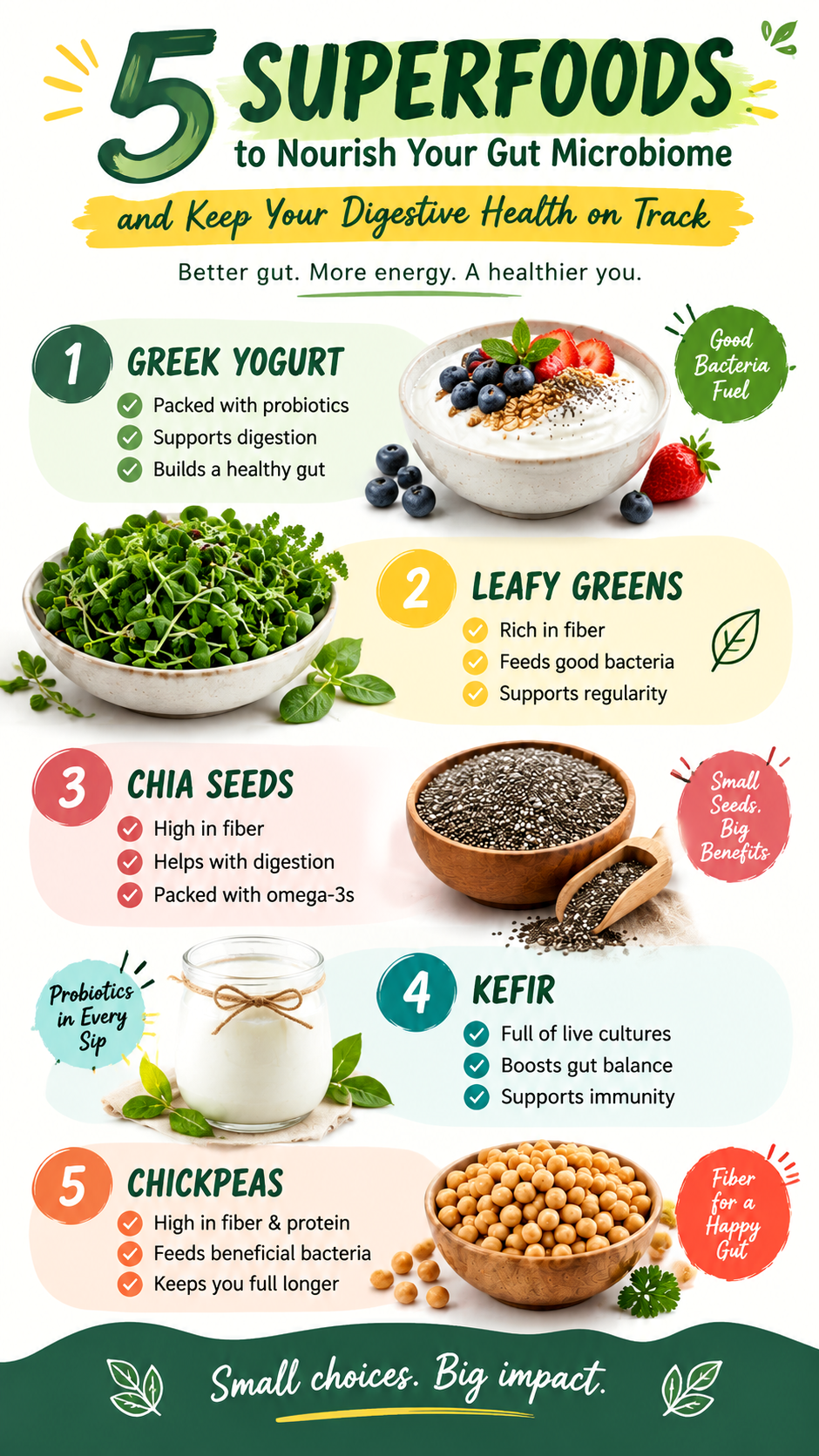
Chia seeds are popular in healthy eating because they provide fiber, plant-based omega-3 fatty acids, and beneficial plant compounds. When soaked in liquid, chia seeds form a gel-like texture that can add bulk and support digestive regularity.
Their high fiber content makes them an excellent choice for people looking to increase their daily intake of prebiotic foods. Prebiotic fibers act as nourishment for beneficial bacteria in the gut.
How to Add Chia Seeds to Your Routine
- Prepare chia pudding for a fiber-rich breakfast.
- Mix into smoothies or overnight oats.
- Sprinkle over fruit, yogurt, or salads.
Pro Tip: Soaking chia seeds before eating can make them easier to digest and creates a versatile texture for many recipes.
4. Kefir: A Fermented Food for Microbiome Variety
Kefir is a fermented drink traditionally made by culturing milk with kefir grains. The fermentation process creates a tangy beverage containing beneficial microorganisms that can contribute to a diverse gut environment.
Fermented foods have been enjoyed in many cultures for generations because fermentation naturally transforms foods while creating unique flavors and textures.
Ways to Use Kefir
- Drink it chilled as a refreshing probiotic beverage.
- Add it to smoothies for creaminess.
- Use it as a base for breakfast bowls.
5. Chickpeas: A Fiber-Packed Plant Protein
Chickpeas are a versatile legume that combines plant-based protein, minerals, and dietary fiber. Their resistant starch content can act as a food source for certain beneficial gut bacteria.
Because chickpeas are affordable, filling, and easy to prepare, they are a practical ingredient for creating gut-friendly meals at home.
Healthy Chickpea Meal Ideas
- Add chickpeas to salads for extra texture.
- Blend them into homemade hummus.
- Use them in soups, stews, and grain bowls.
Expert Insight
A gut-friendly diet is less about finding one magical food and more about creating a consistent pattern of diverse, whole foods.
- Rotate different fruits, vegetables, legumes, seeds, and fermented foods.
- Increase fiber gradually and drink enough water to support digestion.
- Choose minimally processed foods whenever possible.
How to Build a Gut-Friendly Eating Routine
Creating a healthier gut microbiome does not require completely changing your lifestyle overnight. Small, consistent choices can help you build better habits that support digestive wellness.
- Increase plant variety: Try adding different colors of fruits and vegetables throughout the week.
- Prioritize fiber: Include legumes, seeds, vegetables, and whole foods regularly.
- Include fermented foods: Add options like kefir or other fermented foods that fit your preferences.
- Listen to your body: Introduce new high-fiber foods gradually.
At a Glance: Gut Health Food Checklist
Quick Points
- Kiwi supports fiber intake and digestive comfort.
- Broccoli sprouts add powerful plant compounds.
- Chia seeds provide prebiotic fiber.
- Kefir introduces fermented food benefits.
- Chickpeas support fiber and plant-based nutrition.
Conclusion: Nourish Your Gut with Simple Food Choices
A healthier gut microbiome starts with everyday decisions made in the kitchen. Foods like kiwi, broccoli sprouts, chia seeds, kefir, and chickpeas show that supporting digestion can be both simple and delicious.
By focusing on fiber-rich plants, fermented foods, and a wide variety of whole ingredients, you can create meals that nourish your body while supporting a balanced gut environment.
Start small by adding one new gut-friendly food to your routine and gradually build a diverse, colorful plate filled with nutrients your microbiome can use.
Tags
Gut Health
Gut Microbiome
Healthy Digestion
Probiotic Foods
Fiber Rich Foods
Plant Based Nutrition
Healthy Eating