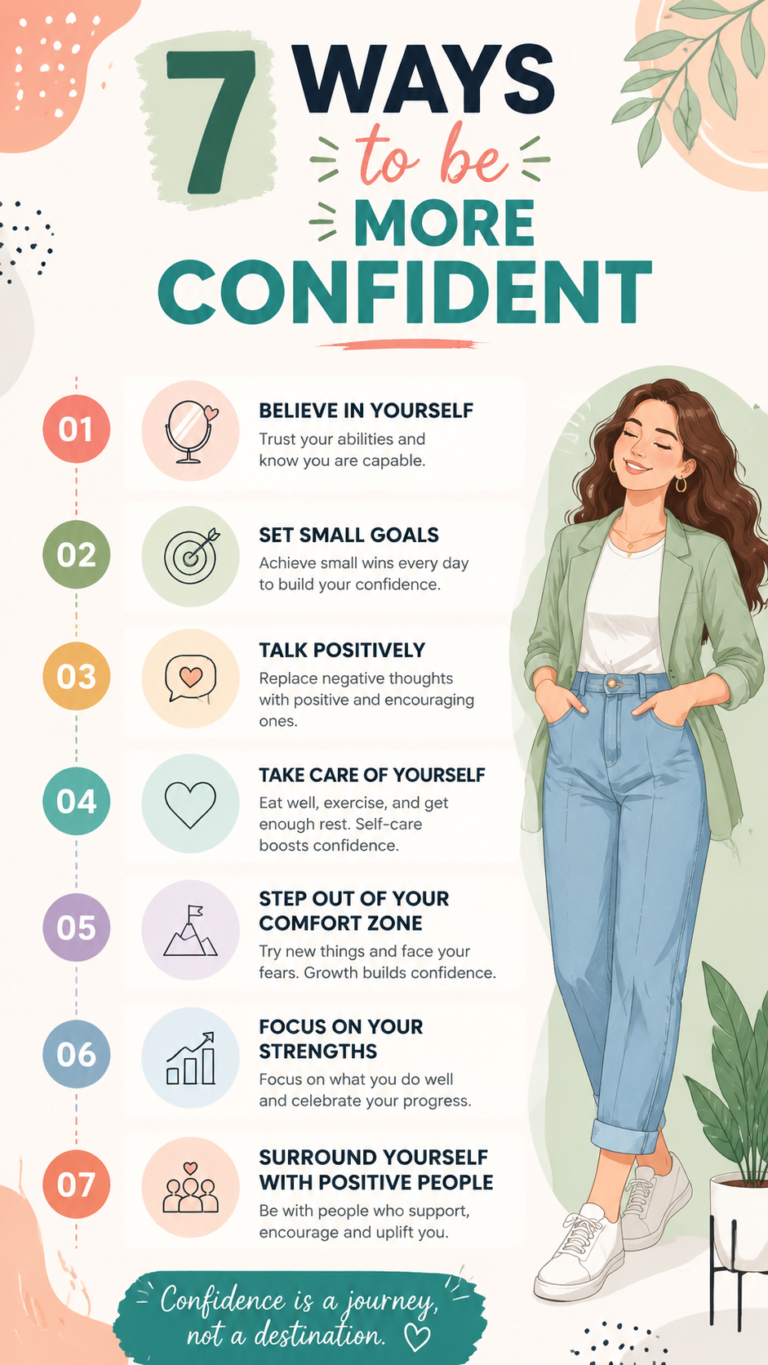
7 Ways to Build Self-Worth and Confidence Every Day for a Happier Life
Self-worth is one of the most powerful foundations of emotional well-being. It influences how we see ourselves, how we treat others, and the standards we set in every area of life. When self-worth is strong, challenges feel more manageable, relationships become healthier, and personal goals seem more achievable. Yet many people struggle with self-doubt, negative self-talk, and the feeling that they are somehow not enough.
Building self-worth is not about becoming perfect or seeking constant approval from others. It is about recognizing your inherent value as a person and learning to appreciate yourself regardless of external achievements or opinions. The good news is that self-worth can be strengthened through intentional daily habits and mindset shifts.
Key Takeaways
- Self-worth grows through consistent daily actions and self-awareness.
- Positive habits can help reduce self-criticism and boost confidence.
- Supportive relationships play a major role in personal growth.
- Celebrating progress builds motivation and resilience.
- Teaching healthy self-esteem benefits future generations.
Understanding the Difference Between Self-Worth and Confidence
Although the terms are often used interchangeably, self-worth and confidence are not exactly the same thing. Confidence relates to believing in your abilities and skills. Self-worth goes deeper. It is the belief that you deserve respect, care, and kindness simply because you are a human being.
Someone can be highly confident in their career but still struggle with feelings of inadequacy. On the other hand, a person with strong self-worth understands that mistakes, setbacks, and imperfections do not reduce their value.
Important: Lasting confidence often grows from healthy self-worth. When you recognize your value independent of achievements, setbacks become learning opportunities rather than proof of failure.
1. Do Things You Enjoy and Are Good At
One of the simplest ways to strengthen self-worth is by regularly engaging in activities that bring joy and fulfillment. Whether it is painting, writing, gardening, cooking, playing music, or learning a new skill, these experiences remind you of your strengths and abilities.
Many people become so focused on responsibilities that they forget to invest time in activities that make them feel capable and energized. Doing what you enjoy creates positive emotions and reinforces a sense of personal identity.
How to Apply This Daily
- Schedule time each week for hobbies.
- Explore activities that spark curiosity.
- Track accomplishments, no matter how small.
- Focus on enjoyment rather than perfection.
The goal is not to become the best at something. The goal is to reconnect with activities that help you appreciate your abilities and unique qualities.
2. Exercise and Challenge Yourself
Physical activity benefits more than just the body. It can have a profound impact on mental and emotional health. Regular exercise releases mood-enhancing chemicals, reduces stress, and creates a sense of accomplishment.
Beyond fitness, challenging yourself in meaningful ways helps build evidence that you are capable of growth. Every time you step outside your comfort zone, you strengthen your belief in your ability to handle life’s challenges.
Examples of Healthy Challenges
- Learning a new language.
- Taking a public speaking course.
- Completing a fitness goal.
- Starting a creative project.
- Trying something unfamiliar.
Small victories accumulate over time and contribute significantly to stronger self-esteem and self-respect.
Why This Matters
- Growth happens when you challenge limiting beliefs.
- New experiences create evidence of your resilience.
- Progress often matters more than perfection.
3. Challenge Negative Thoughts
Negative self-talk is one of the biggest obstacles to healthy self-worth. Many people automatically assume the worst about themselves, often without realizing it.
Thoughts such as “I am not good enough” or “I always fail” can become deeply ingrained over time. The problem is that these thoughts are often inaccurate and exaggerated.
How to Reframe Negative Thinking
- Notice the negative thought.
- Ask whether it is supported by evidence.
- Replace it with a more balanced perspective.
- Practice self-compassion instead of self-criticism.
For example, instead of saying, “I failed completely,” you might say, “This situation did not go as planned, but I learned something valuable.”
Pro Tip: Imagine speaking to yourself the way you would speak to a close friend. Most people naturally offer others more understanding and compassion than they offer themselves.
4. Seek Support and Connection
Human beings are social by nature. Healthy relationships can reinforce positive self-perception and provide encouragement during difficult times.
Support does not always mean having a large social circle. A few trusted friends, family members, mentors, or mental health professionals can make a meaningful difference.
Benefits of Seeking Support
- Gain perspective during challenging situations.
- Receive encouragement and validation.
- Develop healthier coping strategies.
- Reduce feelings of isolation.
Many people hesitate to ask for help because they fear appearing weak. In reality, reaching out demonstrates courage and self-awareness.
5. Practice Self-Respect Every Day
Self-worth thrives when it is supported by self-respect. This means treating yourself with the same dignity and consideration that you would offer someone you care about.
Self-respect often shows up through boundaries, healthy habits, and personal standards. It means recognizing what you deserve and refusing to settle for treatment that diminishes your value.
Ways to Strengthen Self-Respect
- Set clear personal boundaries.
- Honor your commitments to yourself.
- Speak kindly about yourself.
- Prioritize physical and mental well-being.
- Distance yourself from toxic influences.
Important: Self-respect is not selfish. It creates the foundation for healthier relationships, stronger decision-making, and greater emotional resilience.
6. Celebrate Small Wins
Many people focus so heavily on future goals that they overlook present achievements. This habit can make progress feel invisible and lead to unnecessary frustration.
Celebrating small wins helps train the brain to recognize growth and effort. Every positive step deserves acknowledgment.
Simple Ways to Celebrate Progress
- Keep a daily success journal.
- Reflect on weekly accomplishments.
- Reward yourself for consistent effort.
- Share milestones with supportive people.
Small wins build momentum. Over time, they create a powerful record of personal growth that reinforces confidence and self-belief.
7. Build Self-Worth in the Next Generation
Self-worth is not only important for adults. Children benefit tremendously when they learn to value themselves from an early age.
Parents, caregivers, educators, and mentors can help children develop healthy self-esteem by focusing on effort, character, and growth rather than appearance or external achievements.
Ways to Encourage Healthy Self-Worth in Children
- Praise effort and persistence.
- Encourage problem-solving skills.
- Model positive self-talk.
- Celebrate uniqueness and individuality.
- Create a supportive environment.
Children who grow up feeling valued are often better equipped to navigate challenges, build healthy relationships, and pursue meaningful goals.
Why Self-Worth Matters So Much
Strong self-worth influences nearly every area of life. It affects career choices, friendships, romantic relationships, physical health, and emotional resilience.
People with healthy self-worth are often more willing to pursue opportunities, recover from setbacks, and maintain healthier boundaries. They are less likely to base their entire identity on external validation.
When self-worth is nurtured consistently, it becomes easier to face challenges with confidence and maintain a balanced perspective during difficult times.
Long-Term Benefits
- Greater confidence and self-esteem.
- Healthier personal boundaries.
- Improved mental wellness.
- Stronger relationships.
- Higher life satisfaction.
- Increased resilience during adversity.
Expert Insight: Self-worth is not built in a single moment. It develops through hundreds of small decisions that reinforce the belief that you matter, your needs matter, and your growth matters.
At a Glance
- Focus on strengths and enjoyable activities.
- Challenge yourself with achievable goals.
- Replace negative self-talk with balanced thinking.
- Build supportive relationships.
- Celebrate progress consistently.
Conclusion
Building strong self-worth is a lifelong journey, not a destination. It does not require perfection, constant success, or approval from others. Instead, it grows through daily habits that reinforce self-respect, confidence, and self-compassion.
By doing things you enjoy, embracing challenges, questioning negative thoughts, seeking support, practicing self-respect, celebrating progress, and encouraging healthy self-esteem in others, you create a powerful foundation for lasting emotional well-being.
Remember that your worth is not something you must earn. It already exists. The journey is learning to recognize it, strengthen it, and live in alignment with it every day.
Tags
Self-Worth Confidence Building Self-Esteem Personal Growth Mental Wellness Positive Mindset Self-Care Personal Development