8 Genius Johnsons Baby Oil Hacks You Need to Try for Beauty Everyday Life
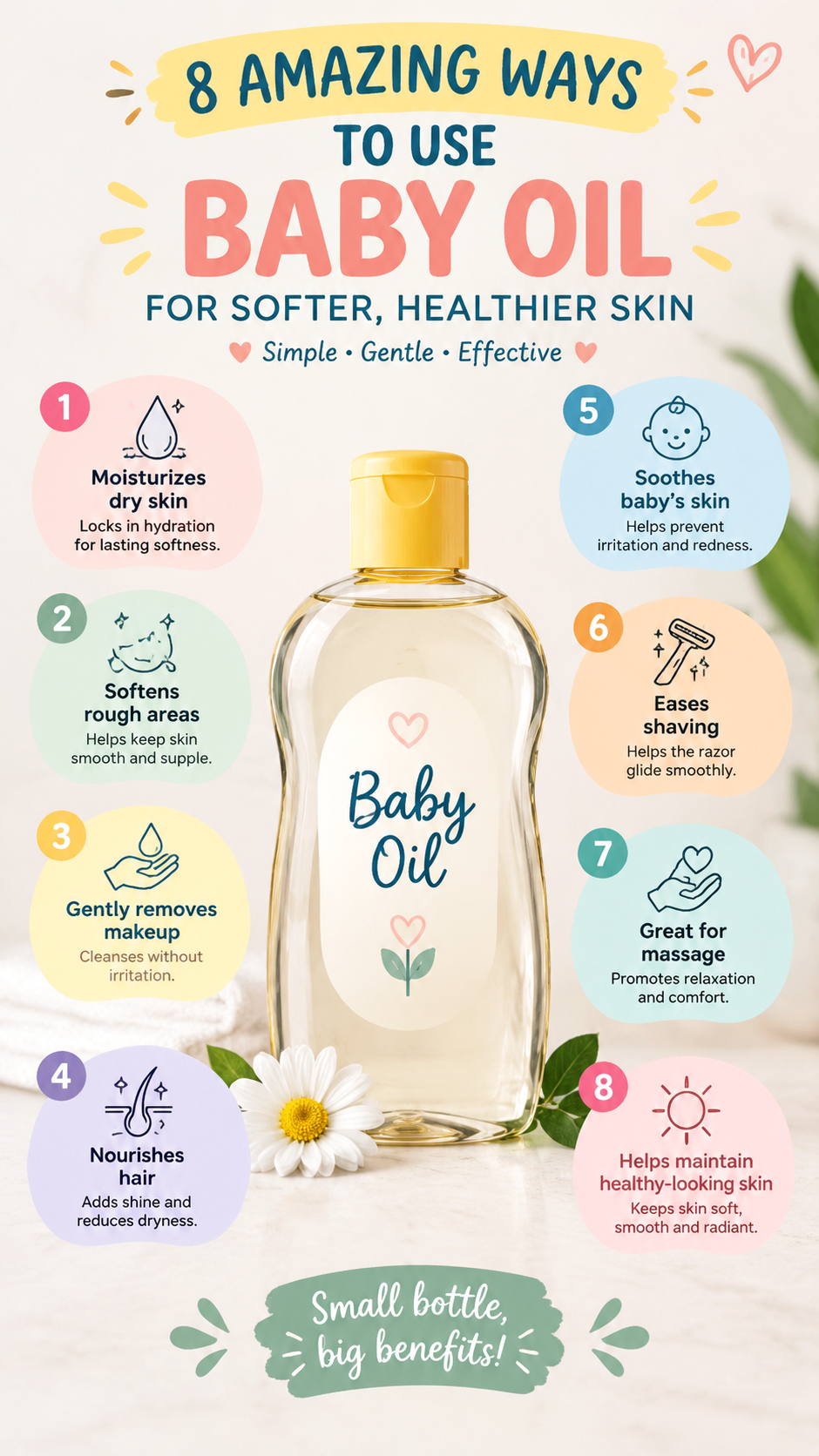
Johnson’s Baby Oil is a familiar bathroom staple, but its uses can extend beyond a traditional baby care routine. From removing stubborn makeup to softening dry cuticles and helping loosen sticky residue, this versatile oil has inspired plenty of clever beauty and household hacks. If you have a bottle at home, you may be surprised by the number of practical ways you can put it to use.
Whether you are looking for simple skincare ideas, affordable beauty tricks, or creative everyday solutions, these eight Johnson’s Baby Oil hacks offer inspiration for making the most of a product you may already own. The key is knowing where baby oil works well, how much to use, and which surfaces or situations are better avoided.
Key Takeaways
- Baby oil can help dissolve many types of makeup, including some waterproof formulas.
- A small amount can soften dry cuticles and help moisturize rough skin.
- Oil may help loosen certain adhesive residues and lubricate stiff zippers.
- Using too much can leave greasy marks, slippery surfaces, or product buildup.
- Baby oil is not sunscreen and should never replace proper sun protection.
- Always check product labels and test a small, hidden area before trying a new household use.
1. Remove Waterproof Makeup Gently
One of the most popular uses for Johnson’s Baby Oil is makeup removal. Oil-based products can help dissolve makeup that water alone struggles to remove, including certain waterproof mascaras, long-wearing eyeliner, and stubborn foundation.
This works because many makeup formulas contain ingredients that dissolve more readily in oil than in water. Rather than rubbing the skin repeatedly, a little oil can help loosen the product so it is easier to wipe away.
How to Use Baby Oil as a Makeup Remover
- Wash your hands before touching your face.
- Apply a small amount of baby oil to a cotton pad or clean fingertips.
- Gently sweep it over makeup, avoiding direct contact with your eyes.
- Allow a few seconds for the makeup to loosen instead of scrubbing.
- Wipe away the residue and cleanse your face with a gentle facial cleanser.
For eye makeup, choose a remover specifically labeled as suitable for the eye area if you have sensitive eyes or wear contact lenses. Baby oil can blur vision if it enters the eyes and may irritate some people.
Important: Baby oil is generally mineral oil based, but formulations vary. It may not suit acne-prone skin, and it should not automatically replace a facial cleanser. Remove the oily residue thoroughly, particularly if you are prone to clogged pores or breakouts.
2. Help Keep Bathroom Tiles Looking Clean
Soap scum can make bathroom tiles look dull, especially around showers, bathtubs, and sinks. The image suggests using baby oil to discourage soap from sticking to tile surfaces, but this trick needs a little caution.
Baby oil does not clean bathroom tiles in the same way that a suitable bathroom cleaner does. Instead, it leaves an oily film that may change the appearance of a surface. That film can attract dust, collect residue, and make floors dangerously slippery.
A Better Way to Maintain Bathroom Tiles
- Use a bathroom cleaner that is compatible with your tile and grout.
- Rinse away soap and cleaning product residue thoroughly.
- Dry shower walls with a squeegee or clean microfiber cloth.
- Follow the tile manufacturer’s care recommendations.
For decorative tile surfaces, an appropriate polish may be suitable, but baby oil should not be treated as a universal tile-care product. Avoid applying it to bathroom floors, shower trays, tubs, or any surface where someone could slip.
3. Soften Dry Cuticles and Nails
Dry cuticles can make otherwise healthy nails look rough and uneven. Frequent handwashing, cold weather, and exposure to cleaning products may contribute to dryness around the nail edges. A small amount of baby oil can help soften the skin and improve its appearance.
Mineral oil works mainly by reducing moisture loss from the skin. It creates a protective layer that helps keep existing moisture from escaping too quickly. This makes it useful as a simple option for moisturizing the skin surrounding your nails.
How to Moisturize Cuticles
- Wash and dry your hands.
- Place a tiny drop of baby oil around each nail.
- Massage gently into the cuticle area and surrounding skin.
- Allow the oil to absorb before handling paper, fabrics, or electronic devices.
For an easy evening routine, apply the oil before bed and wear comfortable cotton gloves if your hands are especially dry. Keep the amount small to avoid transferring oil onto bedding.
Remember that baby oil does not strengthen the nail itself or repair a nail infection. If the skin around your nails becomes swollen, painful, cracked, or persistently inflamed, stop using the product and seek appropriate medical advice.
4. Lubricate a Stiff Zipper
A zipper that refuses to move smoothly can be frustrating, especially when it belongs to a favorite jacket, bag, or pair of boots. The image highlights baby oil as a possible zipper lubricant. Although a small amount of oil may reduce friction, it is not always the best choice for clothing and accessories.
Baby oil can stain fabric, leave a greasy mark, and attract dirt. It may also affect some finishes or materials. For a valuable handbag, delicate garment, or expensive piece of outdoor equipment, a manufacturer-approved zipper lubricant is a safer option.
Try These Zipper-Fixing Steps First
- Check whether fabric or thread is caught in the zipper teeth.
- Remove visible dirt with a soft, dry brush.
- Move the slider gently rather than forcing it.
- Use a zipper lubricant suitable for the item if the zipper remains stiff.
If you decide to test baby oil on a nonvaluable item, use a nearly invisible amount on an appropriate area and keep it away from the surrounding fabric. Never apply it to a zipper near an open flame, heated equipment, or another ignition source.
Pro Tip: Before applying any oil to clothing or accessories, check the care label and test for staining in a hidden area. A purpose-made zipper lubricant is usually a better long-term solution.
5. Loosen Sticky Adhesive Residue
Sticker residue can leave glass, plastic, and other hard surfaces looking messy. A label may peel away easily while a stubborn layer of adhesive remains behind. In some cases, baby oil can help soften the residue and make it easier to remove.
Oil can penetrate and loosen certain adhesives, reducing the effort needed to wipe them away. However, results depend on the adhesive and the material underneath. Some labels use adhesives that respond better to warm soapy water or a purpose-made adhesive remover.
How to Remove Sticky Residue
- Peel away as much of the label as possible without scratching the surface.
- Check whether the surface can safely tolerate oil.
- Apply a tiny amount of baby oil to the adhesive residue using a soft cloth.
- Allow a short period for the residue to soften.
- Wipe gently and remove any remaining oil with an appropriate cleaner.
This method may work on suitable glass jars or some hard plastic objects, but always test a hidden area first. Avoid using baby oil on unfinished wood, absorbent fabrics, paper, painted surfaces, or materials whose manufacturer advises against oil-based products.
Do not apply oil to screens, electrical contacts, electrical outlets, or electronic devices. For delicate surfaces, use a cleaning method recommended by the manufacturer.
6. Make Shaving More Comfortable
Shaving can leave skin feeling dry or uncomfortable, especially when the blade drags across the skin. Because oil creates a lubricating layer, some people use it to help the razor glide more easily. The image presents baby oil as an alternative to traditional shaving foam.
However, baby oil is not specifically formulated as a shaving product, and it may not work well for every skin type. A suitable shaving gel or cream is designed to provide slip while helping the blade move across the skin. It may also be easier to rinse away than a thick oil layer.
A Gentle Shaving Routine
- Wet the skin with warm water before shaving.
- Use a shaving product suitable for your skin type.
- Shave gently in the direction of hair growth when practical.
- Rinse the blade regularly and avoid repeatedly passing over the same area.
- Apply a fragrance-free moisturizer afterward if your skin feels dry.
If you choose to experiment with baby oil, first test a small patch of skin and avoid irritated, broken, or freshly injured areas. Be especially cautious if you experience ingrown hairs or folliculitis, as an oily product may not suit your routine.
Also remember that oil can make a shower floor, bathtub, or sink slippery. Clean any spills immediately with a suitable cleaner before someone uses the area.
7. Add Shine to Suitable Household Surfaces
The image suggests using baby oil to make stainless steel appliances, faucets, and other household surfaces look shiny. While a small amount of mineral oil can change the appearance of certain surfaces, it is not a universal cleaning or polishing solution.
Stainless steel appliances often develop fingerprints and water marks. The most reliable approach is to use a soft microfiber cloth and a cleaner approved for the appliance’s finish. Some manufacturers recommend wiping in the direction of the grain to help maintain a uniform appearance.
How to Make Appliances Look Cleaner
- Check the manufacturer’s care instructions.
- Remove dust and fingerprints with a clean microfiber cloth.
- Use a suitable stainless steel cleaner if necessary.
- Buff gently with a dry cloth to minimize streaks.
For surfaces that specifically permit mineral oil, use only a very small amount and remove excess thoroughly. Never use baby oil on appliance handles, floors, steps, or other areas where a slippery finish could create a hazard.
Keep oil away from hot surfaces, burners, heating elements, and food-preparation areas where the product is not intended for use. Baby oil is not a food-safe appliance polish simply because it is commonly sold for personal care.
What About Faucets and Mirrors?
For faucets, a product designed for the fixture’s finish is preferable, especially on coated, brushed, or specialty metal surfaces. Baby oil may leave streaks rather than a clean shine.
For mirrors and glass, skip the oil. It can create smears that are difficult to remove. A glass cleaner and lint-free cloth will generally deliver a clearer result.
8. Moisturize Skin After Sun Exposure
Soft, comfortable skin is a common goal in any body care routine, and the final tip in the image suggests applying baby oil after spending time outdoors for a glowing appearance. This idea needs an important distinction: moisturizing dry skin is not the same as treating sunburn or protecting skin from ultraviolet radiation.
Baby oil can help reduce moisture loss from intact skin, leaving it feeling smoother. However, it does not provide sun protection unless a particular product is explicitly formulated and labeled with an appropriate SPF, and ordinary baby oil should never be used as a substitute for sunscreen.
Important sun-safety reminder: Do not apply ordinary baby oil to encourage tanning or use it as a protective layer in the sun. Oil can make skin look glossy, but it does not prevent ultraviolet damage. Use broad-spectrum sunscreen with SPF 30 or higher, reapply as directed, and seek shade when possible.
How to Care for Dry Skin After Being Outdoors
- Cool the skin with a cool shower or damp cloth if it feels warm.
- Use a gentle, fragrance-free moisturizer on dry, intact skin.
- Drink water regularly, particularly after sweating or outdoor activity.
- Wear protective clothing and avoid further sun exposure if the skin is irritated.
If you have sunburn, avoid rubbing oil onto hot, painful, blistered, or damaged skin. Use appropriate sunburn care instead. Seek medical attention for severe blistering, significant swelling, fever, or other concerning symptoms.
More Smart Ways to Use Baby Oil
Beyond these eight ideas, baby oil may be useful as a simple moisturizer for certain areas of dry skin. The most effective use depends on your needs, the specific formula, and the condition of your skin.
Moisturize Rough Elbows and Knees
Elbows and knees can become dry because of friction, frequent washing, and environmental conditions. Apply a small amount of baby oil to clean, slightly damp skin, then massage gently. The oil helps retain moisture, although a conventional body cream may be more convenient for everyday use.
Soften Hands After Washing
Repeated handwashing can leave the skin feeling tight. A small amount of baby oil may help seal in moisture, but a hand cream containing moisturizing ingredients can be more comfortable during the day. Use the oil when you have time to let it settle, and avoid applying it before handling objects that need a firm grip.
Create a Simple Body Massage Routine
Baby oil can provide slip for a gentle body massage. Warm a small amount between your palms rather than heating the bottle, then massage the skin using comfortable pressure. Stop if the skin becomes irritated, and avoid broken skin or areas affected by an unexplained rash.
How to Use Johnson’s Baby Oil Safely
Baby oil is a straightforward product, but using it thoughtfully can help prevent common problems. A little often goes a long way, and not every clever internet hack is suitable for every material or skin type.
Follow These Practical Safety Tips
- Read the label: Formulas and recommended uses can vary between products.
- Patch-test first: Try a small amount on a limited area of intact skin and stop if irritation develops.
- Use sparingly: Excess oil can leave a greasy film on skin, clothing, and furniture.
- Avoid eye contact: Oil entering the eyes can cause discomfort and temporary blurred vision.
- Keep surfaces safe: Clean up spills promptly to reduce the risk of slipping.
- Protect fabrics: Test household applications in a hidden area because oil stains can be difficult to remove.
- Keep away from flames: Do not apply oil near ignition sources or hot equipment.
- Store safely: Keep the bottle closed and out of reach of children.
Why This Matters
The best baby oil hacks are the ones that solve a small problem without creating a bigger one. Using a drop to soften cuticles is very different from coating a bathroom floor or using oil as a tanning product. Match the method to the intended use, check product instructions, and choose a purpose-made alternative whenever safety or material compatibility is uncertain.
Frequently Asked Questions About Baby Oil Hacks
Can Johnson’s Baby Oil Be Used on the Face?
It may be suitable for some people as an occasional makeup-removal aid, but it is not ideal for every facial skin type. People who are prone to acne, irritation, or clogged pores may prefer a facial cleanser or makeup remover formulated for their needs. Avoid getting oil in the eyes.
Does Baby Oil Help Dry Skin?
Yes, baby oil can help reduce moisture loss from the skin by forming an oily barrier. Applying it to slightly damp, intact skin may help keep the skin feeling soft. For very dry or sensitive skin, a fragrance-free cream or ointment may be a better option.
Can Baby Oil Remove Sticker Glue?
It can loosen some types of adhesive residue, particularly on suitable nonporous surfaces. Results depend on the adhesive and the material. Test a hidden area first, and avoid applying oil to surfaces that can stain, absorb it, or become damaged.
Can Baby Oil Replace Shaving Cream?
Baby oil may provide lubrication for some people, but it is not specifically designed for shaving. Shaving gel or cream is usually easier to rinse away and may be a better choice for sensitive skin. Whichever product you use, prevent oil from making the shower or bathtub slippery.
Is Baby Oil Safe to Use for Tanning?
No. Ordinary baby oil does not provide adequate protection against ultraviolet radiation and should not be used to promote tanning. Use broad-spectrum sunscreen and other sun-protective measures instead.
Johnson’s Baby Oil Hacks at a Glance
- Makeup removal: May loosen waterproof makeup, followed by gentle cleansing.
- Cuticle care: Helps soften dry skin around the nails.
- Zipper maintenance: Oil may reduce friction, but a suitable zipper lubricant is preferable.
- Adhesive removal: May loosen certain sticky residues on compatible surfaces.
- Shaving: Can provide slip, but a suitable shaving product is often more practical.
- Household shine: Follow the manufacturer’s cleaning instructions rather than using oil indiscriminately.
- Dry skin: Helps retain moisture but does not treat sunburn or protect against UV rays.
Conclusion: Make the Most of Your Baby Oil
Johnson’s Baby Oil can be a useful addition to a simple personal care routine when you understand what it does best. From helping dissolve makeup to softening cuticles, moisturizing rough skin, and loosening certain adhesive residues, a small amount can be surprisingly versatile.
The most important thing is to use each hack thoughtfully. Baby oil is primarily useful as a lubricant or moisture-retaining product, not as a universal cleaner, specialized repair solution, or sun protection product. Test household applications carefully, choose alternatives when needed, and avoid using oil on slippery surfaces or materials that may stain.
Start with one or two ideas that fit your routine, see how they work for you, and keep the bottle handy for suitable uses. If you enjoy discovering practical beauty tips and everyday household solutions, save this list so you can revisit your favorite Johnson’s Baby Oil hacks whenever you need a little inspiration.
Tags
Johnson’s Baby Oil
Baby Oil Hacks
Beauty Tips
Skincare Routine
DIY Beauty
Everyday Household Hacks
Makeup Removal
Simple Self Care