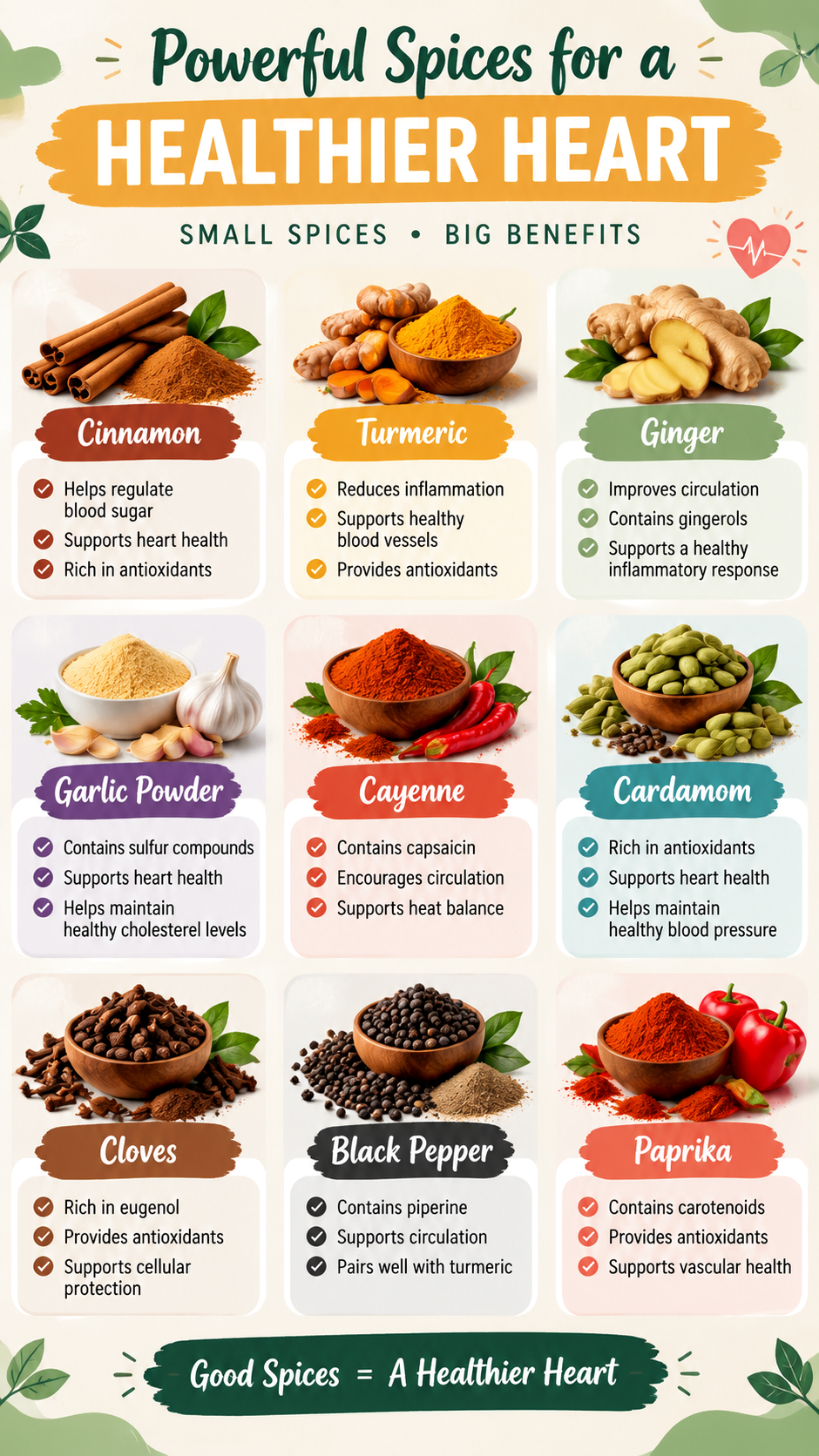
9 Heart Healthy Spices That May Support Better Wellness Naturally
Spices have been valued for centuries not only for their bold flavors and aromas but also for their potential role in supporting overall wellness. A simple sprinkle of the right spice can transform an everyday meal while adding naturally occurring plant compounds that complement a balanced lifestyle. Among the most popular choices are cinnamon, turmeric, ginger, garlic powder, cayenne, cardamom, cloves, black pepper, and paprika, all commonly used in kitchens around the world.
When it comes to heart-conscious eating, these flavorful ingredients can be an exciting way to add variety to meals while focusing on nutrient-rich foods. Many spices contain antioxidants and natural compounds that are being studied for their relationship with healthy circulation, balanced inflammation, and overall cardiovascular wellness.
Key Takeaways
- Spices can add powerful flavor while supporting a healthy eating pattern.
- Turmeric, ginger, cinnamon, and garlic are popular choices for wellness-focused cooking.
- Many culinary spices contain antioxidants and plant-based compounds.
- Using a variety of spices can make nutritious meals more enjoyable.
- Small daily habits, including mindful food choices, can support long-term wellness.
The Connection Between Spices and Heart Healthy Eating
A heart-supportive lifestyle often begins with simple choices made every day. Along with regular physical activity, quality sleep, and a balanced diet, the ingredients used in cooking can play an important role in creating nourishing meals. Spices offer a natural way to enhance flavor without relying heavily on excess salt, sugar, or processed ingredients.
Many spices are rich in plant compounds such as polyphenols, carotenoids, and other antioxidants. These compounds help plants protect themselves and may provide beneficial properties when included as part of a varied diet. While spices are not a replacement for medical care or prescribed treatments, they can be a valuable addition to healthy meal planning.
Important: Spices work best as part of an overall heart-conscious lifestyle. Adding colorful herbs and spices to meals is one small but meaningful way to create flavorful dishes built around whole foods.
9 Popular Spices to Include in Your Kitchen
1. Cinnamon: A Sweet Spice for Balanced Meals
Cinnamon is a familiar kitchen favorite known for its warm aroma and naturally sweet flavor. It is often added to oatmeal, smoothies, baked goods, and beverages. Cinnamon contains plant compounds called polyphenols, which have antioxidant properties.
This versatile spice can help create satisfying flavors without needing large amounts of added sugar. A small sprinkle can make simple foods feel more enjoyable while supporting a mindful approach to eating.
2. Turmeric: The Golden Spice of Wellness
Turmeric is recognized by its bright golden color and earthy flavor. It contains curcumin, a naturally occurring compound that has attracted attention for its antioxidant and inflammation-related properties.
Turmeric is commonly used in curries, soups, rice dishes, and golden milk recipes. Pairing turmeric with black pepper is a popular cooking practice because black pepper contains piperine, a compound often discussed alongside curcumin.
3. Ginger: A Warming Spice for Everyday Cooking
Ginger brings a fresh, slightly spicy flavor to both savory and sweet recipes. It is commonly used in teas, stir-fries, soups, and marinades.
Known for naturally occurring compounds called gingerols, ginger is a popular ingredient among people looking to add more plant-based foods and traditional wellness ingredients to their routines.
4. Garlic Powder: Flavorful and Convenient
Garlic powder makes it easy to add rich flavor to vegetables, proteins, sauces, and homemade seasoning blends. Garlic contains sulfur compounds that contribute to its distinctive aroma and culinary appeal.
Using garlic powder can be a practical way to reduce dependence on heavy sauces or excess salt while keeping meals flavorful.
5. Cayenne: Adding Heat and Character
Cayenne pepper provides a bold kick and contains capsaicin, the compound responsible for its heat. It can be added to soups, roasted vegetables, sauces, and spice blends.
A small amount of cayenne can completely change the flavor profile of a dish, making healthy meals feel more exciting and satisfying.
6. Cardamom: A Fragrant Spice Choice
Cardamom is valued for its sweet, aromatic flavor and is used in many traditional cuisines. It can be added to teas, desserts, rice dishes, and spice blends.
This fragrant spice contains antioxidants and offers a unique way to bring variety to everyday recipes.
7. Cloves: A Powerful Flavor Booster
Cloves have a strong, warm flavor and are often used in seasonal recipes, drinks, and savory dishes. They are rich in eugenol, a natural compound that contributes to their antioxidant properties.
Because cloves have a powerful taste, a small amount is often enough to add depth and complexity to recipes.
8. Black Pepper: The Everyday Spice Essential
Black pepper is one of the most commonly used spices worldwide. It contains piperine and adds gentle heat to almost any savory dish.
Beyond flavor, black pepper is often paired with other spices, especially turmeric, creating combinations that are both delicious and popular in wellness-focused cooking.
9. Paprika: Colorful Flavor for Healthy Recipes
Paprika adds beautiful color and mild warmth to dishes. Made from dried peppers, it can contain carotenoids and other plant-based compounds.
Sprinkle paprika over roasted vegetables, eggs, soups, or homemade seasonings for an easy flavor upgrade.
Easy Ways to Add Heart Friendly Spices to Your Meals
Adding more spices to your routine does not require complicated recipes. Small changes can make a noticeable difference in how enjoyable healthy meals become.
- Add cinnamon to oatmeal, yogurt, or fruit-based snacks.
- Use turmeric in soups, roasted vegetables, or rice dishes.
- Mix garlic powder, paprika, and black pepper for a homemade seasoning blend.
- Add ginger to tea, smoothies, or stir-fry recipes.
- Experiment with different spice combinations to discover new flavors.
Why This Matters
Flavorful cooking can support healthier habits by making nutritious foods more appealing. When meals taste satisfying, it becomes easier to enjoy vegetables, whole grains, lean proteins, and other wholesome ingredients.
- Spices can reduce the need for excess salt and added sugars.
- A variety of spices adds color, aroma, and culinary creativity.
- Healthy cooking habits are built through consistent small choices.
Creating a Balanced Spice Routine
A spice routine is not about using every ingredient at once. Instead, focus on finding combinations that fit your taste preferences and cooking style. Keep frequently used spices visible and experiment with one new flavor at a time.
Fresh, colorful meals often come from simple ingredients prepared thoughtfully. Spices are an easy tool for transforming everyday cooking into a more enjoyable experience.
At a Glance
- Choose spices that match your favorite meals.
- Use herbs and spices to add natural flavor.
- Enjoy variety by rotating different spice combinations.
- Pair flavorful cooking with an overall balanced lifestyle.
Conclusion: Make Flavor a Part of Your Wellness Journey
Heart-conscious eating does not have to feel restrictive or boring. The right spices can bring excitement, aroma, and variety to everyday meals while supporting a thoughtful approach to nutrition.
From the golden warmth of turmeric to the comforting sweetness of cinnamon and the bold flavor of garlic and paprika, these kitchen staples offer endless possibilities. By adding more spices to your cooking routine, you can create meals that are both delicious and aligned with a wellness-focused lifestyle.
Tags
Heart Healthy Spices
Healthy Eating
Turmeric Benefits
Natural Wellness
Healthy Cooking Tips
Kitchen Spices
Antioxidant Foods