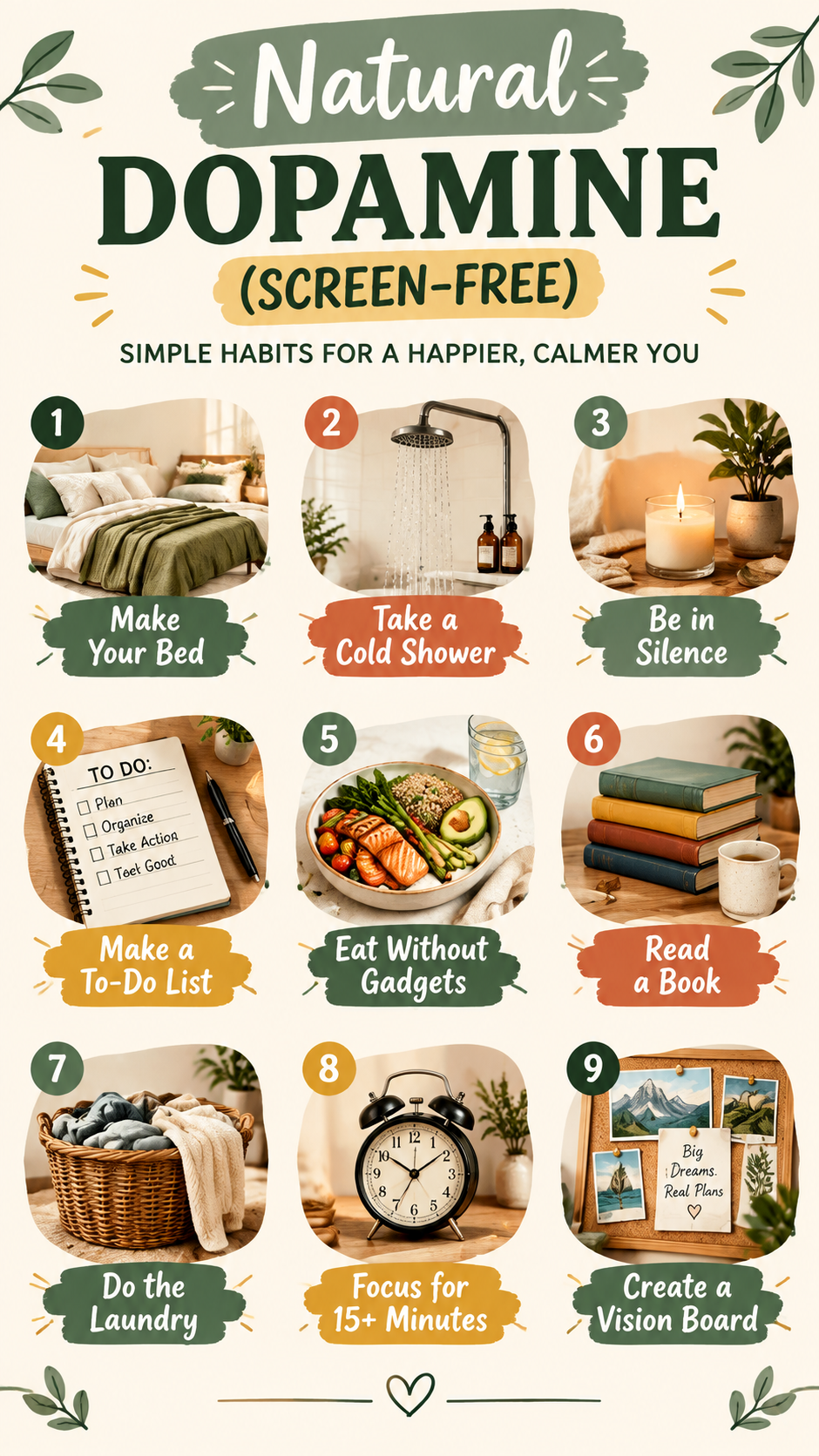
9 Screen-Free Habits for Natural Dopamine Boosts and a Happier, More Focused Life
In a world filled with notifications, endless scrolling, and constant digital stimulation, finding joy in simple everyday activities can feel surprisingly refreshing. A screen-free routine offers an opportunity to slow down, reconnect with yourself, and enjoy the small accomplishments that make an ordinary day feel meaningful. From making your bed in the morning to reading a book before bedtime, simple habits can help you feel more focused, organized, and mentally refreshed.
The idea of natural dopamine habits is about making room for enjoyable, rewarding activities that do not depend on your phone, computer, or television. These activities can include spending a quiet moment in the morning, preparing a nourishing meal, completing a small household task, or working toward a personal goal. Although dopamine is often discussed in connection with motivation and pleasure, healthy routines involve many factors, including sleep, movement, attention, and emotional well-being.
You do not need an elaborate wellness routine to get started. The most effective approach is often to choose a few realistic activities and repeat them consistently. Here are nine screen-free habits that can help you build a calmer, more intentional lifestyle.
Key Takeaways
- Start your morning with small accomplishments, such as making your bed and writing a to-do list.
- Create screen-free moments for meals, reading, relaxation, and quiet reflection.
- Build focus gradually by working on one task for 15 minutes or longer.
- Use simple household chores as opportunities to practice consistency and enjoy visible progress.
- Choose habits that fit your lifestyle instead of following a strict routine that feels overwhelming.
- Reduce unnecessary digital distractions without treating technology as something you must completely avoid.
What Is Natural Dopamine, and Why Do Screen-Free Habits Matter?
Dopamine is a neurotransmitter involved in motivation, learning, movement, and the way the brain responds to rewards. It helps us recognize meaningful outcomes and encourages us to repeat behaviors that support our goals. Everyday experiences, including learning a new skill, completing a task, enjoying a meal, and connecting with others, involve complex brain processes in which dopamine can play a role.
The phrase natural dopamine is commonly used in wellness content to describe ordinary, healthy activities that feel rewarding. It is not a separate type of dopamine, and no particular habit guarantees a specific dopamine increase. Instead, the practical idea is to create a lifestyle that includes satisfying activities beyond the rapid stimulation offered by digital entertainment.
Phones and social media can be useful, entertaining, and valuable tools. However, frequent notifications and habitual checking may interrupt concentration and make it harder to stay engaged with slower activities. When every quiet moment becomes an opportunity to scroll, reading a book, completing a project, or simply sitting peacefully may feel less appealing at first.
Important: You do not need to eliminate dopamine or follow an extreme dopamine detox. Dopamine is essential for normal brain function. A more practical goal is to develop a healthier relationship with digital devices while making more room for sleep, focused work, meaningful activities, and genuine rest.
1. Make Your Bed for an Easy Morning Win
Making your bed is one of the simplest screen-free habits to add to your morning routine. It takes only a few minutes, requires very little equipment, and gives you an immediate opportunity to finish a small task before the day becomes busy.
Although a neatly made bed will not solve every productivity challenge, it can create a pleasant visual starting point. A tidier bedroom may also make your environment feel more organized and inviting.
How to Make This Habit Stick
- Straighten your sheets and blankets as soon as you get up.
- Arrange your pillows and put away anything that does not belong on the bed.
- Keep the process simple rather than aiming for a perfectly styled bedroom.
- Pair the habit with another morning activity, such as opening the curtains.
The biggest benefit is not perfection. It is establishing a small, repeatable action that helps you begin the day intentionally. Completing one manageable task can also make it easier to approach the next task with a sense of momentum.
2. Try a Cool or Cold Shower Mindfully
A cool shower can provide a refreshing start to the morning, especially when you feel sluggish or need a change of pace. The sensation of cooler water may make you feel more alert, offering a simple alternative to immediately reaching for your phone.
However, cold showers are not essential for a healthy routine, and the evidence does not support treating them as a guaranteed way to reset dopamine levels. You can enjoy the refreshing feeling without turning the experience into a test of willpower.
Start at Your Comfort Level
If you enjoy experimenting with water temperature, begin with your usual comfortable shower and make the water slightly cooler for a brief period. Pay attention to how your body responds, and return to a comfortable temperature whenever necessary.
A normal warm shower is also a perfectly good choice. The goal is to build a morning routine that leaves you feeling refreshed, not to force yourself through an uncomfortable experience.
People with certain cardiovascular conditions or other health concerns should be cautious about sudden cold exposure and seek appropriate medical guidance before trying it. Stop if you experience dizziness, chest discomfort, or difficulty breathing.
3. Spend a Few Minutes in Silence
Modern life can make silence feel unusual. Music, podcasts, videos, and notifications often fill the spaces between our activities. Taking a few quiet minutes without a screen can give your attention a chance to settle and help you notice how you feel before moving on to the next responsibility.
Being in silence does not require a meditation app, a special room, or a complicated mindfulness technique. You can sit near a window, drink your morning tea, listen to the sounds outside, or simply breathe comfortably without trying to accomplish anything.
A Simple Quiet-Time Practice
- Choose a comfortable place where you can sit undisturbed.
- Put your phone out of reach or silence nonessential notifications.
- Spend two to five minutes noticing your breathing and surroundings.
- When your mind wanders, gently return your attention to the present moment.
You do not need to stop thinking. Thoughts will naturally come and go. The purpose is simply to experience a short break from constant input and give yourself space to begin the day more deliberately.
Over time, quiet moments may help you become more aware of your stress levels, priorities, and emotional needs. Even a short pause can make the transition between waking up and starting work feel less rushed.
4. Write a To-Do List Instead of Checking Your Phone
When your phone is the first thing you reach for in the morning, other people’s messages, news, and updates can quickly take over your attention. Writing a to-do list on paper offers a different way to begin the day. Instead of reacting to incoming information, you can identify what matters to you.
A handwritten list also turns vague intentions into visible tasks. Rather than thinking, “I need to be productive today,” you can decide to answer one important email, prepare lunch, finish a work assignment, or spend 15 minutes learning something new.
Create a Realistic Daily Plan
- Choose three priorities: Identify the tasks that would make the day feel successful.
- Break down large projects: Turn intimidating goals into smaller, actionable steps.
- Include personal needs: Make space for meals, movement, breaks, and rest.
- Leave room for flexibility: Unexpected responsibilities are part of everyday life.
Pro Tip: Keep a notebook and pen somewhere visible, such as beside your bed or on your desk. Making the helpful choice convenient can reduce the temptation to begin your morning with unnecessary scrolling.
Remember that a to-do list is a planning tool, not a measure of your worth. Completing two important tasks may be more valuable than rushing through ten minor ones. At the end of the day, you can review your progress and carry unfinished priorities forward without guilt.
5. Eat Without Gadgets and Practice Mindful Eating
Meals are an opportunity to take a break from screens and reconnect with the experience of eating. When you eat while watching videos or scrolling through social media, your attention may be divided between the food and the content on your device.
Mindful eating encourages you to notice the flavor, texture, temperature, and aroma of your food. It also gives you an opportunity to pay attention to hunger and fullness cues without judging yourself.
Make Mealtimes More Intentional
- Put your phone away from the dining table.
- Sit down and give yourself enough time to enjoy the meal.
- Notice the different ingredients, flavors, and textures.
- Take comfortable pauses instead of eating as quickly as possible.
- If you are eating with others, enjoy a conversation without digital interruptions.
A balanced meal might include a source of protein, vegetables or fruit, whole grains or another carbohydrate, and healthy fats, depending on your preferences and needs. You do not need expensive ingredients or elaborate recipes to eat well.
Mindful eating is not about restricting food, counting every bite, or forcing yourself to eat slowly at all times. It is about creating a more attentive and enjoyable relationship with everyday meals.
6. Read a Book to Give Your Attention a Break
Reading a physical book is an excellent screen-free activity for people who want to spend less time on digital entertainment. Whether you choose a novel, a biography, a practical guide, or a collection of essays, reading gives you an opportunity to explore an idea without switching between multiple apps.
Unlike fast-moving online feeds, a book encourages you to stay with one subject or story for longer. This can help you practice sustained attention, expand your knowledge, and create a relaxing daily ritual.
Build a Reading Habit You Enjoy
- Start with five to ten minutes a day if reading has not been part of your routine.
- Choose books that genuinely interest you instead of reading only what you think you should read.
- Keep a book beside your bed, on your desk, or in your bag.
- Replace a short period of evening scrolling with a few pages of reading.
- Try different genres until you find something that keeps you engaged.
There is no need to finish a certain number of books each month. Consistency matters more than speed, and even a few pages can make reading a pleasant part of your day.
If your main goal is better sleep, consider reading a printed book as part of a relaxing bedtime routine. Dim the lights when appropriate, choose comfortable reading material, and give yourself enough time to wind down.
7. Do the Laundry and Celebrate Small Accomplishments
Household chores may not sound like an exciting form of self-care, but everyday responsibilities can provide structure and visible progress. Washing clothes, folding towels, organizing a drawer, or clearing a countertop transforms an unfinished task into a completed one.
When chores accumulate, they can make your environment feel overwhelming. Breaking them into smaller steps helps you make progress without needing to dedicate an entire day to cleaning.
Turn Chores Into Manageable Tasks
- Choose one chore rather than attempting to clean your entire home.
- Set a realistic time limit, such as ten or fifteen minutes.
- Gather what you need before starting.
- Work without checking your phone every few minutes.
- Notice the improvement when you finish, even if the result is small.
For example, you could start a load of laundry before breakfast, fold clean clothes while listening to natural household sounds, or put away items that have collected on a chair. These small actions can make your surroundings more comfortable and reduce the number of tasks competing for your attention.
Chores should not become another source of pressure. If you are tired, unwell, or managing a demanding schedule, choose a smaller task or rest instead. The purpose is to support your daily life, not to make every moment productive.
8. Focus for 15 Minutes or Longer
Constant digital interruptions can make it difficult to settle into a task. You may sit down to work, check one notification, open another app, and suddenly realize that a significant amount of time has passed without much progress.
A short period of focused work offers a practical alternative. Fifteen minutes is long enough to make a start on many tasks but short enough to feel manageable when motivation is low.
Try a Simple Focus Session
- Choose one task. Decide exactly what you want to accomplish during the session.
- Remove distractions. Silence nonessential alerts and close unrelated tabs.
- Set a timer. Use a basic timer or clock rather than repeatedly checking your phone.
- Work on the chosen task. If another thought comes up, write it down and return to your work.
- Review your progress. At the end, decide whether to take a break or continue.
This approach works for studying, writing, reading, organizing, practicing a skill, or beginning a project you have been putting off. If fifteen minutes feels too long, start with five. If you are already comfortable concentrating, extend the session as needed.
Why This Matters
A focused session is not a magic productivity trick. Its value comes from reducing unnecessary task-switching and making progress easier to see. When you repeatedly practice starting and completing manageable tasks, you can build a more reliable work routine without depending on constant motivation.
It is also important to schedule breaks. Sustained concentration takes effort, and your ability to focus may vary depending on sleep, stress, the task itself, and your environment. A realistic routine includes periods of work and recovery rather than demanding nonstop attention.
9. Create a Vision Board to Make Your Goals Visible
A vision board is a collection of images, words, reminders, and goals arranged in one place. It can represent the kind of life you want to build, the skills you want to develop, the places you hope to visit, or the personal projects you want to complete.
Creating a physical vision board is a creative, screen-free activity that encourages you to think about your priorities. Instead of keeping every goal in your head, you can make your intentions visible and use them as a reminder of what matters to you.
How to Make a Meaningful Vision Board
- Choose a theme: Focus on personal growth, career development, health, creativity, relationships, or a combination of priorities.
- Gather materials: Use a board, paper, photographs, magazine clippings, printed images, or handwritten notes.
- Set specific goals: Include clear intentions rather than relying entirely on attractive pictures.
- Add practical next steps: Write down actions you can take this week.
- Place it somewhere visible: Keep it in a space where you can review it regularly.
For example, a vision board focused on learning might include a picture of a bookshelf, a reminder to practice a language for ten minutes each day, and a goal of completing a particular course. A wellness board might include reminders about restful evenings, enjoyable movement, balanced meals, and time outdoors.
A vision board cannot guarantee that your goals will happen. Its real value is helping you clarify what you want and keeping those intentions visible. Pairing inspiration with practical steps makes it more useful than simply collecting attractive images.
How to Build a Screen-Free Daily Routine
Knowing which habits are beneficial is one thing. Turning them into a routine that works in real life is another. The easiest way to begin is to introduce a few small changes instead of attempting all nine habits at once.
A Simple Morning Routine
Start with activities that naturally fit together. Make your bed after waking up, enjoy a shower at a comfortable temperature, spend a few minutes in silence, and write down your priorities. You can complete these activities in any order that suits your schedule.
If mornings are busy, choose just one habit. Writing down three priorities while drinking your morning beverage may be enough to establish a helpful starting point.
A More Intentional Afternoon
During the day, focus on one task for fifteen minutes, take a break when needed, and enjoy at least one meal without a screen. If household responsibilities are building up, set aside a short period to complete a chore.
These activities do not have to happen at fixed times. Their purpose is to help you create natural pauses in your day and make room for activities that support your priorities.
A Relaxing Evening Routine
In the evening, consider replacing some screen time with a printed book, a quiet activity, or a short review of your goals. Prepare for the next day by writing down any important tasks and putting necessary items in their usual places.
Try to keep your routine flexible enough to accommodate social plans, work commitments, family responsibilities, and changes in energy. A useful habit should support your life rather than make it more complicated.
A Seven-Day Challenge for Natural Dopamine Habits
If you prefer a clear starting point, use this seven-day challenge to experiment with simple screen-free activities. Treat it as an opportunity to discover what works for you, not as a strict test that you must pass.
- Day 1: Make your bed and write down three priorities for the day.
- Day 2: Spend five quiet minutes without checking your phone.
- Day 3: Enjoy one meal without watching videos or scrolling.
- Day 4: Read a physical book for ten minutes.
- Day 5: Complete one household chore without unnecessary interruptions.
- Day 6: Work on a single task for fifteen focused minutes.
- Day 7: Create a small vision board or write down three meaningful personal goals.
Continue any activities you enjoy after the challenge ends. You can repeat the same habits each week, combine several of them, or adjust the timing to suit your needs.
At the end of the week, reflect on a few simple questions. Which activity felt easiest? Which one made your day feel more organized? When did you notice yourself reaching for your phone out of habit? These observations can help you make thoughtful changes without relying on rigid rules.
Common Mistakes to Avoid When Reducing Screen Time
Building a healthier digital routine does not require perfection. A few common mistakes can make the process feel unnecessarily difficult, especially if you approach every new habit as another task to complete.
Trying to Change Everything at Once
Changing your morning, workday, meals, exercise, and bedtime routines simultaneously can quickly become overwhelming. Start with one or two habits and build from there. Small changes are easier to repeat when life becomes busy.
Expecting Instant Results
You may not immediately feel more motivated, focused, or relaxed. Some activities take time to become familiar, and your experience will depend on your circumstances. Focus on whether a habit is practical and meaningful rather than expecting an immediate transformation.
Treating All Screen Time as Bad
Technology supports work, education, relationships, entertainment, and creativity. The goal is not to remove every screen from your life. Instead, identify the moments when device use distracts you from something important and make intentional adjustments.
Turning Self-Care Into Another Obligation
If your new routine makes you feel guilty whenever you miss a task, simplify it. Rest, flexibility, and enjoyment are important parts of a balanced lifestyle. You can return to a habit tomorrow without needing to compensate for a missed day.
Quick Points: Natural Dopamine Habits at a Glance
- For a better morning: Make your bed, enjoy a comfortable shower, and write a short to-do list.
- For mindful living: Spend time in silence and enjoy meals without digital distractions.
- For personal growth: Read a book, practice focused work, and create a vision board.
- For an organized home: Complete one manageable household chore each day.
- For lasting consistency: Start small, stay flexible, and choose activities you genuinely enjoy.
Conclusion: Find More Joy in Simple, Screen-Free Activities
Natural dopamine habits are less about chasing a particular brain chemical and more about creating a daily life filled with meaningful, manageable experiences. Making your bed, taking a refreshing shower, spending time in silence, writing a to-do list, eating mindfully, reading, doing laundry, focusing on a task, and creating a vision board are simple ways to bring more intention into ordinary routines.
You do not need to adopt all nine habits to experience the benefits of a more thoughtful approach to your time. Choose one activity that feels easy to begin, make it part of your existing routine, and give yourself permission to adjust it as needed.
The most useful screen-free routine is one that fits your real life. Some days, that might mean reading a few pages instead of scrolling before bed. On other days, it might mean completing a small task, enjoying a meal without distractions, or taking a quiet moment before work.
Progress comes from making choices that support your needs and repeating the ones that work. By creating more space for focus, rest, creativity, and everyday accomplishments, you can develop a more balanced relationship with technology and find greater satisfaction in the little things.
Ready to begin? Pick one screen-free habit from this list and try it today. Keep it simple, notice how it fits into your routine, and build from there. Save these ideas for later so you can return whenever you need inspiration for a calmer, more intentional day.
Tags
Natural Dopamine Habits
Screen-Free Activities
Digital Detox
Healthy Daily Habits
Mindful Living
Productivity Tips
Personal Growth
Self-Care Routine