15 Braided Hairstyles Which One is the Hardest to Recreate Hair Tutorial Challenge
Stepping into the world of intricate hairstyling is like entering a gallery of living art. There is something deeply satisfying about the rhythm of crossing strands of hair to create patterns that look almost impossible to the untrained eye. If you have ever scrolled through social media and found yourself mesmerized by a perfectly executed fishtail or an ethereal crown braid, you know that braiding is more than just a way to keep hair out of your face. It is a form of self-expression, a technical skill, and a meditative practice all rolled into one. Today, we are diving deep into the ultimate hair challenge, analyzing fifteen distinct and complex braided styles to see what makes them so captivating and which ones truly test the limits of a stylist’s patience.
The Evolution of Braiding as an Art Form
Braiding has been a staple of human grooming for thousands of years, spanning across cultures and continents. From the intricate cornrows of ancient Africa to the sophisticated updos of the Renaissance, braids have signaled everything from social status to marital readiness. In the modern era, braiding has seen a massive resurgence thanks to digital platforms that allow stylists to share their most complex creations with a global audience. We are no longer limited to the basic three strand technique. Today, we see a fusion of weaving, knotting, and architectural shaping that turns hair into a sculptural masterpiece.
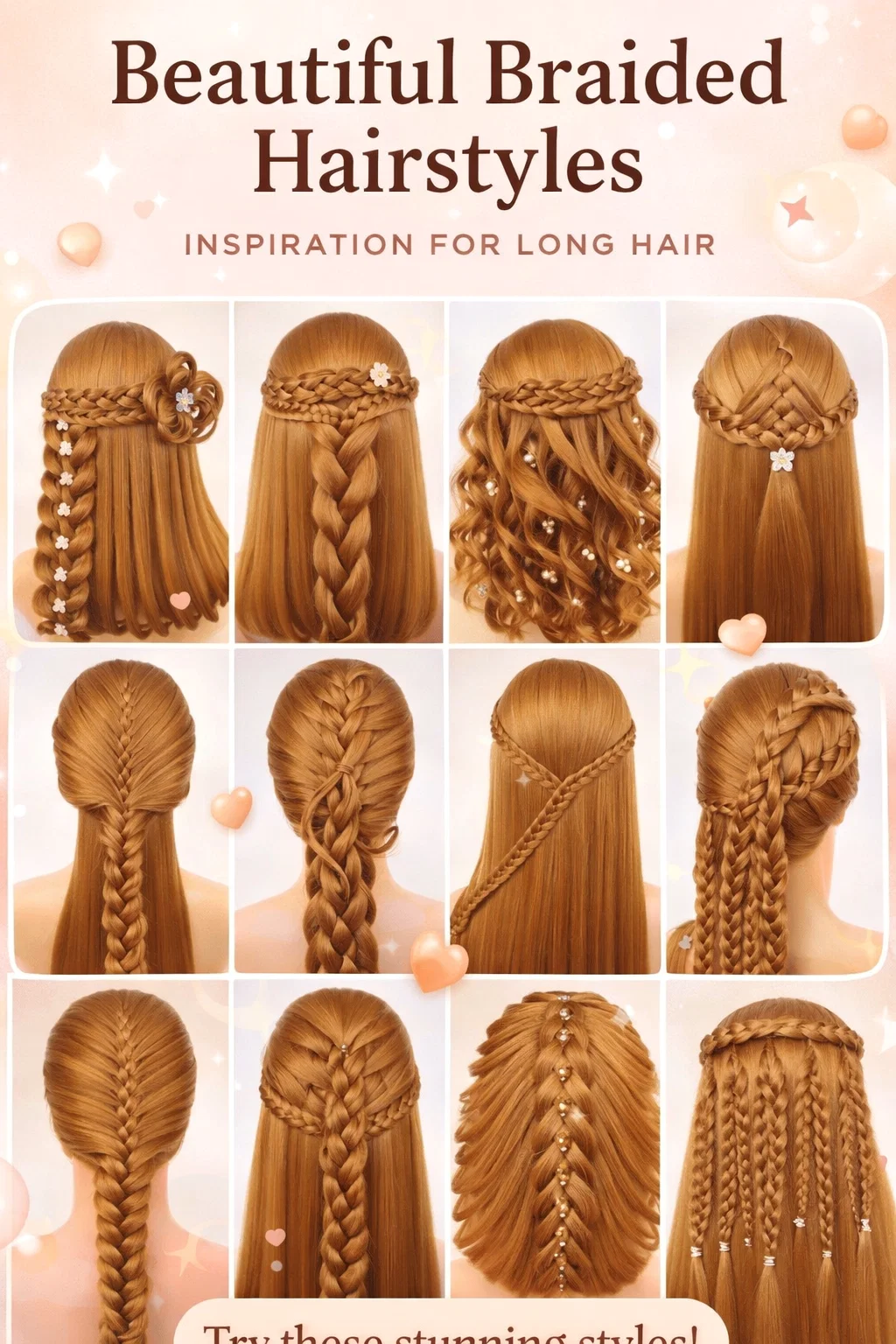
The image we are analyzing showcases fifteen different variations of blonde, honey-toned hair expertly manipulated into geometric patterns. Some styles rely on volume and texture, while others focus on razor-sharp precision and repetition. Understanding the mechanics behind these looks is the first step in mastering the art of the braid.
Breaking Down the Fifteen Masterpieces
To understand the difficulty of these styles, we need to look at them individually. Each style brings a unique set of challenges, from maintaining even tension to managing the sheer volume of hair involved.
Style 1: The Cascading Star Weave
This style features a central spine decorated with delicate star shaped pins. The complexity here lies in the way the side sections are tucked under the main braid to create a tiered, almost shell like appearance. It requires a firm grip to ensure each tier stays symmetrical as you move down the length of the hair.
Style 2: The Floral Crown and Waterfall
This look combines a thick, horizontal Dutch braid that transitions into a beautiful hair rose. Below the crown, the hair falls in a perfect waterfall pattern. The hardest part of this style is the transition from the braid into the flower, ensuring the petals look soft and organic rather than forced.
Style 3: The Oversized Infinity Braid
This is a classic infinity or fishtail braid taken to the extreme. By pulling the edges of the braid out, or pancaking, the stylist creates massive volume. The challenge is keeping the center of the braid tight enough to hold the weight of the hair while making the outer loops look airy and light.
Style 4: The Suspended Chain Braid
This style uses a delicate looping technique where small sections of hair are pulled through a central braid to create a chain effect. It is a masterclass in tension control. If you pull too hard, the loops disappear; if you are too loose, the style loses its structure.
Style 5: The Circular Medallion
One of the most visually striking options, this style uses two curved braids that meet in the center to frame a decorative brooch. It requires incredible spatial awareness to ensure the curves are perfectly mirrored on both sides of the head.
Style 6: The Traditional Tapered Plait
While it looks simple compared to the others, this thick, single braid requires a perfect gradient. Starting with high volume at the crown and tapering down to a fine point is a foundational skill that every professional stylist must perfect.
Advanced Techniques and Textures
As we move into the second row of styles, we see a shift toward more architectural and repetitive patterns. These styles are often the ones that leave onlookers wondering how the hair is even staying in place.
The Horizontal Ladder Braid
Style number eight in our challenge is a horizontal ladder braid. This involves creating a series of loops that run across the back of the head, mimicking the rungs of a ladder. It is exceptionally difficult because you are working against the natural downward flow of the hair.
The Geometric Fishtail Spine
Style eleven shows a fishtail that is so tight and precise it looks like a textured fabric. This requires working with very small sections of hair, usually no more than a few millimeters thick. It is a time consuming process that demands a steady hand and a lot of focus.
The Side Swept Dutch Braid
Style twelve wraps around the side of the head in a graceful arc. The difficulty here is the angle. Braiding at an angle requires the stylist to constantly adjust their body position to maintain the correct direction of the braid.
The Heavy Hitters: Volume and Detail
The bottom row of our challenge features styles that are designed for maximum impact. These are the looks you would expect to see on a red carpet or at a high end wedding.
The Pearl Encrusted Curls
Style thirteen is less about the braid and more about the integration of accessories. It features a thick crown braid that gives way to cascading curls pinned with dozens of pearls. The secret here is the prep work. The hair must be perfectly curled and set before the braiding even begins.
The Ribbed Fan Braid
Style fourteen is arguably one of the most difficult in the entire collection. It looks like a fan or a leaf, with dozens of tiny ridges radiating from a central pearl-lined spine. This requires a technique called micro-braiding combined with extreme pancaking to create that wide, flat surface area.
The Triple Dutch Pigtails
Finally, style fifteen features three parallel Dutch braids that end in pearl-tipped sections. While it looks playful, keeping three braids perfectly parallel and equidistant is a nightmare for beginners. It shows off the symmetry and cleanliness of the stylist’s sectioning skills.
Essential Tools for Success
You cannot achieve these looks with just your fingers and a prayer. Professional braiding requires a specific kit to ensure the hair behaves the way you want it to.
- Rat Tail Comb: Essential for creating those razor sharp parts and sections.
- Sectioning Clips: You need to keep the hair you aren’t working on out of the way to prevent tangles.
- Texturizing Powder: This provides the grip needed for fine or slippery hair, making it much easier to braid.
- Clear Elastic Bands: These are the invisible heroes that hold the ends together without distracting from the design.
- Hair Padding: For the more voluminous styles, sometimes a bit of extra padding is hidden inside to give the braid its shape.
Common Mistakes to Avoid
Even seasoned pros run into trouble when attempting these high level braids. Here are a few things to watch out for if you are taking on the challenge yourself.
Inconsistent Tension
The most common mistake is changing your grip halfway through. This leads to a braid that is tight at the top and loose at the bottom, or vice versa. Try to maintain a steady, firm pressure throughout the entire process.
Poor Hair Preparation
Braiding dirty or tangled hair is a recipe for disaster. Always start with hair that has been brushed thoroughly. If the hair is too soft or freshly washed, a bit of dry shampoo or sea salt spray can add the necessary grit.
Over-Pancaking
We all love the look of a big, full braid, but if you pull the loops out too far without securing them, the whole structure can collapse. Use hairspray as you go to lock each section in place before moving to the next.
Conclusion: Which One Wins the Challenge?
After analyzing all fifteen styles, it is clear that the hardest to recreate is style fourteen, the Ribbed Fan Braid. Its combination of micro-precision, massive volume, and delicate accessory integration makes it a true test of a stylist’s ability. However, every style on this list offers a unique beauty that can transform a person’s look and confidence.
Braiding is a journey of constant learning. Whether you start with a simple three strand plait or dive straight into the pearl encrusted curls, the key is to have fun and stay patient. These styles are not just about the final result; they are about the craft and the care put into every single turn of the hair. So, grab your comb, find a willing friend or a mannequin head, and start practicing. Which braid will you try first?