4 Rounds of Succession Planting Maximize Your Garden Harvest in One Bed
Maximizing a small garden space is the ultimate goal for many home growers. Whether you have a sprawling backyard or just a single raised bed, the challenge remains the same: how do you get the most food out of every square inch? The secret lies in a method called succession planting. Instead of planting everything once and watching the garden go bare by midsummer, succession planting keeps your soil productive from the first thaw of spring until the first frost of winter. By following a strategic schedule of four distinct rounds, you can effectively triple your harvest without needing any extra land.
Understanding the Power of Succession Planting
Succession planting is the practice of following one crop with another in the same space during a single growing season. Many gardeners make the mistake of viewing their garden as a one and done project. They plant in May, harvest in July, and leave the bed empty for the rest of the year. This approach misses out on the cooler shoulders of the season and the natural cycles of plant growth.
By treating your garden bed as a rotating stage, you ensure that as soon as one plant finishes its life cycle, another is ready to take its place. This method does more than just provide more food. It actually helps manage soil health by keeping living roots in the ground, which prevents erosion and keeps the local microbial life thriving. It also reduces weed pressure because there is rarely an empty, sunny spot for weeds to take hold.
The Concept of Zero Downtime
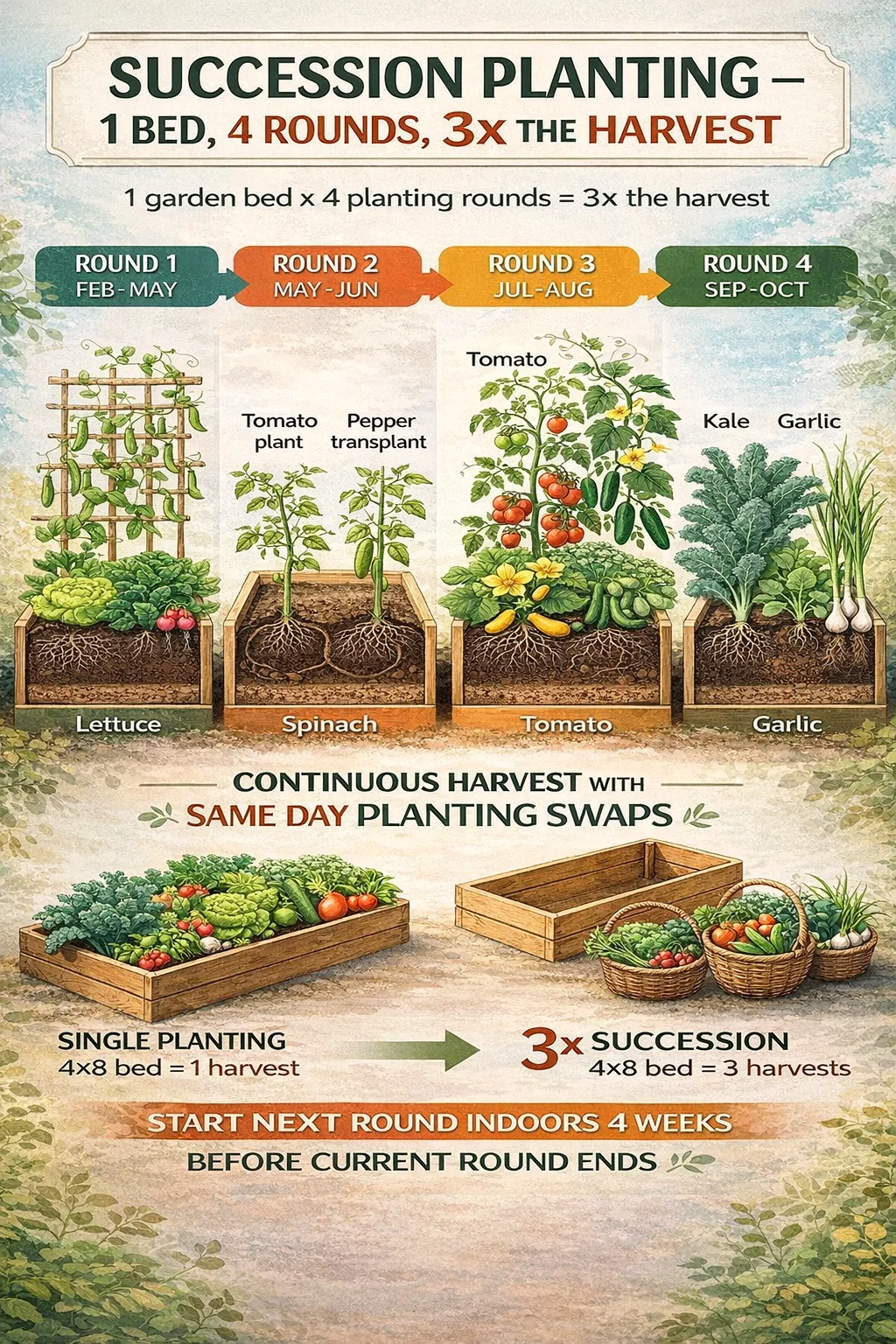
The image above highlights a vital strategy known as the same day swap. This is the gold standard of high productivity gardening. Zero downtime means that the moment you pull out your spent pea vines or finished lettuce plants, you are immediately tucking a new transplant into that exact same hole. To achieve this, you have to shift your perspective on timing. You are no longer just focused on what is growing now, but also on what needs to be ready in four weeks.
Round One: The Early Spring Kickoff (February to May)
The first round of the year is all about taking advantage of the cool, moist weather of early spring. While many people wait until the last frost to start their garden, successful succession gardeners are often out there weeks before. This round focuses on frost hardy vegetables that actually prefer lower temperatures.
Peas and Lettuce: The Perfect Duo
Peas are a classic early season crop because they can handle a light freeze and love the damp spring soil. While the peas climb upward on a trellis, the ground level of your bed can be filled with lettuce. This multi layer approach is a great way to use vertical space. Lettuce acts as a living mulch, keeping the pea roots cool as the days start to warm up. By the time May rolls around, you will have enjoyed multiple harvests of leafy greens and crunchy pods.
Preparing for the Transition
As Round One comes to a close in May, the soil has warmed up significantly. This is your cue to begin the transition. You will notice your peas starting to yellow at the base and your lettuce may begin to bolt or turn bitter. This is the natural end of their cycle. Instead of feeling sad that the spring harvest is over, get excited because the most productive months are just ahead.
Round Two: The Late Spring Bridge (May to June)
Round Two is often the shortest phase, acting as a bridge between the cold hardy crops and the heat loving giants of summer. This is where the magic of the indoor head start comes into play. According to the graphic, you should start your Round Two plants indoors four weeks before Round One finishes. This ensures that your spinach, tomato starts, and pepper transplants are robust and ready to go into the ground the moment the peas are cleared.
Maximizing the Spinach Gap
Spinach is a fast grower, but it hates the intense heat of mid July. By planting it in May, you get a final flush of nutrient dense greens before the summer sun becomes too intense. During this phase, you are also establishing your young tomato and pepper plants. These heat lovers need time to build a strong root system before they begin the heavy lifting of fruit production in the next round.
Round Three: The Summer Peak (July to August)
This is the highlight of the gardening year. July and August are when the garden is at its most vibrant and demanding. The transition from Round Two to Round Three is often a matter of growth rather than a total replant. Your tomato plants, which were small transplants in the previous phase, will now explode into massive, fruit bearing structures.
The Intensive Summer Bed
In a high yield succession bed, you aren’t just growing tomatoes. You can tuck low growing summer squash or bush beans around the base of your taller plants. The key here is heavy feeding. Because you are asking so much of a single bed, you must replenish the nutrients. Adding a layer of high quality compost between rounds ensures that the soil has enough energy to support the rapid growth seen in the peak of summer.
Managing Water and Heat
During Round Three, the biggest challenge is moisture. With so many plants packed into one bed, the competition for water is high. Mulching with straw or shredded leaves can help lock in moisture and prevent the soil from baking. Consistent watering is essential for tomatoes to prevent blossom end rot and to keep the plants from stressing out during the dog days of August.
Round Four: The Autumn Bounty (August to October)
As summer starts to fade, many gardeners hang up their trowels, but the succession gardener is just getting started with the final act. Round Four focuses on crops that can withstand the cooling temperatures and even a light frost. In fact, many fall crops like kale and spinach actually taste sweeter after they have been kissed by a bit of cold.
Transitioning to Kale and Garlic
Once the tomato plants are spent and removed in late August, it is time to plant your fall greens. Kale and spinach are powerhouses for the autumn garden. They grow quickly in the declining light and provide fresh harvests well into October. This is also the time when many gardeners look toward the following year by planting garlic. Garlic stays in the ground over the winter, acting as a placeholder that bridges the gap between this year’s success and next year’s start.
Mastering the Indoor Head Start
The secret weapon of the four round system is the four week indoor start. If you wait until a bed is empty to sow seeds directly into the soil, you are losing valuable growing time. For example, a tomato seed takes several weeks to become a plant large enough to survive outdoors. If those weeks happen while the spring lettuce is still in the bed, you have effectively gained a month of productivity.
Setting Up a Simple Seed Station
You don’t need a professional greenhouse to do this. A simple shop light and some basic seed trays in a garage or spare room are enough. The goal is to have a healthy, 4 to 6 inch transplant ready to go the moment the previous crop is pulled. This overlap is what allows a 4×8 bed to produce three times the harvest of a traditional single planting setup.
Soil Care for High Intensity Gardening
When you use the succession method, you are asking your soil to do a lot of work. In a standard garden, the soil gets a break. In a succession garden, the soil is always on. To keep this sustainable, you must be a steward of your dirt. Here are a few tips for maintaining a high performance garden bed:
- Compost is King: Add a one inch layer of fresh compost between every round of planting to replace nitrogen and organic matter.
- Disturb the Soil Minimally: Try to avoid tilling. When you pull a plant, just shake the dirt off the roots and plant the new one in the same spot to keep the soil structure intact.
- Use Organic Fertilizers: Supplementing with liquid seaweed or fish emulsion during the peak of Round Three can give your heavy feeders the boost they need.
The Financial and Health Benefits of Succession
Beyond the joy of gardening, there is a practical side to this method. Growing your own food through four rounds significantly reduces your grocery bill. Fresh produce is often the most expensive part of a shopping trip, and by growing staples like kale, spinach, peppers, and tomatoes, you are providing high quality nutrition for the cost of a few seeds.
From a health perspective, the succession method ensures you have access to nutrient dense food for the majority of the year. Store bought produce often loses vitamins during transport and storage. When you harvest a handful of spinach for your dinner and eat it ten minutes later, you are getting the maximum possible health benefits from that plant.
Conclusion: Start Small and Grow More
Succession planting might seem intimidating at first, but it is really just about observing the seasons and planning ahead. By breaking your year into four manageable rounds, you transform your garden from a hobby into a highly efficient food production system. Remember the core principles: use your vertical space, never leave the soil bare, and always have your next round of transplants ready to go. Even if you only apply these tips to a single raised bed this year, you will be amazed at how much more food you can produce. Your garden has so much potential waiting to be unlocked, so grab your seeds and start planning for your most productive season yet.