8 Simple Habits to Instantly Feel Better and Improve Your Mental Health at Home
In our fast paced modern world, it is incredibly easy to feel overwhelmed by the weight of our own emotions. Whether it is the nagging pull of overthinking or the heavy exhaustion of burnout, these feelings can often cloud our judgment and drain our energy. The good news is that mental wellness does not always require a massive life overhaul. Sometimes, the most profound shifts come from small, intentional actions that meet our needs in the moment. By understanding the specific signals our minds and bodies are sending, we can respond with targeted self care strategies that provide immediate relief and long term resilience.
The Power of Immediate Action in Mental Wellness
The concept of feeling better instantly is not about ignoring deep seated issues, but rather about managing our physiological and psychological states so we can function at our best. When we are stuck in a loop of anxiety or sadness, our brain is often in a state of high alert. By choosing a specific activity, such as exercise or meditation, we send a signal to our nervous system that it is safe to downshift. This proactive approach helps us regain a sense of agency over our lives, proving that while we cannot always control what happens to us, we can certainly control how we respond to our inner state.
Overthinking: Why Writing is the Ultimate Release
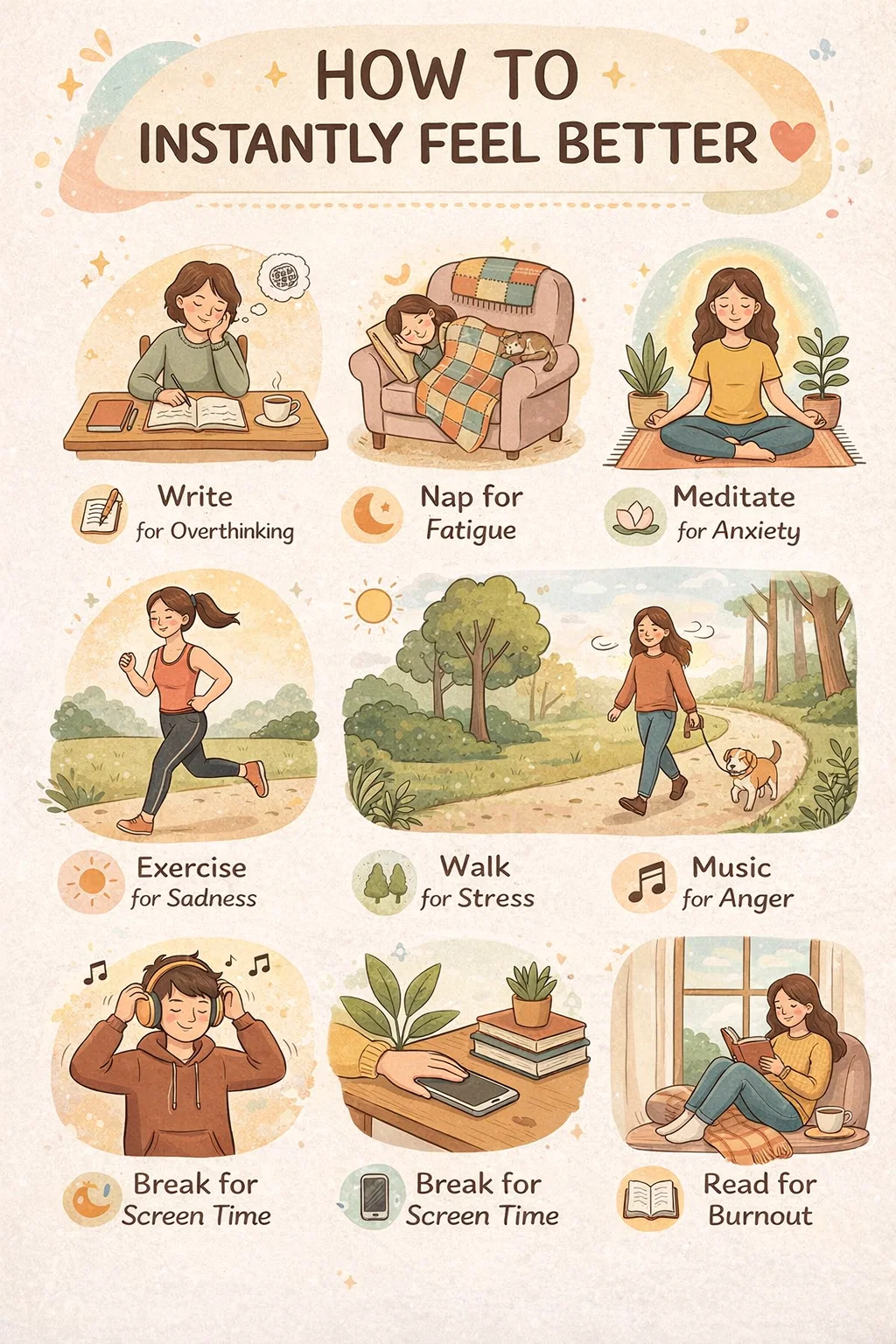
Overthinking is like having too many browser tabs open in your mind at once. It creates a mental fog that makes it nearly impossible to focus on the task at hand. The act of writing serves as a powerful externalization tool. When you put pen to paper, you are physically moving thoughts out of your head and into a tangible space. This process allows you to view your concerns objectively rather than experiencing them as an endless internal loop.
The Benefits of Brain Dumping
- Clarity: Seeing your thoughts in writing helps you identify patterns and irrational fears that look different when they are not just floating in your mind.
- Emotional Regulation: Narrative writing helps the brain process complex emotions, making them feel more manageable and less threatening.
- Decision Making: Once the mental clutter is cleared, you can prioritize what actually needs your attention and what can be let go.
Tired: The Restorative Magic of the Power Nap
In a culture that often glorifies being busy, we frequently overlook the simplest solution to exhaustion: sleep. Being tired is not just a physical sensation; it affects your cognitive abilities, your mood, and your patience. A short, intentional nap can act as a system restart for your brain. It allows your muscles to relax and your mind to drift into a state of recovery that caffeine simply cannot replicate.
How to Nap Effectively
To avoid feeling groggy after waking up, aim for a twenty minute power nap. This duration is long enough to provide a boost in alertness and motor skills without entering the deeper stages of sleep that lead to sleep inertia. Creating a cozy environment with a warm blanket and a quiet space helps your body transition into rest mode quickly, ensuring you wake up feeling refreshed rather than more depleted.
Anxious: Finding Stillness Through Meditation
Anxiety often feels like living in the future, worrying about things that have not happened yet. Meditation brings you back to the present moment. By focusing on your breath or a specific mantra, you anchor yourself in the here and now. This practice trains your brain to observe thoughts without becoming entangled in them, which is a vital skill for anyone prone to chronic worry.
A Simple Meditation Practice for Beginners
You do not need to sit for an hour to see results. Even five minutes of closed eye breathing can lower your heart rate and reduce cortisol levels. Find a comfortable seated position, place your hands on your knees, and simply notice the sensation of air entering and leaving your lungs. When your mind wanders, and it will, gently bring your focus back to your breath without judgment.
Sad: Moving Your Body to Lift Your Spirit
When sadness hits, the last thing many people want to do is move. However, physical exercise is one of the most effective ways to trigger the release of endorphins, the body’s natural feel good chemicals. You do not need to run a marathon to feel the benefits. A brisk jog, a yoga session, or even a few jumping jacks can shift your internal chemistry and provide a much needed perspective shift.
Stressed: The Healing Power of a Nature Walk
Stress often feels like a tightening in the chest or a frantic energy in the limbs. Walking, especially in a natural environment, provides a rhythmic movement that is inherently soothing. The combination of fresh air, greenery, and physical activity helps to lower blood pressure and clear the mind. If you have a furry friend, bringing them along can double the therapeutic effects, as the bond between humans and pets is a known stress reducer.
Why Nature Matters
Ecotherapy suggests that humans have an innate connection to the natural world. Being surrounded by trees and wildlife reduces the stimulation of the city and allows the brain to enter a state of soft fascination. This state is incredibly restorative for those who spend their days staring at spreadsheets or navigating high pressure social environments.
Angry: Using Music to Channel Intense Energy
Anger is a high energy emotion that requires a healthy outlet. While it can be tempting to vent or stew in frustration, listening to music offers a way to harmonize that energy. Whether you choose high energy tracks to match your mood and gradually slow them down, or jump straight into calming melodies, music has a direct line to the emotional centers of the brain. It can distract you from the source of your anger and provide a safe space to process your feelings.
Lazy: The Importance of Reducing Screen Time
Often, what we perceive as laziness is actually sensory overload or digital fatigue. Spending hours scrolling through social media drains our dopamine receptors, leaving us feeling unmotivated and sluggish. By physically setting down the phone and stepping away from the screen, we allow our brains to recover. Reducing screen time creates the mental space necessary for creativity and genuine motivation to return naturally.
Burn Out: Rediscovering Focus Through Reading
Burnout occurs when we have given too much of ourselves to work or external obligations. It is a state of deep mental and emotional depletion. Reading a physical book offers a unique form of escape that is far more beneficial than watching television. It requires a level of focused immersion that helps rebuild our attention spans and transports us to a different world, providing a much needed break from our own reality.
Creating a Reading Sanctuary
To combat burnout, make reading a ritual. Sit by a window, brew a warm cup of tea, and allow yourself to get lost in a story. This slow form of entertainment encourages a state of flow, which is the opposite of the fragmented attention required by the digital world. It is a gentle way to reclaim your time and nurture your imagination.
Building Your Own Feel Better Toolkit
The key to using these strategies effectively is to recognize the symptoms early. Everyone’s mental health journey is unique, and what works for one person might be different for another. However, having a menu of options, like the ones discussed above, ensures that you are never left without a way to help yourself. The next time you feel a negative emotion starting to take over, stop and ask yourself what your body actually needs. Is it movement? Is it stillness? Is it an outlet for expression?
Cultivating Long Term Resilience
While these “instant” fixes are wonderful for immediate relief, they also serve as the building blocks for long term mental health. When you consistently choose to meditate when anxious or write when overthinking, you are rewiring your brain to handle stress more effectively. These habits build emotional intelligence and self awareness, making you more resilient in the face of life’s inevitable challenges.
Conclusion: Small Steps Lead to Big Changes
Improving your mental health does not always have to be a complicated or daunting task. As we have explored, simple shifts in your daily routine can have a profound impact on how you feel. By embracing habits like journaling, walking in nature, and taking time away from screens, you are making a powerful investment in your own well being. Remember that it is okay to start small. Choose one area to focus on today and notice how much better you feel when you give yourself the care and attention you truly deserve. Your mind is your most valuable asset, and nurturing it is the best thing you can do for yourself and those around you.