Best Vegetables to Clean Arteries Naturally for Heart Health Food Guide
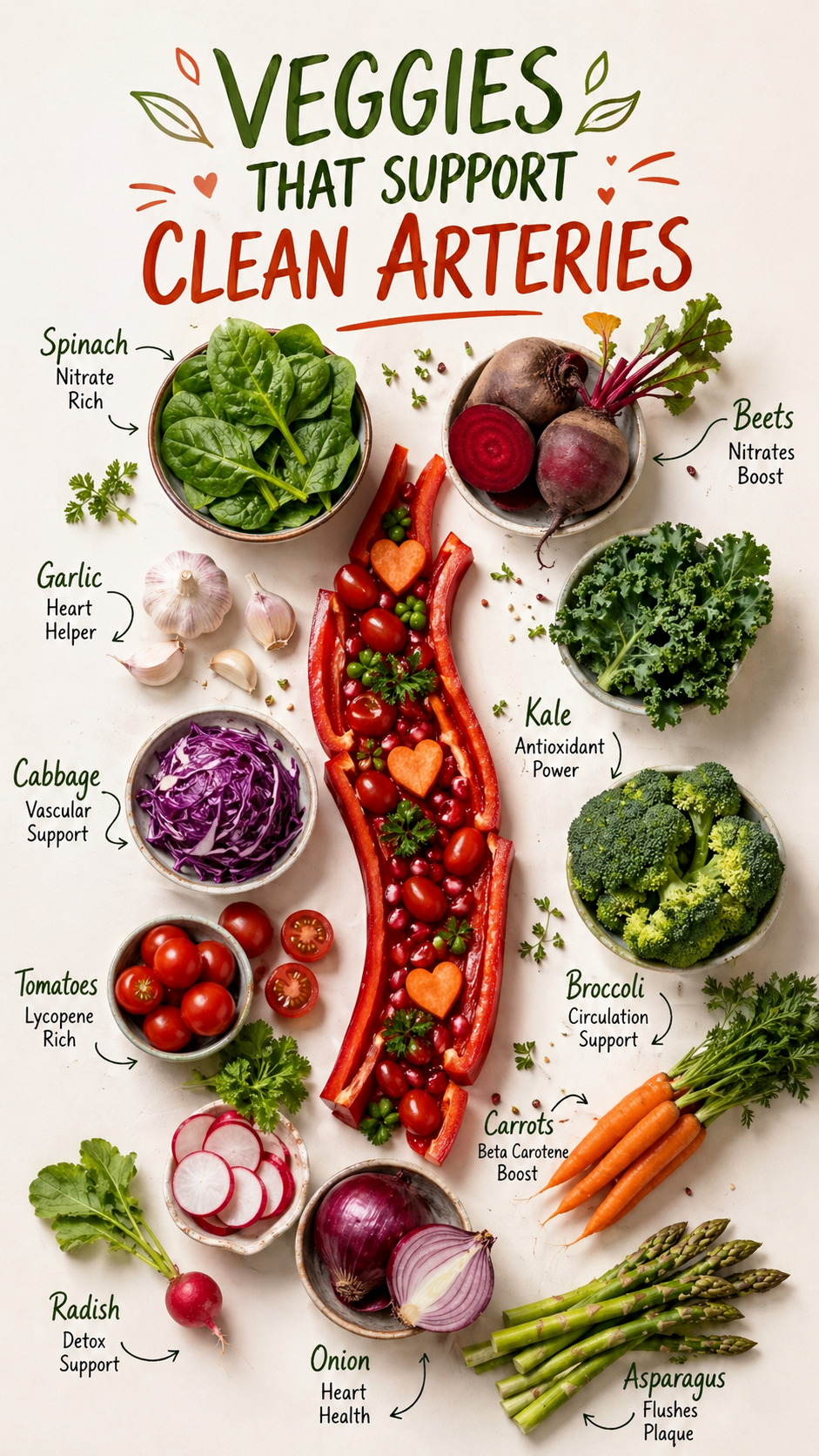
Keeping your heart healthy often starts with the simple choices you make at the grocery store. Colorful vegetables like spinach, beets, garlic, kale, broccoli, tomatoes, carrots, asparagus, cabbage, onions, and radishes are widely loved because they bring fiber, antioxidants, minerals, and plant compounds to everyday meals. When your goal is to support circulation, balanced cholesterol, and overall cardiovascular wellness, these foods deserve a regular place on your plate.
The idea of “artery-clearing” foods can sound dramatic, but the practical takeaway is simple: vegetables can support a heart-friendly lifestyle when they are paired with balanced meals, regular movement, hydration, and smart daily habits. No single food works like a magic cure, yet a vegetable-rich diet can help create the foundation your body needs for better long-term wellness.
Key Takeaways
- Leafy greens such as spinach and kale support heart-friendly eating with fiber, vitamins, and minerals.
- Beets and radishes contain natural nitrates that are often linked with healthy blood flow support.
- Garlic, onions, cabbage, and broccoli bring sulfur compounds and antioxidants to everyday meals.
- Tomatoes and carrots add colorful plant nutrients that fit well into a balanced cardiovascular diet.
- Consistency matters more than perfection when building a heart-healthy routine.
Why Vegetables Matter for Artery and Heart Health
Your arteries are blood vessels that carry oxygen-rich blood from the heart to the rest of the body. Supporting artery health means supporting flexible blood vessels, healthy blood pressure, balanced inflammation, and good cholesterol habits. Vegetables help because they are naturally rich in nutrients while being low in saturated fat and generally low in calories.
Many vegetables also contain dietary fiber, which is one of the most important nutrients for heart-friendly eating. Fiber helps meals feel satisfying, supports digestion, and can play a role in maintaining healthier cholesterol levels when eaten regularly as part of an overall balanced diet.
Important: Vegetables do not literally scrub arteries clean, but they can support the body systems connected to cardiovascular wellness. Think of them as daily support for circulation, blood pressure, cholesterol balance, and antioxidant protection.
Spinach: A Leafy Green for Daily Heart Support
Spinach is one of the easiest heart-friendly vegetables to add to your routine. It blends into smoothies, wilts quickly into soups, works well in omelets, and makes a simple base for salads. Its deep green color signals a rich mix of plant nutrients, including vitamins, minerals, and antioxidants.
Spinach is also known for its natural nitrate content. Dietary nitrates from vegetables can support nitric oxide production in the body, which is connected to healthy blood vessel function. This is one reason leafy greens are often recommended in heart-conscious eating patterns.
Easy Ways to Eat More Spinach
- Add a handful to a morning smoothie with berries and Greek yogurt.
- Use spinach as a base for a tomato, onion, and avocado salad.
- Stir it into soups, lentils, pasta, or scrambled eggs at the end of cooking.
Beets: Colorful Roots That Support Circulation
Beets stand out immediately because of their deep red color. That rich pigment comes from natural plant compounds, and beets are especially popular among people interested in blood flow and exercise performance. Like spinach, beets contain dietary nitrates, which are associated with nitric oxide production.
Roasted beets are sweet, earthy, and satisfying. They pair beautifully with leafy greens, citrus, walnuts, lentils, or a small amount of feta cheese. Beet juice is another popular option, although whole beets offer more fiber.
Pro Tip: For a heart-smart plate, combine beets with leafy greens, beans, and a source of healthy fat like olive oil or avocado. This creates a colorful meal with fiber, minerals, and satisfying flavor.
Garlic: Small Ingredient, Big Flavor
Garlic is a kitchen staple for a reason. It brings bold flavor without relying on heavy sauces, excess salt, or added sugar. In heart-conscious cooking, that matters because flavor helps healthy meals feel enjoyable and sustainable.
Garlic contains sulfur-based compounds that have made it a long-time favorite in wellness-focused kitchens. While it should not replace medical care or prescribed treatment, garlic can be a useful ingredient in a balanced diet built around vegetables, legumes, whole grains, lean proteins, and healthy fats.
How to Use Garlic in Heart-Friendly Meals
Sauté garlic gently with olive oil and vegetables, stir it into homemade salad dressings, add it to roasted broccoli, or use it to season soups and bean dishes. A little garlic can make simple vegetables taste restaurant-worthy.
Kale and Broccoli: Cruciferous Greens With Antioxidant Power
Kale and broccoli are both part of the cruciferous vegetable family, a group that also includes cabbage, cauliflower, Brussels sprouts, and radishes. These vegetables are known for fiber, vitamin content, and unique plant compounds that support a nutrient-dense diet.
Kale works well raw or cooked. Massage raw kale with lemon juice and olive oil to soften it for salads, or sauté it with garlic for a quick side dish. Broccoli can be steamed, roasted, stir-fried, or added to grain bowls.
Why This Matters
The best heart-healthy vegetables are often the ones you can eat consistently. Kale, broccoli, cabbage, and spinach are affordable, versatile, and easy to prepare in batches, making them practical choices for everyday wellness.
Cabbage: Budget-Friendly Support for Healthy Meals
Cabbage is often underrated, but it deserves more attention. It is affordable, stores well, and can be used in fresh slaws, soups, stir-fries, wraps, and fermented foods. Red cabbage adds beautiful color and extra visual appeal to meals, while green cabbage is mild and easy to cook.
Because cabbage is high in volume and pairs well with many flavors, it can help make meals more filling without making them heavy. For heart-conscious eating, that can be especially helpful when you are trying to build plates around vegetables instead of processed foods.
Simple Cabbage Ideas
- Make a crunchy slaw with cabbage, carrots, lemon, herbs, and olive oil.
- Add shredded cabbage to vegetable soup for extra texture.
- Use cabbage leaves as wraps for beans, rice, or lean protein.
Tomatoes and Carrots: Bright Colors for Antioxidant Variety
Tomatoes and carrots bring bright color to a heart-friendly plate. Tomatoes are known for lycopene, a red plant pigment that becomes especially available in cooked tomato products. Carrots are known for beta-carotene, which gives them their orange color.
Color variety is a simple way to improve the nutritional quality of your meals. Red, orange, green, purple, and white vegetables all bring different plant compounds. Instead of focusing on only one “best” food, aim to eat a rainbow over the course of the week.
Important: A colorful plate is not just more appealing. It usually means you are getting a wider range of antioxidants, fibers, and micronutrients that support overall wellness.
Onions, Radishes, and Asparagus for Everyday Circulation-Friendly Cooking
Onions add sweetness and depth to savory dishes. They can be caramelized, roasted, grilled, or added raw to salads. Like garlic, onions contain sulfur compounds and help make vegetable-forward meals more flavorful.
Radishes offer crunch, peppery flavor, and a refreshing bite. They are often used raw, but roasting radishes creates a milder, slightly sweet flavor. Asparagus is another excellent choice for light, nutrient-rich meals. It cooks quickly and pairs well with lemon, garlic, herbs, fish, eggs, grains, and salads.
Flavor Pairings That Work Well
- Asparagus with lemon, garlic, and black pepper
- Radishes with cucumber, herbs, and Greek yogurt dressing
- Onions with tomatoes, lentils, beans, or roasted vegetables
How to Build a Heart-Healthy Vegetable Plate
A heart-friendly meal does not need to be complicated. Start with vegetables, add a fiber-rich carbohydrate, include a protein source, and finish with a healthy fat. For example, you might build a bowl with spinach, roasted beets, broccoli, lentils, brown rice, garlic dressing, and pumpkin seeds.
Another option is a simple dinner plate with roasted salmon, steamed asparagus, tomato salad, and a side of cabbage slaw. For a plant-based meal, try chickpeas with kale, carrots, onions, tomatoes, and herbs over quinoa.
A Simple Formula
- Half the plate: vegetables like spinach, kale, broccoli, cabbage, or asparagus
- One quarter: whole grains or starchy vegetables
- One quarter: lean protein, beans, lentils, fish, tofu, or eggs
- Finish: olive oil, avocado, nuts, seeds, herbs, or citrus
Cooking Tips to Preserve Flavor and Nutrients
Healthy vegetables are only helpful when you actually enjoy eating them. The right cooking method can make all the difference. Roasting brings out sweetness in carrots, beets, onions, and broccoli. Quick steaming keeps asparagus and broccoli bright and tender. Sautéing greens with garlic makes them savory and satisfying.
Avoid drowning vegetables in heavy sauces or too much salt. Instead, use herbs, spices, citrus, vinegar, garlic, onion, pepper, and small amounts of healthy oils. These ingredients add flavor while keeping meals light and heart-conscious.
Pro Tip: Batch-prep two or three vegetables at the start of the week. Roasted beets, steamed broccoli, chopped cabbage, and washed spinach can turn quick lunches into nutrient-rich meals in minutes.
Common Mistakes to Avoid
One common mistake is expecting one vegetable to solve everything. Heart health is built through patterns, not single ingredients. Another mistake is eating vegetables only once in a while and expecting major benefits. Consistency is where the real value comes from.
It is also important not to rely on supplements or extreme diets without guidance. Whole vegetables provide fiber, water, texture, and a combination of nutrients that supplements cannot fully replace. If you have heart disease, high blood pressure, kidney issues, diabetes, or take medication, speak with a healthcare professional about the best eating pattern for your needs.
A Sample Day of Heart-Friendly Vegetable Meals
Breakfast
Try an egg or tofu scramble with spinach, onions, tomatoes, and garlic. Add a side of whole-grain toast or oats for extra fiber.
Lunch
Make a colorful salad with kale, cabbage, carrots, beets, broccoli, and chickpeas. Dress it with lemon, olive oil, herbs, and black pepper.
Dinner
Serve roasted asparagus, broccoli, and carrots with beans, lentils, fish, or tofu. Add a tomato-based sauce with garlic and onions for extra flavor.
At a Glance
- Choose leafy greens often for fiber and minerals.
- Add beets and radishes for natural nitrate-rich variety.
- Use garlic and onions to boost flavor without heavy sauces.
- Eat a rainbow of vegetables throughout the week.
- Pair vegetables with whole grains, protein, and healthy fats.
Conclusion: Small Vegetable Habits Can Support a Healthier Heart
Vegetables like spinach, beets, garlic, kale, broccoli, cabbage, tomatoes, carrots, onions, radishes, and asparagus are simple, powerful additions to a heart-conscious lifestyle. They bring fiber, antioxidants, color, texture, and flavor to meals while supporting the bigger picture of cardiovascular wellness.
You do not need a perfect diet to start. Add spinach to breakfast, roast beets for salads, cook broccoli with garlic, snack on carrots, or make a fresh cabbage slaw. Small choices repeated often can become lasting habits, and those habits can help support a healthier, more energized life.
Tags
Heart Health Artery Health Healthy Vegetables Clean Eating Circulation Support Leafy Greens Nutrition Tips