DIY Natural Roll-On Deodorant Recipe Easy Homemade Deodorant That Actually Works
Making your own roll-on deodorant at home is a simple way to take more control over the ingredients you apply to your skin every day. Whether you’re looking to reduce unnecessary additives, explore natural personal care options, or enjoy creating DIY beauty products, a homemade deodorant can be a rewarding project. With just a handful of accessible ingredients and a clean roll-on bottle, you can create a lightweight deodorant that feels refreshing, dries quickly, and becomes part of your everyday routine.
This guide explores the ingredients commonly used in DIY roll-on deodorants, explains why each one is included, provides helpful preparation tips, and shares practical advice for storing and using your homemade formula successfully.
Key Takeaways
- Create a lightweight roll-on deodorant using simple household ingredients.
- Understand the purpose of each ingredient before mixing.
- Store the deodorant properly to help maintain freshness.
- Customize the scent using skin-friendly essential oils.
- Follow good hygiene practices when making homemade skincare products.
Why Homemade Roll-On Deodorant Is So Popular
Natural beauty and personal care have become increasingly popular as more people seek straightforward ingredient lists and customizable skincare products. Homemade deodorants allow you to know exactly what goes into the bottle while giving you the flexibility to adjust fragrance, consistency, and overall feel.
Unlike thicker deodorant balms, a roll-on formula feels light on the skin, spreads evenly, and absorbs relatively quickly. Many people appreciate this style because it leaves less residue while providing a refreshing application experience.
Important: Homemade personal care products work best when prepared with clean equipment, carefully measured ingredients, and proper storage practices. Always perform a small patch test before using any new skincare product.
Ingredients Commonly Used in a DIY Roll-On Deodorant
A simple recipe often combines several gentle ingredients that each contribute something unique to the finished product.
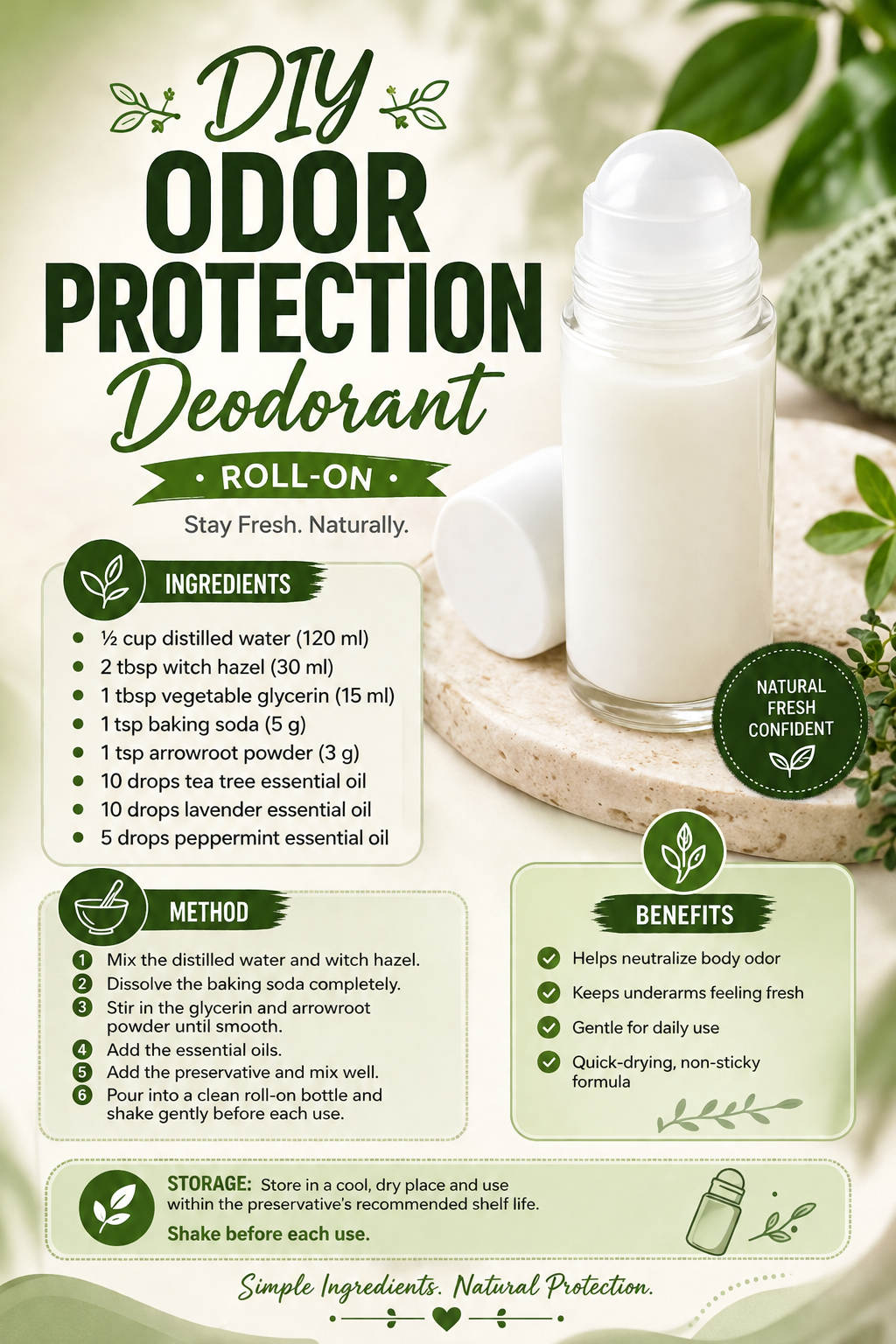
Distilled Water
Distilled water serves as the primary liquid base. Using distilled water instead of tap water helps reduce unwanted impurities and creates a cleaner starting point for the mixture.
Witch Hazel
Witch hazel is frequently included because it provides a refreshing feel and helps create a lightweight formula. It also evaporates quickly, helping the deodorant dry faster after application.
Vegetable Glycerin
Glycerin acts as a humectant that attracts moisture. In small amounts, it helps prevent the formula from feeling overly drying while improving the overall texture.
Baking Soda
Baking soda is one of the most recognizable ingredients in homemade deodorant recipes. Some people enjoy its odor-neutralizing properties, although those with sensitive skin may prefer reducing the amount or choosing alternative recipes.
Arrowroot Powder
Arrowroot powder helps create a smoother consistency and may contribute to a more comfortable feel by reducing excess moisture on the skin.
Essential Oils
Essential oils are commonly added for fragrance. Popular choices include lavender for its calming aroma, tea tree for its fresh scent, and peppermint for an invigorating finish. These should always be used carefully and in appropriate amounts.
Broad-Spectrum Preservative
Because this recipe contains water, using an appropriate broad-spectrum preservative according to the manufacturer’s instructions is generally recommended to help reduce microbial growth during storage.
Expert Insight
Water-based DIY skincare products require extra attention to cleanliness. Sanitizing your tools, bottles, and mixing containers before use can help improve the quality and longevity of your finished product.
Step-by-Step Preparation
Preparing a roll-on deodorant is relatively straightforward when you organize your ingredients beforehand.
- Combine distilled water with witch hazel in a sanitized mixing container.
- Slowly stir in the baking soda until it dissolves.
- Add vegetable glycerin and arrowroot powder while mixing continuously.
- Blend in your chosen essential oils.
- Add the preservative according to its usage instructions.
- Transfer the finished mixture into a clean roll-on bottle.
- Shake gently before each use if natural settling occurs.
Pro Tip: Use a small funnel when filling the roll-on bottle. This minimizes spills and makes transferring the liquid much easier.
Benefits of a Roll-On Formula
- Lightweight texture.
- Easy everyday application.
- Quick drying compared to thicker creams.
- Simple ingredient customization.
- Convenient travel-friendly packaging.
- Suitable for those who enjoy liquid personal care products.
Customizing Your Homemade Deodorant
One of the biggest advantages of DIY beauty recipes is personalization. You can adjust the fragrance profile to match your preferences while maintaining the overall structure of the recipe.
Fresh Herbal Blend
- Lavender
- Tea tree
- Peppermint
Citrus Inspired Blend
- Sweet orange
- Lemon
- Grapefruit
Floral Blend
- Lavender
- Geranium
- Roman chamomile
Always research safe dilution guidelines for essential oils and discontinue use if irritation develops.
Storage Tips
Proper storage helps maintain the quality of your homemade deodorant.
- Keep the bottle tightly closed.
- Store in a cool, dry location.
- Avoid prolonged exposure to direct sunlight.
- Follow the preservative manufacturer’s recommended shelf life.
- Discard the product if you notice unusual odor, color, or texture changes.
Important: Because homemade skincare products are made in small batches, preparing smaller quantities more frequently can help maintain freshness and reduce waste.
Helpful Application Tips
- Apply to clean, dry underarms.
- Allow the product to dry before dressing.
- Shake gently before each application if ingredients naturally separate.
- Reapply as needed throughout the day.
- Avoid applying to irritated or freshly shaved skin if sensitivity occurs.
Frequently Asked Questions
Can I use tap water?
Distilled water is generally preferred because it contains fewer impurities than ordinary tap water.
Do I need a preservative?
For water-based DIY formulations, an appropriate preservative is commonly recommended according to the manufacturer’s instructions.
Can I change the fragrance?
Yes. Many people customize the scent using different essential oil combinations while following safe usage guidelines.
Why should I shake the bottle?
Some natural ingredients may settle over time. A gentle shake helps redistribute the mixture before application.
Quick Points
- Use clean equipment every time.
- Choose distilled water for the base.
- Store in a cool, dry place.
- Customize scents with suitable essential oils.
- Shake before each use.
Conclusion
Creating your own DIY roll-on deodorant is a satisfying project that combines simplicity with customization. By selecting quality ingredients, maintaining clean preparation methods, and storing the product correctly, you can make a fresh-feeling deodorant that fits naturally into your daily self-care routine. Whether you’re just beginning your homemade beauty journey or expanding your collection of DIY skincare recipes, this roll-on deodorant offers an approachable and practical place to start. With thoughtful ingredient choices and careful preparation, you’ll have a personalized product that’s easy to make, easy to use, and enjoyable to incorporate into everyday life.
Tags
DIY Deodorant Natural Deodorant Roll-On Deodorant Homemade Skincare DIY Beauty Natural Living Essential Oils DIY Personal Care