Fenugreek for Hair Growth DIY Paste with Curd Fenugreek Water Guide
Natural hair care has remained popular for generations because simple plant-based ingredients often fit easily into healthy beauty routines. Among these traditional ingredients, fenugreek seeds have earned a strong reputation for supporting healthier-looking hair. Whether your goal is reducing hair fall, improving scalp care, increasing softness, or adding shine, a DIY fenugreek hair treatment can become a valuable part of your weekly routine.
This guide explores how to prepare fenugreek seed paste with curd, how to reuse the soaked fenugreek water, the potential benefits of each treatment, and practical tips for getting the most from this natural remedy. While natural ingredients are not miracle solutions, consistent care, proper nutrition, and a healthy scalp can all contribute to stronger, more vibrant hair over time.
Key Takeaways
- Fenugreek seeds are commonly used in DIY hair care routines.
- A paste made with curd can help condition dry hair.
- Soaked fenugreek water can be used as a final hair rinse.
- Weekly consistency often delivers better results than occasional use.
- Always perform a patch test before trying any homemade treatment.
Why Fenugreek Is Popular for Hair Care
Fenugreek seeds have been used in traditional beauty routines across many cultures for centuries. Their naturally slippery texture after soaking creates a smooth paste that spreads easily across the scalp and hair. This makes them ideal for nourishing masks and conditioning treatments.
Fenugreek naturally contains protein, fiber, iron, and plant compounds that have made it a favorite ingredient in homemade hair recipes. While scientific research is still evolving, many people appreciate fenugreek because it leaves hair feeling softer, easier to manage, and healthier looking after regular use.
Important: Healthy hair growth depends on many factors including genetics, nutrition, stress management, scalp health, and overall wellness. DIY hair masks can support a healthy routine, but they should be viewed as one part of complete hair care.
Understanding Fenugreek Seed Paste
Fenugreek paste is created by soaking seeds until they soften before blending them into a creamy consistency. Mixing the paste with curd creates a rich hair mask that many people enjoy because it feels cooling and moisturizing.
Why Add Curd?
Curd adds moisture and helps create a smoother texture that spreads evenly throughout the hair. It also helps prevent the paste from becoming overly thick, making application easier from roots to ends.
Ideal Hair Types
- Dry hair
- Frizzy hair
- Dull hair lacking shine
- Hair that feels rough after washing
- Scalps that benefit from gentle conditioning
How to Prepare Fenugreek Paste with Curd
The preparation process is simple and requires only a few ingredients.
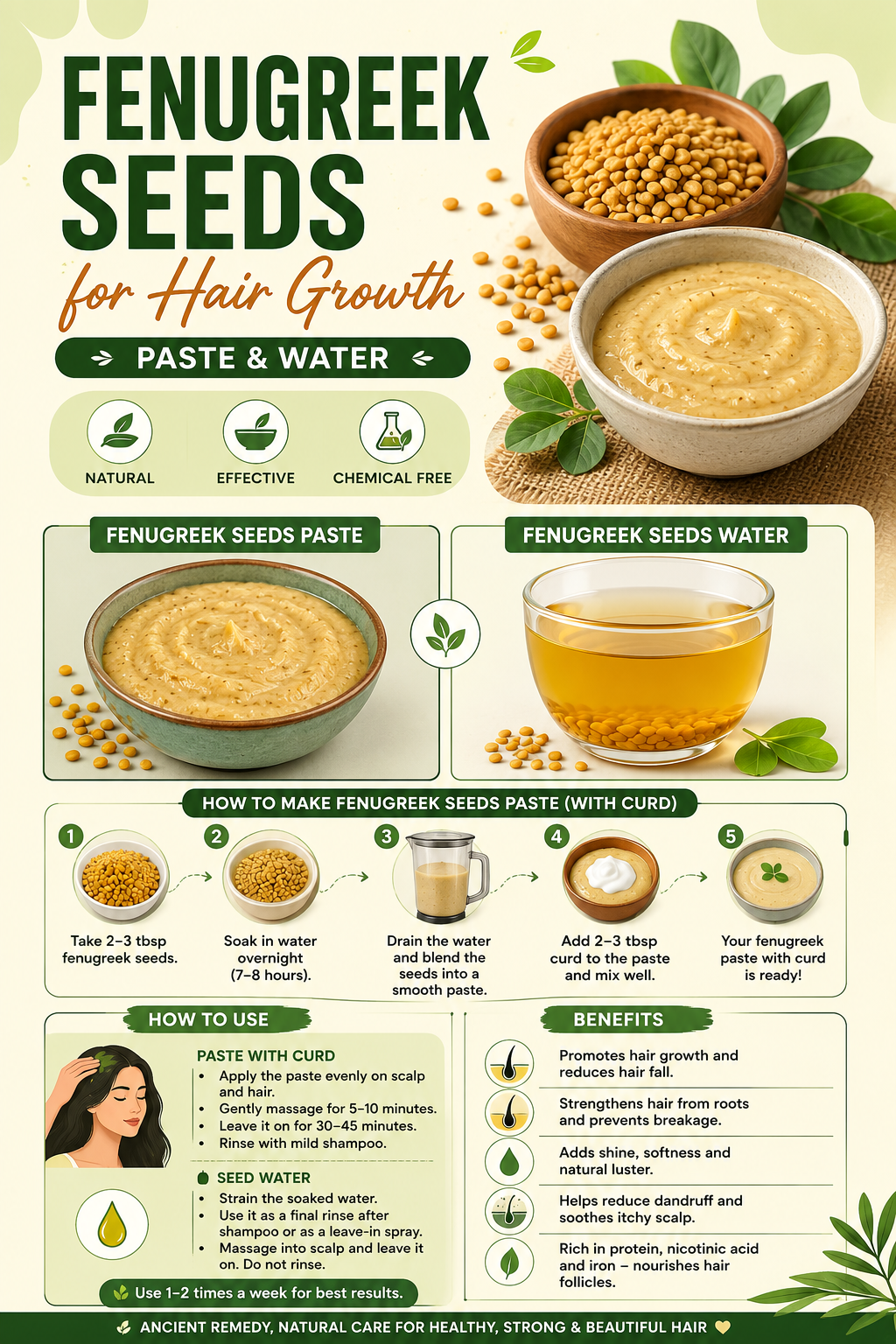
- Measure two to three tablespoons of fenugreek seeds.
- Soak the seeds in clean water for seven to eight hours or overnight.
- Drain the seeds while saving the soaking water.
- Blend the softened seeds until smooth.
- Add two to three tablespoons of plain curd.
- Mix until creamy and lump free.
The finished paste should have a smooth consistency that spreads easily without dripping.
Expert Insight
Never discard the soaking water. Many DIY hair enthusiasts use it as a final rinse or leave-in scalp mist because it helps extend the usefulness of every batch of soaked fenugreek seeds.
How to Use the Hair Mask
Apply the paste evenly over the scalp before working it through the lengths of your hair.
- Massage gently for five to ten minutes.
- Allow the mask to remain for approximately thirty to forty five minutes.
- Rinse thoroughly with lukewarm water.
- Follow with a mild shampoo if needed.
Many people repeat this treatment once or twice each week as part of their regular self-care routine.
Using Fenugreek Water
The soaking water should not go to waste. Once the seeds have been removed, the remaining liquid can be incorporated into your hair care routine in several ways.
As a Final Hair Rinse
After shampooing, slowly pour the fenugreek water over your scalp and hair before allowing it to remain without rinsing again.
As a Leave-In Spray
Transfer the strained water into a clean spray bottle. Lightly mist your scalp and hair before styling or before bedtime.
Pro Tip: Refrigerate freshly prepared fenugreek water and use it within a few days for the best freshness. Prepare small batches regularly instead of storing them for extended periods.
Potential Benefits of Fenugreek Hair Care
Supports Healthier-Looking Hair
Regular conditioning treatments can improve the overall appearance of hair by making it feel softer and smoother.
Helps Reduce Dryness
The creamy texture of fenugreek paste with curd provides moisture that may benefit dry strands and reduce roughness.
Improves Hair Manageability
Softer hair often becomes easier to comb, style, and detangle with less breakage caused by rough handling.
Adds Natural Shine
Conditioned hair reflects light more evenly, creating a smoother and healthier-looking finish.
Encourages Good Scalp Care
A clean, comfortable scalp provides a better environment for maintaining healthy hair over time.
Building a Weekly Hair Care Routine
Natural remedies work best when combined with a balanced hair care routine.
- Wash your hair with a gentle shampoo.
- Apply the fenugreek mask once or twice weekly.
- Use fenugreek water after washing.
- Avoid excessive heat styling.
- Stay hydrated.
- Eat a balanced diet rich in protein and vitamins.
- Trim split ends regularly.
Mistakes to Avoid
- Skipping the soaking process.
- Leaving large seed pieces in the paste.
- Applying to heavily tangled hair.
- Using spoiled or old fenugreek water.
- Expecting overnight transformations.
- Ignoring scalp irritation.
Safety Tips
Although fenugreek is widely used in DIY beauty routines, everyone reacts differently to natural ingredients.
- Perform a patch test before full application.
- Stop using the treatment if irritation develops.
- Avoid contact with the eyes.
- Consult a healthcare professional if you have persistent scalp conditions.
Important: Consistency usually matters more than frequency. Gentle weekly treatments combined with healthy daily habits often produce better long-term results than overusing any single hair remedy.
Frequently Asked Questions
How often should I use fenugreek paste?
One to two applications per week are commonly recommended for maintaining a consistent routine.
Can I store leftover paste?
Freshly prepared paste generally provides the best experience. Refrigerate leftovers briefly and use promptly.
Should I shampoo afterward?
A mild shampoo helps remove residue while leaving hair feeling clean and refreshed.
Can fenugreek water replace conditioner?
Fenugreek water can complement your routine, but it should not necessarily replace conditioner if your hair requires additional moisture.
At a Glance
- Soak fenugreek seeds overnight.
- Blend with curd for a nourishing hair mask.
- Reuse soaked water as a final rinse.
- Apply once or twice weekly.
- Combine with a healthy lifestyle for the best overall results.
Conclusion
Fenugreek seeds continue to be one of the most appreciated ingredients in traditional DIY hair care. Their versatility allows you to create both a nourishing paste with curd and a beneficial hair rinse from the soaking water, making every batch useful. While no natural treatment can guarantee dramatic changes on its own, consistent care, gentle handling, and healthy daily habits can all contribute to stronger, shinier, and healthier-looking hair.
If you enjoy simple beauty routines made from everyday ingredients, adding fenugreek to your weekly hair care schedule is an easy way to introduce a time-tested natural treatment that supports beautiful, well-conditioned hair.
Tags
Fenugreek Hair Mask Hair Growth Tips DIY Hair Care Natural Hair Care Fenugreek Water Healthy Scalp Homemade Hair Mask Beauty Routine