How to Reduce Inner Thigh Pigmentation Naturally Dark Inner Thigh Brightening Tips
Dark inner thigh pigmentation is a common skincare concern that affects people of all skin tones. Friction, moisture, shaving, hormonal changes, and everyday lifestyle habits can all contribute to discoloration in this delicate area. The good news is that with gentle skincare, healthy habits, and realistic expectations, you can gradually improve the appearance of uneven skin tone while keeping your skin soft, comfortable, and healthy. Instead of searching for instant fixes, focusing on consistent care often delivers the best long-term results.
Key Takeaways
- Inner thigh pigmentation is often caused by friction, moisture, and irritation.
- Gentle exfoliation and daily moisturizing support healthier-looking skin.
- Some natural ingredients may help improve skin appearance over time.
- Consistency is more important than expecting overnight results.
- Patch testing new products helps reduce the risk of irritation.
What Causes Inner Thigh Pigmentation?
Skin naturally produces melanin, the pigment responsible for its color. When the skin experiences repeated irritation or inflammation, it may produce extra melanin during the healing process. This can lead to darker patches known as post-inflammatory hyperpigmentation.
The inner thighs experience frequent movement throughout the day. Walking, exercising, and wearing fitted clothing can create repeated rubbing that gradually affects the skin’s appearance.
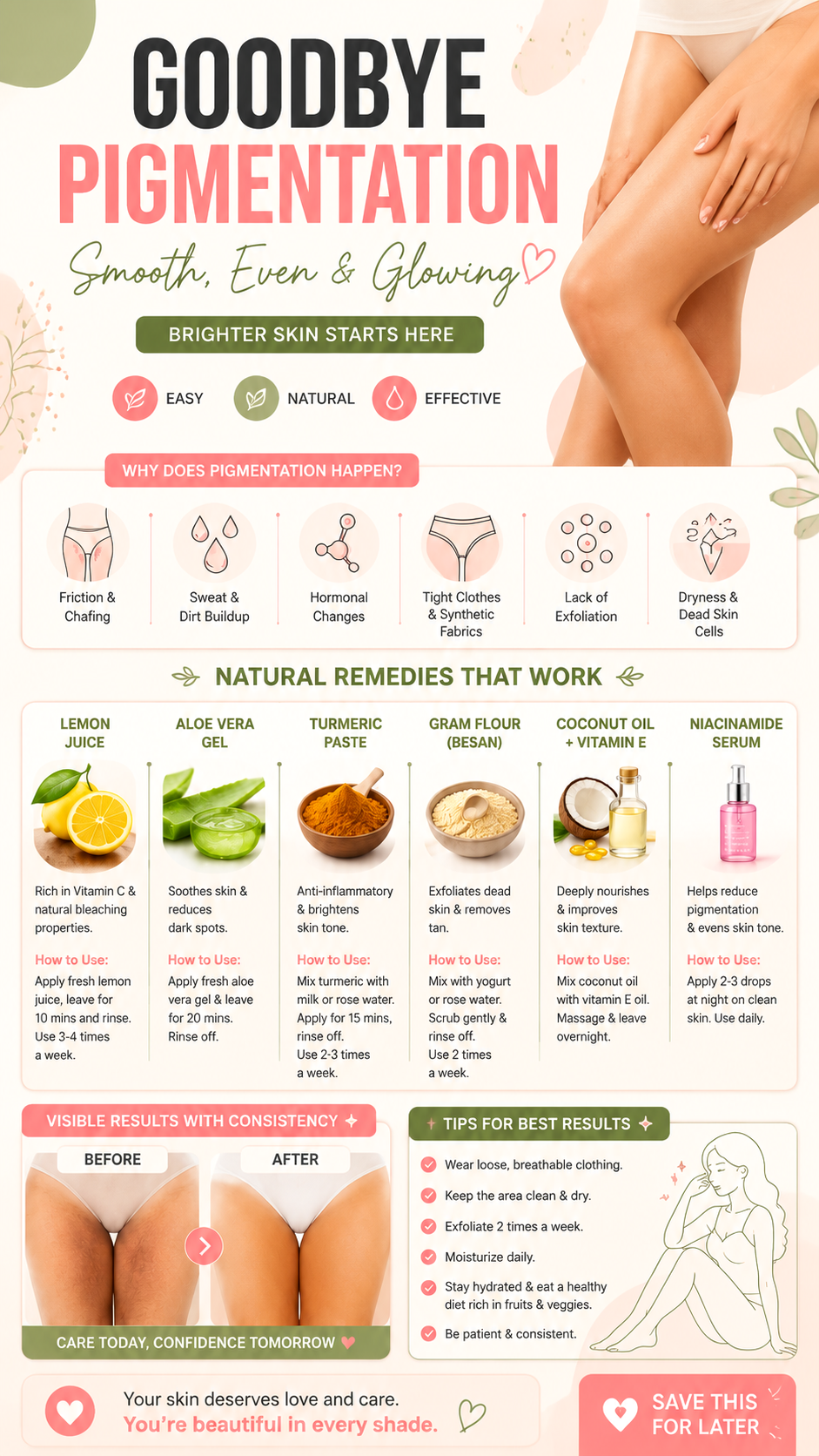
Common Factors That Contribute
- Friction from walking or exercise
- Sweat and moisture buildup
- Dead skin cell accumulation
- Hormonal fluctuations
- Shaving or hair removal irritation
- Tight clothing and synthetic fabrics
- Dry skin and lack of regular moisturizing
Important: Darkened inner thighs are extremely common and do not necessarily indicate poor hygiene. In many cases, everyday friction and natural skin responses play a much larger role than cleanliness.
Building a Gentle Inner Thigh Care Routine
A consistent routine is often more effective than using multiple harsh products. The goal is to minimize irritation while supporting healthy skin renewal.
Step 1: Cleanse Gently
Use a mild, fragrance-free cleanser that removes sweat and impurities without stripping the skin. Avoid aggressive scrubbing, as it can worsen irritation.
Step 2: Exfoliate Carefully
Gentle exfoliation once or twice a week helps remove dead skin cells and encourages smoother-looking skin. Over-exfoliating can damage the skin barrier, so moderation is essential.
Physical vs. Chemical Exfoliation
Soft exfoliating cloths or mild body scrubs can provide physical exfoliation, while skincare products containing gentle exfoliating acids may support skin turnover. Choose products designed for sensitive skin whenever possible.
Step 3: Moisturize Daily
Hydrated skin experiences less friction than dry skin. Applying a nourishing moisturizer after showering helps support the skin barrier while reducing roughness.
Expert Insight
- Gentle daily care is more effective than harsh weekly treatments.
- Reducing friction can be just as important as using brightening ingredients.
- Healthy skin barriers recover and renew more efficiently.
Natural Ingredients Commonly Used for Skin Brightening
Many people enjoy incorporating natural ingredients into their skincare routine. While research varies and results differ from person to person, several ingredients are traditionally used to improve the appearance of uneven skin tone.
Aloe Vera Gel
Aloe vera is widely appreciated for its soothing and hydrating properties. Applying pure aloe vera gel may help calm skin after shaving or irritation while providing lightweight moisture.
Turmeric Paste
Turmeric has long been used in traditional beauty routines. Homemade mixtures should be used cautiously because turmeric can temporarily stain skin and fabrics. Patch testing is always recommended.
Gram Flour Masks
Gram flour, also called besan, is commonly mixed with yogurt or rose water to create a gentle cleansing mask. It may help remove surface buildup and leave skin feeling smoother.
Coconut Oil and Vitamin E
These moisturizing ingredients help soften dry skin and improve overall texture. While they are not guaranteed to lighten pigmentation, they can support a healthier skin barrier.
Niacinamide
Niacinamide is a well-known skincare ingredient that helps improve uneven skin tone and supports the skin barrier. It is commonly found in serums and lotions formulated for daily use.
Pro Tip: Natural does not always mean irritation-free. Always perform a patch test before applying any new ingredient to larger areas of skin.
Lifestyle Habits That Make a Difference
Wear Breathable Clothing
Choose soft, breathable fabrics that reduce heat and moisture. Properly fitting clothing also minimizes constant rubbing.
Stay Dry
After exercising or spending time outdoors, change out of damp clothing promptly to reduce prolonged moisture exposure.
Maintain a Balanced Diet
A diet rich in fruits, vegetables, healthy fats, and adequate hydration supports overall skin health from within.
Exercise Comfortably
During workouts, moisture-wicking clothing and anti-chafing products can help reduce friction and discomfort.
Important: Visible improvements often happen gradually. Healthy skincare focuses on protecting the skin barrier while allowing natural renewal to occur over time.
Habits to Avoid
- Scrubbing the skin aggressively.
- Using harsh DIY mixtures that cause burning.
- Applying multiple active ingredients at once.
- Ignoring signs of irritation.
- Expecting dramatic changes within a few days.
When Should You See a Healthcare Professional?
If pigmentation develops suddenly, becomes painful, itches persistently, is accompanied by thickened skin, or continues to worsen despite good skincare, consult a qualified healthcare professional. They can identify underlying causes and recommend appropriate treatment options.
Consistency Delivers the Best Results
Healthy-looking skin is usually the result of small daily habits rather than one miracle solution. Gentle cleansing, thoughtful exfoliation, regular moisturizing, breathable clothing, and proven skincare ingredients can all work together to improve the appearance of inner thigh pigmentation over time.
Quick Points
- Reduce friction whenever possible.
- Moisturize every day.
- Exfoliate gently one or two times weekly.
- Patch test every new product.
- Be patient and stay consistent.
Conclusion
Reducing the appearance of inner thigh pigmentation is a gradual journey that combines healthy skincare habits with patience and consistency. While natural remedies and brightening ingredients may support smoother and more even-looking skin, protecting the skin barrier and minimizing friction remain equally important. Build a simple routine, treat your skin gently, and focus on long-term care rather than quick fixes. Over time, these small daily efforts can contribute to healthier, more comfortable, and more confident skin.
Tags
Inner Thigh Care
Skin Brightening
Hyperpigmentation
Body Care
Natural Skincare
Niacinamide
Healthy Skin
Self Care