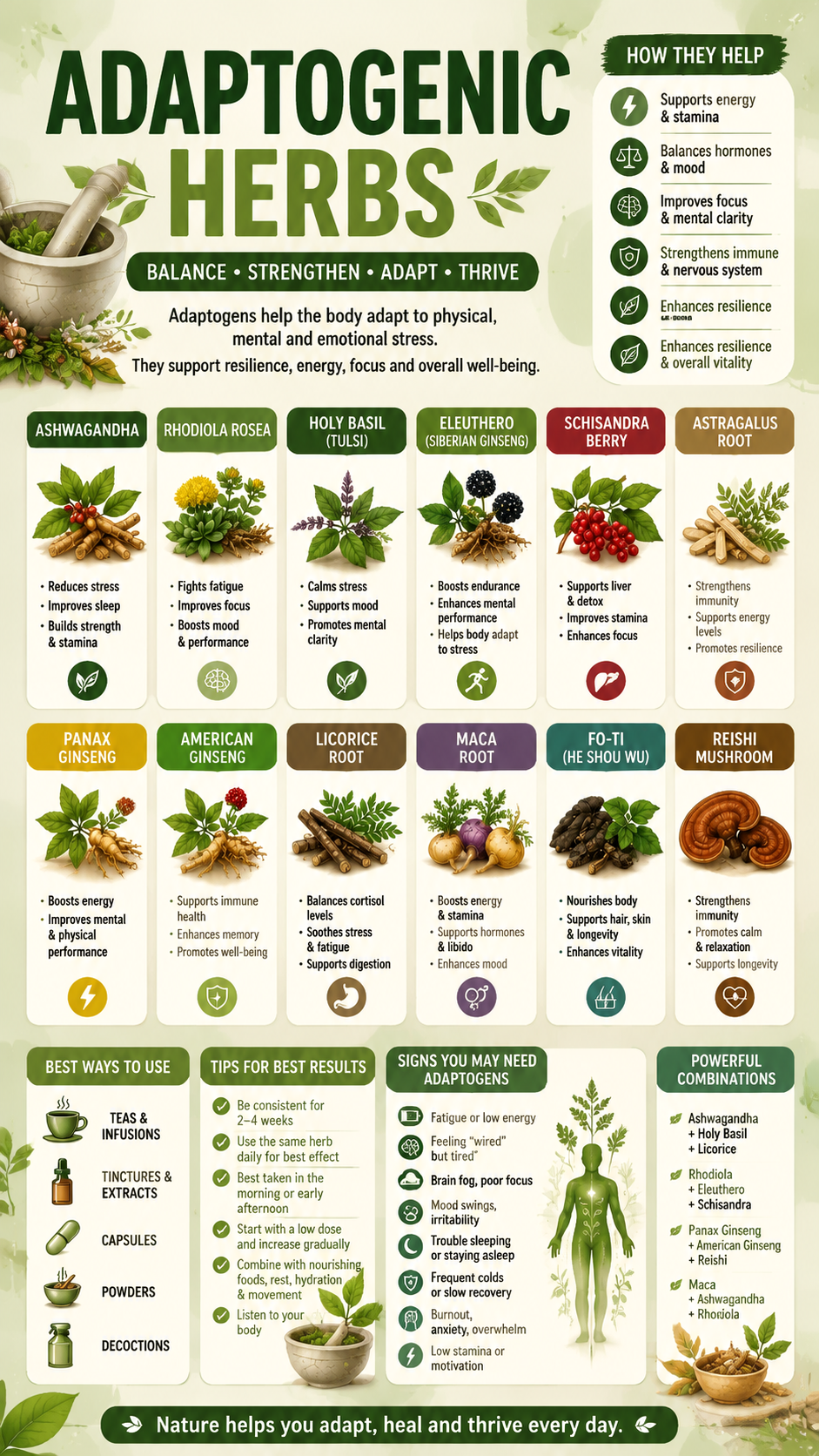
Adaptogenic Herbs Guide Natural Stress Relief, Energy Wellness Benefits
Adaptogenic herbs have become a popular part of modern wellness routines, offering a natural approach to supporting balance, resilience, energy, and overall well-being. From traditional herbal practices to today’s holistic lifestyle trends, these powerful plants are valued for their ability to help the body respond to everyday challenges.
Herbs such as ashwagandha, rhodiola rosea, holy basil, ginseng, schisandra berry, astragalus root, maca, licorice root, and reishi mushroom are often included in wellness routines focused on stress support, mental clarity, and healthy energy levels. Understanding how these herbs are traditionally used can help you create a more mindful and personalized approach to plant-based self-care.
Key Takeaways
- Adaptogenic herbs are traditionally used to support the body’s response to stress.
- Different herbs may support areas like energy, focus, relaxation, and vitality.
- Popular adaptogens include ashwagandha, rhodiola, holy basil, ginseng, and reishi.
- Consistency and mindful use are important parts of herbal wellness routines.
- Herbs work best as part of a balanced lifestyle with healthy habits.
What Are Adaptogenic Herbs?
Adaptogenic herbs are plants that have traditionally been used to help the body maintain balance during periods of physical, mental, or emotional stress. The concept of adaptogens comes from herbal traditions where certain plants were valued for their ability to promote resilience and support the body’s natural systems.
Unlike herbs that are commonly used for a single purpose, adaptogens are often described as balancing herbs because they are believed to support the body’s ability to adjust to changing demands. Many people include them in daily wellness routines to encourage steady energy, improved focus, and a greater sense of calm.
Important: Adaptogenic herbs are best viewed as supportive additions to a healthy lifestyle. They are not instant solutions, and their benefits depend on factors such as individual needs, consistent habits, nutrition, sleep, and overall wellness choices.
Popular Adaptogenic Herbs and Their Traditional Uses
Ashwagandha: A Traditional Stress Support Herb
Ashwagandha, also known as Withania somnifera, is one of the most recognized adaptogenic herbs. It has a long history in traditional wellness practices and is commonly associated with relaxation, energy support, and emotional balance.
Many people add ashwagandha to their routines when they want to support a calmer mindset, improve daily resilience, or create a more balanced approach to managing busy schedules.
Rhodiola Rosea: Supporting Energy and Mental Performance
Rhodiola rosea is traditionally used as an energizing adaptogen. It is often associated with supporting stamina, focus, and mental endurance, making it a popular choice among people looking for natural ways to support productivity.
This herb is commonly included in wellness plans focused on maintaining energy during demanding periods while encouraging a balanced response to everyday stress.
Holy Basil (Tulsi): A Calming Herbal Favorite
Holy basil, also called tulsi, is a beloved herb in traditional herbal practices. It is often used in teas and wellness blends for its refreshing qualities and association with calm, clarity, and balance.
Many herbal enthusiasts enjoy tulsi as part of a daily ritual because it combines soothing qualities with a pleasant natural flavor.
Ginseng: Supporting Vitality and Stamina
Ginseng varieties, including Panax ginseng and American ginseng, have been traditionally used to support vitality, energy, and overall wellness. These roots are commonly found in teas, extracts, and herbal supplements.
Ginseng is often chosen by people looking for natural support during periods when they want to maintain steady energy and performance.
Reishi Mushroom: A Wellness-Focused Adaptogen
Reishi mushroom is a popular functional mushroom often included in wellness routines. Traditionally valued for its calming and restorative qualities, reishi is frequently used in teas, powders, and extracts.
Its popularity has grown as more people explore plant-based approaches to supporting relaxation, recovery, and healthy daily habits.
How Adaptogenic Herbs Fit Into a Wellness Routine
Adding adaptogenic herbs to your lifestyle does not have to be complicated. Many people begin with simple practices, such as drinking herbal teas, adding powdered herbs to smoothies, or using carefully selected herbal blends.
The key is finding a routine that feels sustainable. Herbal wellness is often about small, consistent choices rather than dramatic changes.
Common Ways to Use Adaptogenic Herbs
- Herbal teas: A simple and relaxing way to enjoy herbs like holy basil and reishi.
- Powders: Often blended into smoothies, drinks, or recipes.
- Tinctures: Concentrated herbal extracts commonly used in wellness routines.
- Capsules: A convenient option for people who prefer measured servings.
- Traditional decoctions: Slow preparation methods often used with roots.
Choosing the Right Adaptogen for Your Goals
Each adaptogenic herb has unique traditional uses, so choosing one often depends on your personal wellness goals. Some people focus on relaxation, while others are interested in energy, focus, or general vitality.
For Stress and Calm
Ashwagandha and holy basil are commonly selected by people interested in calming herbal routines. These herbs are often paired with practices such as meditation, mindful breathing, and healthy sleep habits.
For Energy and Endurance
Rhodiola and ginseng are often associated with energy-focused routines. They are popular among individuals who want to support stamina and maintain productivity throughout busy days.
For Overall Wellness
Herbs like astragalus root, schisandra berry, maca, and reishi are often included in broader wellness approaches focused on balance and vitality.
Expert Insight
A thoughtful herbal routine works best when combined with foundational wellness habits. Quality sleep, nourishing foods, hydration, movement, and stress management practices create the foundation where herbal support can fit naturally.
Safety and Mindful Herbal Use
Although adaptogenic herbs are natural, it is important to use them thoughtfully. Herbal products can vary in strength and quality, and individual responses may differ.
People who are pregnant, nursing, taking medications, or managing health conditions should speak with a qualified healthcare professional before adding new herbs to their routine.
Choosing reputable sources, following recommended usage instructions, and paying attention to how your body responds are important parts of responsible herbal wellness.
At a Glance: Adaptogenic Herb Benefits
- Supports a balanced approach to daily stress.
- Encourages mindful energy and focus routines.
- Adds variety to natural wellness practices.
- Offers many traditional herbal options to explore.
Conclusion: Building a Balanced Herbal Wellness Practice
Adaptogenic herbs offer an inspiring way to explore traditional plant-based wellness. From calming herbs like holy basil and ashwagandha to energizing options like rhodiola and ginseng, each plant brings unique qualities to a mindful routine.
The best approach is to view adaptogens as one piece of a complete wellness lifestyle. When combined with healthy habits, intentional choices, and consistent self-care, these herbs can become a meaningful part of your journey toward balance and vitality.
Tags
Adaptogenic Herbs
Herbal Wellness
Ashwagandha
Natural Stress Support
Holistic Living
Plant Based Wellness
Herbal Remedies