The Blue Zone Guide Simple Self Care Tips to Boost Your Mood and Energy
Feeling low, tired, unmotivated, or emotionally drained can happen to anyone. The Blue Zone is a simple way to understand those moments when your energy feels low and your mind needs extra care. Instead of judging these feelings, this wellness concept encourages awareness, kindness, and small steps that help you return to a more balanced emotional state.
The idea behind the Blue Zone is not about staying stuck in difficult feelings. It is about recognizing what your body and mind may be communicating. When you notice signs like low energy, wanting to be alone, feeling disconnected, or losing interest in everyday activities, it can be a reminder to slow down and practice self-care.
Key Takeaways
- The Blue Zone represents moments of low energy and emotional heaviness.
- Recognizing your feelings is the first step toward caring for yourself.
- Small actions like resting, moving gently, and connecting with others can help.
- Self-care routines can support emotional wellness and daily balance.
- You can move through difficult moments one small step at a time.
Understanding the Blue Zone and Emotional Wellness
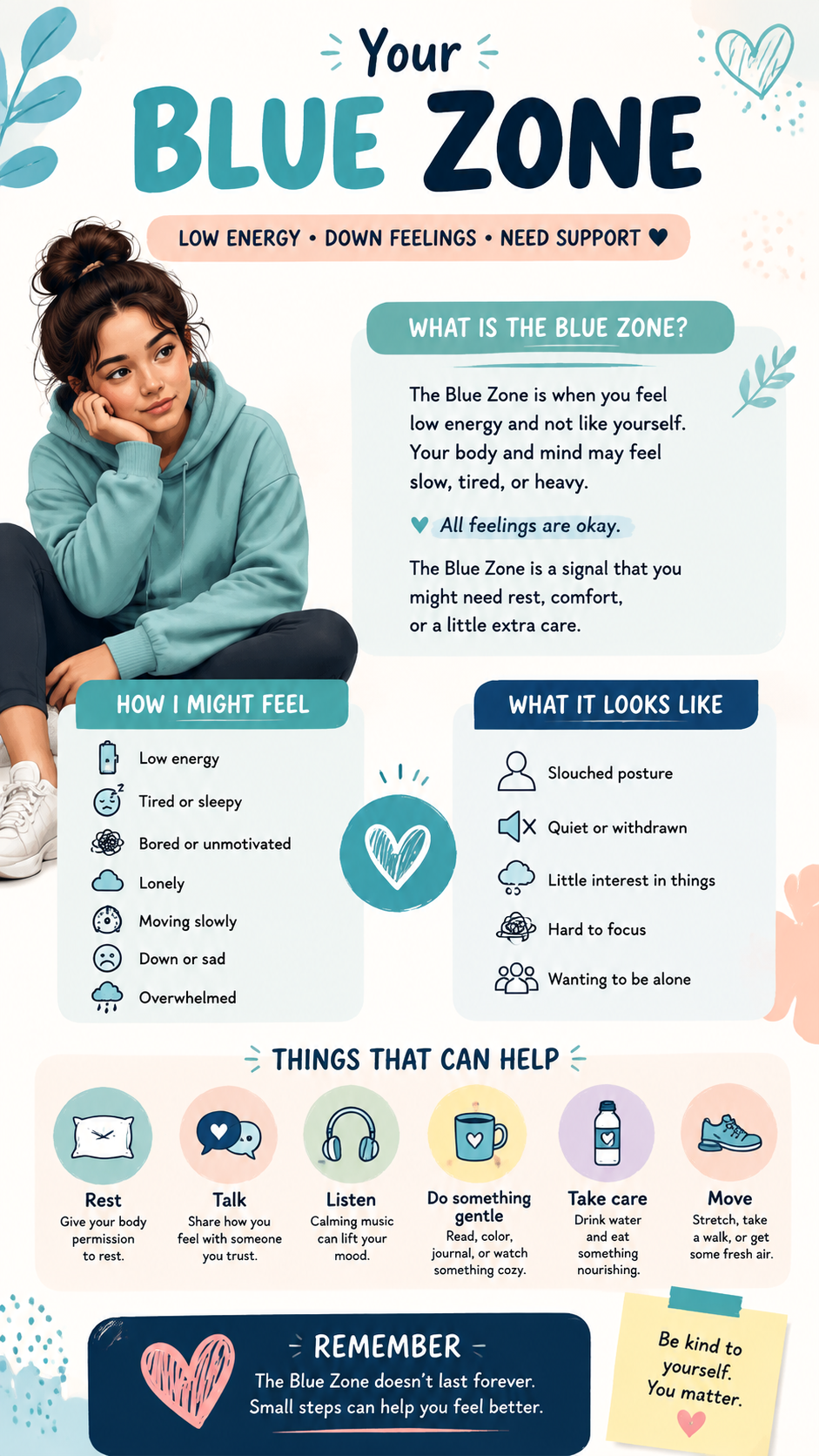
The Blue Zone is a visual and emotional reminder that not every day feels energetic or productive. Life naturally moves through different emotional states, and some days bring feelings of tiredness, sadness, boredom, or needing extra comfort.
Many people experience moments where their body feels heavy, their motivation disappears, or simple tasks feel more difficult than usual. These experiences can be signals that it is time to pause and provide yourself with support rather than pushing harder.
Important: Low-energy moments are a normal part of being human. Listening to your emotions can help you understand what you need, whether that means rest, comfort, connection, or a gentle change in routine.
Common Feelings Associated With the Blue Zone
The Blue Zone concept highlights several emotions and behaviors that may appear when someone is feeling mentally or physically drained. These signs can look different from person to person, but common experiences include:
- Feeling down, sad, or emotionally heavy
- Low energy or feeling physically tired
- Losing motivation for activities you normally enjoy
- Wanting more quiet time or personal space
- Feeling lonely or disconnected
- Moving more slowly than usual
Recognizing these feelings does not mean something is wrong with you. It simply creates an opportunity to check in with yourself and choose supportive actions.
Signs You May Be in a Low Energy State
Understanding your personal signs of emotional fatigue can make self-care easier. The earlier you notice changes in your mood or energy, the easier it can be to respond with patience and care.
Physical Signs
Your body often communicates before your mind fully recognizes stress or exhaustion. You may notice:
- Feeling sleepy or needing more rest
- Low physical energy throughout the day
- A slower pace during normal activities
- Feeling tense, heavy, or physically worn out
Emotional Signs
Your emotions may also provide important clues. A Blue Zone moment may include feeling less interested in things, becoming quieter, or needing more emotional support.
- Reduced excitement about hobbies or routines
- Feeling overwhelmed by small challenges
- Needing reassurance or comfort
- Feeling less connected to others
Why This Matters
Emotional awareness helps you respond with compassion instead of criticism. Simple habits like taking a break, talking with someone you trust, or doing something calming can support a healthier mindset.
Simple Self-Care Ideas to Return to the Green Zone
Moving out of a low-energy state does not always require big changes. Often, small and gentle actions can create a positive shift. The goal is not to force yourself to feel different instantly but to support your well-being with patience.
1. Get Enough Rest
Rest is one of the most important forms of self-care. Sleep, naps, quiet moments, and breaks from constant activity can help your body recover and recharge.
When your energy feels low, give yourself permission to slow down. Rest is not wasted time. It is a way of caring for your physical and emotional health.
2. Talk to Someone You Trust
Sharing your thoughts with a supportive friend, family member, or trusted person can make difficult feelings feel lighter. Connection reminds you that you do not have to handle every emotion alone.
3. Listen to Music or Do Something Comforting
Calming activities can gently improve your mood. Listening to music, reading, journaling, coloring, or enjoying a cozy activity can create moments of peace during a difficult day.
4. Drink Water and Nourish Your Body
Basic needs often become easy to overlook when you feel tired or emotionally overwhelmed. Drinking water, eating regular meals, and caring for your body can support your overall energy.
5. Add Gentle Movement
You do not need an intense workout to support your mood. Stretching, taking a short walk, or moving your body in a comfortable way can help you feel more refreshed.
Pro Tip: Choose one small action instead of trying to change everything at once. A glass of water, a few deep breaths, or a short walk can be a meaningful first step.
Creating a Personal Self-Care Routine
A helpful self-care routine does not need to be complicated. The best routines are realistic, comfortable, and easy to repeat. Think about what helps you feel calm, supported, and refreshed.
Morning Self-Care Ideas
- Drink water after waking up
- Take a few quiet minutes before starting your day
- Practice positive thoughts or gratitude
Evening Self-Care Ideas
- Create a relaxing bedtime routine
- Reduce stressful activities before sleep
- Reflect on one good moment from the day
Supporting Mental Health With Small Steps
Self-care is not about being happy all the time. It is about building a healthier relationship with your emotions. Every feeling provides information, and every small act of care can help you feel more balanced.
If low feelings become overwhelming, last for a long time, or interfere with daily life, reaching out to a mental health professional can be an important step. Support and guidance are valuable parts of emotional wellness.
At a Glance
- Notice when your energy and mood change.
- Practice gentle self-care without pressure.
- Connect with people who support you.
- Remember that difficult moments can pass.
Final Thoughts: Your Feelings Matter
The Blue Zone is a reminder that every emotional state deserves understanding and care. Feeling tired, quiet, or less motivated does not define you. These moments are opportunities to slow down, listen to yourself, and practice kindness.
Small steps can create meaningful changes. Whether you choose to rest, connect with someone, listen to music, or take a gentle walk, each caring action helps you move toward a healthier and more balanced state of mind.
Remember that self-care begins with noticing what you need. Give yourself patience, compassion, and time. Your emotional wellness matters, and even the smallest steps forward count.
Tags
Self Care
Mental Health Awareness
Emotional Wellness
Mindfulness
Positive Habits
Mood Support