40 Life Skills Everyone Should Learn for a More Independent Life
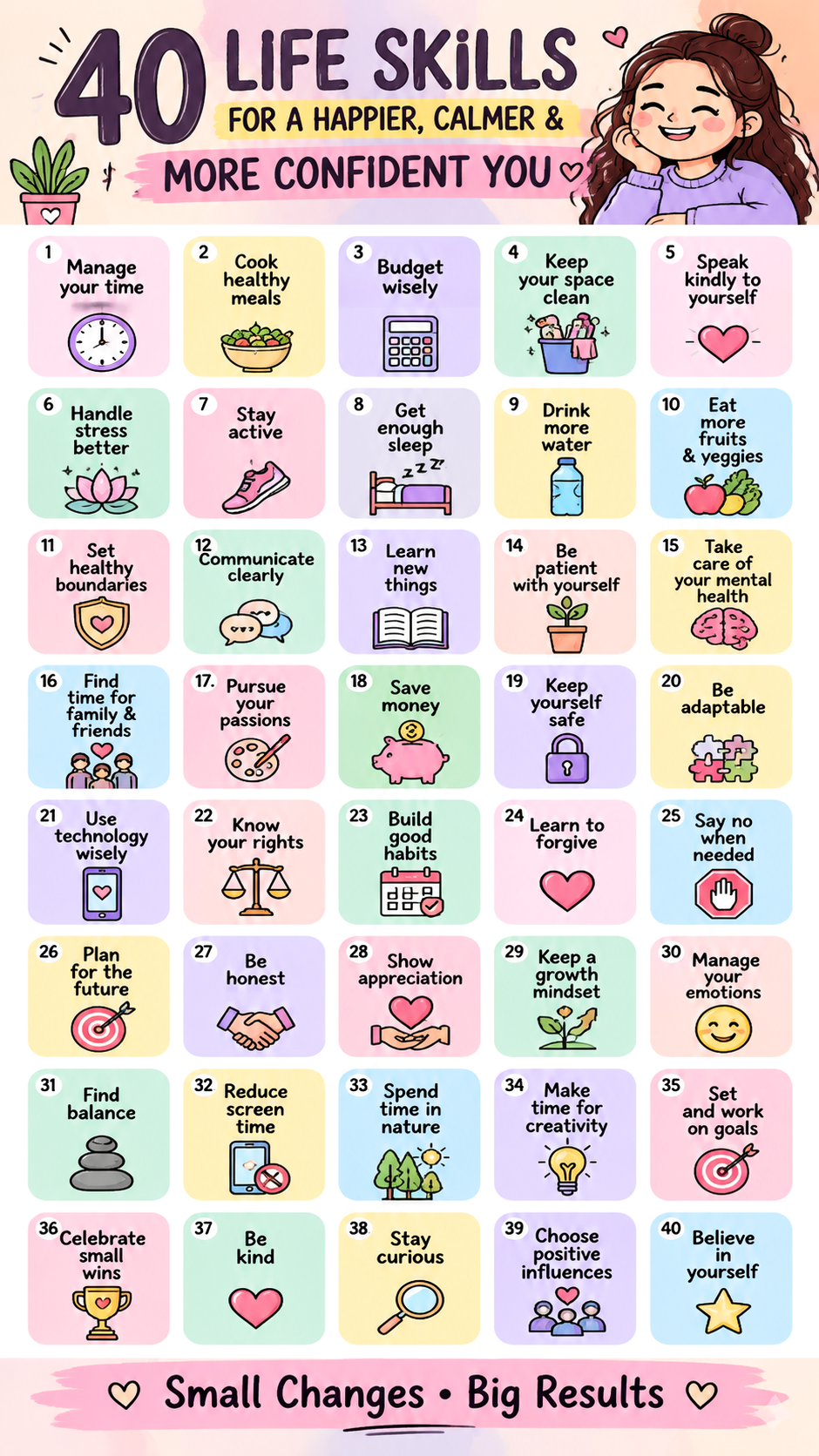
Life is not just about gaining knowledge in school or building a career. Many of the most valuable lessons come from learning practical life skills that help you become more confident, independent, and prepared for everyday challenges. From managing your time and money to communicating clearly and taking care of yourself, these skills create a strong foundation for personal growth.
The journey toward becoming a capable adult is built through small habits practiced consistently. You do not need to master everything overnight. Each new skill you learn adds confidence and makes daily life smoother, more organized, and more fulfilling.
Key Takeaways
- Practical life skills build independence and self-confidence.
- Money management and organization habits support long-term stability.
- Communication skills improve relationships and opportunities.
- Small daily improvements create meaningful personal growth.
- Learning never stops, and every skill adds value to your life.
Why Learning Life Skills Matters
Life skills are the abilities that help you handle responsibilities, solve problems, and make thoughtful decisions. They are not always taught in classrooms, yet they influence almost every part of daily living. Knowing how to plan your schedule, prepare simple meals, maintain your home, and communicate effectively can make a major difference in your confidence and independence.
Many people focus on professional skills while overlooking the everyday abilities that support a balanced life. Strong life skills help you adapt when situations change, manage stress more effectively, and feel more prepared for unexpected challenges.
Important: Life skills are built through practice, not perfection. Every small action, from creating a budget to learning how to communicate your needs, strengthens your ability to navigate life with confidence.
Essential Everyday Skills Everyone Should Develop
1. Time Management and Planning
Learning how to manage your time is one of the most useful skills for personal and professional success. Good time management allows you to complete responsibilities, reduce stress, and create space for activities that matter to you.
Simple strategies like creating a daily checklist, setting realistic goals, and prioritizing important tasks can help you stay organized. Planning ahead also makes it easier to handle busy periods without feeling overwhelmed.
Simple Ways to Improve Time Management
- Write down your top priorities each morning.
- Break large goals into smaller steps.
- Avoid unnecessary distractions when focusing on important tasks.
- Schedule time for rest and personal activities.
2. Basic Cooking and Meal Preparation
Cooking simple meals is a valuable skill that supports independence, healthier choices, and better financial habits. You do not need to become a professional chef to enjoy the benefits of preparing your own food.
Learning basic cooking techniques, understanding ingredients, and planning affordable meals can save money while helping you build a stronger connection with your health and daily routines.
3. Budgeting and Money Management
Financial skills are among the most important life skills because money decisions affect many areas of life. Understanding how to create a budget, save consistently, and spend wisely can provide greater freedom and security.
Start by tracking your expenses and identifying areas where you can save. Even small changes, such as planning purchases or avoiding unnecessary spending, can create positive financial habits over time.
Beginner Money Habits
- Create a simple monthly spending plan.
- Save a small amount regularly.
- Learn the difference between needs and wants.
- Prepare for unexpected expenses.
4. Communication and Speaking Up
Strong communication skills help you build healthier relationships and express yourself clearly. Being able to share your thoughts, listen actively, and set boundaries is essential in both personal and professional situations.
Learning to speak up for yourself does not mean being aggressive. It means respecting your own needs while also considering the feelings and perspectives of others.
Personal Growth Skills That Strengthen Your Future
Building Emotional Awareness
Managing emotions is a skill that improves decision-making and relationships. Emotional awareness helps you understand your feelings, respond calmly, and handle stressful situations with greater control.
Practices such as journaling, mindfulness, and taking time to reflect can help you recognize patterns and develop healthier responses.
Learning From Mistakes
Mistakes are a natural part of growth. Instead of seeing failures as setbacks, view them as opportunities to learn and improve. People who develop resilience become better at adapting to change and overcoming challenges.
Keeping Your Environment Organized
A clean and organized space can improve focus and reduce daily stress. Simple habits like putting items back in their place, maintaining laundry routines, and creating basic cleaning schedules make life easier.
Organization is not about creating perfection. It is about creating a supportive environment where you can feel comfortable and productive.
How to Start Learning New Life Skills
The best way to develop life skills is to start small. Choose one area you want to improve and practice consistently. Over time, simple actions become habits that shape your lifestyle.
- Identify a skill you want to improve.
- Break it into small, manageable steps.
- Practice regularly until it becomes natural.
- Reflect on your progress and continue improving.
Remember that everyone learns at a different pace. The goal is progress, not perfection. Each new skill you develop helps you become more capable and confident.
Expert Insight
- Small habits create long-term results.
- Practical skills increase independence and confidence.
- Continuous learning keeps you prepared for new challenges.
Life Skills Checklist for Everyday Success
A balanced collection of life skills includes practical, emotional, and social abilities. By developing different areas of your life, you create a stronger foundation for future opportunities.
- Manage your time effectively.
- Prepare simple meals.
- Create healthy financial habits.
- Communicate with confidence.
- Stay organized.
- Adapt to change.
- Ask for help when needed.
- Celebrate progress and small wins.
At a Glance
- Life skills create independence.
- Daily practice leads to confidence.
- Organization improves productivity.
- Communication strengthens relationships.
Conclusion: Small Skills Create Big Changes
Developing life skills is a lifelong journey that helps you become more prepared, confident, and adaptable. The small things you learn today can create meaningful improvements in your future.
Whether you are learning how to budget, organize your space, communicate better, or manage your emotions, every skill adds value to your everyday life. Growth happens one step at a time, and each new ability brings you closer to becoming the best version of yourself.
Tags
Life Skills
Personal Growth
Self Improvement
Adulting Tips
Productivity Habits
Confidence Building