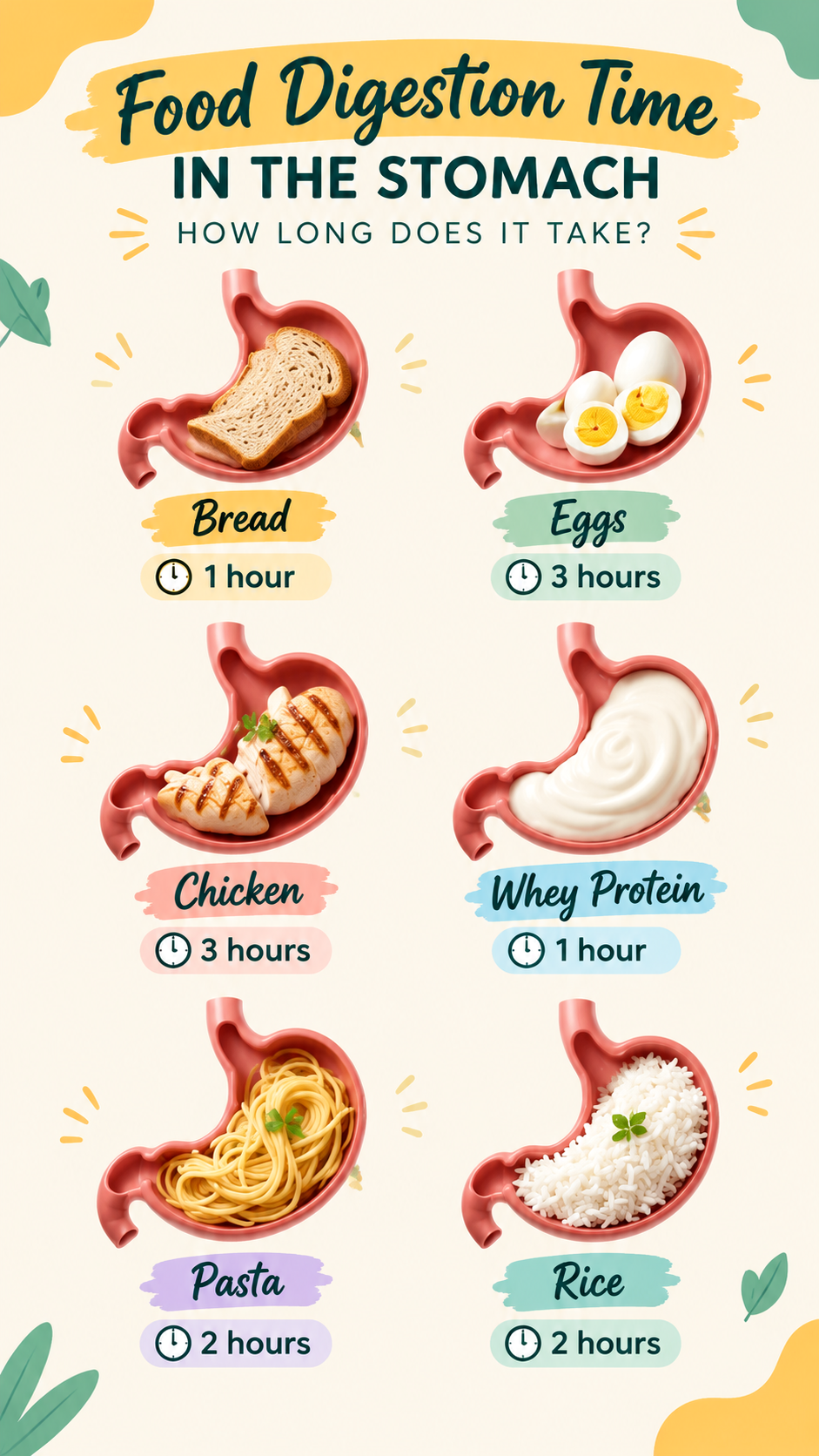
Food Digestion Times How Long Your Favorite Foods Stay in Your Stomach
Understanding how long different foods take to digest can help you make smarter choices about meal timing, portion sizes, and overall eating habits. Digestion is a complex process influenced by many factors, including the type of food, preparation method, individual metabolism, and the balance of nutrients in a meal. A simple digestion time guide can provide a helpful starting point for anyone interested in nutrition, gut health, and mindful eating.
The foods commonly highlighted in digestion charts, including bread, eggs, chicken, whey protein, pasta, and rice, represent some of the most popular choices in everyday diets. Each one interacts with the digestive system differently because carbohydrates, proteins, and fats require different amounts of time and effort to break down.
Key Takeaways
- Different foods move through the stomach at different rates.
- Protein-rich foods often require more digestive effort than simple carbohydrates.
- Food combinations can change overall digestion time.
- Individual digestion speed varies based on lifestyle and health factors.
- Balanced meals support steady energy and comfortable digestion.
How Food Digestion Time Works
Digestion begins as soon as you start eating. Chewing breaks food into smaller pieces, while saliva begins the first stages of breaking down certain nutrients. After swallowing, food travels to the stomach, where acids and enzymes continue the process before nutrients move into the small intestine for absorption.
When people talk about food digestion time, they often refer specifically to how long food remains in the stomach. However, the complete digestive journey takes much longer because the body must process, absorb, and eliminate different components of food.
Important: Digestion charts provide general estimates, not exact measurements. Your personal digestion speed can change depending on hydration, activity level, stress, sleep, and the overall composition of your meals.
Understanding the Digestion Times of Common Foods
Bread: A Quick Source of Carbohydrates
Bread is a carbohydrate-based food that is generally processed relatively quickly compared with protein-heavy foods. The digestion time shown in many food charts places bread among faster-digesting options because starches can be broken down into glucose, which the body uses for energy.
The type of bread can influence digestion. White bread, whole grain bread, and bread containing seeds or added fiber may affect fullness and digestion differently. Foods with more fiber often slow digestion slightly and may help support longer-lasting energy.
Eggs: A Protein-Rich Choice
Eggs are known for providing high-quality protein and important nutrients. Protein generally takes longer to digest than simple carbohydrates because the body must break proteins down into amino acids before they can be absorbed.
The way eggs are prepared can also affect digestion. Boiled eggs, scrambled eggs, and eggs cooked with added fats may feel different in the stomach depending on the individual and the rest of the meal.
Chicken: A Longer-Digesting Protein Source
Chicken is another protein-focused food that often takes longer to digest than carbohydrate sources. Lean chicken provides protein that supports muscle maintenance and can contribute to feelings of fullness.
Preparation methods matter. Grilled or baked chicken may be easier for some people to digest compared with heavily fried versions because added oils and fats can slow stomach emptying.
Whey Protein: Fast and Convenient Nutrition
Whey protein is commonly used by athletes and people looking to increase their protein intake. Because it is already processed into a concentrated form, it is often considered a convenient protein option that can be digested relatively quickly.
However, digestion experiences vary. Some people tolerate whey protein easily, while others may prefer plant-based proteins or whole-food sources depending on their dietary needs.
Pasta and Rice: Popular Energy Foods
Pasta and rice are staple carbohydrate foods enjoyed around the world. Their digestion speed can depend on factors such as cooking method, portion size, and whether they are eaten alone or combined with protein, vegetables, or fats.
For example, a meal containing rice with chicken and vegetables will typically digest differently from a bowl of plain rice because the added nutrients influence how quickly the stomach processes the meal.
Pro Tip: Instead of focusing only on digestion speed, consider the full nutritional value of a meal. A balanced combination of protein, carbohydrates, healthy fats, and fiber often supports better energy and satisfaction.
Factors That Influence Digestion Speed
Food digestion time is not the same for everyone. Many personal and environmental factors affect how quickly the stomach processes a meal.
Meal Size and Portion Control
Larger meals generally require more digestive work than smaller portions. Eating very large amounts at once may leave some people feeling overly full or uncomfortable.
Fiber Content
Fiber-rich foods often slow digestion and help support a feeling of fullness. Fruits, vegetables, legumes, and whole grains can play an important role in a balanced eating pattern.
Hydration and Lifestyle Habits
Drinking enough water, staying active, and maintaining healthy daily routines can support normal digestive function. Regular movement may help the digestive system work efficiently.
Choosing Foods Based on Your Goals
Different digestion speeds may be useful depending on your personal goals. Someone preparing for exercise may prefer foods that provide accessible energy, while someone planning a filling meal may choose foods that provide longer-lasting satisfaction.
- For quick energy: Carbohydrate sources such as rice, pasta, and bread can provide fuel for daily activities.
- For fullness: Protein-rich foods like eggs and chicken can help create satisfying meals.
- For convenience: Whey protein can be an easy option when whole-food protein sources are not available.
- For balance: Combining multiple food groups creates more complete meals.
Expert Insight
- Digestion time is only one part of healthy eating.
- Nutrient quality and portion balance are equally important.
- Listening to your body’s hunger and fullness signals can help guide better choices.
Common Questions About Food Digestion Time
Does faster digestion mean a food is healthier?
Not necessarily. Digestion speed does not determine whether a food is healthy or unhealthy. A nutritious diet includes a variety of foods that provide essential nutrients, energy, and satisfaction.
Why do some meals feel heavier?
Meals higher in fat, larger portions, or combinations of several nutrient types may take longer to process. Individual tolerance also plays a role in how meals feel after eating.
Can digestion time affect workout meals?
Many people consider digestion when planning meals around exercise. Eating choices and timing may vary depending on personal comfort, activity level, and fitness goals.
At a Glance
- Food digestion times are general estimates.
- Protein, carbohydrates, and fats digest differently.
- Meal combinations influence digestion speed.
- Balanced nutrition matters more than digestion time alone.
Conclusion: Understanding Digestion for Smarter Eating
Learning about food digestion time can help you become more aware of how different foods fit into your daily routine. Bread, eggs, chicken, whey protein, pasta, and rice all provide unique nutritional benefits and can play a role in a balanced diet.
Rather than focusing only on how quickly a food leaves the stomach, consider the bigger picture: nutrient quality, meal balance, portion size, and how your body responds. Simple awareness of digestion can make meal planning easier and help you create eating habits that support your lifestyle.
Tags
Food Digestion
Healthy Eating
Gut Health
Nutrition Tips
Protein Foods
Meal Planning
Healthy Lifestyle