9 Powerful Anti-Inflammatory Herbs Spices Turmeric, Ginger, Garlic More
Inflammation is a natural process that helps the body respond to injury and stress, but ongoing inflammation can affect overall wellness and comfort. Many people are turning to everyday kitchen ingredients as part of a balanced lifestyle, and herbs and spices have gained attention for their traditional uses, rich flavors, and naturally occurring plant compounds. From golden turmeric and warming ginger to aromatic rosemary and garlic, these ingredients can add both taste and nutritional value to daily meals.
This guide explores 9 anti-inflammatory herbs and spices that are commonly used in cooking and wellness routines. Discover how these flavorful ingredients fit into a healthy diet, why they are valued, and simple ways to include them in your favorite recipes.
Key Takeaways
- Turmeric, ginger, and garlic are popular ingredients valued for their natural plant compounds.
- Spices can support a flavorful, nutrient-rich approach to everyday cooking.
- Combining herbs and spices creates delicious meals while adding variety to your diet.
- Black pepper may help enhance the use of turmeric in recipes.
- Small daily habits, such as adding herbs to meals, can support a balanced lifestyle.
Understanding Anti-Inflammatory Herbs and Spices
Herbs and spices have been used for centuries in traditional cooking and wellness practices around the world. Their vibrant colors, distinctive aromas, and unique flavors come from naturally occurring compounds found within the plants. Many of these compounds are studied for their antioxidant properties and their role in supporting a healthy response to everyday stress.
Adding anti-inflammatory herbs and spices to meals does not replace a balanced diet or healthy habits, but it can be an enjoyable way to increase the variety of plant-based ingredients you consume. A colorful spice cabinet often represents a wide range of beneficial plant compounds that can complement vegetables, grains, proteins, and other nourishing foods.
Important: Herbs and spices work best as part of an overall healthy lifestyle that includes a variety of whole foods, regular movement, good sleep habits, and mindful eating choices.
9 Anti-Inflammatory Herbs and Spices to Add to Your Kitchen
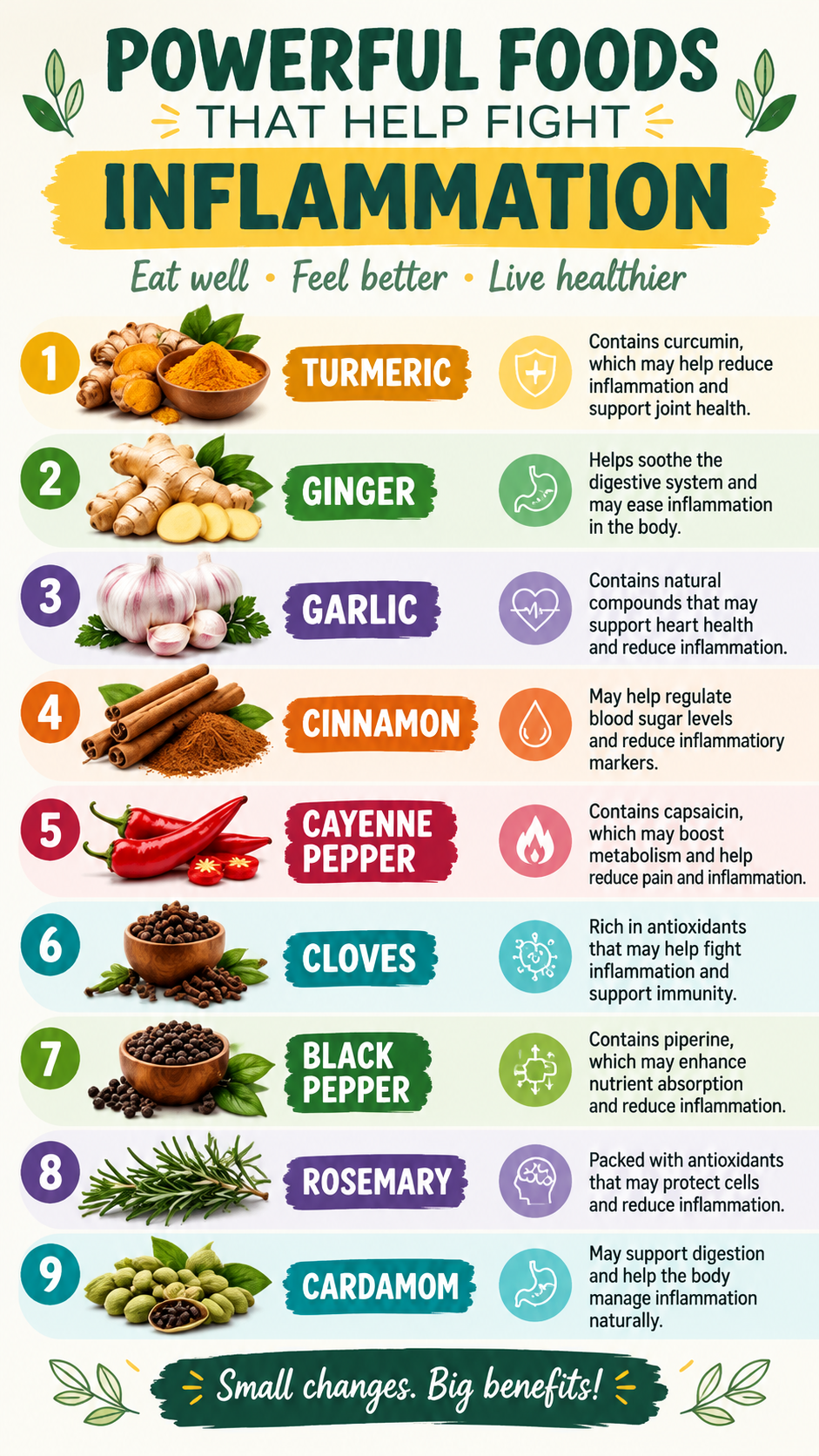
1. Turmeric: The Golden Spice
Turmeric is one of the most recognized spices associated with anti-inflammatory cooking. Its bright yellow-orange color comes from curcumin, a naturally occurring compound that has been widely researched for its antioxidant properties.
This versatile spice is commonly added to curries, soups, roasted vegetables, rice dishes, and warm drinks. Many recipes combine turmeric with black pepper because this pairing is traditionally used to complement the spice’s unique qualities.
Simple Ways to Use Turmeric
- Mix it into vegetable soups for extra color and warmth.
- Add a pinch to scrambled eggs, rice, or roasted vegetables.
- Create a comforting turmeric beverage with spices like cinnamon and ginger.
2. Ginger: A Warming Root Spice
Ginger brings a refreshing, slightly spicy flavor to both sweet and savory dishes. It contains natural compounds such as gingerol, which contribute to its distinctive taste and have made it a popular ingredient in traditional wellness practices.
Fresh ginger can be grated into stir-fries, teas, smoothies, sauces, and marinades. Ground ginger is also a convenient option for baking and spice blends.
3. Garlic: A Flavorful Kitchen Staple
Garlic is loved around the world for its powerful aroma and savory flavor. It contains sulfur-based compounds that contribute to its unique characteristics and make it a popular addition to heart-healthy and plant-focused recipes.
From roasted garlic spreads to homemade sauces and vegetable dishes, this simple ingredient can transform everyday meals while adding depth and nutrition.
4. Cinnamon: A Sweet and Aromatic Spice
Cinnamon is a naturally sweet spice that works well in both breakfast dishes and savory recipes. It contains plant compounds with antioxidant properties and is often used to add flavor without relying on excessive sugar.
Sprinkle cinnamon over oatmeal, fruit, yogurt, or smoothies, or use it in warming spice blends for seasonal recipes.
5. Cayenne Pepper: Heat with Benefits
Cayenne pepper adds a bold kick to meals thanks to capsaicin, the compound responsible for its spicy flavor. It is commonly used in sauces, soups, marinades, and seasoning mixes.
A small amount can bring warmth and complexity to recipes while helping create exciting flavor combinations with other herbs and spices.
6. Cloves: A Powerful Aromatic Spice
Cloves have a strong, sweet aroma and are often used in baking, teas, and spice blends. They contain eugenol, a naturally occurring compound that contributes to their traditional uses and antioxidant activity.
Because cloves have an intense flavor, a small amount is usually enough to enhance recipes.
7. Black Pepper: More Than a Seasoning
Black pepper is one of the most commonly used spices worldwide. Beyond adding a sharp, earthy flavor, it contains piperine, a natural compound that gives pepper its characteristic taste.
Black pepper is frequently paired with turmeric in recipes, creating a classic combination that adds both flavor and variety to meals.
8. Rosemary: A Fragrant Herbal Favorite
Rosemary adds a fresh, pine-like aroma to roasted vegetables, potatoes, breads, and Mediterranean-inspired dishes. It contains rosemary acid and other plant compounds that contribute to its antioxidant profile.
Fresh rosemary can elevate simple recipes, while dried rosemary offers a convenient pantry option.
9. Cardamom and Coriander: Flavorful Plant-Based Spices
Cardamom and coriander bring unique flavors to cooking. Cardamom has a sweet, fragrant taste often used in teas and desserts, while coriander provides a citrus-like flavor in savory dishes.
Both spices are valued for their natural plant compounds and their ability to add variety to everyday meals.
How to Build an Anti-Inflammatory Spice Routine
Creating a spice-focused kitchen does not require complicated recipes. Start by choosing a few versatile ingredients and gradually experimenting with new flavors.
- Keep basic spices like turmeric, ginger, garlic powder, cinnamon, and black pepper available.
- Add fresh herbs such as rosemary or coriander when preparing meals.
- Use spice combinations instead of relying heavily on salt or processed seasonings.
- Explore recipes from different cultures that naturally incorporate herbs and spices.
Simple changes, such as adding turmeric to roasted vegetables or ginger to tea, can help make nutritious habits feel effortless and enjoyable.
Cooking Ideas with Herbs and Spices
These ingredients are easy to include in everyday meals. Try combining them with whole foods for flavorful dishes that support a balanced lifestyle.
- Turmeric and black pepper in vegetable curries.
- Garlic and rosemary with roasted potatoes or vegetables.
- Ginger and cinnamon in warming drinks.
- Cayenne pepper in soups, sauces, and marinades.
- Coriander and cardamom in global-inspired recipes.
Quick Points
- Use colorful spices to add variety to meals.
- Turmeric, ginger, and garlic are kitchen favorites.
- Fresh and dried herbs both offer convenient options.
- Balanced eating habits matter most for long-term wellness.
Final Thoughts on Anti-Inflammatory Herbs and Spices
Herbs and spices are small ingredients with a big impact on the way we experience food. Their colors, aromas, and flavors can turn simple meals into enjoyable, nourishing experiences while introducing a wider variety of plant-based compounds into your diet.
From turmeric and ginger to garlic, rosemary, and cinnamon, these natural kitchen staples offer countless ways to make healthy cooking more exciting. Whether you are preparing a comforting soup, a fresh salad, or a flavorful dinner, adding herbs and spices is an easy step toward a more mindful approach to eating.
Tags
Anti-Inflammatory Herbs
Turmeric Benefits
Ginger Recipes
Healthy Spices
Natural Wellness
Herbal Kitchen Tips