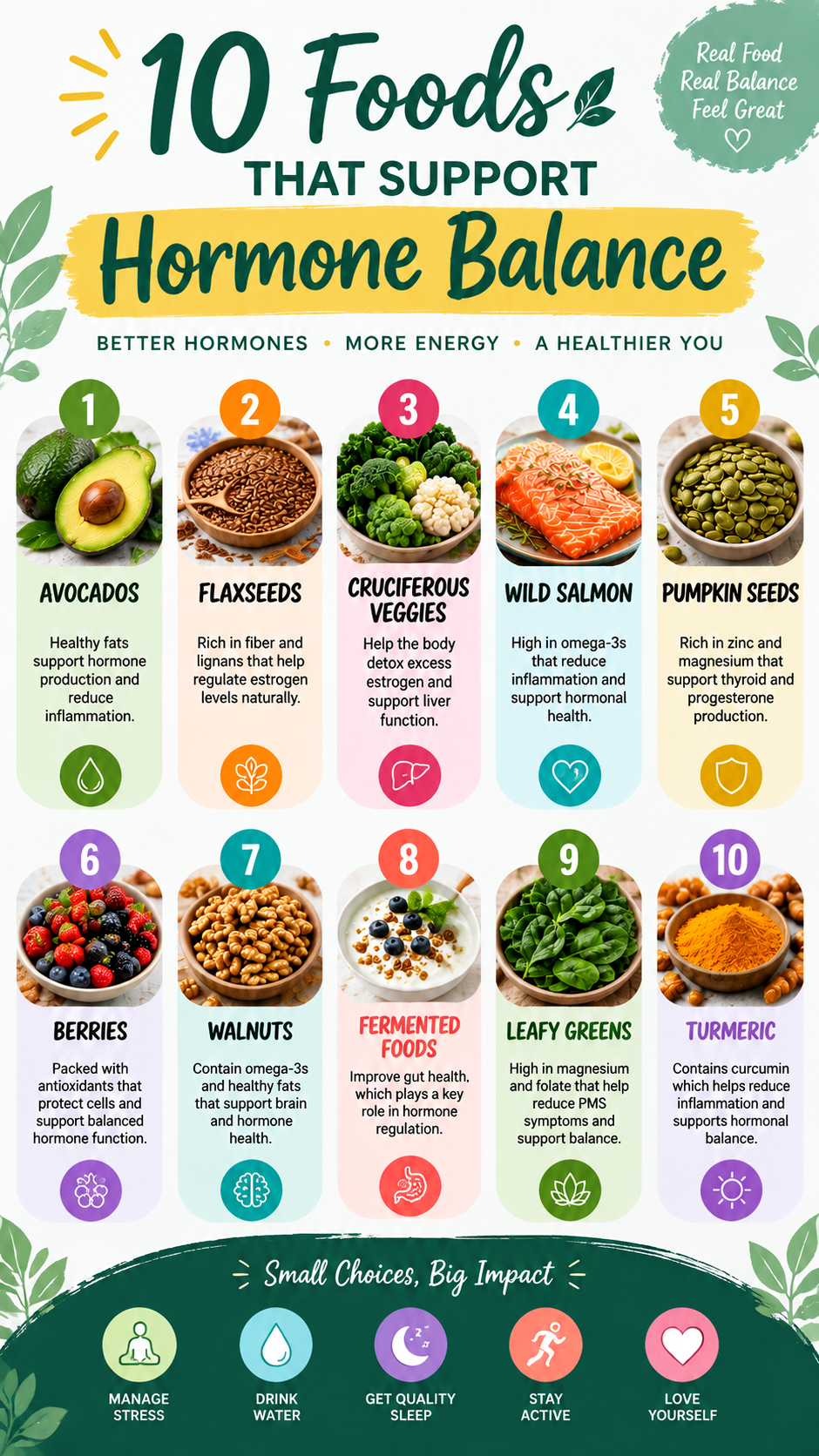
10 Hormone Balancing Foods for Womens Health Natural Hormone Support
Supporting your body naturally starts with the everyday choices you make, especially the foods you include on your plate. Hormones influence many areas of women’s health, including energy levels, mood, metabolism, reproductive wellness, sleep quality, and overall balance. While food is not a replacement for medical care, a nutrient-rich diet can provide the building blocks your body needs to function at its best.
The right combination of healthy fats, fiber, antioxidants, vitamins, and minerals can help create a foundation for balanced wellness. From creamy avocados and fiber-rich flaxseeds to colorful berries and leafy greens, many whole foods contain nutrients that support the body’s natural processes.
Key Takeaways
- Whole foods provide essential nutrients that support women’s wellness.
- Healthy fats, fiber, and antioxidants are important parts of a balanced diet.
- Certain foods may support healthy estrogen metabolism and overall hormone function.
- Gut health, stress management, sleep, and nutrition work together for balance.
- Small daily food choices can contribute to long-term healthy habits.
How Nutrition Supports Hormone Balance
Hormones act as chemical messengers that help regulate countless processes throughout the body. They influence everything from appetite and stress response to menstrual cycles and energy production. Because hormone production depends on nutrients, the quality of your diet can play an important role in supporting overall wellness.
A balanced eating pattern focused on whole, minimally processed foods can help provide nutrients involved in normal hormone production and regulation. Foods containing healthy fats, minerals, plant compounds, and fiber are especially valuable because they support many systems connected to hormonal health.
Important: Hormone balance is influenced by many factors, including genetics, lifestyle, stress, sleep, and overall health. Adding nutrient-dense foods is one supportive step toward caring for your body naturally.
10 Hormone Balancing Foods for Women’s Health
1. Avocados: Healthy Fats for Hormone Support
Avocados are rich in monounsaturated fats, fiber, and important nutrients that support overall wellness. Healthy fats are essential because the body uses fats as part of normal hormone production processes.
Adding avocado to meals can also help create a satisfying balance of nutrients. Try adding sliced avocado to salads, spreading it on whole-grain toast, or blending it into creamy smoothies.
2. Flaxseeds: A Fiber-Rich Choice
Flaxseeds are a popular addition to women’s wellness diets because they contain fiber and plant compounds called lignans. Fiber supports healthy digestion, while lignans are naturally occurring compounds studied for their relationship with estrogen metabolism.
Ground flaxseeds are easy to add to oatmeal, yogurt, smoothies, and baked goods. Grinding them helps make their nutrients easier for the body to access.
3. Cruciferous Vegetables: Nutrient-Dense Greens
Vegetables such as broccoli, cauliflower, kale, and Brussels sprouts are packed with vitamins, minerals, and plant compounds. These vegetables are excellent sources of fiber and antioxidants that support general health.
Including a variety of colorful vegetables in your meals can support a balanced diet while adding important nutrients your body needs every day.
4. Wild Salmon: Omega-3 Rich Nutrition
Wild salmon provides omega-3 fatty acids and high-quality protein. Omega-3 fats are known for their role in supporting a healthy inflammatory response and overall wellness.
Enjoy salmon grilled, baked, or added to salads for an easy way to include nourishing fats in your weekly meals.
5. Pumpkin Seeds: Minerals for Wellness
Pumpkin seeds contain minerals such as zinc and magnesium, which are important nutrients involved in many body functions. They make a convenient snack and can add texture to salads, yogurt bowls, and homemade trail mixes.
6. Berries: Antioxidant Powerhouses
Blueberries, strawberries, raspberries, and other berries are rich in antioxidants and fiber. These colorful fruits can support overall health while satisfying sweet cravings naturally.
Berries are a simple addition to breakfast bowls, smoothies, snacks, and desserts made with wholesome ingredients.
7. Walnuts: Plant-Based Healthy Fats
Walnuts contain omega-3 fatty acids, fiber, and plant-based nutrients. They can be a nourishing snack choice or a flavorful topping for salads, oatmeal, and yogurt.
8. Fermented Foods: Supporting Gut Health
Foods like yogurt, kefir, sauerkraut, and other fermented options contain beneficial bacteria. Gut health is closely connected to digestion, nutrient absorption, and overall wellness.
Pro Tip: A healthy lifestyle is built through consistency. Focus on adding nourishing foods rather than trying to create a perfect diet overnight.
9. Leafy Greens: Essential Vitamins and Minerals
Leafy greens such as spinach, arugula, and kale are packed with nutrients including magnesium and folate. They are versatile ingredients that can be enjoyed raw in salads or cooked into warm meals.
10. Turmeric: A Traditional Wellness Spice
Turmeric contains curcumin, a plant compound widely studied for its antioxidant properties. Adding turmeric to meals can bring both flavor and nutritional benefits.
Try using turmeric in soups, roasted vegetables, golden milk-style drinks, or homemade spice blends.
Expert Insight
Hormone-friendly nutrition is less about a single “miracle” food and more about creating balanced eating habits.
- Combine protein, healthy fats, and fiber at meals.
- Choose a variety of colorful fruits and vegetables.
- Support your body with hydration, movement, and quality rest.
Creating a Hormone-Friendly Daily Eating Routine
Building healthier habits does not require a complete lifestyle overhaul. Simple changes can make nutritious foods easier to include throughout the week.
- Add ground flaxseeds or walnuts to breakfast.
- Include leafy greens or cruciferous vegetables with lunch or dinner.
- Choose healthy snacks like berries, pumpkin seeds, or yogurt.
- Prepare balanced meals that include protein, fiber, and healthy fats.
Lifestyle Habits That Complement Healthy Nutrition
Food is one important part of supporting women’s health, but daily lifestyle habits matter too. Managing stress, getting enough sleep, staying hydrated, and moving your body regularly all contribute to overall well-being.
When healthy habits work together, they create a supportive environment for your body’s natural processes.
At a Glance: Hormone Supporting Food Choices
- Choose whole foods rich in nutrients.
- Include healthy fats for balanced nutrition.
- Enjoy fiber-rich plants daily.
- Add antioxidant-rich foods for variety.
Conclusion
Supporting hormone balance naturally begins with simple, nourishing choices. Foods like avocados, flaxseeds, berries, salmon, leafy greens, and turmeric can be part of a balanced approach to women’s health.
Rather than focusing on quick fixes, aim for consistent habits that nourish your body over time. A colorful plate filled with whole foods, combined with healthy lifestyle practices, can help you feel your best and support your wellness journey.
Tags
Hormone Balance
Women’s Health
Healthy Eating
Natural Wellness
Nutrition Tips
Healthy Lifestyle