Fruits That Cause Weight Gain 5 Best Fruits for Weight Loss Timing Tips
Choosing the right fruits can make a big difference when you are working toward a healthier lifestyle, better nutrition, and sustainable weight management. Fruits are naturally packed with vitamins, minerals, fiber, and antioxidants, but portion size, timing, and personal eating habits all play important roles. While some fruits are higher in natural sugars or calories, they can still be part of a balanced diet when enjoyed mindfully.
This guide explores which fruits may contribute to weight gain when eaten in excess, which fruits are often better choices for weight-conscious eating, and the best times to enjoy fruit for energy, digestion, and overall wellness.
Key Takeaways
- Fruits are healthy foods, but eating large amounts can increase calorie intake.
- High-sugar fruits and dried fruits require extra attention to portion sizes.
- Berries, apples, kiwi, papaya, and guava are nutrient-rich options for balanced eating.
- Whole fruits are usually a better choice than juices or sweetened fruit products.
- The timing and combination of fruit with protein can support better fullness.
Can Fruits Really Trigger Weight Gain?
Fruit often receives a reputation as a “perfect” health food, and for good reason. Most fruits provide essential nutrients that support the body. However, like any food, eating more calories than your body uses can contribute to weight gain. The source of those calories does not change that basic principle.
Some fruits contain more natural sugar, carbohydrates, or calories compared with others. Eating several large servings throughout the day, especially alongside other calorie-dense foods, may increase your total calorie intake without you realizing it.
Important: The goal is not to avoid fruit. The smarter approach is choosing the right portions, balancing fruit with protein or healthy fats, and enjoying fruit as part of an overall nutritious eating pattern.
Fruits That May Contribute to Weight Gain When Overeaten
Some fruits are naturally higher in sugar or calories. They are not unhealthy, but they can be easier to overconsume, especially when eaten in large portions or in processed forms.
Bananas
Bananas are a convenient source of carbohydrates, potassium, and energy. They can be especially useful before exercise or when you need a quick snack. However, eating multiple large bananas daily may add more calories and natural sugar than needed.
A balanced serving of banana can fit into most diets. Pairing banana slices with protein-rich foods like yogurt or nut butter can help create a more satisfying snack.
Grapes
Grapes are refreshing and full of antioxidants, but their small size makes them easy to eat quickly. A large bowl of grapes can contain significantly more calories and sugar than a carefully measured portion.
Mangoes
Mangoes are rich, flavorful fruits containing vitamins and antioxidants. Because they are naturally sweet and enjoyable, portion control is important. A moderate amount can be a delicious addition to a healthy meal plan.
Dried Fruits
Dried fruits such as raisins, dates, and dried berries contain less water than fresh fruits, making their calories more concentrated. It is easy to snack on large amounts without feeling as full as you would from fresh fruit.
Cherries
Cherries contain beneficial nutrients and antioxidants, but their natural sweetness means portions matter. Eating them mindfully can help you enjoy their flavor without accidentally overeating.
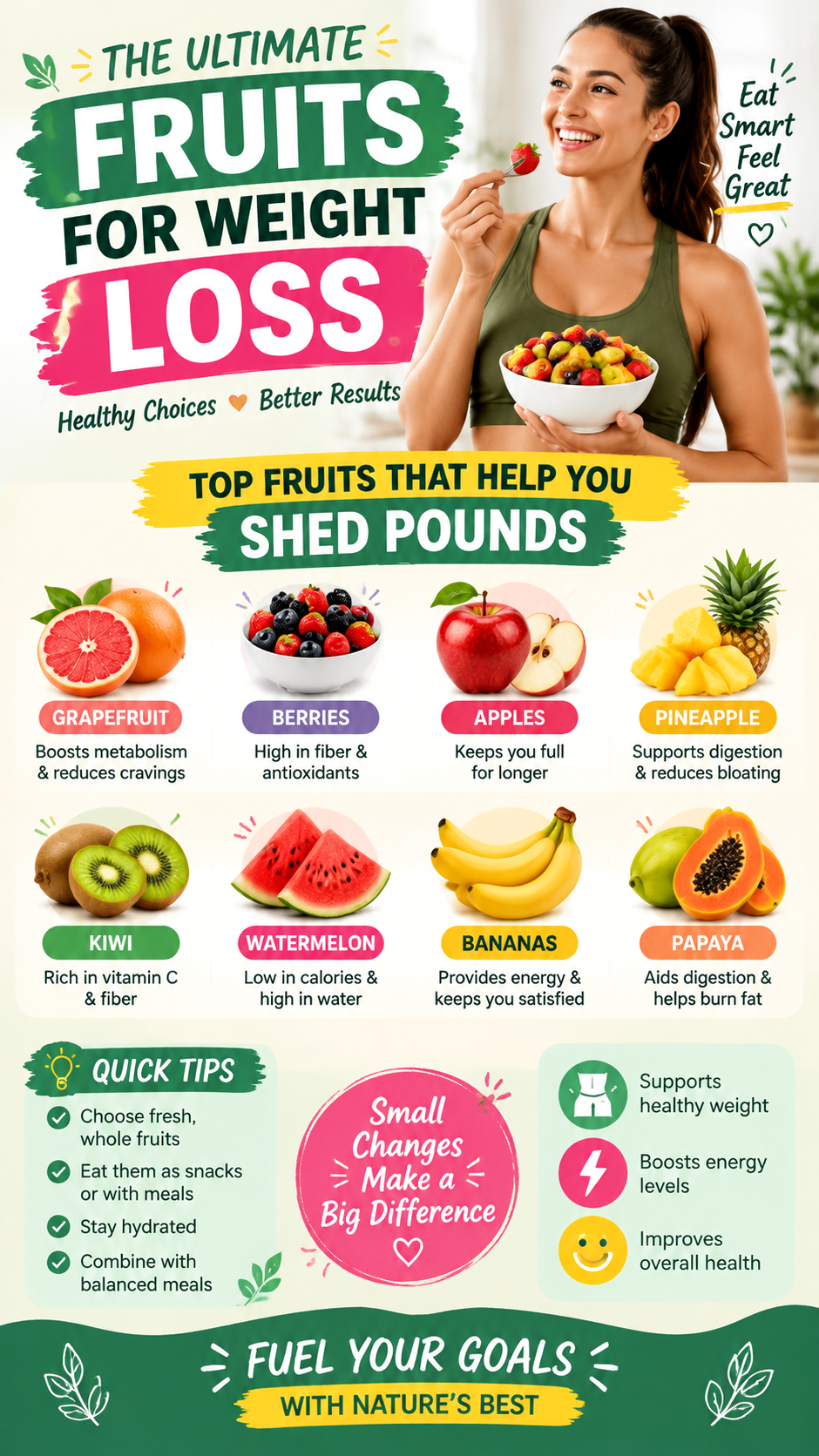
5 Safe Fruits to Include in a Weight-Friendly Diet
When choosing fruits for healthy eating, look for options that provide fiber, water content, and nutrients that help support fullness. These fruits can be excellent choices when included in balanced meals and snacks.
1. Berries
Strawberries, blueberries, raspberries, and blackberries are popular choices for people focused on balanced nutrition. They are naturally flavorful and can add sweetness to meals without relying on processed sugars.
Berries are easy to combine with Greek yogurt, oatmeal, smoothies, or healthy snack plates.
2. Apples
Apples are a classic healthy snack because they are convenient and satisfying. Their fiber content can help you feel fuller between meals and support digestive health.
3. Kiwi
Kiwi offers a refreshing flavor and provides important nutrients. It can be enjoyed alone or added to breakfast bowls, salads, and snacks.
4. Papaya
Papaya is a naturally sweet fruit that works well as part of a balanced meal. Many people enjoy it because of its light texture and refreshing taste.
5. Guava
Guava is a nutrient-rich fruit that can be enjoyed fresh as a snack. Its fiber content makes it a satisfying choice for people looking to manage hunger throughout the day.
The Best Time to Eat Fruit for Better Results
There is no single perfect time for everyone to eat fruit. The best timing depends on your routine, hunger levels, and activity habits. However, certain moments may make fruit easier to enjoy as part of a balanced lifestyle.
Morning
Fruit can be a refreshing addition to breakfast. Pairing fruit with protein can help create a more balanced meal that supports steady energy.
Before or After Exercise
Fruit can provide natural carbohydrates that support physical activity. Many active people enjoy fruit before workouts or alongside protein after exercise.
Late Evening
Eating fruit at night is not automatically harmful. However, if late-night snacking leads to eating beyond your daily needs, adjusting timing or portions may help.
Simple Fruit Eating Tips for Weight Management
- Choose whole fruits instead of juices whenever possible.
- Pay attention to serving sizes, especially with sweet fruits.
- Combine fruit with protein for longer-lasting fullness.
- Avoid adding extra sugar, syrups, or sweet toppings.
- Keep a variety of fruits available to support healthy choices.
At a Glance
- Fruit can support health when eaten in balanced portions.
- High-sugar fruits are best enjoyed mindfully.
- Fiber-rich fruits can help support fullness.
- Healthy combinations make fruit snacks more satisfying.
Conclusion: Enjoy Fruit the Smart Way
Fruit does not need to be removed from your diet when you are trying to maintain a healthy weight. The key is understanding how different fruits fit into your daily nutrition goals. Choosing nutrient-rich options, controlling portions, and pairing fruit with other wholesome foods can help you enjoy natural sweetness while staying on track.
Remember, healthy eating is about balance rather than restriction. Fruits can be a valuable part of your lifestyle when you choose the right amounts and enjoy them mindfully.
Tags
Weight Loss Tips
Healthy Fruits
Fruit Nutrition
Clean Eating
Balanced Diet
Healthy Lifestyle
Weight Management