DIY Essential Oil Perfume Recipes 6 Natural Fragrance Blends on a Recipe Card
Creating a signature scent at home can be a simple and rewarding experience with the right essential oil perfume recipes. Natural fragrance blends allow you to combine beautiful aromas, experiment with different scent families, and design a perfume that reflects your personal style. From fresh citrus notes to calming florals and warm woody tones, DIY essential oil perfumes offer endless creative possibilities for anyone who loves handmade beauty products.
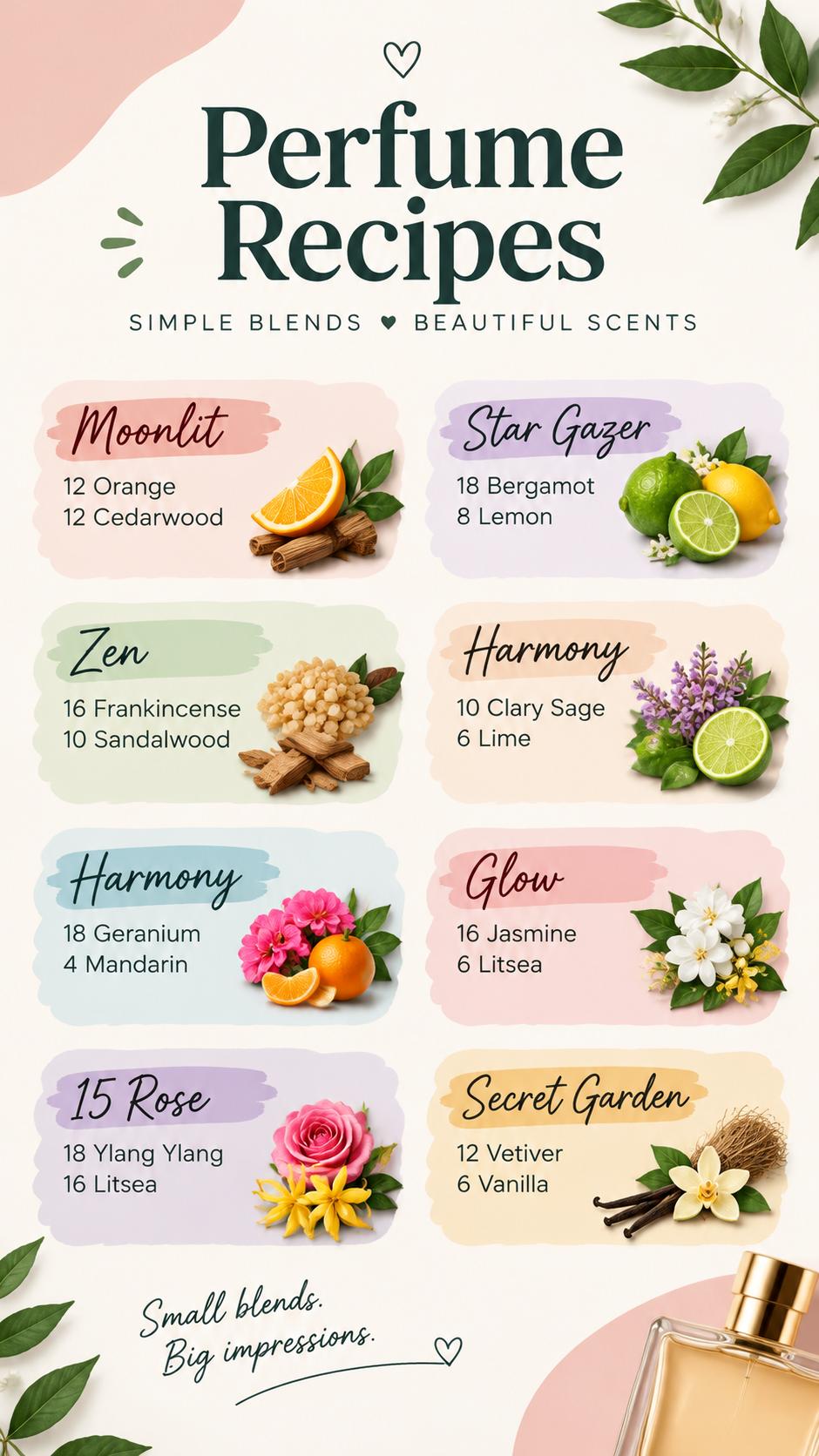
The simple recipe card concept shown in this collection highlights several unique perfume combinations using carefully paired essential oils. These blends are designed around balanced scent profiles, making them a wonderful starting point for beginners and experienced DIY enthusiasts who want to explore natural perfumes.
Key Takeaways
- Essential oil perfumes are a natural alternative to conventional fragrance products.
- Simple ingredient combinations can create fresh, floral, calming, or earthy scents.
- Layering top, middle, and base notes creates a more balanced perfume blend.
- DIY perfume recipes are easy to customize for personal preferences.
- Proper storage helps preserve the quality and aroma of essential oil blends.
Why Make Your Own Essential Oil Perfume?
Store-bought perfumes often contain synthetic fragrance ingredients, while homemade essential oil perfumes provide a more natural approach to personal scent. Making your own blend gives you complete control over the ingredients, aroma strength, and overall fragrance experience.
DIY perfume making is also a creative wellness activity. Choosing oils based on their aromas can help create different moods, from refreshing and energizing blends for daytime use to cozy and relaxing scents for evening routines.
Important: A beautiful perfume is created through balance. Combining different scent categories, such as citrus top notes, floral heart notes, and grounding base notes, helps create a fragrance that develops naturally over time.
Understanding the Essential Oil Perfume Blends
The recipe card features several inspired fragrance combinations that showcase how different essential oils can work together. Each blend has its own personality, allowing you to choose scents that match your mood, season, or personal taste.
Citrus and Fresh Perfume Blends
Citrus essential oils are often used as bright top notes because of their fresh and uplifting aroma. Oils like orange, lemon, lime, and mandarin bring a cheerful quality to perfume recipes.
Blends featuring citrus notes are excellent for daytime fragrances because they feel light, clean, and refreshing. They can be combined with woodsy or floral oils to create more depth.
Floral Essential Oil Perfume Ideas
Floral oils create elegant and romantic fragrance profiles. Jasmine, geranium, rose, and ylang ylang are popular choices for homemade perfumes because they add softness and sophistication.
A floral perfume blend can feel luxurious while still maintaining a natural, handmade character. Pairing floral oils with citrus or earthy notes helps prevent the scent from becoming too overwhelming.
Warm and Grounding Aromas
Base notes provide staying power and help anchor lighter scents. Essential oils such as cedarwood, sandalwood, vetiver, and vanilla-inspired aromas create warm and comforting perfume profiles.
These deeper scents are especially popular in evening perfumes because they create a cozy, sophisticated fragrance experience.
How to Create a Balanced DIY Perfume Blend
Creating an essential oil perfume is similar to designing a recipe. Each ingredient contributes something different, and the goal is to create harmony between the aromas.
1. Choose Your Scent Notes
Most perfume blends include three types of notes:
- Top notes: Light, fresh aromas that are noticed first, such as citrus oils.
- Middle notes: The heart of the perfume, often created with floral or herbal oils.
- Base notes: Deep scents that help the fragrance last longer, including woody oils.
2. Start With Small Amounts
When experimenting with essential oil perfume recipes, begin with small batches. This allows you to adjust the aroma without wasting ingredients.
A few drops can completely change a blend, so patience and experimentation are important parts of the creative process.
3. Select a Perfume Base
Essential oil perfumes can be made using different bases depending on your preference. Common options include carrier oils for roll-on perfumes or alcohol bases for traditional spray fragrances.
Always choose high-quality ingredients and follow proper dilution guidelines when creating products for personal use.
Why This Matters
Natural perfume making is about more than fragrance. It is a way to create a personal ritual, explore creativity, and enjoy scents that feel meaningful.
- Custom blends allow you to create a fragrance that feels unique.
- Natural aromas can complement different moods and routines.
- Simple recipes make perfume crafting approachable for beginners.
Tips for Storing Homemade Essential Oil Perfumes
Proper storage helps maintain the quality of your DIY perfume blends. Essential oils are sensitive to heat, sunlight, and air exposure, so keeping them protected is important.
- Store perfume bottles in a cool, dark location.
- Use dark glass containers when possible.
- Keep bottles tightly closed when not in use.
- Label each blend with ingredients and the date created.
A well-stored essential oil perfume can remain enjoyable for a long time while keeping its original character and aroma.
Creating Your Own Signature Scent
The best part of DIY perfume recipes is the freedom to personalize every blend. You can adjust floral, citrus, herbal, and woody notes until you discover a combination that feels like your own.
Consider creating seasonal perfumes as well. Fresh citrus blends work beautifully during warmer months, while richer vanilla, cedarwood, and floral combinations can create cozy autumn and winter fragrances.
Making perfume at home also makes a thoughtful handmade gift idea. Small bottles of custom essential oil blends can be shared with friends and family who appreciate natural beauty products.
At a Glance
- Explore simple essential oil perfume combinations.
- Balance fresh, floral, and grounding aromas.
- Create personalized natural fragrances at home.
- Store blends properly for longer-lasting quality.
Conclusion: Enjoy the Art of Natural Perfume Making
Essential oil perfume recipes make it easy to explore the world of natural fragrance from the comfort of your home. With a few carefully chosen oils and a little creativity, you can design beautiful blends that match your personality, mood, and lifestyle.
The simple combinations featured in this recipe collection are a reminder that homemade beauty can be both enjoyable and accessible. Whether you prefer fresh citrus scents, elegant florals, or warm earthy aromas, DIY perfume making offers endless opportunities to create something truly personal.
Start experimenting with your favorite essential oils, keep notes of your favorite combinations, and enjoy the creative journey of crafting your own signature scent.
Tags
Essential Oil Perfume
DIY Fragrance
Natural Perfume Recipes
Aromatherapy Blends
Homemade Beauty
Essential Oil Blends
Clean Beauty Ideas