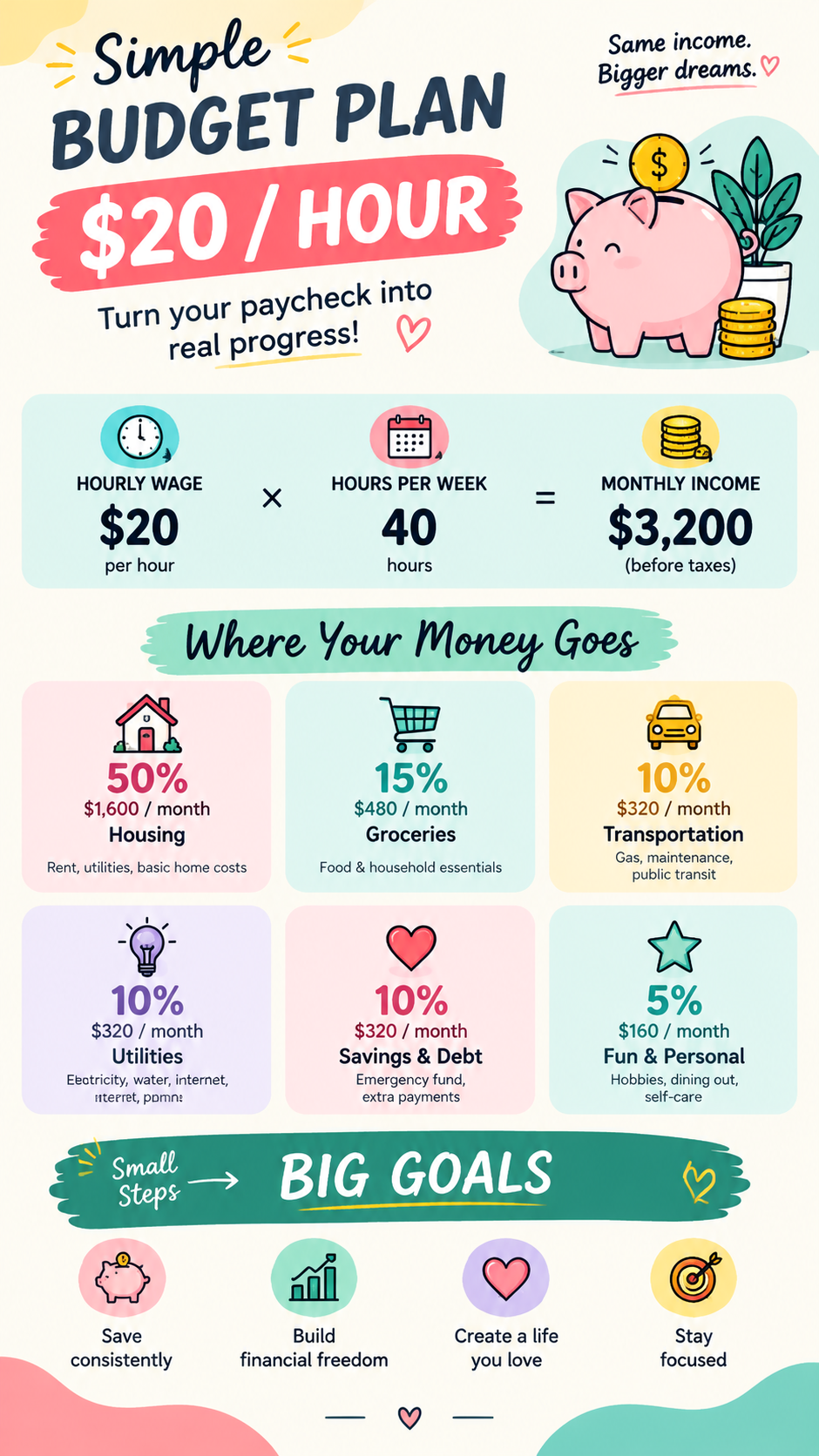
20Hour Budget Plan Simple 702010 Money Management Strategy
Managing money can feel overwhelming, especially when you are trying to balance everyday expenses, personal goals, savings, and debt payments. A simple budgeting system can make the process easier by giving every dollar a purpose. The 70/20/10 budget method offers a clear and practical way to organize your paycheck while creating a healthier relationship with money.
This budgeting approach divides your take-home income into three main categories: 70% for needs, 20% for wants, and 10% for savings and debt repayment. Whether you are new to personal finance or looking for a simpler money management routine, this strategy can help you create structure without making your budget feel restrictive.
Key Takeaways
- The 70/20/10 budget helps organize income into clear spending categories.
- Essential expenses come first to create financial stability.
- A realistic budget includes room for enjoyment and personal priorities.
- Saving consistently builds emergency funds and future security.
- Small adjustments can create long-term improvements in money habits.
What Is the 70/20/10 Budget Rule?
The 70/20/10 budget rule is a simple personal finance framework designed to divide your monthly income into three spending groups. Instead of tracking every single purchase, this method focuses on creating a balanced financial plan that is easy to follow.
The first category uses 70% of your income for essential expenses and lifestyle costs. The second category assigns 20% toward personal spending and enjoyment. The final 10% focuses on building savings, preparing for unexpected expenses, and reducing debt.
Important: A successful budget is not about perfection. It is about creating a repeatable system that helps you make intentional choices with your money every month.
Understanding Each Part of the 70/20/10 Budget
70% Needs: Covering Your Essential Expenses
The largest portion of your income goes toward the costs required to maintain your daily life. These expenses usually include housing, utilities, groceries, transportation, insurance, healthcare, phone bills, and minimum debt payments.
In the example shown, a monthly take-home pay of $2,400 places $1,680 toward needs. This creates room for important expenses while keeping spending organized.
Common Needs Categories
- Housing: Rent or mortgage payments.
- Utilities: Electricity, water, internet, and other household services.
- Food: Groceries and necessary meal expenses.
- Transportation: Fuel, maintenance, insurance, or public transit.
- Healthcare: Medical expenses and insurance costs.
- Debt Payments: Required minimum payments on loans or credit cards.
20% Wants: Enjoying Life Within Your Plan
Many people struggle with budgeting because they believe they must eliminate all fun spending. The 20% category creates space for activities and purchases that make life enjoyable while keeping financial goals on track.
This portion can include dining out, shopping, entertainment, hobbies, travel, subscriptions, and personal treats. Having planned spending money helps prevent frustration and makes it easier to stick with your budget.
Examples of Wants
- Restaurants and coffee outings
- Entertainment and streaming services
- Hobbies and creative activities
- Shopping for non-essential items
- Trips and experiences
10% Savings and Debt: Building Your Future
The final part of the plan focuses on improving your future financial position. This category helps you prepare for emergencies, reach personal goals, and reduce financial stress.
For someone earning $2,400 per month after taxes, the 10% category equals $240. This money can be divided between an emergency fund, long-term savings goals, investments, or additional debt payments.
How to Create Your Own 70/20/10 Budget
Step 1: Calculate Your Take-Home Income
Start with the money you actually receive after taxes and payroll deductions. Your take-home pay is the amount available for budgeting each month.
If your income changes regularly, use an average from the previous few months to create a realistic estimate.
Step 2: Separate Needs, Wants, and Goals
Review your expenses and place each one into the correct category. This simple step helps you understand where your money is going and identifies areas where adjustments may be needed.
- List your fixed monthly bills.
- Estimate variable expenses like groceries and transportation.
- Identify personal spending categories you enjoy.
- Choose savings goals that matter most to you.
Step 3: Adjust the Percentages When Needed
The 70/20/10 method is a guide, not a strict rule. Everyone’s financial situation is different. Someone with high housing costs may need a temporary adjustment, while someone focused on paying off debt may choose to increase the savings category.
Why This Matters
A simple budget framework reduces decision fatigue and helps you focus on what matters most.
- Clear categories make spending easier to understand.
- Planned savings create confidence for unexpected situations.
- Balanced spending allows both responsibility and enjoyment.
Simple Ways to Improve Your Budget
Once your budget is created, small changes can make a meaningful difference. You do not need to completely change your lifestyle overnight. Consistent improvements often create the strongest results.
- Review your spending at the end of each month.
- Cancel subscriptions you no longer use.
- Plan meals to reduce unnecessary food expenses.
- Use automatic transfers for savings.
- Compare bills and look for better rates when possible.
At a Glance: 70/20/10 Budget Summary
- 70% covers essential living expenses.
- 20% provides room for personal enjoyment.
- 10% supports savings and debt reduction.
- Small habits create stronger financial confidence.
Conclusion: Build a Money Plan That Works for You
The 70/20/10 budget plan is a practical starting point for anyone looking to manage their paycheck more effectively. By separating needs, wants, and future goals, you can create a financial routine that feels organized and achievable.
Good money management is built through consistent choices, not one perfect month. Start with what you have, adjust as your situation changes, and continue building habits that support the future you want.
Tags
Budget Planning
Money Management
70/20/10 Budget Rule
Personal Finance
Saving Strategies
Debt Reduction
Financial Goals