Decluttering Mistakes to Avoid Simple Home Organization Tips That Work
Creating a calm, functional home does not always require a major renovation or expensive storage solutions. Often, the biggest transformation comes from making smarter choices about what stays, where things belong, and how each space supports your daily routine. Decluttering and organizing are not just about making a room look neat. They are about creating a home that feels easier to live in, easier to maintain, and more enjoyable every day.
The most common organizing struggles usually come from a few simple mistakes: trying to organize before removing unnecessary items, buying storage bins too early, filling every empty space, or creating systems that do not match the way you naturally move through your home. By understanding these mistakes and using practical home organization strategies, you can build a space that stays tidy with less effort.
Key Takeaways
- Start decluttering with one small zone instead of tackling the entire home at once.
- Create storage systems based on your daily habits and movement patterns.
- Sort and reduce belongings before purchasing containers or organizers.
- Keep frequently used items easy to access and simple to return.
- Leave intentional empty space to make rooms feel calmer and more functional.
The Biggest Decluttering Mistakes That Make Homes Feel Messy
Many people begin organizing with good intentions but end up frustrated because their approach focuses only on appearance. A home can have beautiful baskets and matching containers while still feeling cluttered if the underlying system does not work.
Successful decluttering starts with understanding that organization is not about hiding items. It is about making intentional decisions. Every object in your home should have a purpose, a place, or a reason for being there.
Mistake 1: Organizing Before Decluttering
One of the most common mistakes is purchasing shelves, boxes, and storage baskets before deciding what you actually need to keep. New containers may temporarily make a space look cleaner, but they often become another place to store unused items.
The better approach is to begin with sorting. Remove everything from the area you want to organize, then separate items into categories such as keep, donate, recycle, relocate, and discard. This process helps you understand what storage solutions are truly necessary.
Important: Decluttering should always come before organizing. Reducing the number of items in a space creates more room, makes cleaning easier, and allows your storage systems to work effectively.
Mistake 2: Trying to Declutter the Entire Home at Once
Looking at an entire house filled with belongings can feel overwhelming. Many people start with motivation but lose energy halfway through because the project feels too large.
A more sustainable method is to organize one zone at a time. Begin with a drawer, a shelf, a kitchen cabinet, or a small corner of a room. Completing small areas creates momentum and builds confidence for larger projects.
Creating an Organized Home Based on Daily Flow
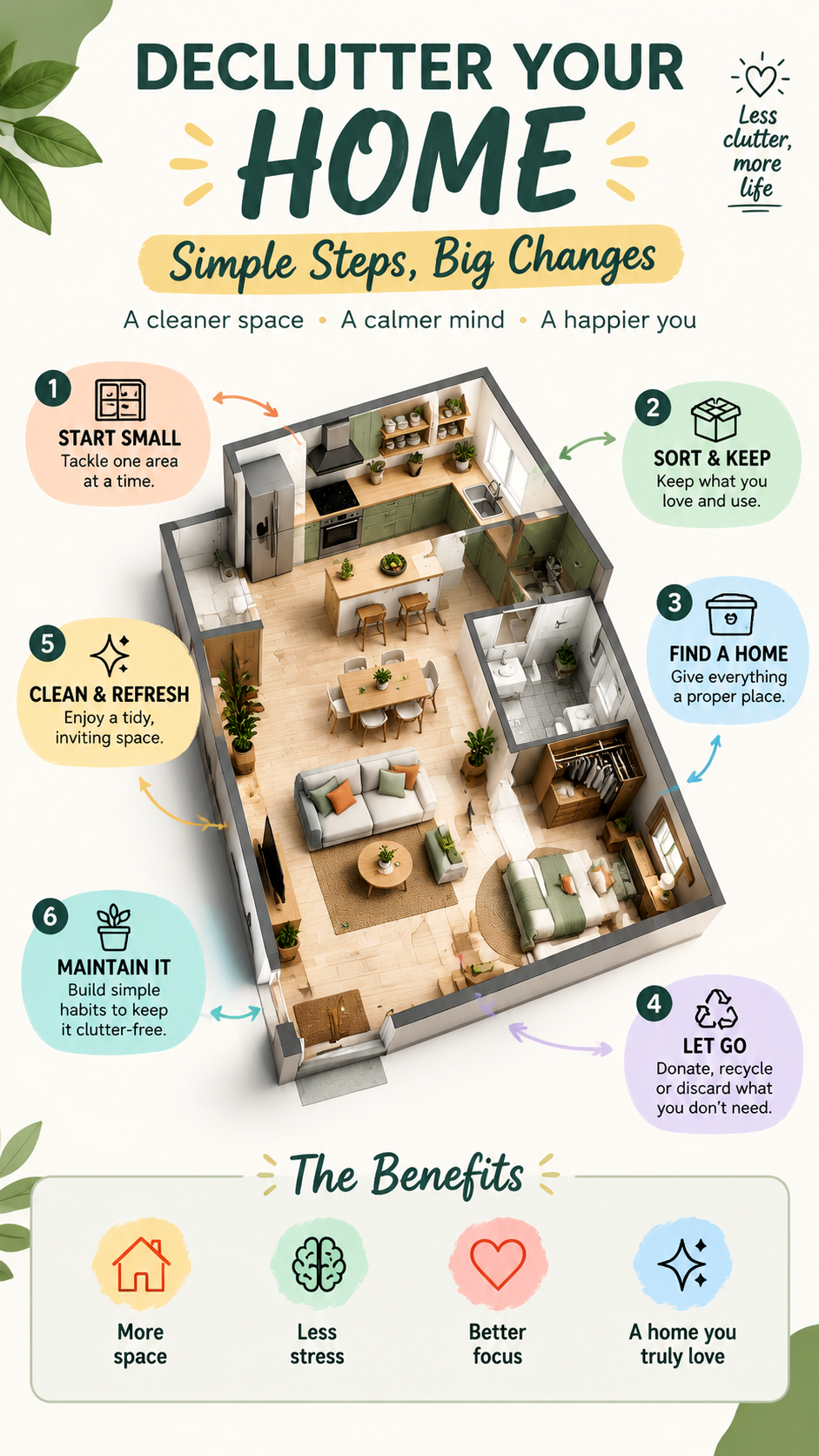
The layout of your home affects how easily you maintain it. The image of a well-planned living space highlights the importance of creating clear pathways between areas such as the entrance, storage spaces, kitchen, and living room.
Good organization follows your natural routine. Think about where you enter your home, where you drop your belongings, where you prepare meals, and where you relax. Items should be stored close to where they are used most often.
Map Your Daily Routes
Instead of organizing rooms separately without considering movement, observe how you naturally travel through your home. This helps create practical storage zones.
- Place everyday items near the areas where you use them.
- Create an entryway system for shoes, bags, keys, and frequently carried items.
- Keep kitchen essentials close to preparation areas.
- Store rarely used items in less accessible spaces.
A functional home is not just visually appealing. It supports your habits and reduces the number of small decisions you make throughout the day.
Smart Storage Ideas That Keep Clutter Under Control
Storage is most effective when it supports visibility and accessibility. The goal is not to maximize how much you can store. The goal is to make it easy to find what you need and easy to put things away.
Group Similar Items Together
Keeping similar items together is one of the simplest organization habits. When everything has a category, you spend less time searching and less time accidentally buying duplicates.
Examples of useful categories include:
- Kitchen supplies grouped by cooking purpose.
- Cleaning products stored in one dedicated area.
- Books, documents, and office supplies organized together.
- Seasonal decorations kept in clearly labeled containers.
Avoid Overfilling Storage Areas
A common mistake is treating every empty shelf or cabinet space as an opportunity to add more items. However, rooms need breathing space to feel comfortable and organized.
Leaving some open space allows you to clean more easily, notice what you own, and maintain a calmer visual environment.
Why Simple Organization Systems Are Easier to Maintain
Many organizing projects fail because they create systems that are too complicated. If maintaining a space requires constant effort, it becomes difficult to keep up with over time.
The best home organization ideas are simple enough that everyone in the household can follow them. Clear labels, accessible storage, and logical categories make it easier for items to return to their proper places.
Expert Insight
- Organization is a daily habit, not a one-time cleaning project.
- The right system reduces clutter by making decisions easier.
- A simple home is often easier to enjoy and maintain.
How to Reset Your Home After Decluttering
Once your spaces are organized, creating a simple reset routine helps maintain the results. A reset does not need to take hours. Small daily actions can prevent clutter from building again.
Build a Return Path for Everyday Items
Every frequently used item should have an easy return location. This could mean a basket near the entrance, a tray for everyday essentials, or a dedicated shelf for household supplies.
When items have a clear home, tidying becomes faster because you are not constantly deciding where things belong.
Quick Points
- Declutter before buying storage products.
- Organize according to your daily routine.
- Keep categories simple and visible.
- Leave open space for a calmer home.
Conclusion: Create a Home That Works for You
Decluttering and organizing are about more than creating a picture-perfect room. They are about designing a home that supports your lifestyle, reduces stress, and makes everyday tasks easier.
By avoiding common organizing mistakes, starting with small areas, creating practical storage zones, and building simple routines, you can transform your space into a place that feels peaceful and manageable.
A well-organized home does not need to be empty or perfectly styled. It simply needs to work for the people who live there. Start with one small area, create a system that fits your habits, and enjoy the benefits of a more functional and comfortable space.
Tags
Home Organization
Decluttering Tips
Minimalist Home
Storage Ideas
Organizing Hacks
Clean Home Routine