Create a Realistic Routine That Fits Your Life, Energy Goals
Many people believe they need a stricter schedule, more discipline, or a completely new lifestyle when their routine stops working. The truth is often much simpler: the routine may not match their current reality. A sustainable daily routine should support your energy, responsibilities, priorities, and personal goals instead of creating more pressure.
The idea behind a realistic routine is not about filling every hour with tasks. It is about creating a flexible structure that helps you focus on what matters most. Whether your days are busy with work, study, family responsibilities, or personal growth, the best routine is one you can return to consistently.
Key Takeaways
- A successful routine should fit your real life, not an ideal version of it.
- Small, consistent habits create stronger results than unrealistic plans.
- Your energy levels are just as important as your available time.
- Reviewing your current routine helps identify what needs to change.
- A flexible routine is easier to maintain during busy seasons.
Why Your Routine May Not Be Working
A routine can look perfect on paper but still feel impossible to follow. Many people create schedules based on what they think they should be doing rather than what actually fits their current lifestyle. They may plan early mornings, long productivity sessions, daily workouts, and endless self-improvement habits without considering their energy, commitments, or personal limits.
When a routine constantly feels overwhelming, it is often a sign that the structure needs adjustment. A routine should make life easier, not make you feel like you are always behind.
Important: A realistic routine is not about doing more tasks. It is about choosing habits and activities that support your well-being, goals, and everyday responsibilities.
Your current season of life matters. A routine that worked months ago may no longer match your needs today. Changes in work, relationships, health, priorities, or available time can all affect what kind of structure feels realistic.
Start With a Routine Reality Check
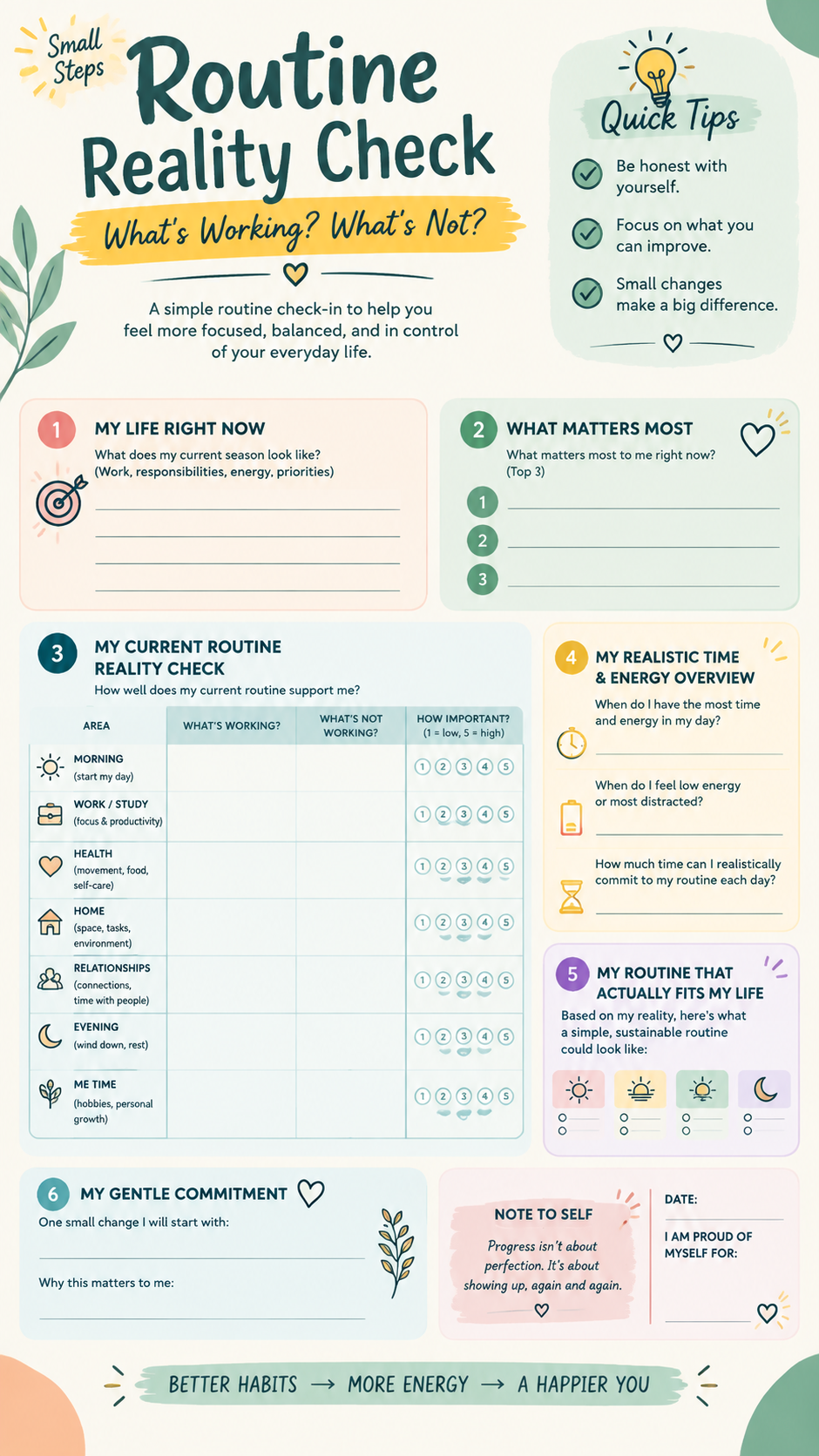
Before creating a new schedule, take time to understand your current reality. A routine reset begins with honesty. Instead of asking, “What should my perfect day look like?” ask, “What actually works for me right now?”
Look at Your Current Responsibilities
Your daily routine is influenced by many areas of life. Consider your workload, personal commitments, relationships, energy levels, and priorities. Understanding these factors helps you create a routine that feels supportive rather than restrictive.
Write down what currently takes up your time and identify which activities truly matter. Some responsibilities cannot be removed, but others may be simplified, reduced, or reorganized.
Identify What Is Working
Not everything about your current routine needs to change. Many people focus only on what is going wrong and forget to recognize the habits that already support them.
- A morning habit that helps you feel prepared.
- A simple evening activity that helps you relax.
- A productivity method that keeps you focused.
- A self-care practice that improves your mood.
Keeping the habits that already work creates a stronger foundation for your new routine.
Build a Routine Around Your Energy
Time management is important, but energy management is often overlooked. Two people may have the same number of available hours but completely different energy patterns.
Some people feel focused in the morning, while others do their best work later in the day. A realistic routine considers when you naturally feel motivated, creative, and productive.
Match Tasks With Your Best Moments
Try placing important activities during times when your energy is naturally higher. Save simple tasks for lower-energy periods.
- Use high-energy moments for focused work or learning.
- Use slower periods for organizing, planning, or simple tasks.
- Protect time for rest because recovery supports productivity.
Create Simple Routine Priorities
Trying to improve everything at once can make your routine harder to maintain. Instead, choose a few priorities that create the biggest positive impact.
Choose Your Non-Negotiables
Non-negotiables are the habits or activities that help you feel balanced. These may include movement, quality sleep, personal time, healthy meals, meaningful connections, or quiet moments for yourself.
They do not need to be complicated. A short walk, a few minutes of planning, or a consistent bedtime can make a noticeable difference when practiced regularly.
Avoid the All-or-Nothing Mindset
A common reason routines fail is the belief that missing one habit means the entire plan is ruined. Real life is unpredictable. A flexible routine allows space for changes without creating guilt.
A missed workout, a busy day, or a delayed task does not mean you failed. It simply means your routine needs to adapt.
Why This Matters
A routine that respects your real life creates consistency. When your habits feel manageable, you are more likely to repeat them and build long-term progress.
Design Your Ideal Realistic Routine
Once you understand your needs, you can begin creating a routine that feels natural. Think of your routine as a guide rather than a strict rulebook.
Morning Routine Ideas
- Start with a simple action that helps you feel calm and prepared.
- Choose one or two priorities instead of creating a long checklist.
- Create space for a positive beginning to your day.
Midday Routine Ideas
- Check your priorities and adjust if your day changes.
- Take short breaks to protect your focus.
- Complete important tasks during your strongest energy periods.
Evening Routine Ideas
- Create a relaxing transition away from daily responsibilities.
- Reflect on what went well during the day.
- Prepare one small thing that makes tomorrow easier.
A Routine Should Support Your Life, Not Control It
The purpose of a routine is to create more freedom, not more pressure. When your schedule reflects your actual needs, you spend less energy fighting your own habits and more energy enjoying your progress.
Building a realistic routine takes patience. It may require testing different approaches, removing unnecessary expectations, and making adjustments along the way.
At a Glance
- Focus on what matters most right now.
- Create habits that fit your energy and lifestyle.
- Keep routines simple and flexible.
- Choose consistency over perfection.
Conclusion: Create a Routine You Can Return To
A successful routine is not measured by how busy your day looks. It is measured by how well it supports the life you are actually living. When your routine matches your priorities, energy, and responsibilities, healthy habits become easier to maintain.
Instead of searching for the perfect schedule, focus on creating a realistic routine that feels possible. Small changes, thoughtful planning, and consistent effort can help you build a daily structure that supports your goals while leaving room for real life.
Tags
Realistic Routine
Daily Habits
Routine Planning
Self Care
Productivity Tips
Intentional Living