15 Foods You Should Never Buy in Bulk to Save Money and Reduce Waste
Buying groceries in bulk can feel like a smart way to save money, reduce shopping trips, and prepare for the future. However, not every food item is a good candidate for bulk buying. Some foods lose freshness quickly, develop unpleasant flavors, attract pests, or become unsafe before you have a chance to use them. Understanding which foods to avoid buying in large quantities can help you protect your budget and reduce unnecessary food waste.
The key to smarter grocery shopping is knowing the difference between foods that store well and foods that require frequent replacement. Pantry staples, fresh produce, dairy products, and certain cooking ingredients all have different storage needs. By making informed choices, you can create a more efficient kitchen while still enjoying the benefits of thoughtful preparation.
Key Takeaways
- Some foods spoil or lose quality faster when purchased in large amounts.
- Fresh ingredients often require smaller, more frequent purchases.
- Proper storage can extend the life of many pantry items.
- Buying only what you can realistically use helps reduce waste.
- Smart bulk shopping focuses on shelf life, not just price.
Why Buying Food in Bulk Is Not Always the Best Choice
Bulk shopping has become popular among families, budget-conscious shoppers, and people interested in emergency preparedness. Large packages often appear cheaper, and having extra supplies at home can provide convenience. However, a lower price per unit does not always mean better value.
Food quality plays a major role in determining whether a bulk purchase is worthwhile. Items that contain natural oils, moisture, or delicate textures can deteriorate much faster than expected. A large package may look like a bargain, but if half of it ends up spoiled, the savings disappear.
Important: The best bulk purchases are foods with long shelf lives, stable storage requirements, and a realistic chance of being used before their quality declines.
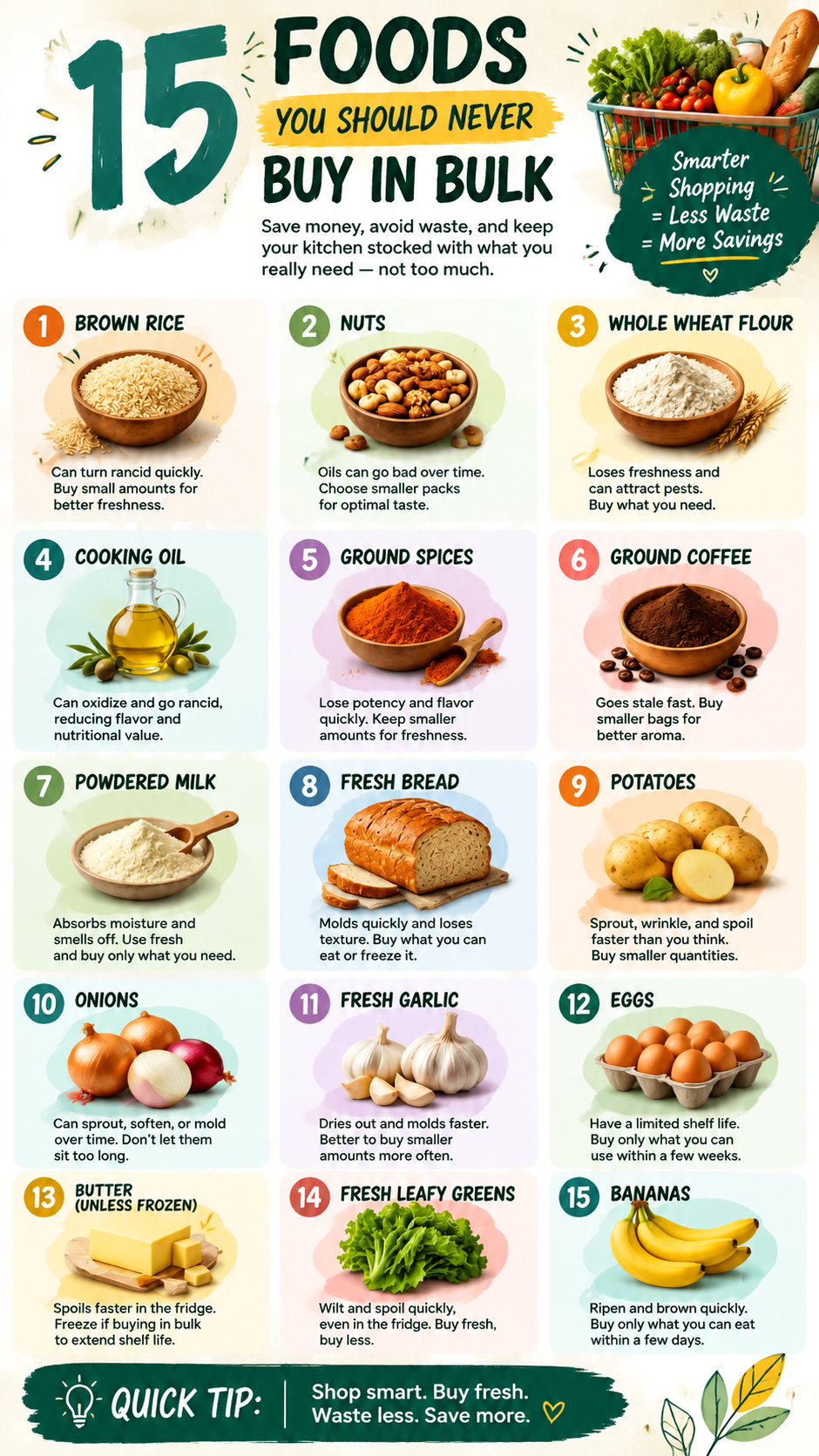
15 Foods You Should Avoid Buying in Bulk
1. Brown Rice
Brown rice is often considered a healthier alternative to white rice, but it has a shorter storage life. The natural oils found in the outer layer of brown rice can become rancid over time. Buying a large bag may not be practical unless you use it frequently or have proper storage conditions.
2. Nuts
Nuts are nutritious and convenient, but they contain oils that can turn stale or rancid. Large containers may seem economical, yet flavor and texture can decline before you finish them. Smaller portions stored in airtight containers are often a better option.
3. Whole Wheat Flour
Whole wheat flour contains natural oils from the wheat germ, which makes it more sensitive to storage conditions. Over time, it can develop an unpleasant taste and may attract pantry pests. Buying smaller amounts helps maintain freshness.
4. Cooking Oil
Cooking oils are kitchen essentials, but large bottles can lose quality after opening. Exposure to heat, light, and air can cause oxidation, affecting taste and freshness. Choose sizes that match your cooking habits.
5. Ground Spices
Spices do not usually spoil quickly, but they lose their aroma and flavor over time. Ground spices have more exposed surface area than whole spices, causing them to fade faster. Buying smaller containers keeps meals more flavorful.
6. Ground Coffee
Coffee lovers know that freshness matters. Ground coffee loses its rich aroma after opening because it reacts with air and moisture. Smaller bags help preserve the taste and provide a better coffee experience.
7. Powdered Milk After Opening
Powdered milk can be useful for storage, but once opened it needs careful handling. Moisture exposure can affect quality and texture. Keeping it sealed and purchasing manageable quantities can prevent waste.
8. Fresh Bread
Fresh bread is one of the easiest foods to waste when bought in large quantities. It can become stale quickly and may develop mold if not used. Freezing extra portions can help extend its usefulness.
9. Potatoes
Potatoes can last for a while under ideal conditions, but large amounts may begin sprouting, softening, or developing quality issues. Buying a reasonable amount based on your meal plans is usually better.
10. Onions
Onions are useful in many recipes, but too many can become soft, sprouted, or moldy. Proper ventilation helps, but buying only what you need reduces unnecessary losses.
11. Fresh Garlic
Garlic can last longer than many fresh ingredients, but large amounts may dry out, sprout, or lose quality before they are used. Smaller purchases often provide better flavor.
12. Eggs
Eggs have a limited shelf life compared with many pantry products. Buying more than your household can use may lead to waste, especially if your cooking routine changes.
13. Butter Unless Frozen
Butter can be stored longer when frozen, but large amounts kept in the refrigerator may lose freshness. If you buy extra, proper freezing and packaging are important.
14. Fresh Leafy Greens
Leafy greens are highly perishable. Lettuce, spinach, and similar vegetables can wilt quickly, making them poor choices for bulk buying unless you have a specific meal plan.
15. Bananas
Bananas ripen quickly, and buying too many at once often results in overripe fruit. Purchasing smaller bunches allows you to enjoy them at their best.
How to Shop in Bulk Without Wasting Food
Bulk shopping can still be a valuable strategy when done carefully. The goal is not to avoid bulk purchases completely but to choose items that match your lifestyle and storage abilities.
Choose Long-Lasting Foods
Dry goods such as certain grains, canned foods, and sealed pantry staples are usually better choices for bulk storage. Always check expiration dates and rotate older items first.
Use the FIFO Method
The first in, first out method helps keep your pantry organized. Place older items where they are easy to see and use them before newer purchases.
Store Food Correctly
Airtight containers, cool storage areas, and proper refrigeration can significantly improve the lifespan of many foods.
Expert Insight
- Saving money starts with buying the right amount, not simply the largest package.
- Food storage habits are just as important as shopping decisions.
- A smaller purchase that gets used completely is often the better value.
Smart Grocery Habits for a More Efficient Kitchen
A successful food budget depends on planning, awareness, and realistic habits. Before shopping, review what you already have, create a simple meal plan, and consider how quickly your household uses certain ingredients.
Reducing food waste does not require complicated systems. Small adjustments, such as buying fresh foods in smaller quantities and storing pantry items properly, can make a noticeable difference over time.
At a Glance
- Avoid bulk buying foods that spoil quickly.
- Consider shelf life before chasing discounts.
- Store food properly to protect quality.
- Plan purchases around your actual eating habits.
Conclusion
Buying food in bulk can be a great way to save money and stay prepared, but only when the products match your needs. Foods like fresh bread, leafy greens, nuts, oils, and other items with shorter quality windows are often better purchased in smaller amounts.
Smart grocery shopping is about balance. By understanding which foods store well and which ones decline quickly, you can spend wisely, keep your kitchen organized, and reduce unnecessary waste. A thoughtful shopping strategy helps you enjoy fresher meals while making the most of every purchase.
Tags
Bulk Food Shopping
Food Storage Tips
Reduce Food Waste
Smart Grocery Shopping
Pantry Organization
Budget Friendly Living