Easy Homemade Peach Jam Without Pectin Simple 40-Minute Recipe
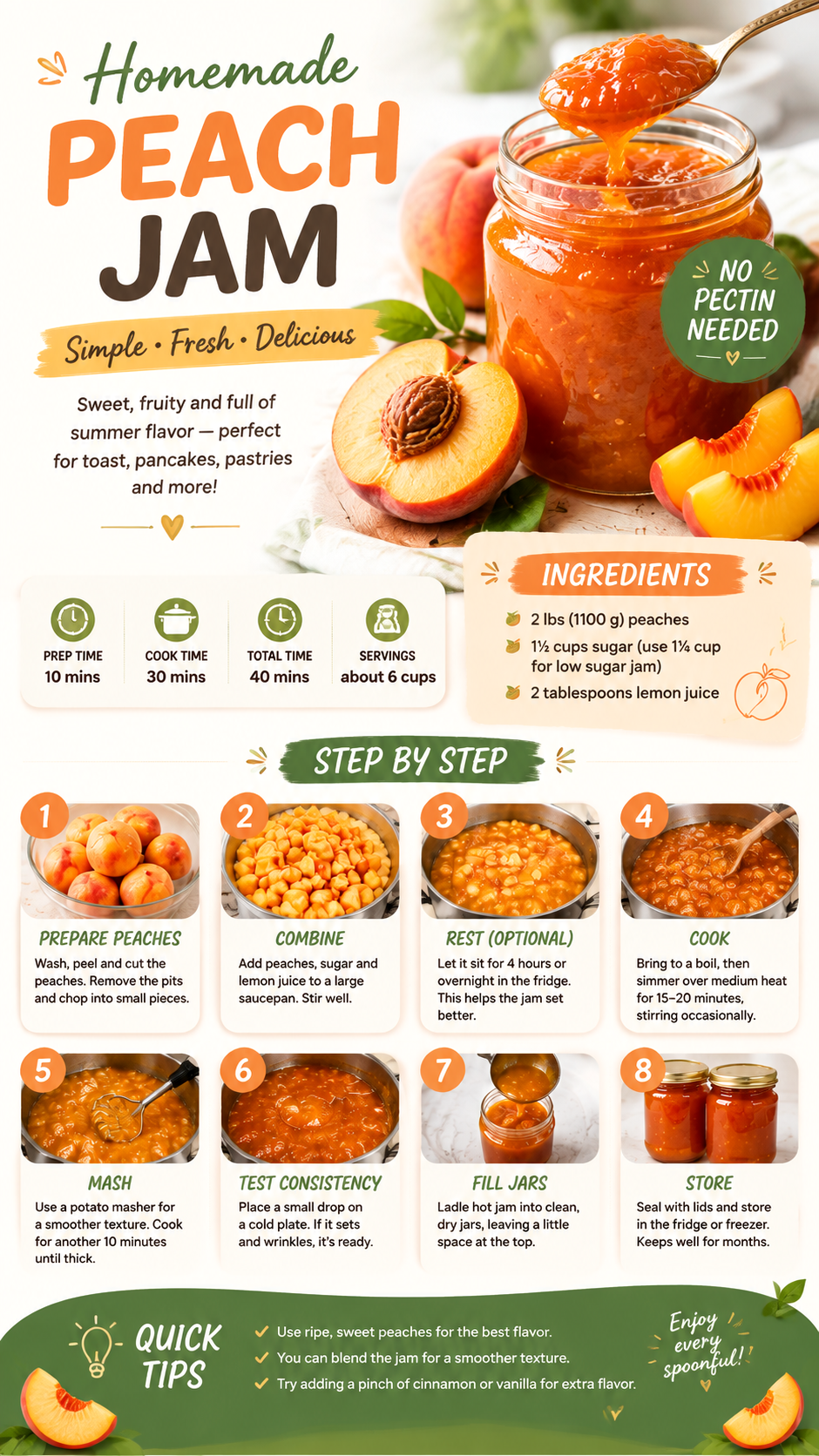
There is something special about homemade peach jam, especially when it is made with ripe, juicy peaches and a few simple pantry ingredients. This easy peach jam without pectin is sweet, fruity, and full of fresh peach flavor, making it a delicious addition to toast, pancakes, biscuits, pastries, and so much more. With fresh peaches, sugar, and a little lemon juice, you can make a beautiful batch of golden-orange peach jam right in your own kitchen.
Unlike recipes that rely on commercial pectin, this homemade peach jam thickens naturally as the fruit cooks and moisture evaporates. The process is straightforward, and you do not need any special jam-making equipment beyond a large pot, a spoon, and clean jars. Whether you have picked up fresh peaches at the farmers market or have a basket of ripe fruit waiting on your counter, this recipe is a wonderful way to turn seasonal produce into something delicious.
Key Takeaways
- Make flavorful homemade peach jam with fresh peaches, sugar, and lemon juice.
- No commercial pectin is needed because the jam thickens through gentle cooking.
- Prepare the peaches by peeling, removing the pits, and chopping the fruit.
- Use the cold-plate test to check when the jam has reached a suitable consistency.
- Refrigerate the finished jam or freeze it in suitable freezer-safe containers.
- Enjoy peach preserves on toast, pancakes, yogurt, biscuits, and desserts.
Why You Will Love This Easy Peach Jam Without Pectin
This simple peach jam recipe is ideal for anyone who loves homemade fruit preserves but prefers to keep the ingredient list short. You do not need to purchase a separate box of pectin or follow a complicated canning process to enjoy fresh peach flavor at home.
One of the best things about making peach jam from scratch is the ability to control the texture. Leave some small pieces of fruit for a chunky, rustic preserve, or mash the peaches more thoroughly for a smoother spread. Either way, the finished jam has a lovely orange color and a sweet, summery taste.
The recipe is also flexible. You can use it as a starting point for experimenting with warm spices, vanilla, or other complementary flavors. A small batch is especially convenient when you want to use ripe peaches before they become overripe.
What Makes Peach Jam Without Pectin Different?
Pectin is a naturally occurring substance found in fruit that helps jams and jellies set. Commercial pectin is often used to achieve a predictable texture in a shorter cooking time, but it is not essential for every homemade jam recipe.
Peaches contain some natural pectin, although generally less than fruits such as apples and citrus. When peaches are cooked with sugar and lemon juice, the mixture gradually loses moisture and becomes more concentrated. This process helps the jam thicken without commercial pectin.
Important: Peach jam made without added pectin may take longer to reach the desired consistency than a pectin-based recipe. The final texture depends on the ripeness of the peaches, the amount of liquid released, the width of your pot, and how long the mixture cooks.
Ingredients for Homemade Peach Jam
You only need three main ingredients to make this easy homemade peach jam. Each one contributes to the flavor, texture, or balance of the finished preserve.
1. Fresh Peaches
Start with approximately 2 pounds, or 1,100 grams, of fresh peaches. Choose fruit that smells fragrant and gives slightly when pressed gently. Ripe peaches provide the sweetest flavor and break down more easily during cooking.
Yellow peaches are an excellent choice because they offer a classic peach flavor and a warm orange color. White peaches can also work, although their flavor and acidity may differ slightly. Avoid fruit that is moldy, fermented, or badly damaged.
2. Granulated Sugar
The recipe uses approximately 1 1/2 cups of granulated sugar, with the option to use 1 1/3 cups for a less sweet batch. Sugar helps balance the fruit’s natural acidity, enhances flavor, and contributes to the texture of the finished jam.
Keep in mind that reducing sugar can affect how a jam cooks and stores. A lower-sugar version should be refrigerated or frozen unless you are following a tested recipe specifically designed for shelf-stable preservation.
3. Fresh Lemon Juice
Add 2 tablespoons of lemon juice to brighten the peach flavor and balance the sweetness. Lemon juice also contributes acidity, which can influence the jam’s texture. For a consistent result, use bottled lemon juice when following a tested home-canning recipe that specifies it, rather than substituting fresh juice without guidance.
How to Make Peach Jam Without Pectin
The total preparation and cooking time is approximately 40 minutes, although the exact time can vary depending on your peaches and stove. An optional resting period can help the fruit release its juices before cooking.
Step 1: Prepare and Peel the Peaches
Wash the peaches thoroughly under running water. Bring a large pot of water to a boil and prepare a bowl of cold water nearby. Carefully lower the peaches into the boiling water for about 30 to 60 seconds, depending on their ripeness.
Transfer the peaches to the cold water to stop the heating process. Once they are cool enough to handle, gently slip off the skins. If the skins do not loosen easily, return the peaches to the boiling water briefly.
Cut each peach in half, remove the pit, and chop the flesh into small pieces. Smaller pieces soften more quickly, while larger chunks create a more textured preserve.
Step 2: Combine the Peaches, Sugar, and Lemon Juice
Place the chopped peaches in a wide, heavy-bottomed pot. Add the sugar and lemon juice, then stir until the fruit is evenly coated. Let the mixture sit briefly if you would like the sugar to begin drawing out the peach juices.
For a more developed fruit flavor, you can cover the mixture and refrigerate it for several hours or overnight. This optional resting step is known as maceration. If you choose to refrigerate the mixture overnight, cook it promptly the next day.
Stir the fruit again before placing the pot on the stove. Some sugar may have settled at the bottom, so make sure the mixture is evenly combined.
Step 3: Bring the Mixture to a Gentle Boil
Set the pot over medium heat and stir frequently as the peaches release their juices. The sugar will dissolve, and the mixture will gradually become more liquid. Once it begins bubbling, adjust the heat to maintain a steady simmer.
Use a long-handled spoon because hot fruit mixtures can splatter. Scrape the bottom and corners of the pot regularly to prevent the sugar and fruit from sticking or scorching.
Step 4: Cook Until the Peaches Soften
Allow the peaches to cook for approximately 15 to 20 minutes, stirring regularly. The fruit should become tender, and the mixture should begin to look thicker and more concentrated.
Cooking time depends on how juicy the peaches are and how much surface area your pot provides. A wide pot encourages faster evaporation, while a narrow pot may require additional time. If the mixture is bubbling too aggressively, lower the heat to prevent scorching.
Step 5: Mash the Peaches to Your Preferred Texture
Use a potato masher to break down the softened peaches. Press gently for a chunky jam with visible fruit pieces, or mash more thoroughly for a smoother consistency.
If you prefer a very smooth spread, you can carefully blend part of the mixture using an appropriate heat-safe method. Always take care when handling hot fruit, and avoid filling a blender with steaming liquid unless the appliance is designed for that purpose.
Continue cooking the mashed peaches over low to medium-low heat for approximately 10 minutes, stirring frequently. The mixture should become glossy and thicker as excess moisture evaporates.
Step 6: Test the Jam Consistency
One of the most useful techniques for making peach jam without pectin is the cold-plate test. Before you begin cooking, place two small plates in the freezer. When the jam looks close to ready, spoon a little onto a chilled plate.
Wait approximately 30 seconds, then tilt the plate. If the jam remains in place or moves slowly and wrinkles slightly when gently pushed, it may be ready. If it runs freely like syrup, continue cooking for a few minutes and test again with a clean, chilled plate.
Remember that hot jam always looks thinner than cooled jam. Avoid cooking it excessively just to make it look very firm in the pot, as too much evaporation can produce a stiff or overly concentrated preserve.
Why This Matters
The goal is a jam that spreads easily after cooling, not a mixture that becomes solid in the pot. Use the cold-plate test alongside visual cues, such as reduced bubbling and a thicker texture. For a reliable result, allow the finished jam to cool before judging its final consistency.
Step 7: Transfer the Jam to Clean Jars
Once the jam reaches your preferred consistency, remove the pot from the heat. Carefully transfer the hot mixture into clean jars using a ladle and a suitable funnel if needed. Leave enough space at the top for expansion if you plan to freeze the jam in freezer-safe containers.
Let the jam cool safely before securing containers for refrigerator storage. Avoid placing extremely hot glass jars directly on a cold surface, and do not handle hot jam with bare hands.
Important safety note: Clean jars and hot filling alone do not make peach jam shelf-stable. This recipe is intended for refrigerated or frozen storage unless you use a tested home-canning recipe and follow its specified processing instructions. Do not store these jars at room temperature simply because the lids appear sealed.
Step 8: Cool, Refrigerate, or Freeze
Allow the jam to cool appropriately, then refrigerate it promptly in clean, covered containers. For longer storage, freeze it in freezer-safe containers, leaving suitable headspace for expansion.
The illustrated recipe suggests refrigeration for up to three weeks and freezing for up to six months. These are recipe-specific estimates rather than universal guarantees. Storage life depends on preparation, handling, container cleanliness, refrigerator temperature, and freezer conditions. Follow current food-safety guidance, and discard jam that develops mold, an unusual smell, or other signs of spoilage.
Tips for the Best Homemade Peach Jam
A few small details can make a noticeable difference in the flavor and texture of your finished peach preserves.
Choose Ripe, Sweet Peaches
Start with fragrant, ripe peaches for the best flavor. Fruit that is firm and underripe may be less sweet and harder to mash, while excessively soft fruit can be difficult to prepare and may have an off flavor if it has begun to spoil.
Use a Wide, Heavy-Bottomed Pot
A wide pot provides more surface area for water to evaporate, helping the jam thicken efficiently. A heavy bottom distributes heat more evenly and reduces the risk of scorching. Avoid filling the pot too close to the top because fruit mixtures can bubble up as they cook.
Stir Frequently Toward the End
As the jam becomes thicker, it is more likely to stick to the bottom of the pot. Stir regularly, especially during the final minutes of cooking. Lowering the heat is often better than rushing the process with a high flame.
Experiment With Gentle Flavor Additions
Peaches pair beautifully with warm spices and aromatic ingredients. A small pinch of cinnamon, a little vanilla, or a hint of finely grated ginger can give the jam a different character without overpowering the fruit.
For your first batch, consider making the basic recipe as written. Once you understand how your peaches behave, you can experiment with small flavor variations. If you intend to preserve the jam through home canning, avoid changing ingredient proportions or adding low-acid ingredients unless the variation is supported by a tested preservation recipe.
How to Fix Common Peach Jam Problems
Why Is My Peach Jam Too Runny?
Runny peach jam usually needs more time to cook, although it may also appear thin because it is still hot. First, allow a small sample to cool completely. If it remains too loose, return the jam to the pot and simmer it gently for a little longer, stirring frequently and repeating the cold-plate test.
Keep in mind that some homemade peach preserves are naturally softer than commercial jam. A spoonable texture can still be delicious on yogurt, oatmeal, or pancakes.
Why Did My Jam Become Too Thick?
If the mixture cooks for too long, too much moisture may evaporate. This can leave you with a jam that is stiff or difficult to spread. If you notice the mixture becoming excessively thick while cooking, reduce the heat and reassess its consistency. A small amount of water may help loosen jam for immediate use, but avoid treating this adjustment as a safe way to correct a shelf-stable preserve.
Why Does My Jam Taste Too Sweet?
Peaches naturally vary in sweetness, so some batches may taste sweeter than others. Lemon juice helps balance the flavor, while choosing ripe fruit with good natural acidity can also make a difference. For future batches, you can explore a tested lower-sugar recipe designed specifically for peach jam without added pectin.
Why Is My Jam Not Setting After Cooling?
Peach jam without commercial pectin often has a softer set than other fruit preserves. If the cooled jam is looser than you prefer, you can gently recook it and test again. However, remember that texture is partly a matter of preference, and a soft homemade peach spread can be perfect for breakfast or desserts.
Delicious Ways to Use Peach Jam
Once your homemade peach jam is ready, there are countless ways to enjoy its sweet, fruity flavor. Keep a jar in the refrigerator for quick breakfasts, simple desserts, and afternoon snacks.
- Toast and biscuits: Spread peach jam over warm toast, English muffins, scones, or homemade biscuits.
- Pancakes and waffles: Spoon it over pancakes, waffles, or French toast instead of syrup.
- Yogurt and oatmeal: Swirl a spoonful into plain yogurt or warm oatmeal for a fruity breakfast.
- Pastries and cakes: Use it as a filling for thumbprint cookies, sponge cakes, turnovers, and sweet rolls.
- Cheese boards: Serve a small bowl alongside mild cheeses and crackers for a sweet contrast.
- Glazes and sauces: Use a little peach jam as a flavoring for suitable savory sauces or glazes, adjusting the sweetness to taste.
- Homemade gifts: Pack refrigerated or frozen jam attractively for friends and family, and clearly label its storage requirements.
Frequently Asked Questions
Can I Make Peach Jam Without Pectin?
Yes. Peaches can be cooked with sugar and lemon juice until enough moisture evaporates to create a thick, spreadable preserve. Because peaches have relatively modest natural pectin levels, the result may be softer than jam made with commercial pectin.
Do I Have to Peel the Peaches?
Peeling is recommended if you want a smoother texture. The boiling-water method makes the skins easier to remove. You can leave the skins on for a more rustic result if you prefer, but the finished texture will be different.
Can I Use Frozen Peaches?
Frozen peaches can work well in homemade jam. Thaw them first and include their released juices in the mixture. Because frozen fruit may release additional liquid, cooking time can vary. Use the same visual checks and cold-plate test to assess consistency.
How Long Does Homemade Peach Jam Last?
For this simple recipe, refrigerate the jam promptly in clean, covered containers and follow a conservative storage period, such as the recipe’s suggested limit of up to three weeks. Freeze portions you will not use soon, allowing room for expansion. These storage suggestions do not replace tested canning instructions for shelf-stable jam.
Can I Reduce the Sugar?
You can experiment with a lower-sugar version intended for refrigeration or freezing, but sugar affects more than sweetness. It influences texture and preservation, so reducing it may produce a softer jam. For the most dependable result, use a tested recipe developed for reduced-sugar peach preserves.
Can I Store This Jam in the Pantry?
No, not unless you follow a tested recipe and the appropriate boiling-water canning process for shelf-stable preservation. Filling clean jars and tightening the lids does not establish that the contents are safe for room-temperature storage. Refrigerate or freeze this simple version instead.
Quick Points
- Use approximately 2 pounds of ripe peaches.
- Combine the fruit with sugar and 2 tablespoons of lemon juice.
- Simmer, mash, and cook until the jam thickens.
- Use the cold-plate test to check the consistency.
- Refrigerate promptly or freeze for longer storage.
Conclusion: Enjoy the Sweet Taste of Homemade Peach Jam
This easy peach jam without pectin is a lovely way to make the most of fresh, juicy peaches. With just peaches, sugar, and lemon juice, you can create a flavorful homemade preserve without relying on commercial pectin. The simple cooking method allows the fruit to soften, release its juices, and develop a rich, golden-orange color.
Take your time while cooking, stir regularly, and use the cold-plate test to help you achieve the texture you enjoy. Whether you prefer a chunky spread or a smoother jam, this recipe offers plenty of room to make it your own. Serve it with toast, pancakes, biscuits, or pastries, and enjoy a little taste of summer whenever you open the refrigerator.
Make a batch when ripe peaches are in season, keep a jar ready for breakfast, and freeze extra portions for another day. Homemade peach jam is simple, comforting, and delicious, making it a recipe worth returning to whenever fresh peaches are available.
Tags
Peach Jam Without Pectin
Homemade Peach Jam
Easy Jam Recipe
Fresh Peach Recipes
Small Batch Preserves
Summer Canning Ideas
Fruit Preserves
Easy Breakfast Recipes