8 Healing Honey Combinations with Ginger, Lemon, Garlic, Cinnamon More
Honey has been a beloved kitchen staple for generations, appreciated for its natural sweetness, comforting flavor, and versatility in everyday recipes. When combined with ingredients such as ginger, lemon, garlic, cinnamon, rosemary, or warm milk, honey can become part of simple homemade drinks and traditional wellness routines. These honey combinations are easy to prepare, require only a few common ingredients, and offer plenty of inspiration for anyone looking to make their daily habits more enjoyable.
From a soothing honey and ginger drink to warm milk sweetened with honey before bedtime, there are many ways to enjoy this golden ingredient. Some combinations are traditionally used to comfort an irritated throat, while others add flavor to meals and beverages. The key is understanding what each ingredient brings to the recipe and recognizing that natural ingredients are not substitutes for proven medical treatment.
Key Takeaways
- Honey pairs well with ginger, lemon, garlic, cinnamon, rosemary, and warm milk.
- Honey and ginger make a flavorful addition to warm drinks during cold weather.
- Honey and lemon can create a comforting beverage for a scratchy throat.
- Honey adds sweetness, while herbs and spices contribute distinctive flavors and aromas.
- Never give honey to children younger than 12 months because of the risk of infant botulism.
- Use honey combinations as food and comfort measures, not as cures for illnesses or replacements for prescribed medication.
1. Honey and Ginger: A Warming Homemade Combination
Honey and ginger are a popular pairing in traditional home kitchens. Ginger has a distinctive spicy flavor, while honey adds a smooth sweetness that balances its natural sharpness. Together, they make a warming drink that is especially enjoyable during chilly mornings or when you want something soothing and flavorful.
Potential Benefits of Honey and Ginger
Ginger contains naturally occurring compounds, including gingerols, that have been studied for their biological effects. Ginger also has evidence supporting its usefulness for certain types of nausea, although the strength of the evidence varies by condition. Honey can coat the throat temporarily and may help relieve coughing associated with upper respiratory infections.
However, combining honey and ginger does not guarantee relief from severe cold symptoms, and it should not be described as a cure for respiratory infections. The main appeal of this combination is its flavor, warmth, and potential to provide temporary comfort.
How to Make Honey and Ginger Tea
- 1 cup of hot water
- 3 to 5 thin slices of fresh ginger
- 1 to 2 teaspoons of honey
- A small squeeze of lemon, if desired
- Place the ginger slices in a cup or heatproof container.
- Pour hot water over the ginger and let it steep for 5 to 10 minutes.
- Allow the drink to cool slightly before adding honey.
- Stir well and enjoy while comfortably warm.
Helpful tip: Start with a small amount of ginger if you are sensitive to spicy foods. Ginger may cause heartburn or stomach discomfort in some people, especially in larger amounts.
2. Honey and Fermented Garlic: A Traditional Kitchen Pairing
Honey and fermented garlic are often discussed in traditional food and wellness practices. Garlic has a strong, savory flavor, while honey adds sweetness that can balance its sharpness. Fermentation changes garlic’s flavor and texture, creating a mellow, tangy ingredient that can be used in dressings, marinades, and other recipes.
What Makes Garlic Interesting?
Garlic contains sulfur-containing compounds that have been studied for possible effects on cardiovascular health and other biological processes. Some research suggests that certain garlic preparations may modestly affect blood pressure or cholesterol in some people. These findings depend on the preparation, amount, and individual circumstances, and they do not establish that honey-fermented garlic prevents infections or reliably boosts immune function.
Honey contributes sweetness and can make strongly flavored ingredients easier to enjoy. Nevertheless, the combination should be viewed primarily as a food preparation rather than a proven medicinal treatment.
How to Enjoy Honey and Garlic
For a simple serving idea, combine a little finely minced garlic with honey in a dressing or sauce. Allowing the mixture to sit briefly can help the flavors blend. Try it with roasted vegetables, grain bowls, or a savory marinade.
If you want to prepare garlic fermented in honey, use a tested recipe from a reliable food-preservation source. Garlic stored in honey creates a moist, low-acid environment, and an improvised mixture should not automatically be assumed safe for long-term storage at room temperature. Follow established food-safety instructions rather than relying on appearance, smell, or taste to judge safety.
Food safety note: Do not assume that honey preserves raw garlic safely under all conditions. Use a validated fermentation method, keep the mixture under the specified conditions, and discard food that shows signs of spoilage. People taking blood-thinning medication should also consult a healthcare professional before regularly using concentrated garlic preparations.
3. Honey, Lemon, and Warm Water: A Simple Soothing Drink
Honey, lemon, and warm water form one of the easiest honey combinations to prepare. The sweetness of honey balances lemon’s tartness, while warm water creates a comforting beverage that can be enjoyed in the morning, during colder weather, or whenever you want a caffeine-free drink.
Why People Enjoy Honey and Lemon
Lemon contains vitamin C, an essential nutrient involved in normal immune function, collagen formation, and antioxidant activity. Honey supplies carbohydrates and sweetness. When mixed with warm water, the ingredients create a pleasant drink that can encourage fluid intake.
Honey may provide temporary relief from coughing, particularly at night for some children over one year of age and adults. Lemon adds flavor but does not directly cure a sore throat or eliminate the viruses responsible for common colds.
Easy Honey Lemon Water Recipe
- 1 cup of warm water
- 1 to 2 teaspoons of honey
- 1 to 2 teaspoons of fresh lemon juice
- Pour warm water into a cup.
- Add the fresh lemon juice and stir.
- Mix in the honey until it dissolves.
- Taste the drink and adjust the lemon or honey to your preference.
Use warm rather than scalding water for a comfortable drinking temperature. You can also add a thin slice of fresh ginger for extra flavor.
A Note About Tooth Enamel
Lemon juice is acidic, and honey contains sugars that oral bacteria can use. Frequent sipping throughout the day may increase the risk of dental erosion or tooth decay. Enjoy the drink in moderation, avoid swishing it around your mouth, and rinse with plain water afterward. Wait before brushing your teeth after consuming acidic drinks.
4. Honey and Warm Milk: A Cozy Evening Favorite
Warm milk with honey is a familiar bedtime drink for many people. It is simple, comforting, and easy to customize. The gentle sweetness of honey pairs well with the creamy flavor of milk, making this combination a pleasant choice for an evening routine.
Can Honey and Milk Improve Sleep?
Milk provides protein, calcium, and other nutrients, depending on the type you choose. It also contains tryptophan, an amino acid used by the body to produce substances involved in sleep regulation. However, the presence of tryptophan in milk does not mean that drinking a cup will reliably trigger sleep or increase melatonin enough to treat insomnia.
Warm milk may help some people relax because it is associated with comfort and a predictable bedtime routine. A small amount of honey adds sweetness, but there is limited evidence that honey and milk together have a special sleep-inducing effect.
How to Prepare Honey Milk
- 1 cup of milk or an unsweetened fortified alternative
- 1 teaspoon of honey, or less to taste
- A small pinch of cinnamon, if desired
- Warm the milk gently in a saucepan or microwave-safe cup.
- Avoid bringing it to a boil.
- Let it cool to a comfortable temperature.
- Stir in the honey and optional cinnamon.
- Enjoy as part of a relaxing evening routine.
Try this: Pair your warm drink with a consistent bedtime, dim lighting, and a break from screens. These habits may support better sleep more reliably than any single drink.
5. Honey and Rosemary: A Fragrant Herbal Combination
Rosemary is an aromatic herb commonly used in Mediterranean cooking. Its pine-like fragrance and earthy flavor complement honey’s floral sweetness, creating a combination that works well in drinks, dressings, marinades, and simple homemade syrups.
What Rosemary Adds to the Mix
Rosemary contains naturally occurring plant compounds, including rosmarinic acid and other phenolic substances. These compounds have been investigated for antioxidant activity in laboratory settings. However, laboratory findings do not prove that eating rosemary with honey protects brain cells, improves memory, or prevents mental fatigue in everyday life.
The most dependable reason to use rosemary is its culinary versatility. Its aroma can make a simple honey drink or dressing feel more distinctive without requiring complicated ingredients.
How to Make Rosemary-Infused Honey
- 2 to 3 tablespoons of honey
- 1 small fresh rosemary sprig
- 1 cup of hot water for a tea variation
For a simple rosemary tea, steep a small sprig in hot water for several minutes, remove the herb, and add honey once the drink has cooled slightly. You can also stir a small amount of honey into a dressing with olive oil and a little chopped rosemary.
For homemade infused honey intended for storage, follow a reliable food-safety recipe and use clean, dry utensils. Fresh herbs introduce moisture, so do not assume that an improvised infusion will remain safe indefinitely at room temperature.
Why This Matters
Natural ingredients can be valuable additions to a balanced diet, but their traditional uses and laboratory-tested compounds should not be confused with proven medical outcomes. Enjoy honey and herbs for their flavor, use reasonable portions, and seek appropriate medical care for persistent or severe symptoms.
6. Honey and Apple Cider Vinegar: A Tangy Drink Combination
Honey and apple cider vinegar create a sweet-and-tangy mixture that can be used in drinks, salad dressings, and marinades. Honey softens the vinegar’s sharp taste, making it easier to incorporate into everyday recipes.
What You Should Know About Apple Cider Vinegar
Apple cider vinegar contains acetic acid, which gives it its distinctive sour flavor. Research has explored vinegar’s possible effects on post-meal blood glucose and other metabolic measures, but the evidence is limited and does not establish that honey and apple cider vinegar treat acid reflux, gastritis, bloating, or abdominal pain.
In fact, vinegar is acidic and may worsen heartburn or irritate the digestive tract in some people. Honey adds sugar and does not neutralize all the potential effects of the vinegar.
A Simple Honey and Vinegar Dressing
- 2 tablespoons of olive oil
- 1 teaspoon of apple cider vinegar
- 1 teaspoon of honey
- A pinch of salt and black pepper
Whisk the ingredients together until combined, then drizzle the dressing over a salad or roasted vegetables. This approach allows you to enjoy the combination as part of a meal rather than treating it as a concentrated wellness shot.
Important: If you experience frequent acid reflux, persistent stomach pain, or symptoms of gastritis, do not rely on vinegar-based home remedies. They may aggravate symptoms. Speak with a healthcare professional about the cause and appropriate treatment.
7. Honey and Cinnamon: A Sweet and Aromatic Pairing
Honey and cinnamon are a classic combination found in warm beverages, oatmeal, baked goods, and breakfast recipes. Honey brings floral sweetness, while cinnamon contributes a warm, woody aroma. Together, they make ordinary foods feel more comforting and flavorful.
Potential Benefits of Honey and Cinnamon
Cinnamon contains plant compounds that have been studied for possible metabolic and antioxidant effects. Research into cinnamon supplements and blood glucose management has produced mixed results, and the evidence is not strong enough to recommend honey and cinnamon as a treatment for diabetes, inflammation, or other medical conditions.
Honey and cinnamon may also appear in homemade skincare recipes. However, a food ingredient is not automatically safe for direct application to the skin. Cinnamon can irritate skin, and homemade mixtures may cause allergic reactions. Honey and cinnamon should not be presented as proven treatments for severe skin inflammation or other skin conditions.
How to Enjoy Honey and Cinnamon
- Stir a small amount of honey and cinnamon into oatmeal.
- Add a pinch of cinnamon and a teaspoon of honey to warm milk.
- Drizzle honey over sliced apples sprinkled with cinnamon.
- Mix honey and cinnamon into plain yogurt for a quick snack.
These simple options deliver the combination’s flavor without requiring special preparations or large quantities of either ingredient.
Choose the Right Cinnamon
Cassia cinnamon, a common variety sold in supermarkets, can contain relatively high levels of coumarin, a naturally occurring compound that may harm the liver when consumed in excessive amounts over time. Ceylon cinnamon generally contains much less coumarin. If you use cinnamon frequently, consider choosing Ceylon cinnamon and avoid taking concentrated cinnamon supplements without professional advice.
How to Choose the Best Honey for Homemade Combinations
Honey comes in many varieties, each with its own color, texture, aroma, and flavor. Some types are light and delicate, while others have a darker color and stronger taste. The best choice depends on how you plan to use it.
Raw, Filtered, and Regular Honey
Raw honey is generally honey that has not undergone extensive processing, although the exact meaning of the term can vary. Filtered honey has had some particles removed, while other commercially sold honey may be heated or processed to achieve a particular consistency.
Different honeys may contain varying amounts of naturally occurring plant compounds, but there is no reliable basis for assuming that a particular type will cure illness or provide dramatic health advantages. For everyday recipes, choose honey you enjoy and buy it from a trustworthy source.
Tips for Better Results
- Use small amounts: Honey is a source of sugar, so a little often provides enough sweetness.
- Match flavors thoughtfully: Mild honey works well with lemon, while a stronger variety can complement ginger or rosemary.
- Keep utensils clean: Avoid introducing water or food particles into a honey container.
- Store honey properly: Keep it tightly closed in a clean, dry place and follow the product’s storage guidance.
- Adjust sweetness gradually: Start with one teaspoon and add more only if needed.
Important Safety Tips for Honey Combinations
Although honey is a familiar food, natural does not automatically mean safe for everyone. A few straightforward precautions can help you enjoy these combinations responsibly.
Never Give Honey to Infants Under 12 Months
Honey can contain spores of the bacteria that cause infant botulism. A baby’s digestive system is not mature enough to reliably prevent these spores from growing and producing toxins. Never give honey to a child younger than 12 months, whether it is raw, pasteurized, mixed into water, stirred into milk, or added to cooked foods.
Be Mindful of Sugar Intake
Honey contains naturally occurring sugars and contributes calories to the diet. Although it can be a flavorful alternative to some other sweeteners, it should not be treated as sugar-free or unlimited simply because it is natural.
People managing diabetes or blood glucose levels should account for honey as part of their overall carbohydrate intake. A healthcare professional or registered dietitian can help determine how it fits into an individual eating plan.
Consider Allergies and Medication Interactions
Some people may be sensitive or allergic to honey, pollen-related substances, herbs, or spices. Introduce unfamiliar ingredients in small amounts and stop using them if you develop an adverse reaction.
Garlic, ginger, and concentrated herbal preparations may interact with certain medications or affect bleeding risk in some circumstances. If you take prescription medication, have a chronic condition, or are pregnant or breastfeeding, ask a qualified healthcare professional before using concentrated preparations regularly.
Know When Home Remedies Are Not Enough
Honey drinks may provide temporary comfort, but they do not replace medical evaluation. Seek urgent medical care for difficulty breathing, severe chest pain, confusion, or other alarming symptoms. Contact a healthcare professional if a cough persists, symptoms worsen, or you experience ongoing digestive problems.
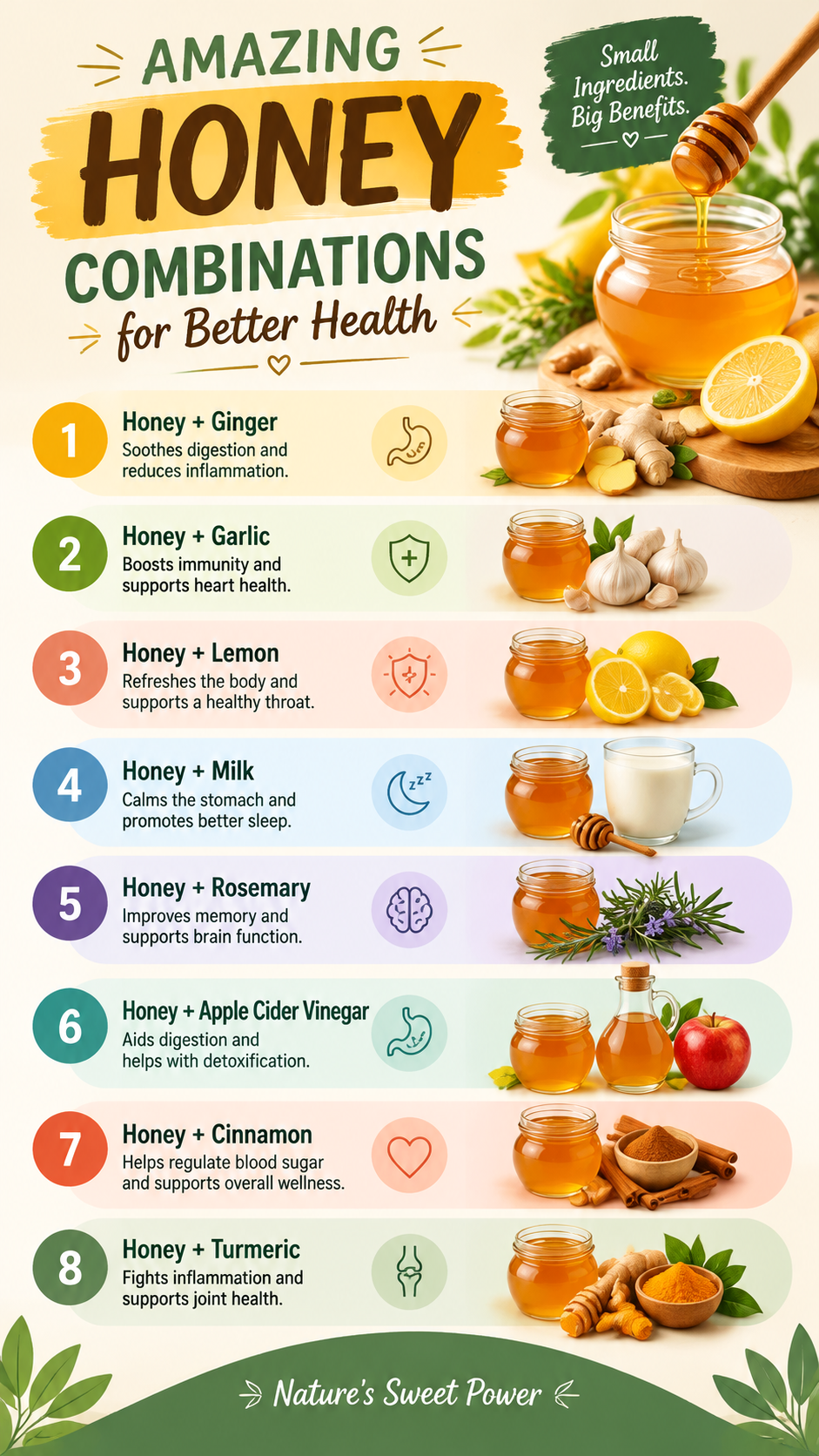
Quick Points: Honey Combinations at a Glance
- Honey and ginger: A warming, spicy addition to homemade tea.
- Honey and garlic: A sweet-savory combination for dressings and marinades.
- Honey, lemon, and warm water: A refreshing, comforting drink.
- Honey and warm milk: A cozy option for an evening routine.
- Honey and rosemary: An aromatic pairing for tea and cooking.
- Honey and apple cider vinegar: A tangy ingredient combination best enjoyed diluted or in food.
- Honey and cinnamon: A flavorful addition to oatmeal, fruit, yogurt, and warm drinks.
Conclusion: Make Honey Combinations Part of Your Everyday Routine
Honey combinations offer a simple way to explore new flavors, prepare comforting drinks, and make everyday meals more enjoyable. Whether you prefer honey and ginger tea on a chilly morning, honey and lemon in warm water, or honey and cinnamon over fresh fruit, these recipes use familiar ingredients and require very little preparation.
The most useful approach is to appreciate what each combination genuinely offers. Honey provides sweetness, ginger contributes a warming flavor, lemon adds tartness, garlic brings savory depth, rosemary offers an herbal aroma, and cinnamon creates a cozy finish. Some ingredients have been studied for possible health effects, but these mixtures should not be promoted as guaranteed cures for infections, digestive disorders, sleep problems, or skin conditions.
Keep portions moderate, choose ingredients carefully, and follow food-safety recommendations when preparing mixtures for storage. Remember that honey must never be given to infants under 12 months, and seek medical guidance when symptoms are severe or persistent.
With a few simple ingredients and a little creativity, you can discover honey combinations that suit your taste and daily routine. Save your favorite recipes, experiment with different flavors, and enjoy these homemade ideas as part of a balanced lifestyle.
Tags
Honey Combinations
Honey Recipes
Ginger and Honey
Honey Lemon Water
Cinnamon and Honey
Natural Wellness
Homemade Drinks
Healthy Kitchen Ideas