Natural Oils Guide Benefits and Uses for Skin, Hair Wellness
Natural oils have earned a special place in skincare, hair care, and everyday self-care routines. From nourishing dry skin to adding shine to dull hair, these plant-based oils offer versatile ways to support your beauty goals with simple ingredients. Whether you prefer lightweight jojoba oil, rich coconut oil, or antioxidant-rich argan oil, understanding the benefits and uses of natural oils can help you choose the right options for your needs.
The secret to getting the most from natural oils is knowing what each one does best, how to apply it properly, and which precautions matter. Some oils are ideal for moisturizing, while others are better suited to targeted hair care or occasional scalp treatments. This guide explores eight popular natural oils, their potential benefits, and practical ways to incorporate them into your routine.
Key Takeaways
- Sweet almond, jojoba, and coconut oils can help soften and moisturize skin.
- Argan and coconut oils can help improve hair softness, shine, and manageability.
- Tea tree oil requires careful dilution and may help with certain skin concerns when used appropriately.
- Rosehip oil is a popular option for moisturizing and supporting the appearance of uneven skin tone.
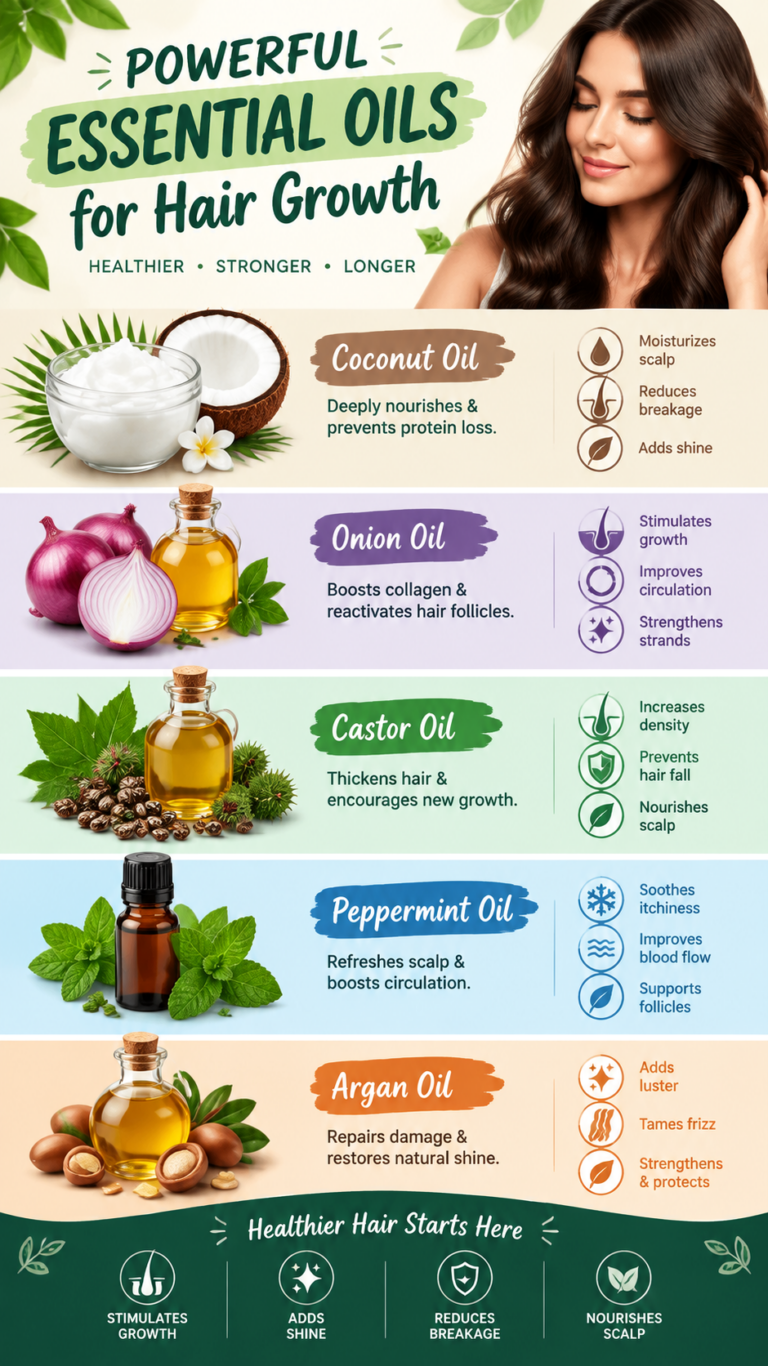
- Castor oil conditions hair and brows, but strong evidence that it stimulates growth is limited.
- Lavender essential oil can add a relaxing aroma to a self-care routine, but it must be used safely.
What Are Natural Oils and Why Are They Popular?
Natural oils are oils obtained from plant materials such as nuts, seeds, fruits, and flowers. They are used in cosmetics, massage products, hair treatments, and personal care formulations because many contain fatty acids and other compounds that help condition the skin and hair.
Not all natural oils work in the same way. Carrier oils, including almond, jojoba, coconut, argan, and castor oils, are commonly used to moisturize or condition. Essential oils, such as tea tree and lavender, are more concentrated aromatic extracts that require additional care during application.
Natural does not automatically mean gentle or suitable for everyone. An oil that works well for dry skin may feel too heavy for acne-prone skin, while a concentrated essential oil can cause irritation if applied incorrectly. Choosing the right oil depends on your skin type, hair texture, preferences, and intended use.
1. Sweet Almond Oil: A Gentle Moisturizer for Skin and Hair
Sweet almond oil is a popular carrier oil valued for its smooth texture and moisturizing properties. It contains fatty acids that help soften the skin and reduce moisture loss, making it a useful option for people who experience dryness or rough patches.
Benefits of Sweet Almond Oil
- Moisturizes dry skin: Helps soften rough areas and leaves the skin feeling smoother.
- Supports hair conditioning: Can reduce the feeling of dryness and improve manageability.
- Enhances massage: Its slip makes it useful as a base oil for gentle body massage.
- Helps maintain softness: Regular, appropriate use can make dry skin feel more comfortable.
How to Use Sweet Almond Oil
Apply a few drops to slightly damp skin after bathing to help seal in moisture. For hair care, smooth a small amount through dry ends before washing or use a tiny quantity after styling to reduce the appearance of frizz.
People with almond or tree nut allergies should avoid sweet almond oil unless a qualified healthcare professional confirms that a particular product is safe for them. If you have sensitive skin, test a small amount on a limited area first.
2. Coconut Oil: Nourishment for Skin and Hair
Coconut oil is widely used in beauty routines because it forms a rich, conditioning layer on the skin and can help reduce protein loss from hair during washing. Its texture makes it particularly appealing for people who want a simple oil for dry areas and hair lengths.
Benefits of Coconut Oil
- Softens dry skin: Helps reduce moisture loss and improve the feel of rough areas.
- Conditions hair: May help protect hair from some protein loss and improve softness.
- Supports massage: Its rich texture makes it suitable for body massage when tolerated.
- Smooths dry ends: A small amount can help tame flyaways and improve the appearance of hair.
How to Use Coconut Oil
For hair, apply a small amount to the lengths before shampooing, particularly if your hair is dry or prone to breakage. Leave it on for a short treatment period and wash thoroughly. For skin, use a thin layer on dry areas such as elbows, knees, and legs.
Pro Tip: Coconut oil can feel heavy and may worsen clogged pores or breakouts in some people. If your face is acne-prone, consider a lighter, non-comedogenic moisturizer instead of using coconut oil as your daily facial product.
3. Jojoba Oil: Lightweight Moisture for Everyday Care
Jojoba oil is technically a liquid wax rather than a conventional triglyceride oil. Its composition resembles some of the wax esters naturally found in human sebum, which helps explain why it is a popular ingredient in facial moisturizers and hair products.
Benefits of Jojoba Oil
- Moisturizes skin: Helps soften the skin and support its moisture barrier.
- Feels lightweight: Often spreads easily without the heavy feel of richer oils.
- Conditions hair: Can smooth dry ends and improve manageability.
- Supports scalp comfort: May help soften dry areas, although persistent flaking requires appropriate treatment.
How to Use Jojoba Oil
Warm two or three drops between your palms and gently press them onto slightly damp skin. For hair, distribute a small amount through the ends or add it to a suitable conditioner. Start with less than you think you need, especially if your hair is fine.
Although jojoba oil is often chosen by people with combination or oily skin, no oil is guaranteed to suit every complexion. Introduce it gradually and discontinue use if you notice irritation or new breakouts.
4. Argan Oil: Shine and Softness for Hair
Argan oil is extracted from the kernels of the argan tree and is commonly used in hair serums, conditioners, and skincare products. It contains fatty acids and antioxidant compounds, including vitamin E-related compounds, that make it an appealing ingredient for conditioning routines.
Benefits of Argan Oil
- Adds shine: Helps hair look smoother and more polished.
- Reduces the appearance of frizz: Coats the hair surface and improves manageability.
- Softens dry lengths: Helps hair feel less rough and easier to detangle.
- Moisturizes skin: Can be used as an emollient to soften dry areas.
How to Use Argan Oil
Rub one or two drops between your hands and apply them to the mid-lengths and ends of damp or dry hair. Avoid applying too much near the roots if your hair becomes oily easily. On the skin, use a few drops after cleansing or layer the oil over a water-based moisturizer if your skin tolerates it.
Argan oil can improve the appearance and feel of hair, but it should not be considered a proven treatment for hair loss. Consistent hair care, gentle handling, and identifying the cause of shedding are more important for long-term hair health.
5. Tea Tree Oil: A Targeted Option for Skin and Scalp Care
Tea tree oil is an essential oil obtained from the leaves of the tea tree. It is known for its characteristic herbal aroma and has been studied for antimicrobial activity. Certain topical preparations may help with specific skin concerns, but results vary, and concentrated tea tree oil can cause irritation or allergic reactions.
Potential Benefits of Tea Tree Oil
- Acne care: Some formulated topical products may help improve mild acne, although evidence is more limited than for established acne treatments.
- Scalp care: Certain formulated shampoos containing tea tree oil may help with dandruff for some users.
- Antimicrobial activity: Laboratory research suggests activity against some microorganisms, but this does not make tea tree oil a substitute for medical treatment.
How to Use Tea Tree Oil Safely
Choose a properly formulated product intended for the area you want to treat and follow its label directions. Do not apply undiluted tea tree essential oil directly to your skin. Avoid contact with your eyes, mouth, and other sensitive areas, and never swallow it, as ingestion can cause poisoning.
Tea tree oil is not suitable for every skin type. Stop using it if burning, redness, swelling, or itching develops. Persistent acne, severe scalp irritation, or signs of infection deserve advice from a qualified healthcare professional.
6. Castor Oil: A Rich Oil for Conditioning
Castor oil is a thick vegetable oil extracted from castor seeds. Its dense texture makes it popular in hair and beauty routines, particularly for conditioning dry lengths, softening rough skin, and adding a glossy finish to brows and lashes.
Benefits of Castor Oil
- Conditions hair: Helps coat strands and improve the feel of dry ends.
- Softens skin: Creates a rich layer that can help reduce moisture loss.
- Adds a glossy finish: A tiny amount can make brows appear more conditioned.
- Supports a massage routine: Its thick consistency can be useful when blended with a lighter carrier oil.
Does Castor Oil Promote Hair Growth?
Castor oil is frequently promoted as a natural hair growth remedy, but strong clinical evidence that it stimulates new hair growth is lacking. It may make hair feel softer and appear shinier, which can create the impression of healthier hair without necessarily changing its growth rate.
To use it on hair, apply a very small amount to dry ends before shampooing. Because it is thick, excessive application can be difficult to wash out and may leave hair feeling greasy. Avoid getting it into your eyes, and do not use it as an unverified treatment for hair loss or thinning eyelashes.
7. Rosehip Oil: A Popular Choice for Skin Care
Rosehip oil is produced from the seeds of rose fruits and is widely used in facial oils and moisturizers. It contains essential fatty acids and naturally occurring compounds that make it a popular option for people seeking a nourishing addition to their skincare routine.
Benefits of Rosehip Oil
- Moisturizes dry skin: Helps soften the skin and reduce the feeling of tightness.
- Supports a smoother appearance: Regular moisturizing can improve the look and feel of dry or rough skin.
- Provides antioxidant compounds: Its natural composition includes compounds studied for their role in skin care.
- Complements a simple routine: Can be added to a moisturizer-based routine when suitable for your skin.
How to Use Rosehip Oil
After cleansing, apply a few drops to slightly damp skin or layer them over your usual moisturizer. Begin with occasional use to see how your skin responds. Store the bottle according to its label, away from excessive heat and direct light, because oils can deteriorate over time.
Rosehip oil is sometimes advertised as a way to erase scars, dark spots, and wrinkles. It may help improve skin softness and appearance, but results for pigmentation and scarring are not guaranteed. Daily broad-spectrum sunscreen is a more established step for preventing sun-related dark spots from becoming more noticeable.
8. Lavender Oil: A Relaxing Addition to Self-Care
Lavender essential oil is best known for its floral aroma and frequent use in massage products, bath preparations, and relaxation routines. Some people find lavender-scented products calming, although responses to scent vary and research on sleep benefits is mixed.
Potential Benefits of Lavender Oil
- Encourages relaxation: Its aroma may help create a calming atmosphere during an evening routine.
- Supports a bedtime ritual: A familiar scent can become part of a consistent wind-down habit.
- Enhances massage: Properly diluted lavender oil can add fragrance to a massage blend.
- Complements self-care: It can make a simple routine feel more enjoyable without complicated products.
How to Use Lavender Oil
Use a product specifically designed for aromatherapy or topical application, following its instructions. For skin or massage, dilute the essential oil in a suitable carrier oil at the concentration recommended by the product manufacturer or a qualified professional. Never apply it undiluted or ingest it.
Lavender essential oil can cause skin irritation or allergic reactions. Do not assume that a natural fragrance is automatically safe for sensitive skin. If you prefer a low-risk relaxation ritual, try a lavender-scented product intended for its particular use and discontinue it if you experience discomfort.
How to Choose the Best Natural Oil for Your Needs
With so many natural oils available, choosing one can feel confusing. Start with a specific goal rather than buying several oils at once. Consider your skin type, hair texture, fragrance sensitivity, and whether the product is intended for facial use, body care, or hair conditioning.
For Dry Skin
Sweet almond, argan, jojoba, and rosehip oils may help soften dry skin. Coconut and castor oils offer richer textures that some people prefer for rough areas of the body. Apply a small amount to damp skin and assess whether the finish feels comfortable.
For Oily or Acne-Prone Skin
Consider lightweight products formulated for facial use, and look for a non-comedogenic moisturizer if clogged pores are a concern. Jojoba oil may suit some people, but individual responses differ. Avoid assuming that an oil will balance sebum production or treat acne simply because it is plant-based.
For Dry, Frizzy, or Damaged Hair
Argan and coconut oils are useful starting points for conditioning. Coconut oil may help reduce protein loss during washing, while argan oil can add softness and shine. Fine hair often needs less product than thick or coarse hair, so begin with a drop or two and adjust as needed.
For Relaxation and Aromatherapy
Lavender essential oil is a popular option for scent-based relaxation. Tea tree oil, meanwhile, is generally chosen for specific topical products rather than as a relaxing fragrance. Keep essential oils separate from food and drink, and store them securely away from children and pets.
Expert Insight: Simple Routines Often Work Best
You do not need eight different oils to build an effective beauty routine. Start with one product that matches your main goal, introduce it gradually, and pay attention to how your skin or hair responds. A gentle cleanser, appropriate moisturizer, and daily sunscreen for exposed skin usually provide a stronger foundation than a complicated collection of oils.
How to Use Natural Oils Safely
Natural oils can be useful additions to personal care, but proper application matters. A thoughtful approach helps reduce the chance of irritation and prevents unrealistic expectations about what an oil can achieve.
Patch-Test New Products
Before applying a new oil to your face or scalp, test a small amount on a limited area of skin. Follow the product instructions and monitor the area for redness, itching, swelling, or discomfort. A patch test can reduce uncertainty, although it cannot guarantee that a reaction will never occur.
Understand Carrier Oils and Essential Oils
Carrier oils such as jojoba and sweet almond oil are commonly used directly as cosmetic ingredients, provided the product is intended for that use and your skin tolerates it. Essential oils are concentrated and should be handled differently. Tea tree and lavender essential oils should not be applied undiluted to the skin.
Check Ingredients and Storage
Choose products with clear ingredient lists, appropriate packaging, and instructions for use. Store oils in accordance with the label, away from excess heat and light. Discard products that smell noticeably rancid, change unexpectedly in texture, or are past their recommended use period.
Know When to Seek Professional Advice
Natural oils are not substitutes for medical care. Persistent acne, unexplained hair loss, severe dandruff, eczema flares, or ongoing skin irritation may need targeted treatment. If you have a known allergy, are using prescription skin treatments, or are unsure whether an oil is suitable during pregnancy, ask a qualified healthcare professional for advice.
Building a Simple Natural Oil Routine
The best routine is one you can follow consistently. You can use natural oils as occasional treatments or as small additions to products you already enjoy. There is no need to apply every oil daily or combine multiple ingredients just because they are popular online.
A Simple Skin Care Routine
- Cleanse gently: Use a cleanser suited to your skin type.
- Apply moisturizer: Choose a product that supports your skin’s moisture barrier.
- Add oil if needed: Apply a few drops of a suitable carrier oil to areas that feel dry.
- Protect your skin: Use broad-spectrum sunscreen during the day on exposed skin.
A Simple Hair Care Routine
- Choose a conditioning oil: Consider coconut oil for a pre-wash treatment or argan oil for smoothing the ends.
- Use a small amount: Begin with one or two drops and adjust for your hair length and texture.
- Wash when needed: Remove heavier oils thoroughly to prevent buildup.
- Handle hair gently: Limit excessive heat and rough brushing to reduce breakage.
Important: Oils can help condition hair and reduce moisture loss, but they cannot repair every form of damage or guarantee faster growth. If your hair is thinning or shedding significantly, identifying the underlying cause is more useful than relying on a single beauty oil.
Natural Oils at a Glance
Quick Points
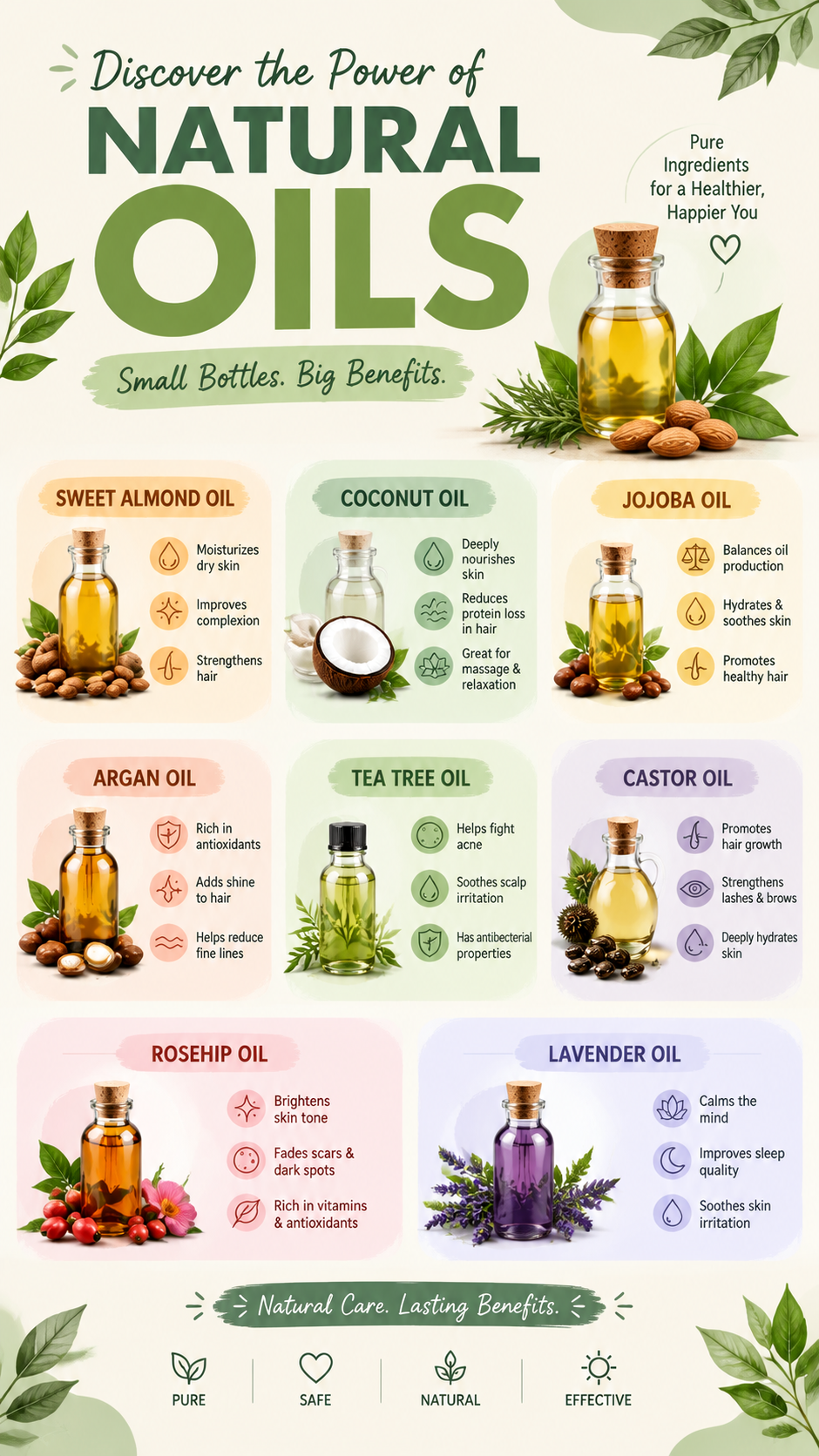
- Sweet almond oil: Moisturizes dry skin and conditions hair.
- Coconut oil: Offers rich moisture and may reduce hair protein loss.
- Jojoba oil: A versatile, lightweight-feeling option for skin and hair.
- Argan oil: Helps improve hair softness, shine, and manageability.
- Tea tree oil: Best used carefully in suitable, formulated topical products.
- Castor oil: Provides rich conditioning, although hair growth claims remain unproven.
- Rosehip oil: A popular moisturizing facial oil.
- Lavender oil: Adds a relaxing scent when used appropriately and safely.
Conclusion: Find the Natural Oils That Work for You
Natural oils offer plenty of possibilities for simple skincare, hair conditioning, and everyday wellness routines. Sweet almond and jojoba oils can help moisturize skin, coconut oil may benefit dry hair, argan oil can add shine, and rosehip oil provides a nourishing option for facial care. Castor oil is useful for conditioning, while tea tree and lavender essential oils require additional attention to safe application.
The most effective approach is to choose oils based on your needs rather than following every trend. Start with one product, use it sparingly, and give yourself time to assess the results. Pay attention to ingredient quality, patch-test new products, and remember that natural ingredients can still cause reactions.
With a little experimentation and a focus on safe, consistent care, you can discover which natural oils fit comfortably into your routine. Save this guide as a reference when exploring natural skincare, healthy hair habits, and simple self-care ideas.
Tags
Natural Oils
Natural Skin Care
Hair Care Tips
Carrier Oils
Essential Oil Safety
DIY Beauty
Holistic Wellness
Healthy Hair