Best Hair Oils for High, Medium Low Porosity Hair Complete Guide
Finding the right hair oil can completely change the way your hair looks and feels. Many people invest in expensive hair products but still struggle with dryness, frizz, dullness, or heavy buildup because they are using oils that do not match their hair’s porosity. Understanding whether your hair has high, medium, or low porosity can help you create a more effective hair care routine that supports moisture balance, softness, and healthy-looking strands.
Hair porosity refers to how easily your hair absorbs and holds onto moisture. This simple concept can guide you toward choosing oils that work with your natural hair structure instead of against it. Whether your hair quickly loses moisture, absorbs products slowly, or sits somewhere in between, selecting the right oil can make your routine easier and more personalized.
Key Takeaways
- Hair porosity helps determine which oils work best for your strands.
- High porosity hair often benefits from sealing and nourishing oils.
- Medium porosity hair usually needs balanced moisture and lightweight nourishment.
- Low porosity hair often prefers lighter oils that absorb easily.
- The right oil can support smoother, softer, and healthier-looking hair.
Understanding Hair Porosity Before Choosing Hair Oils
Before adding any oil to your hair routine, it is important to understand your hair’s ability to absorb and retain moisture. Hair porosity is influenced by the condition of the cuticle layer, which is the outer protective surface of each strand.
When the cuticle is tightly closed, moisture and oils may have difficulty entering the hair shaft. When the cuticle is raised or damaged, moisture can enter quickly but may also escape just as fast. This is why the same oil can feel amazing for one person and completely wrong for another.
What Are the Different Hair Porosity Types?
Low Porosity Hair
Low porosity hair has tightly packed cuticles that make it harder for moisture and products to penetrate. People with this hair type often notice that products sit on the surface instead of absorbing quickly.
Lightweight oils are usually a better match because they can provide nourishment without leaving the hair feeling coated or weighed down. Applying oils with gentle heat or warm water treatments may also help improve absorption.
- Look for lightweight oils that spread easily.
- Avoid using too much oil at once to prevent buildup.
- Focus on moisture balance rather than heavy coating.
Medium Porosity Hair
Medium porosity hair is often considered the easiest to maintain because it can absorb and hold moisture effectively. It usually responds well to a balanced hair routine with regular conditioning and moderate oil use.
This hair type can often enjoy a variety of oils depending on personal preferences. The goal is maintaining softness, shine, and flexibility without creating unnecessary weight.
- Choose balanced oils that provide moisture and nourishment.
- Use oils as a finishing step or pre-wash treatment.
- Adjust your routine based on seasonal changes.
High Porosity Hair
High porosity hair absorbs moisture quickly but can lose it just as fast. This hair type may feel dry, appear frizzy, or require extra care to maintain softness.
Rich oils can help create a protective layer that supports moisture retention. Many people with high porosity hair enjoy using oils after moisturizing products to help seal hydration into the strands.
- Choose nourishing oils that help lock in moisture.
- Use oil to protect ends and reduce the appearance of dryness.
- Combine oils with moisturizing products for better results.
Important: Hair porosity is not about having “good” or “bad” hair. It simply helps you understand what your strands need. A personalized routine based on moisture absorption can make your hair care choices much more effective.
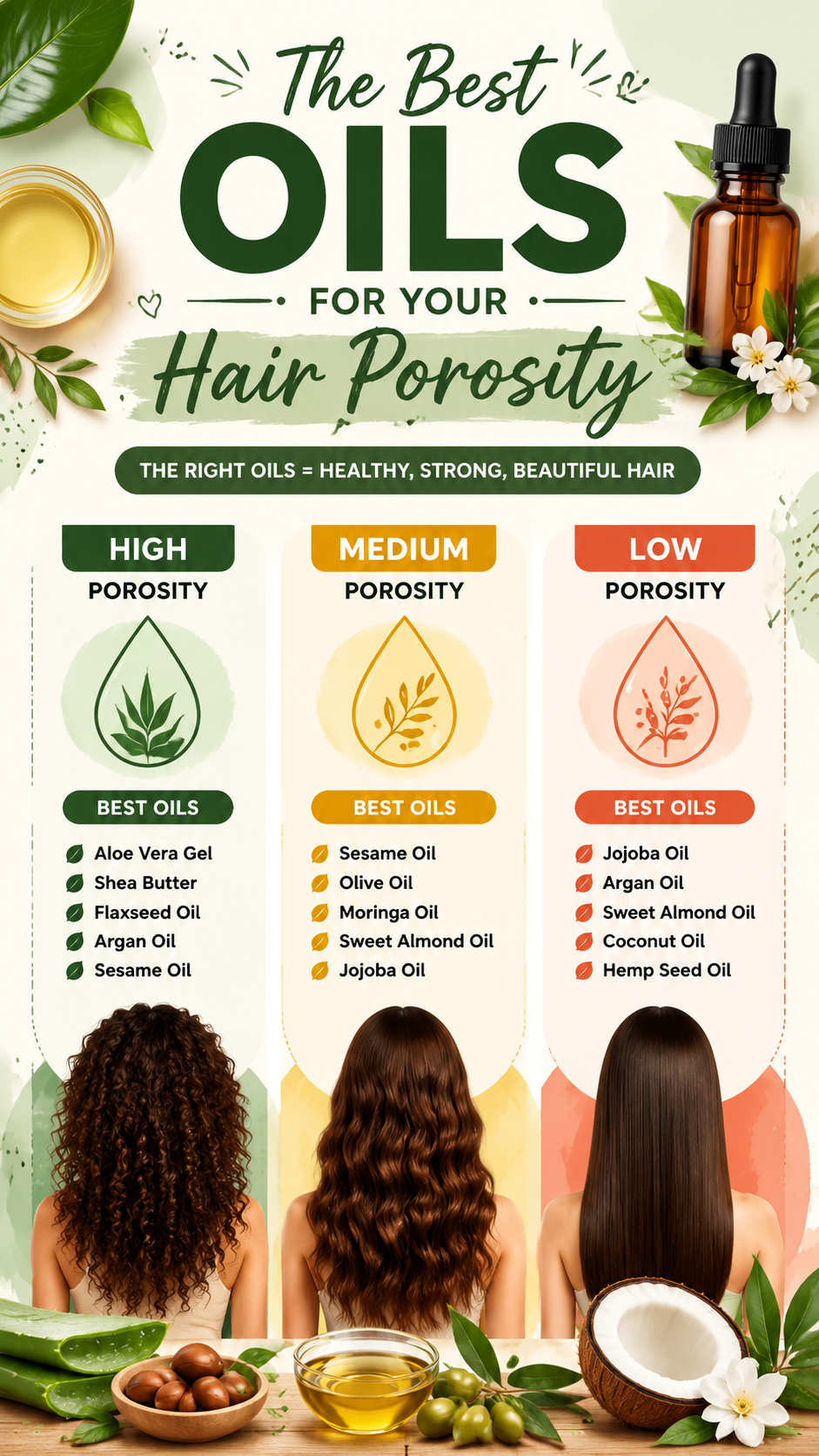
Best Hair Oils for High Porosity Hair
High porosity hair often benefits from oils that provide deeper nourishment and help reduce moisture loss. Because the cuticle layer may allow moisture to escape easily, sealing oils can become an important part of a healthy hair routine.
Recommended Oil Choices
- Avocado oil: A rich oil option often used for softening and nourishing dry-feeling hair.
- Shea butter-based oils: Helpful for adding a protective feel to coarse or very dry strands.
- Castor oil: A thicker oil commonly used when extra sealing is desired.
- Argan oil: Popular for adding shine and a smoother appearance.
High porosity hair can benefit from applying oils after leave-in conditioners or moisturizing creams. This layering method helps create a routine focused on maintaining hydration.
Best Hair Oils for Medium Porosity Hair
Medium porosity hair typically responds well to a balanced approach. Since this hair type naturally manages moisture better, the goal is to maintain strength, shine, and softness without overloading the strands.
Balanced Oils to Try
- Jojoba oil: A lightweight choice that works well for many hair routines.
- Sweet almond oil: Often used for a smooth, soft finish.
- Argan oil: A versatile option for shine and manageability.
- Olive oil: A classic nourishing oil that can work well when used correctly.
Best Hair Oils for Low Porosity Hair
Low porosity hair often needs lightweight products that can absorb without leaving a heavy layer. Using the right oils can help support softness while keeping hair feeling fresh and manageable.
Lightweight Oils for Better Absorption
- Jojoba oil: A lightweight oil commonly chosen for low porosity routines.
- Grapeseed oil: A thin oil option that feels less heavy.
- Sweet almond oil: Provides nourishment while remaining lightweight.
- Argan oil: Works well as a finishing oil for smoothness.
Using small amounts is especially important for low porosity hair. A few drops can often provide enough nourishment without making the hair appear greasy.
How to Use Hair Oils in Your Routine
Adding hair oils to your routine is simple, but the method you choose can affect your results. Oils can be used before shampooing, mixed with conditioning treatments, or applied lightly to finished hairstyles.
- Start with a small amount of oil.
- Apply mainly to the mid-lengths and ends if your scalp becomes oily easily.
- Give the oil time to work before washing if using it as a pre-shampoo treatment.
- Adjust frequency depending on how your hair feels.
Expert Insight
The best hair oil is the one that matches your hair’s needs. Porosity is a helpful guide, but your texture, lifestyle, climate, and current hair condition also influence what works best.
Common Hair Oil Mistakes to Avoid
- Using too much oil and creating unnecessary buildup.
- Choosing oils only because they are popular instead of considering hair needs.
- Skipping moisture products and relying only on oils.
- Applying heavy oils to hair that needs lightweight care.
At a Glance: Choosing Your Perfect Hair Oil
- High porosity hair: Choose richer sealing oils.
- Medium porosity hair: Focus on balanced nourishment.
- Low porosity hair: Pick lightweight oils that absorb easily.
- Always adjust your routine based on how your hair responds.
Final Thoughts on Finding the Right Hair Oil
Choosing the best hair oil for your porosity type can make your hair care routine feel more intentional and effective. Instead of following every trend, focus on understanding what your strands need and selecting oils that support your personal goals.
Whether your hair needs extra moisture retention, balanced nourishment, or lightweight hydration, the right oil can become a valuable part of your routine. Experiment with different options, pay attention to how your hair responds, and create a simple approach that helps your hair look and feel its best.
Tags
Hair Porosity
Hair Oils
Natural Hair Care
Healthy Hair Routine
Hair Growth Tips
Moisture Balance