Blue Lotus Benefits Natural Calm, Sleep Support Herbal Tea Guide
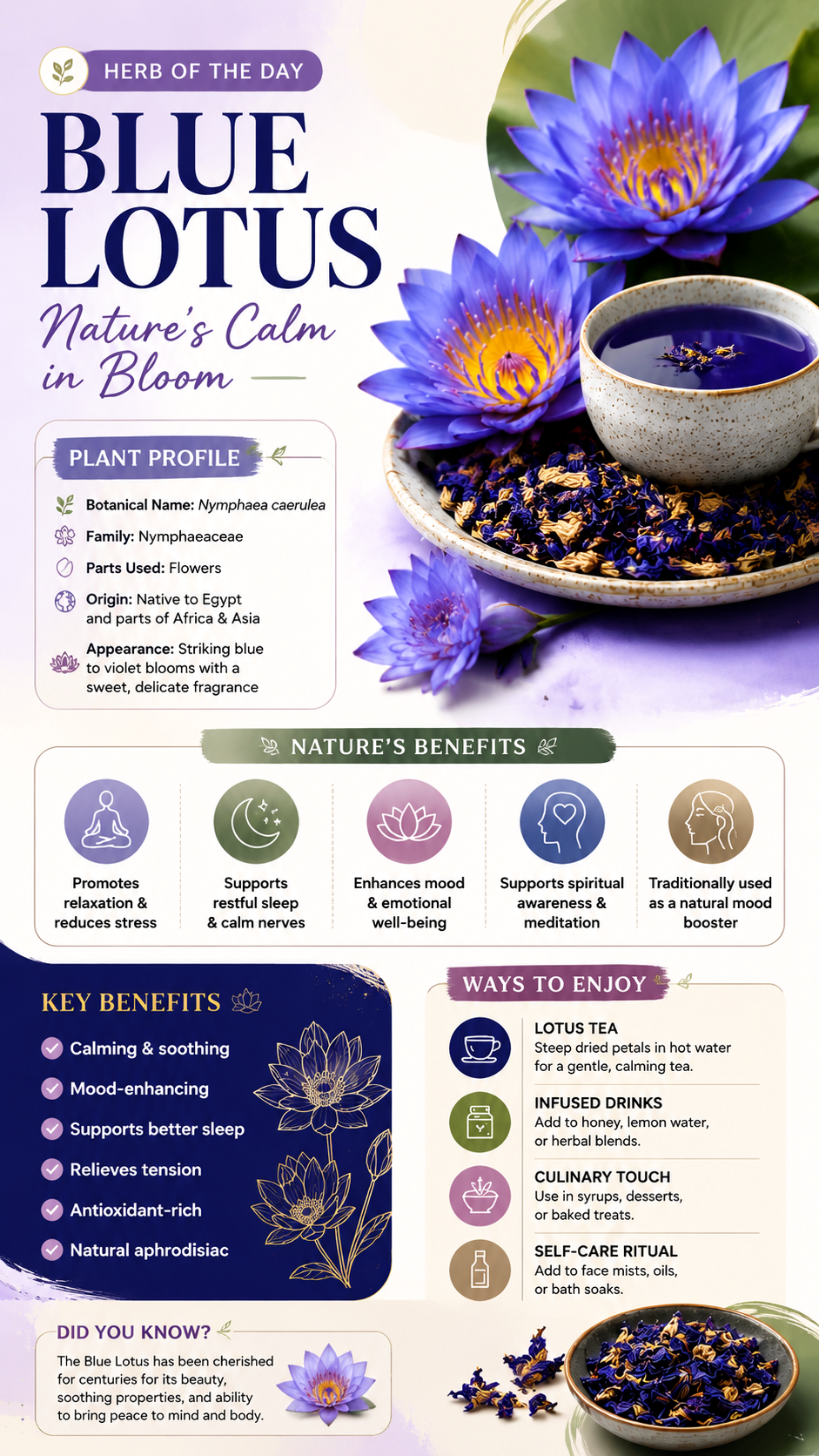
Blue Lotus has captured attention for centuries with its striking violet-blue petals, calming presence, and connection to traditional herbal wellness practices. Known botanically as Nymphaea caerulea, this beautiful aquatic flower is often associated with relaxation, mindfulness, and natural self-care rituals. From soothing herbal teas to peaceful evening routines, Blue Lotus continues to inspire people looking for gentle ways to support balance and well-being.
Key Takeaways
- Blue Lotus is a traditional botanical known for its calming qualities.
- The flower is commonly enjoyed as herbal tea or part of wellness rituals.
- Its beautiful appearance makes it popular in natural lifestyle practices.
- Blue Lotus is often linked with relaxation, mindfulness, and emotional balance.
- Responsible use and professional guidance are important for personal wellness choices.
What Is Blue Lotus?
Blue Lotus, also called the Egyptian Blue Water Lily, is an aquatic flowering plant recognized by its elegant blue to violet petals and golden center. It has a long history in traditional cultures where flowers and plants were valued for their beauty, symbolism, and potential wellness applications.
The plant belongs to the Nymphaeaceae family and grows naturally in warm aquatic environments. Today, dried Blue Lotus flowers are commonly used in herbal preparations, especially teas, infused drinks, and relaxing botanical blends.
Important: Blue Lotus is best viewed as a traditional botanical used for relaxation and wellness rituals rather than a replacement for medical care. Individual experiences can vary, and mindful use is always recommended.
Traditional Uses of Blue Lotus
Throughout history, Blue Lotus has been appreciated for its connection to calmness, reflection, and peaceful moments. Ancient traditions often valued flowers not only for their appearance but also for their role in daily rituals and personal well-being.
Relaxation and Stress Support
One of the most popular reasons people explore Blue Lotus is its association with relaxation. Many herbal enthusiasts enjoy a warm cup of Blue Lotus tea as part of a calming evening routine, meditation practice, or quiet self-care moment.
Mindfulness and Emotional Wellness
Blue Lotus is often included in wellness routines focused on mindfulness and emotional balance. Its gentle floral aroma and peaceful appearance can create a relaxing atmosphere that supports moments of reflection.
Traditional Herbal Practices
Herbal traditions around the world have used flowers as part of teas, aromatic preparations, and natural lifestyle practices. Blue Lotus remains popular among people interested in botanical wellness and plant-based rituals.
Potential Benefits of Blue Lotus
Blue Lotus is commonly discussed in natural wellness communities because of its traditional reputation for promoting calm and comfort. While more research is needed to understand its effects fully, many people enjoy it as part of a balanced lifestyle.
A Natural Way to Create Calm Moments
Modern lifestyles often involve constant stimulation, busy schedules, and limited opportunities to slow down. Herbal rituals using flowers like Blue Lotus can encourage intentional pauses and moments of relaxation.
Supporting Restful Evening Routines
Many people enjoy calming herbal beverages before bedtime as part of their nighttime routine. Blue Lotus tea may complement habits such as reducing screen time, practicing gentle stretching, or creating a peaceful bedroom environment.
A Beautiful Botanical for Self-Care
Beyond traditional uses, Blue Lotus is admired for its visual beauty. The flower can inspire nature-focused wellness practices, decorative displays, and a deeper appreciation for botanical ingredients.
How to Use Blue Lotus
Blue Lotus is typically enjoyed in simple herbal preparations. The dried flowers can be incorporated into different wellness routines depending on personal preference.
Blue Lotus Herbal Tea
One of the most common methods is preparing Blue Lotus tea. Dried flowers are steeped in hot water to create a mild floral infusion that can be enjoyed during moments of relaxation.
- Add dried Blue Lotus flowers to hot water.
- Allow the flowers to steep for several minutes.
- Enjoy the aroma and flavor as part of a peaceful routine.
Infused Drinks and Botanical Blends
Some people combine Blue Lotus with other herbs, honey, lemon, or natural flavors to create unique wellness drinks. These combinations can add variety while maintaining a relaxing herbal experience.
Self-Care Applications
Blue Lotus-inspired products may also appear in natural skincare, aromatic blends, and bath rituals. The flower’s delicate scent and appearance make it a favorite ingredient among those who enjoy botanical beauty routines.
Safety Considerations and Responsible Use
Although Blue Lotus is a natural plant, it is important to approach herbal products with care. Natural does not always mean suitable for everyone, and personal factors can influence how a botanical is experienced.
- Consult a healthcare professional if you are pregnant, nursing, taking medication, or managing a health condition.
- Choose quality herbal products from trusted sources.
- Start with small amounts when trying a new botanical product.
- Pay attention to your individual response.
Quick Note: Herbal wellness works best when combined with healthy lifestyle habits such as nutritious food, quality sleep, movement, and stress management practices.
Why Blue Lotus Continues to Inspire Wellness Trends
Interest in Blue Lotus reflects a larger movement toward natural living, mindful routines, and plant-based wellness. People are increasingly exploring traditional botanicals as a way to reconnect with nature and create intentional daily habits.
The flower represents more than a simple herbal ingredient. Its calming color, delicate structure, and long cultural history make it a symbol of peaceful moments and thoughtful self-care.
Expert Insight
- Natural rituals can help create a sense of mindfulness.
- Botanical ingredients are most valuable when used thoughtfully.
- Consistency and balance are key parts of a healthy lifestyle.
At a Glance: Blue Lotus Wellness Summary
Quick Points
- Beautiful blue botanical with traditional herbal use.
- Often enjoyed in calming tea rituals.
- Popular in mindfulness and natural wellness routines.
- Best used responsibly as part of a balanced lifestyle.
Final Thoughts on Blue Lotus
Blue Lotus remains a fascinating flower that blends natural beauty with traditional wellness practices. Whether enjoyed as a calming herbal tea, appreciated as a botanical ingredient, or included in a mindful self-care routine, this flower continues to inspire peaceful connections with nature.
Exploring herbs like Blue Lotus can be a wonderful reminder to slow down, create intentional moments, and appreciate the simple benefits of natural living. When approached with knowledge and care, botanical traditions can become meaningful additions to everyday wellness routines.
Tags
Blue Lotus
Herbal Tea
Natural Wellness
Botanical Remedies
Self Care Rituals
Mindful Living