DIY Anti-Sweat Odor Foot Bath Recipe Natural Remedy for Smelly Feet Sweaty Soles
Struggling with foot odor or excessive perspiration can be more than just a minor inconvenience; for many, it is a source of daily anxiety and discomfort. Whether you spend all day on your feet in heavy work boots or simply have a natural tendency toward hyperhidrosis, finding a solution that actually works without relying on harsh chemicals is a top priority. Nature has provided us with an incredible array of botanicals and minerals that can address these issues at the source, and one of the most effective methods to harness these benefits is through a dedicated foot soak.
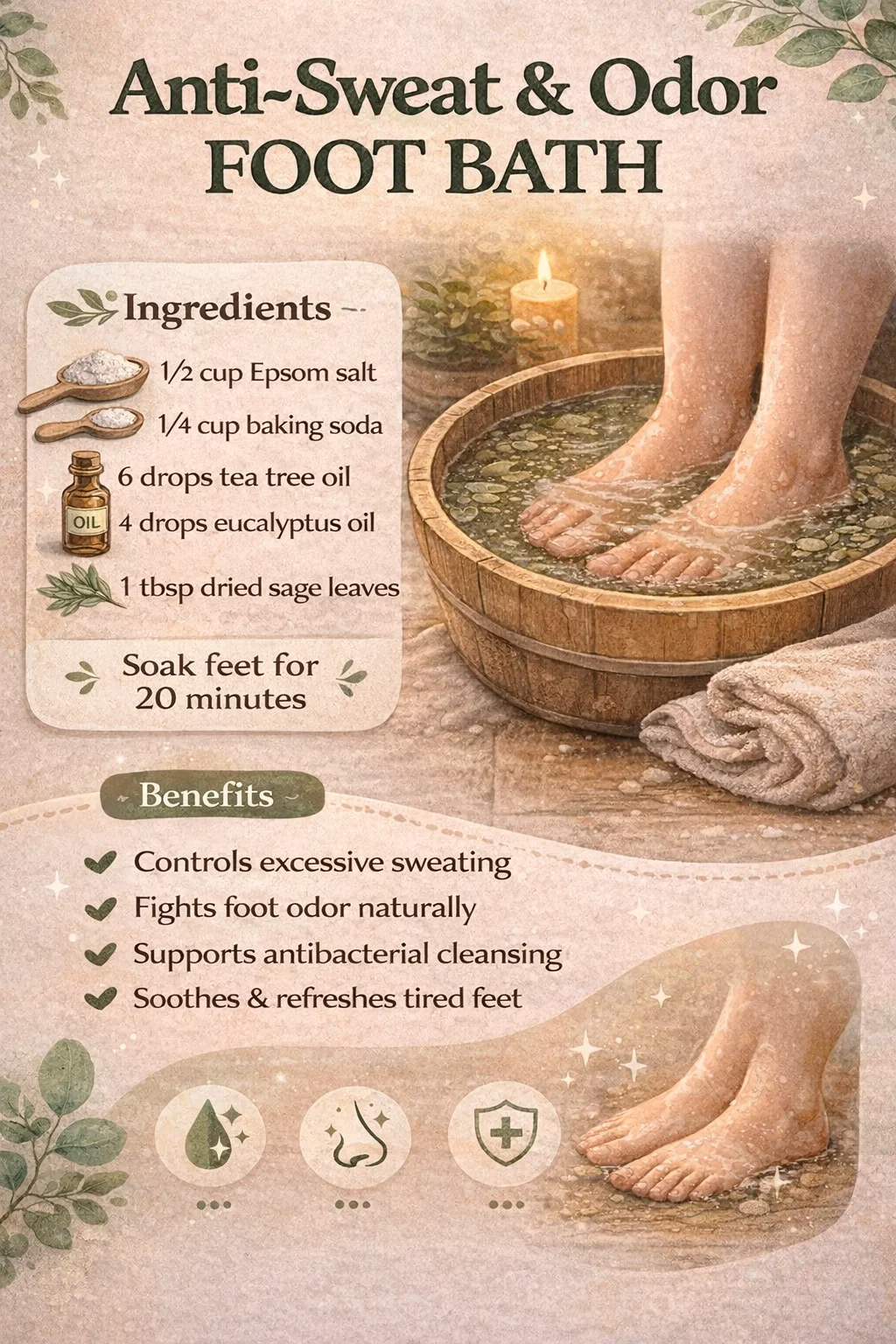
The image provided outlines a beautiful, holistic approach to foot health: the Anti-Sweat and Odor Foot Bath. This remedy is not just about masking smells with artificial fragrances; it is about utilizing the antibacterial properties of tea tree oil, the astringent nature of dried sage, and the detoxifying power of Epsom salts. In this comprehensive guide, we will dive deep into why these specific ingredients work, how to set up the perfect home spa environment, and additional lifestyle tips to keep your feet feeling fresh and rejuvenated permanently.
The Science Behind the Soak: Why These Ingredients Matter
To understand why this foot bath is so effective, we need to look at the individual components. Each ingredient in this recipe serves a specific physiological purpose, moving beyond mere relaxation to provide functional medical-grade benefits for your skin and sweat glands.
Epsom Salt: The Detoxifier
Epsom salt, technically known as magnesium sulfate, has been a staple in home remedies for centuries. When dissolved in warm water, it breaks down into magnesium and sulfate. Magnesium is known to help relax muscles and reduce inflammation, which is vital for tired, aching feet. Furthermore, the salt creates an osmotic effect that helps draw out toxins and impurities from the pores, providing a deep clean that standard soap often misses.
Baking Soda: The pH Balancer
Baking soda, or sodium bicarbonate, is a powerhouse when it comes to odor neutralization. Most foot odors are caused by the waste products of bacteria that thrive in acidic, moist environments. Baking soda is alkaline, meaning it helps to balance the pH level of the skin on your feet. By shifting the environment to a more neutral state, you make it much harder for odor-causing bacteria to survive and multiply.
Tea Tree Oil: The Natural Antiseptic
Tea tree oil is perhaps the most critical ingredient for anyone dealing with persistent odor or fungal concerns like athlete foot. It contains compounds called terpenoids, which have been shown to have strong antibacterial and antifungal properties. Adding six drops to your soak ensures that you are actively sanitizing the skin and reaching the difficult areas between the toes where bacteria love to hide.
Eucalyptus Oil: Cooling and Deodorizing
While tea tree oil handles the heavy lifting of disinfection, eucalyptus oil provides a refreshing, cooling sensation. It acts as a natural deodorant and has mild stimulant properties that can improve circulation in the feet. This is especially helpful if your feet feel heavy or swollen at the end of the day.
Dried Sage Leaves: The Natural Astringent
Sage is an often-overlooked hero in foot care. It contains tannic acid, a natural astringent that helps to constrict the sweat glands. By reducing the diameter of the pores, sage effectively limits the amount of perspiration your feet produce. For those suffering from excessive sweating, regular exposure to sage can significantly decrease moisture levels over time.
Step-by-Step Guide to Preparing Your Foot Bath
Creating the perfect foot bath is as much about the process as it is about the ingredients. Follow these steps to ensure you get the maximum therapeutic benefit from your session.
First, find a basin or a dedicated foot tub large enough to accommodate both feet comfortably with enough room for the water to cover your ankles. Fill the basin with warm water. You want the water to be comfortably hot to help open the pores and dissolve the salts, but never so hot that it causes discomfort or redness.
- Measure your dry ingredients: Add 1/2 cup of Epsom salt and 1/4 cup of baking soda. Stir the water until the solids are completely dissolved.
- Incorporate the oils: Carefully drop 6 drops of tea tree oil and 4 drops of eucalyptus oil into the water. Because oils float on the surface, you may want to give the water a quick swirl to disperse them.
- Add the botanicals: Sprinkle 1 tablespoon of dried sage leaves over the top. The warm water will begin to rehydrate the leaves, releasing their natural tannins into the soak.
Once your bath is prepared, submerge your feet and set a timer for 20 minutes. This duration is crucial. It gives enough time for the Epsom salts to draw out toxins and for the essential oils to penetrate the outer layers of the skin. Use this time to disconnect from your phone, read a book, or simply practice deep breathing.
Maximizing the Benefits: Best Practices for Foot Health
While the foot bath is a potent tool, it works best when integrated into a broader foot care strategy. If you are dealing with chronic odor or sweat, consider these additional habits to support your journey toward fresher feet.
Proper Drying is Key
Bacteria and fungi thrive in damp environments. After your 20 minute soak, make sure to dry your feet thoroughly. Pay special attention to the spaces between your toes. Using a clean, dry towel is essential. If you are prone to infections, you might even consider using a hair dryer on a cool setting to ensure every bit of moisture is gone before you put on socks.
Choose the Right Footwear
The materials you wear on your feet dictate how much they sweat. Synthetic materials like polyester or cheap plastic shoes trap heat and moisture. Opt for natural, breathable fabrics like cotton or wool socks. For shoes, leather or mesh materials allow for better air circulation. It is also wise to rotate your shoes, giving each pair at least 24 hours to dry out completely before wearing them again.
Exfoliation and Maintenance
Dead skin cells can provide a food source for bacteria. Every few days, use a pumice stone or a foot scrub to gently remove calluses and dry skin. This ensures that the ingredients in your foot bath can reach the fresh, healthy skin underneath more effectively.
Understanding Hyperhidrosis and Persistent Odor
If you find that your feet sweat excessively regardless of the temperature or your activity level, you may be experiencing a condition known as plantar hyperhidrosis. This is essentially an overactive sweat response. While the Anti-Sweat and Odor Foot Bath is an excellent management tool, it is helpful to understand that consistency is vital for these cases.
Using the sage and tea tree soak three to four times a week can help “train” the skin and sweat glands to be less reactive. Over time, the astringent properties of the sage can lead to a noticeable reduction in daily moisture. However, if you notice signs of infection, such as extreme redness, itching, or peeling skin that does not improve, it is always a good idea to consult with a podiatrist or dermatologist.
Creating a Spa Atmosphere at Home
Self-care is not just about the physical results; it is about the mental reset. To make your foot bath experience more enjoyable, try to elevate the environment. Dim the lights, light a candle as shown in the inspiration image, and perhaps play some soft ambient music. When you treat the foot bath as a ritual rather than a chore, you are more likely to stick with the routine long enough to see lasting results.
You can also enhance the soak by adding smooth river stones to the bottom of your basin. Gently rubbing your soles over the stones while you soak provides a DIY reflexology massage, stimulating nerve endings and further promoting relaxation. This is especially beneficial for people who suffer from plantar fasciitis or general foot fatigue.
Common Questions About Natural Foot Soaks
Can I use fresh sage instead of dried?
Yes, you certainly can. If you have a herb garden, fresh sage is wonderful. You will likely need to use about three times the amount of fresh leaves to get the same concentration of oils and tannins as the dried version. Bruise the leaves slightly before adding them to the water to help release their beneficial compounds.
Is it safe to use this soak every day?
For most people, a daily soak is perfectly safe and can be very effective for severe odor issues. However, baking soda and salts can be drying to the skin if overused. If you notice your skin becoming flaky or dry, reduce the frequency to two or three times a week and apply a high quality moisturizer or coconut oil to your feet after drying them.
What if I do not have eucalyptus oil?
Eucalyptus oil is great for the scent and cooling effect, but it is not the primary odor fighter. If you do not have it, you can substitute it with peppermint oil for a similar cooling sensation, or lavender oil if you prefer a more relaxing, floral scent. The tea tree oil, however, should not be skipped as it is the primary antibacterial agent.
Final Thoughts on Natural Foot Care
Taking care of your feet is an essential part of overall health that is frequently overlooked. By utilizing the Anti-Sweat and Odor Foot Bath described in the guide, you are taking a proactive step toward better hygiene and increased confidence. This recipe proves that you do not need expensive, chemical-laden products to achieve professional results. With just a few pantry staples and essential oils, you can transform the health of your feet and enjoy a sense of freshness that lasts all day.
Consistency is the secret ingredient in any natural remedy. Incorporate this soak into your weekly routine, pay attention to your footwear choices, and treat your feet with the respect they deserve. After all, they carry you through every step of your life. It is time to give them a little bit of the spotlight and the relief they need. Happy soaking!