DIY Hibiscus Hair Oil for Faster Hair Growth Natural Recipe for Thick, Healthy Hair
Natural hair care continues to grow in popularity as more people look for simple, ingredient-focused routines that fit into a healthy lifestyle. Among the many traditional beauty remedies that have stood the test of time, hibiscus hair oil remains one of the most loved DIY treatments. Made by infusing nourishing botanical ingredients into coconut oil, this homemade recipe is appreciated for its ability to moisturize the scalp, improve hair softness, and support stronger-looking strands.
Whether you are trying to build a healthier hair care routine or simply enjoy making your own beauty products, this DIY hibiscus hair oil recipe offers a practical and affordable solution. Using a handful of natural ingredients, you can create a versatile oil that fits easily into your weekly self-care ritual.
Key Takeaways
- Hibiscus flowers are commonly used in natural hair care routines.
- Coconut oil provides an excellent base for herbal oil infusions.
- Fenugreek seeds and curry leaves are popular ingredients in traditional DIY hair recipes.
- Consistent scalp massage may help improve the overall appearance of hair.
- Homemade hair oil is easy to customize with quality natural ingredients.
Why Hibiscus Is a Favorite for Natural Hair Care
Hibiscus has been valued in traditional beauty practices across many cultures for generations. Its vibrant flowers and leaves are commonly included in homemade hair masks, rinses, shampoos, and infused oils. Many people enjoy using hibiscus because it helps create a nourishing treatment that leaves hair feeling softer, smoother, and more manageable.
Although individual results vary, hibiscus is widely associated with supporting healthy-looking hair when used consistently as part of a balanced hair care routine.
Important: Natural remedies work best when combined with gentle hair care habits such as reducing excessive heat styling, eating a balanced diet, protecting hair from damage, and maintaining a healthy scalp.
Ingredients You’ll Need
This DIY recipe uses simple ingredients that complement one another while creating a rich botanical infusion.
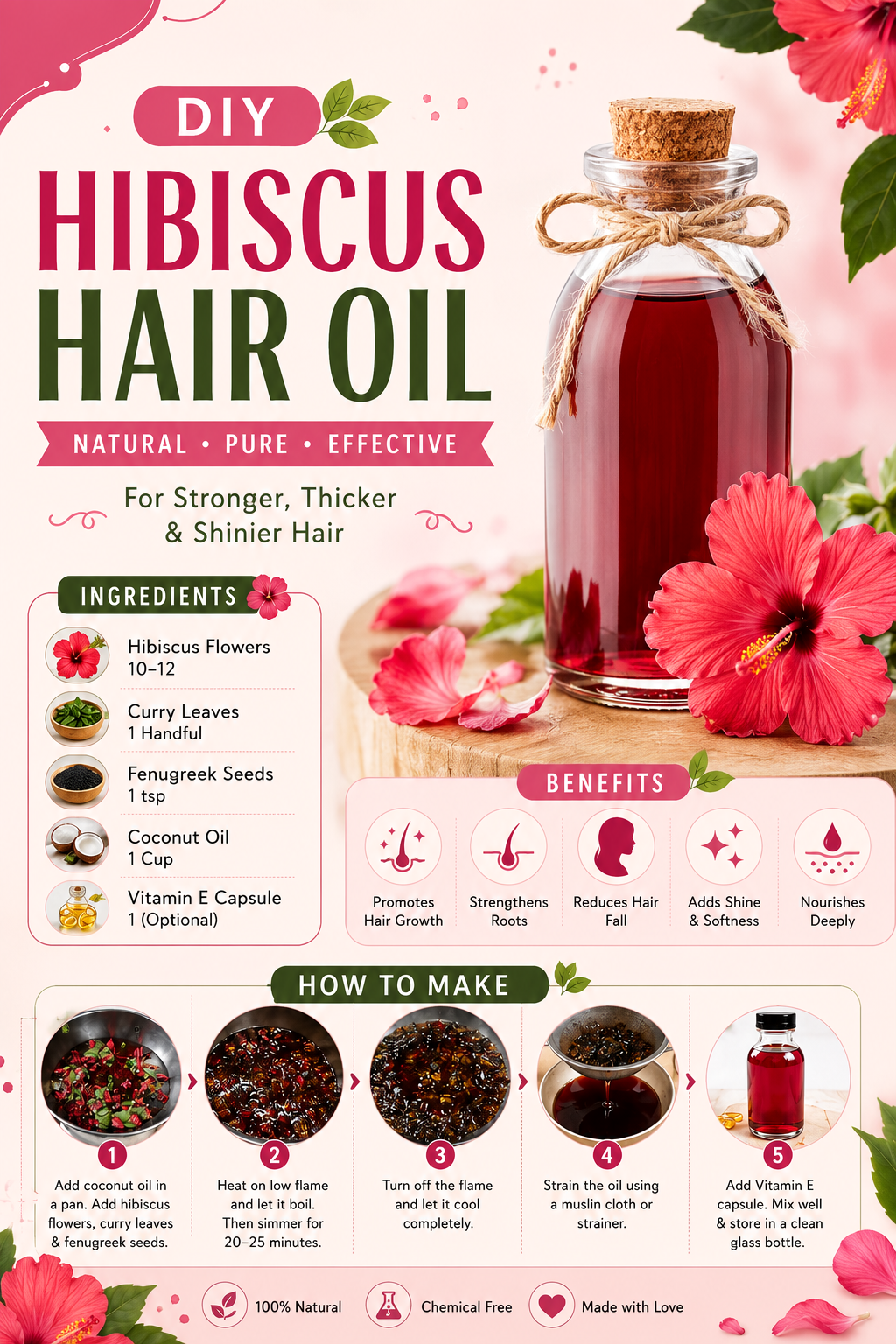
- 10 to 12 hibiscus flowers (fresh or dried)
- 1 handful of curry leaves
- 1 teaspoon fenugreek seeds
- 1 cup coconut oil
- 1 Vitamin E capsule (optional)
Hibiscus Flowers
Hibiscus flowers are the star ingredient. They contain naturally occurring plant compounds that make them a popular addition to homemade beauty recipes.
Curry Leaves
Curry leaves have long been used in traditional hair care preparations. They blend well with coconut oil and are frequently included in herbal oil recipes designed for scalp nourishment.
Fenugreek Seeds
Fenugreek seeds are another classic ingredient in DIY beauty recipes. Once gently heated in oil, they contribute to a rich herbal infusion and complement the other botanicals.
Coconut Oil
Coconut oil acts as the carrier oil for this recipe. Its smooth texture makes it ideal for scalp massage while helping distribute the botanical ingredients throughout the hair.
Vitamin E
Vitamin E is optional but often included in homemade beauty products. Many DIY enthusiasts like adding it to their oils as an additional nourishing ingredient.
How to Make DIY Hibiscus Hair Oil
Preparing this homemade oil requires only a few simple steps.
- Pour one cup of coconut oil into a clean pan.
- Add hibiscus flowers, curry leaves, and fenugreek seeds.
- Heat the mixture over low heat.
- Allow it to gently simmer for about 20 to 25 minutes.
- Turn off the heat and let the mixture cool completely.
- Strain the oil using a fine strainer or muslin cloth.
- Add the contents of one Vitamin E capsule if desired.
- Transfer the finished oil into a clean glass bottle.
Expert Insight
Using low heat is one of the most important parts of making herbal-infused oils. Gentle heating allows the ingredients to infuse into the carrier oil while helping preserve the quality of the finished product.
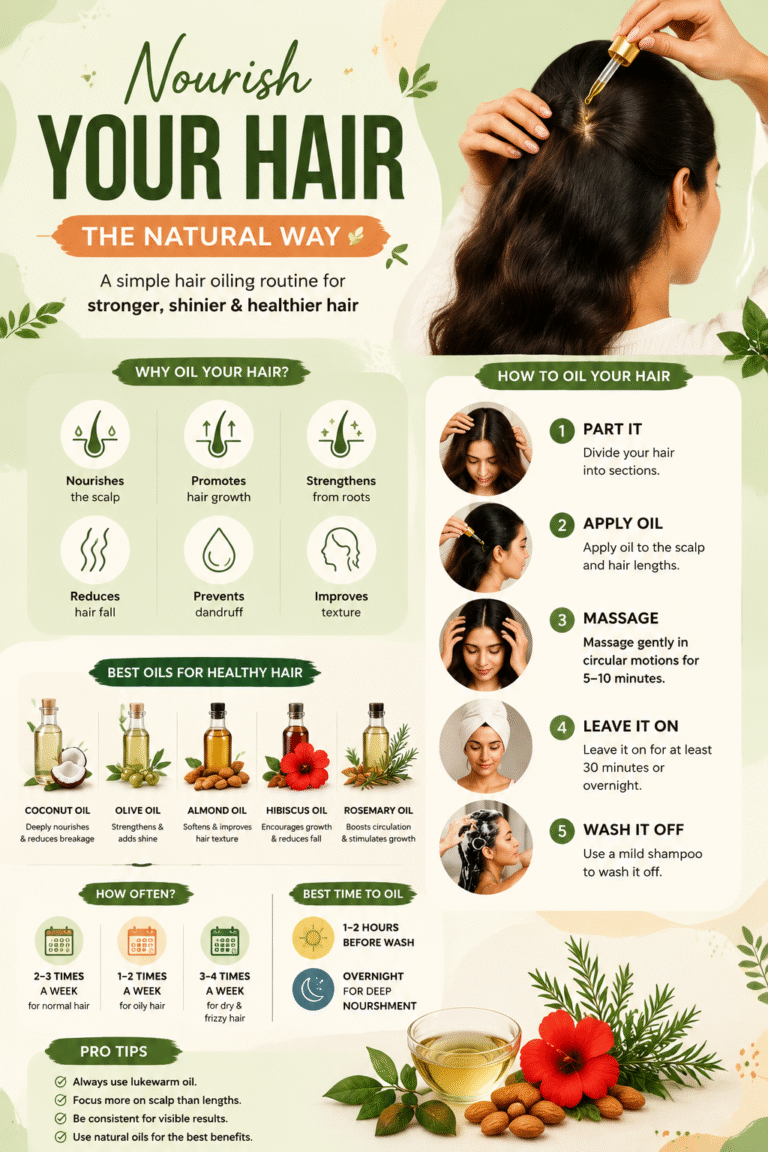
How to Apply Hibiscus Hair Oil
Application matters just as much as preparation.
- Warm a small amount of oil between your palms.
- Massage gently into the scalp using circular motions.
- Work the remaining oil through the mid-lengths and ends.
- Leave it on for one to two hours or overnight if preferred.
- Wash with a mild shampoo.
- Repeat two or three times each week for consistency.
Pro Tip: Gentle scalp massage may help distribute the oil evenly while creating a relaxing self-care experience. Avoid using excessive force, especially on fragile or wet hair.
Potential Benefits of Homemade Hibiscus Hair Oil
Supports Healthy-Looking Hair
Many people enjoy botanical hair oils because they leave hair feeling softer, smoother, and easier to manage.
Adds Shine
Natural oils coat the hair strands, helping reduce dryness while improving overall appearance and shine.
Comforts Dry Scalps
A well-moisturized scalp often feels more comfortable, particularly during dry seasons or after frequent washing.
Encourages a Healthy Hair Routine
One of the greatest benefits of homemade hair oil is consistency. Regular scalp care encourages mindfulness while making self-care a relaxing habit.
Tips for Better Results
- Use clean, dry containers when storing homemade oils.
- Store the bottle away from direct sunlight.
- Always perform a patch test before first use.
- Apply consistently rather than using large amounts occasionally.
- Use a gentle shampoo that does not overly strip natural oils.
- Reduce excessive heat styling whenever possible.
- Protect hair while sleeping with a satin bonnet or pillowcase.
Important: While natural ingredients are popular in DIY beauty, they are not a substitute for medical advice. If you experience persistent scalp irritation or significant hair loss, consult a qualified healthcare professional or dermatologist.
Frequently Asked Questions
Can I use dried hibiscus flowers?
Yes. Both fresh and dried hibiscus flowers are commonly used in homemade herbal oil recipes.
How often should I apply the oil?
Many people choose to use herbal hair oils two or three times each week as part of their regular routine.
How long should I leave it on?
Leaving the oil on for one to two hours is common, although some prefer applying it overnight before washing it out the following morning.
Can I store homemade hair oil?
Yes. Keep it in a clean, tightly sealed glass bottle in a cool, dry location. Discard the oil if you notice an unusual smell, discoloration, or signs of spoilage.
Quick Points
- Simple DIY recipe using natural ingredients.
- Easy weekly addition to a healthy hair routine.
- Perfect for scalp massage and hair conditioning.
- Affordable alternative to many commercial hair oils.
- Best results come from regular, consistent use.
Conclusion
DIY hibiscus hair oil is a timeless natural beauty recipe that combines simple botanical ingredients into an easy-to-make treatment for everyday hair care. Whether your goal is softer hair, a healthier-looking scalp, or a relaxing weekly self-care ritual, this homemade infusion offers an enjoyable way to embrace natural ingredients. With gentle preparation, proper storage, and consistent use, it can become a valuable part of your long-term hair care routine while allowing you complete control over the ingredients you use.
Tags
Hibiscus Hair Oil DIY Hair Care Natural Hair Oil Hair Growth Routine Scalp Care Homemade Beauty Coconut Oil Healthy Hair