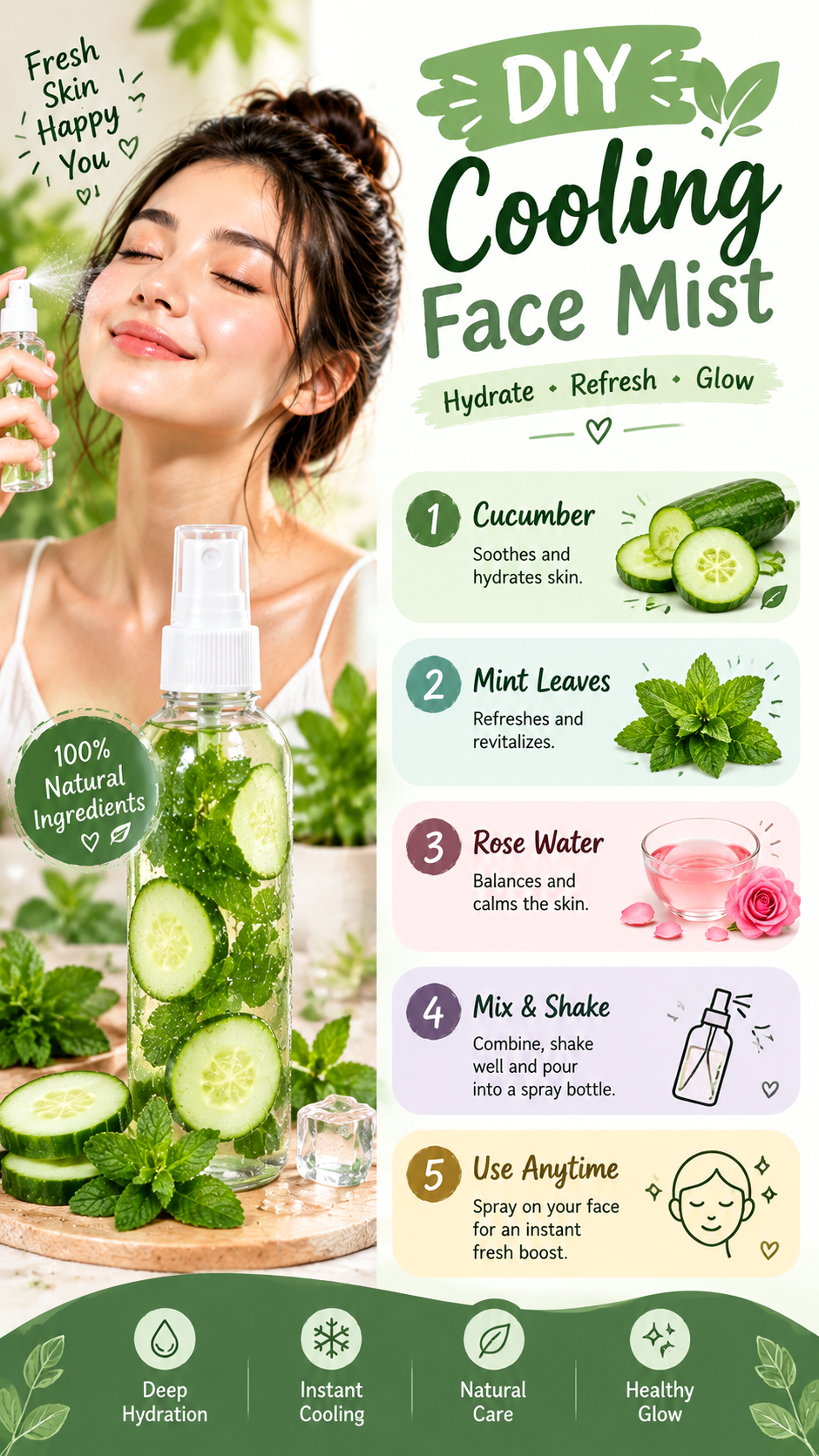
DIY Mint Face Mist Recipe Easy Homemade Natural Skincare for Fresh, Glowing Skin
Looking for a simple way to refresh your skincare routine with a homemade beauty recipe? A DIY mint face mist is an easy project for anyone who loves natural skincare, fresh ingredients, and simple self-care rituals. Made with fresh mint and clean water, this refreshing facial mist offers a cooling sensation that can make your skincare routine feel more enjoyable, especially on warm days.
With just a few basic supplies, you can prepare a mint-infused water mist at home and use it as an occasional refreshing step in your routine. The key is to keep the recipe simple, prepare small batches, handle the ingredients hygienically, and understand that a homemade water-based product does not have the same preservation system as a professionally formulated facial spray.
Key Takeaways
- Make a simple DIY mint face mist using fresh mint and clean water.
- Allow the infusion to cool completely before straining and transferring it into a clean spray bottle.
- Use the mist for a refreshing sensation, not as a treatment for acne, redness, or other skin conditions.
- Patch test before applying it to your face, particularly if you have sensitive skin.
- Prepare a small amount, refrigerate it, and discard it promptly because homemade water-based cosmetics can develop harmful microbial growth.
- Use a properly formulated, preserved facial mist if you need a product with a longer shelf life.
What Is a DIY Mint Face Mist?
A DIY mint face mist is a simple facial spray made by infusing fresh mint leaves in water. Once the mixture has cooled and been strained, it can be transferred into a clean spray bottle for occasional use. Its appeal lies in its minimal ingredient list, refreshing feel, and easy preparation.
Mint has a naturally fresh aroma, making it a popular ingredient in homemade beauty projects. When used in a water infusion, it can provide a light botanical scent and a pleasant sensory experience. The mist can be incorporated into a simple skincare ritual whenever you want a moment of freshness.
Unlike a commercial facial mist, however, homemade mint water has not necessarily undergone stability testing, microbial testing, or professional preservation. Its natural appearance and fresh scent do not guarantee that it is safe to use over time.
Important: Fresh mint and water are not a proven treatment for skin conditions. The main purpose of this DIY recipe is to provide an occasional refreshing experience, rather than replace moisturizer, sunscreen, or dermatologist-recommended skincare.
Benefits of Using a Homemade Mint Face Mist
One reason homemade facial mists are appealing is that they are easy to prepare and simple to incorporate into an existing routine. A mint-infused spray can be a pleasant addition when you want something light instead of a heavy skincare layer.
1. Provides a Refreshing Sensation
A fine water mist can feel refreshing on the skin, particularly when you have spent time in a warm environment. The light spray offers a quick way to freshen up without applying a rich cream or oily product.
Mint’s distinctive aroma can make the experience feel especially fresh. However, the cooling sensation should not be confused with a measurable reduction in skin temperature or a treatment for heat-related skin problems.
2. Fits Into a Simple Skincare Routine
If you prefer a minimalist beauty routine, a homemade face mist may seem like an attractive option. The recipe uses two basic ingredients, requires little preparation, and does not involve complicated equipment.
Keeping your skincare routine simple can also make it easier to recognize which products agree with your skin. Still, simplicity alone does not guarantee that a product will be suitable for everyone.
3. Offers a Light, Botanical Aroma
Fresh mint has a recognizable herbal fragrance that many people associate with cleanliness and freshness. A mild infusion can add a botanical element to your self-care routine without requiring a complicated combination of fragrances.
Keep in mind that aromatic plant compounds may irritate sensitive skin. If you know that mint, fragrance, or botanical extracts trigger reactions for you, a plain, fragrance-free facial product may be a better choice.
4. Encourages a Relaxing Self-Care Ritual
Preparing a homemade skincare recipe can be an enjoyable way to slow down and make time for yourself. Washing fresh mint, preparing the infusion, and organizing your skincare products can turn an ordinary routine into a small moment of relaxation.
You do not need a large collection of beauty products to create a routine that feels special. A gentle cleanser, a suitable moisturizer, daily sunscreen, and a refreshing product you tolerate well can be enough for a straightforward approach to everyday skincare.
DIY Mint Face Mist Ingredients
The recipe uses fresh mint and clean water. Because it contains no added fragrance, alcohol, or essential oils, it avoids several ingredients that can be irritating for some people. Nevertheless, fresh botanical ingredients can still cause sensitivity, and the finished mixture remains vulnerable to contamination.
What You Will Need
- Fresh mint leaves: Use a small handful of fresh, healthy leaves without visible mold, decay, or heavy damage.
- Clean water: Use freshly boiled water that is suitable for drinking, then allow the infusion to cool completely. Distilled water is another option, although it does not make the finished product sterile.
- A clean heat-safe container: Choose a container suitable for preparing the infusion.
- A fine strainer: Use it to remove the mint leaves and visible plant particles.
- A clean spray bottle: Select a small bottle that can be thoroughly cleaned and is suitable for storing a water-based mixture.
Start with a small quantity rather than making a large bottle that may sit unused. Homemade water-based cosmetics can support the growth of bacteria, yeast, and mold, even when they look and smell normal.
How to Make DIY Mint Face Mist Step by Step
Preparing a mint face mist is straightforward, but clean handling is essential. Follow these steps to create a simple infusion for occasional use.
Step 1: Wash the Fresh Mint
Rinse the mint leaves thoroughly under clean running water to remove visible dirt and debris. Inspect the leaves and discard any that look damaged, slimy, or moldy.
Wash your hands and clean the utensils and preparation surface before you begin. Clean handling helps reduce contamination, although it cannot eliminate all microorganisms from a homemade preparation.
Step 2: Prepare the Mint Infusion
Place the washed mint leaves in a clean, heat-safe container. Pour freshly boiled drinking water over them, using enough water to cover the leaves comfortably.
Cover the container and let the mint steep for approximately five to ten minutes. This is a practical starting point for a light infusion, not a standardized cosmetic formulation. Longer steeping may create a stronger aroma and a more pronounced herbal taste or color, but it does not guarantee additional skincare benefits.
Step 3: Allow It to Cool Completely
Remove the mint leaves from the hot water and let the infusion cool in its covered container. Avoid spraying or applying the mixture while it is warm.
Keep the container covered during cooling to limit exposure to dust and other contaminants. Do not leave the infusion sitting at room temperature for extended periods.
Step 4: Strain the Mixture
Once the infusion has cooled, strain it carefully to remove the mint leaves and visible plant material. A clean, fine strainer can help produce a smoother liquid that is easier to transfer into a spray bottle.
Straining removes particles, but it does not sterilize the water or make the preparation safe for long-term storage. Avoid assuming that a clear, smooth appearance means the mixture is free from microorganisms.
Step 5: Transfer to a Clean Spray Bottle
Transfer a small amount of the cooled infusion into a thoroughly cleaned spray bottle. Avoid touching the inside of the bottle, the opening, or the spray mechanism with your fingers.
Close the bottle securely and label it with the preparation date. Place it in the refrigerator immediately and use it promptly. For the lowest risk, prepare only enough for one use and discard any remainder rather than attempting to preserve it for several days.
Safety note: Boiling water, refrigeration, and a clean spray bottle do not replace a validated cosmetic preservation system. Do not rely on a homemade shelf-life estimate. Discard the mixture after preparation whenever possible, and never use it if its appearance, smell, or texture changes. Contamination can occur even when no visible changes appear.
How to Apply Mint Face Mist to Your Skin
Application should be gentle and should never leave your skin uncomfortable. Before using a new homemade preparation on your face, check how your skin responds to a small test area.
Step 1: Start With Clean Skin
Cleanse your face with a gentle product appropriate for your skin type. Pat your skin dry with a clean towel rather than rubbing vigorously.
A facial mist is optional. It does not replace cleansing, and there is no need to add it to your routine if your current products already meet your needs.
Step 2: Use a Light Spray
If you have patch tested the preparation and chosen to use it, apply a very light mist without saturating your face. Keep your eyes and mouth closed, and avoid spraying directly into your eyes, nostrils, or any irritated or broken skin.
Stop immediately if you experience stinging, itching, redness, burning, or discomfort. Rinse the area with clean water if irritation occurs.
Step 3: Follow With Moisturizer
Water alone does not provide the lasting moisturizing benefits of a well-formulated moisturizer. If your skin needs hydration, apply a suitable moisturizer after cleansing and any optional misting step.
During the daytime, finish your routine with broad-spectrum sunscreen with SPF 30 or higher. A homemade mint mist does not provide sun protection, prevent sunburn, or replace sunscreen.
How Often Should You Use Mint Face Mist?
The featured recipe suggests beginning with a few uses per week. However, there is no established, evidence-based frequency for this particular homemade mint infusion, and more frequent application does not necessarily produce better skin.
If you decide to try it, prioritize skin tolerance and product hygiene rather than following a rigid schedule. Do not keep a bottle for repeated use simply because you intend to spray it only occasionally. Microbial growth can occur during storage, and each use can introduce additional contamination.
For everyday refreshment, a commercially manufactured facial mist with appropriate preservation and safety testing is generally a more reliable option. If you prefer a homemade recipe, preparing a fresh, single-use amount avoids the need to store a water-based mixture.
Patch Testing: An Important Step Before Use
Natural ingredients can cause irritation or allergic reactions, so a patch test is particularly important when trying a new botanical preparation. Mint may not be suitable for every skin type, especially skin that is already sensitive or irritated.
How to Patch Test a New Skincare Product
- Choose a small area of skin, such as the inner forearm, rather than starting with your face.
- Apply a small amount of the preparation to the test area without covering it with an airtight dressing.
- Observe the area for signs of irritation, including redness, itching, swelling, or burning.
- Follow established patch-testing guidance for new skincare products, which commonly involves repeat application over several days. Stop immediately if a reaction develops.
A patch test can help identify some forms of irritation or sensitivity, but it cannot guarantee that a product will be safe for facial use. Homemade preparations also carry contamination risks that patch testing cannot detect.
If you have eczema, rosacea, a damaged skin barrier, or a history of reactions to botanical ingredients, consider avoiding homemade mint water and asking a dermatologist for guidance.
Common DIY Mint Face Mist Mistakes to Avoid
Small preparation mistakes can affect the quality and safety of a homemade facial mist. Keep these points in mind when experimenting with simple skincare recipes.
Adding Essential Oils Directly to Water
Mint essential oil is much more concentrated than a water infusion. Essential oils do not dissolve evenly in water, so adding a few drops directly to a spray bottle can leave concentrated droplets that may irritate the skin or eyes.
Do not add peppermint essential oil to this basic recipe. A product containing essential oils requires appropriate formulation, including a suitable method of dispersion and safety assessment.
Assuming Natural Means Preserved
Fresh ingredients can contain microorganisms, and water provides an environment in which many microorganisms can grow. A homemade preparation without a validated preservative system can become contaminated even when stored in a refrigerator.
Do not use homemade mint water for weeks or assume that refrigeration guarantees safety. Preparing a fresh, single-use quantity is preferable to storing a bottle for repeated facial application.
Using the Mist on Irritated Skin
A botanical spray is not an appropriate treatment for a rash, sunburn, broken skin, or an unexplained skin reaction. Even a mild infusion may aggravate an already compromised skin barrier.
If your skin is irritated, pause optional skincare products and use gentle, appropriate care. Seek medical advice if symptoms are severe, persistent, or worsening.
Expecting Instant Glow or Acne Treatment
A refreshing spray may make your skincare routine feel pleasant, but there is not enough evidence to claim that this simple mint infusion clears acne, shrinks pores, removes dark spots, or reverses signs of aging.
For specific concerns, choose products with ingredients supported by appropriate evidence and seek professional advice when necessary. A basic routine built around gentle cleansing, moisturizer, and sunscreen is a more dependable starting point.
Why This Matters
The best homemade skincare recipe is not just simple to prepare. It should also be appropriate for your skin and handled safely. With a water-based mint infusion, contamination and potential irritation matter more than achieving a particular color, scent, or number of ingredients.
Can You Customize Your Homemade Face Mist?
The simplest version uses only mint and water, which makes it easy to understand what you are applying. Although adding more ingredients can make a DIY recipe seem appealing, additional ingredients may also introduce new irritation risks or complicate the formulation.
Keep the Recipe Minimal
For a first attempt, avoid combining mint with multiple herbs, fragrances, essential oils, or kitchen ingredients. A simple recipe makes it easier to identify potential causes if your skin reacts.
Ingredients such as lemon juice, vinegar, and strongly fragranced oils are not necessary for this preparation and may be irritating when applied to facial skin. Likewise, adding aloe vera gel or other water-based ingredients does not automatically make the mist more effective or stable.
Choose a Suitable Spray Bottle
A small, clean bottle makes preparation and handling easier. Glass or compatible cosmetic-grade plastic may be suitable, provided the container and spray mechanism can be cleaned according to the manufacturer’s instructions.
Do not reuse a bottle that previously contained an incompatible chemical or a product that cannot be removed completely. A container that looks clean may still harbor residue or microorganisms, so careful cleaning remains essential.
Who Should Consider Avoiding Mint Face Mist?
Although the recipe uses familiar ingredients, it is not suitable for everyone. Consider avoiding homemade mint water if you have a known mint allergy, frequently react to botanical products, or have skin that is currently inflamed or damaged.
- People with sensitive skin: Botanical compounds may trigger irritation or discomfort.
- People with active rashes or broken skin: Avoid applying an unpreserved homemade infusion to compromised skin.
- People with known mint sensitivity: Choose a product without mint or related ingredients that have caused reactions.
- People seeking treatment for a skin condition: Do not rely on homemade facial mist as a substitute for medical care.
When in doubt, a fragrance-free product formulated for facial use is generally a more predictable option than a homemade botanical preparation. Stop using any product that causes irritation and consult a healthcare professional if symptoms persist or worsen.
Quick Points: DIY Mint Face Mist at a Glance
- Main ingredients: Fresh mint and clean water.
- Preparation: Steep, cool, and strain using clean equipment.
- Application: Use only after patch testing, and avoid the eyes and irritated skin.
- Storage: Make a fresh, single-use amount and avoid storing leftovers for repeated use.
- Best approach: Keep the recipe simple and maintain a gentle, consistent skincare routine.
Frequently Asked Questions About DIY Mint Face Mist
Can I Use Mint Water on My Face Every Day?
There is no established daily-use recommendation for homemade mint water. Your skin’s tolerance, the quality of the preparation, and the risk of contamination all matter. Because the mixture lacks a validated preservation system, preparing a fresh amount for occasional use is safer than keeping a bottle for daily application.
Does Mint Face Mist Help With Acne?
There is insufficient evidence that a simple mint-and-water infusion treats acne. Acne-prone skin may also be sensitive to irritating ingredients. If you are looking for acne care, consider established treatments and seek advice from a qualified healthcare professional when needed.
Can I Leave Mint Leaves Inside the Spray Bottle?
It is better to strain out all visible plant material before transferring the liquid. Leaving leaves inside can complicate cleaning and provide additional organic material in a water-based mixture. Straining, however, does not remove all microorganisms or make the product suitable for long-term storage.
Should I Store Homemade Mint Face Mist in the Refrigerator?
Refrigeration slows the growth of many microorganisms, but it does not prevent all microbial growth or make a homemade facial mist sterile. For the lowest risk, prepare only the amount you need for one use and discard any leftover liquid rather than saving it for later.
Can I Use Peppermint Essential Oil Instead of Fresh Mint?
No. Peppermint essential oil is highly concentrated and does not mix evenly into water on its own. It can irritate skin and eyes, particularly when concentrated droplets come into direct contact with the skin. The basic recipe uses fresh mint leaves, not essential oil.
Does a Mint Face Mist Replace Moisturizer?
No. A water-based mist provides a temporary refreshing sensation but does not replace a moisturizer designed to support skin hydration. If your skin needs moisture, follow your cleansing routine with a suitable moisturizer and use sunscreen during the day.
Final Thoughts on DIY Mint Face Mist
A DIY mint face mist is an appealing idea for anyone who enjoys simple beauty recipes and refreshing botanical aromas. With fresh mint, clean water, a suitable container, and a few minutes of preparation, you can create a basic infusion without a long list of ingredients.
The most important part of homemade skincare is knowing what a recipe can and cannot do. Mint water may provide a pleasant, refreshing sensation, but it is not a proven acne treatment, moisturizer, or solution for other skin concerns. It should not replace the products that protect and support your skin every day.
Keep the preparation hygienic, patch test before facial use, avoid essential oils in the basic water recipe, and do not store leftovers for repeated application. If you want a facial mist that can be used regularly, choose a properly formulated product with suitable preservation and clear usage instructions.
Above all, let your skincare routine work for your skin rather than following every trend. Simple, gentle, consistent care is often a better foundation than adding unnecessary products. If you enjoy trying homemade beauty ideas, save this recipe as inspiration and explore other skincare options with safety and skin tolerance in mind.
Tags
DIY Mint Face Mist
Homemade Skincare
Natural Skincare
Mint Water
DIY Beauty Recipes
Facial Mist
Skincare Tips
Simple Self-Care