DIY Rice Milk Honey Baby Soap Recipe for Gentle Natural Skincare
Creating handmade soap at home can be a rewarding way to embrace natural skincare and enjoy a more mindful bathing routine. A gentle rice milk and honey baby soap combines nourishing oils, creamy plant-based ingredients, and skin-loving additions like oatmeal and clay to create a beautifully simple cold process soap bar. This type of homemade soap has become popular among DIY skincare enthusiasts who appreciate traditional soap-making methods and natural ingredients.
The inspiration behind this recipe is a soft, comforting soap designed around delicate skincare needs. With a creamy appearance, smooth texture, and wholesome ingredients, rice milk and honey soap offers a wonderful project for beginner and experienced soap makers alike. Whether you are exploring cold process soap recipes or looking for handmade bath products, this guide walks through the process, ingredients, benefits, and important tips for creating your own bars.
Key Takeaways
- Rice milk and honey create a creamy, nourishing soap concept for gentle skincare routines.
- Cold process soap making allows control over oils, additives, and texture.
- Oatmeal, kaolin clay, and natural oils add unique qualities to handmade soap bars.
- Proper curing time helps create a harder, longer-lasting bar.
- Safety and accurate measurements are essential when working with lye soap recipes.
Why Rice Milk and Honey Soap Is Loved in Natural Skincare
Natural soap making has grown in popularity because many people enjoy knowing exactly what goes into their everyday skincare products. Instead of relying on heavily fragranced commercial bars, handmade soap allows makers to select oils, butters, and botanical ingredients that match their preferences.
Rice milk and honey are often chosen for handmade soap because they represent gentle, traditional skincare ingredients. Rice-based beauty routines have long been associated with soft, smooth-looking skin, while honey is commonly used in personal care products for its naturally appealing texture and moisturizing reputation.
The combination creates a soap bar with a warm, creamy appearance and a luxurious feel. When paired with nourishing oils like olive oil, coconut oil, shea butter, and castor oil, the result is a balanced cold process soap recipe suitable for those who enjoy simple, natural bath products.
Important: Handmade soap is different from many store-bought cleansing products because it is created through a careful chemical process called saponification. Always follow trusted soap-making safety practices, especially when measuring and handling lye.
Understanding the Ingredients in Rice Milk Baby Soap
Each ingredient in a cold process soap recipe has a purpose. The oils, natural additives, and powders work together to influence the hardness, lather, conditioning feel, and overall character of the finished bar.
Nourishing Oil Blend
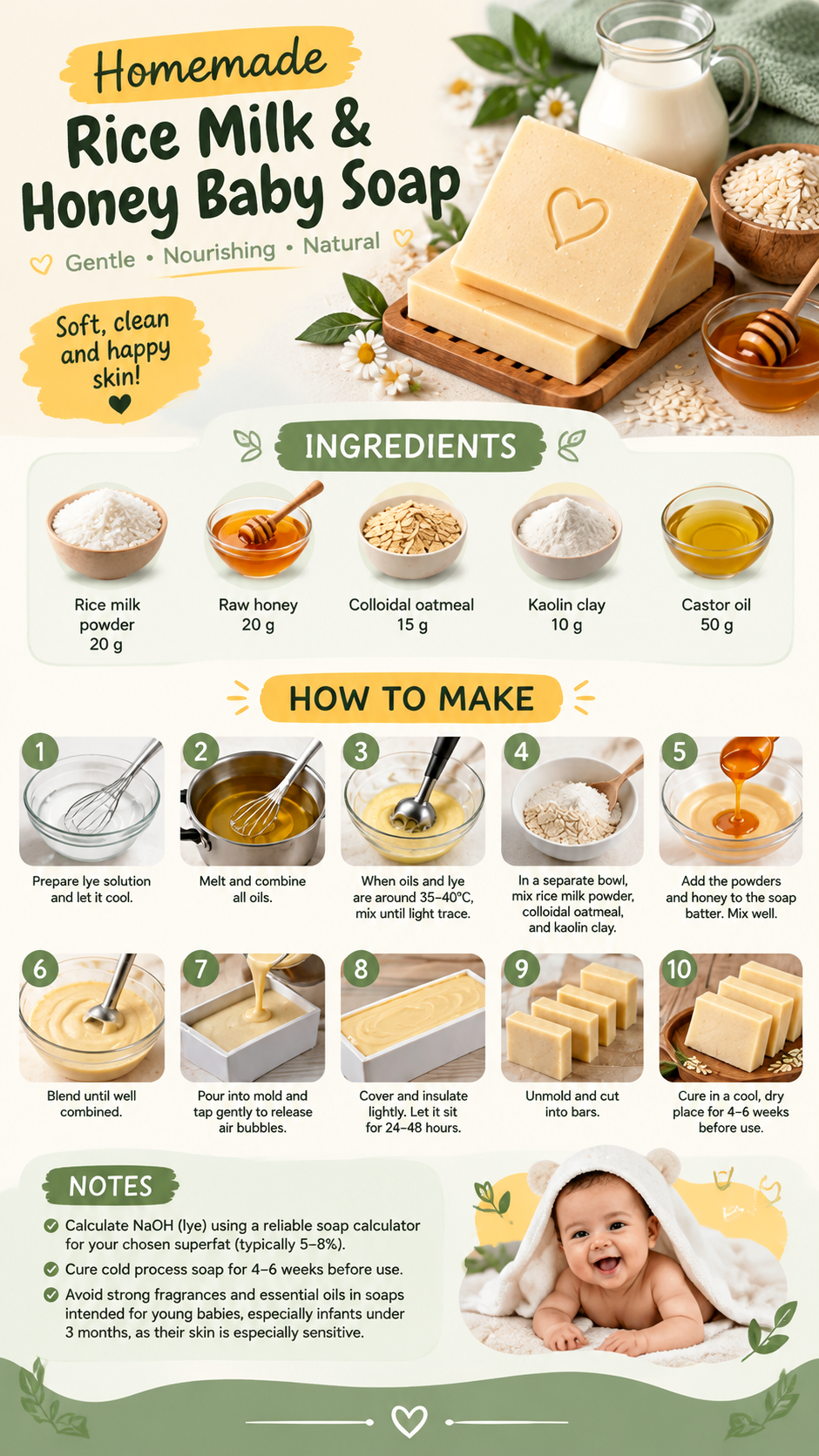
The oil blend shown in this style of soap recipe includes several classic soap-making favorites:
- Olive oil: Known for creating a gentle, conditioning soap with a smooth feel.
- Coconut oil: Helps support cleansing ability and bubbly lather.
- Palm oil: Traditionally used to contribute firmness and stability.
- Shea butter: Adds a rich, creamy quality to handmade bars.
- Castor oil: Often included to support a luxurious, creamy lather.
Natural Soap Additives
The visual recipe includes several popular soap additives that can enhance the experience:
- Rice milk powder: Adds a creamy element and supports the theme of gentle skincare.
- Raw honey: A traditional ingredient used in moisturizing beauty products.
- Colloidal oatmeal: A popular choice for soothing-style skincare formulations.
- Kaolin clay: Commonly used in soap for a silky texture and smooth finish.
Cold Process Soap Making: The Basic Method
Cold process soap making is a traditional technique that involves combining oils with a lye solution and allowing the soap to naturally transform over time. Unlike melt-and-pour methods, cold process soap gives makers complete control over ingredients and customization.
Step 1: Prepare the Lye Solution Safely
The first step is preparing the lye solution according to a reliable soap calculator and recipe formula. The solution should be handled carefully in a well-ventilated area using appropriate protective equipment.
Step 2: Combine and Prepare the Oils
Hard oils and butters are gently melted before combining them with liquid oils. The mixture is then allowed to cool until it reaches a suitable temperature for blending with the lye solution.
Step 3: Blend Until Trace
Once the oils and lye mixture are combined, a stick blender is used to create a light trace. This means the soap batter begins to thicken and hold a visible trail on the surface.
Step 4: Add Rice Milk, Honey, and Powders
The special additives are carefully incorporated into the soap batter. Mixing evenly helps distribute the ingredients throughout the bar for consistent texture and appearance.
Step 5: Mold, Cut, and Cure
The finished soap batter is poured into a mold, covered, and left to set. After unmolding and cutting, the bars require several weeks of curing to allow excess moisture to evaporate and create a firm, long-lasting soap.
Tips for Making Better Handmade Soap Bars
Successful soap making comes from patience, accuracy, and practice. Small changes in ingredients or technique can create noticeable differences in the final product.
- Use a digital scale for accurate measurements rather than relying on volume measurements.
- Choose high-quality oils and additives for a better soap-making experience.
- Keep detailed notes about every batch, including temperatures and ingredient changes.
- Allow enough curing time before using handmade cold process soap.
- Store finished bars in a dry area with good airflow.
Creating a Gentle DIY Skincare Routine
A handmade rice milk and honey soap bar can become part of a simple self-care routine focused on mindful ingredients. Many DIY skincare lovers enjoy the process as much as the finished product because making soap offers creativity, relaxation, and a connection to traditional crafts.
These bars also make thoughtful handmade gifts when packaged beautifully. A simple paper wrap, natural label, or reusable container can transform homemade soap into a charming present for friends and family.
Why This Matters
- Homemade soap gives you control over ingredients and customization.
- Natural soap recipes encourage thoughtful skincare choices.
- Traditional soap-making can become a rewarding creative hobby.
Frequently Asked Questions About Rice Milk Soap
Can beginners make cold process soap?
Yes, beginners can learn cold process soap making with proper education, safety equipment, and carefully followed recipes. Starting with simple recipes can help build confidence.
How long does handmade soap need to cure?
Many cold process soaps benefit from several weeks of curing. The exact time depends on the recipe, ingredients, and desired hardness.
Why add oatmeal and clay to soap?
Oatmeal and clay are popular additions because they can influence the feel, texture, and overall character of handmade soap.
At a Glance
- Gentle rice milk and honey soap inspiration
- Cold process method with natural additives
- Perfect for DIY skincare enthusiasts
- Requires patience, precision, and curing time
Conclusion
Rice milk and honey baby soap represents the beauty of simple, thoughtful skincare. With nourishing oils, gentle additives, and the traditional cold process method, this type of handmade soap offers an inspiring project for anyone interested in natural bath products.
Whether you are creating your first soap batch or expanding your DIY collection, this recipe idea highlights the creativity and care behind handmade skincare. From selecting ingredients to cutting the final bars, every step brings a personal touch that makes homemade soap special.
Tags
Rice Milk Soap
Honey Soap Recipe
Cold Process Soap
DIY Skincare
Handmade Soap
Natural Bath Products