DIY Rosemary Hair Oil Recipe Natural Homemade Hair Growth Guide
Creating your own DIY rosemary hair oil is a beautiful way to bring a natural touch to your hair care routine. This simple herbal infusion combines the refreshing power of rosemary with nourishing carrier oils to create a homemade treatment designed for scalp care, hydration, and healthier-looking hair. Whether you are looking for a relaxing self-care ritual or exploring natural hair remedies, rosemary oil is a popular choice for those who enjoy plant-based beauty solutions.
Key Takeaways
- Learn how to make a simple rosemary-infused hair oil at home.
- Discover how rosemary and carrier oils work together in a hair care routine.
- Understand the importance of proper preparation, infusion, and storage.
- Create a natural scalp massage treatment with easy-to-find ingredients.
- Add this DIY recipe to your weekly self-care routine.
Why Rosemary Hair Oil Has Become a Popular Natural Hair Care Choice
Natural hair care has gained attention as more people look for gentle alternatives to complicated routines. Rosemary hair oil stands out because it combines the simplicity of herbal ingredients with the comfort of a traditional scalp oiling ritual. The process shown in this guide focuses on creating an infused oil using fresh rosemary, a suitable carrier oil, and careful preparation techniques.
Rosemary has long been used in beauty routines because of its refreshing aroma and botanical properties. When infused into oils like jojoba, argan, or castor oil, rosemary creates a lightweight treatment that can be incorporated into scalp massages and hair care practices.
Important: A consistent hair care routine often matters more than using many different products. A simple homemade rosemary oil treatment can become a relaxing habit that supports scalp nourishment and helps you care for your hair regularly.
What You Need to Make DIY Rosemary Hair Oil
The beauty of this homemade rosemary oil recipe is its simplicity. You only need a few ingredients and tools to create your own herbal infusion. Choosing quality ingredients can make your DIY experience more enjoyable and help you build a mindful beauty routine.
Fresh Rosemary
Fresh rosemary sprigs are the main botanical ingredient in this recipe. Select vibrant rosemary with a strong green color and a fresh herbal scent. The leaves contain natural aromatic compounds that make rosemary a favorite ingredient in homemade beauty preparations.
A Nourishing Carrier Oil
Carrier oils help dilute the rosemary and create a comfortable texture for applying to the scalp and hair. Popular options include jojoba oil, argan oil, and castor oil. Each oil has a different feel, so you can choose one based on your personal hair preferences.
- Jojoba oil: A lightweight option that feels comfortable on the scalp.
- Argan oil: A smooth oil often used in hair care for softness and shine.
- Castor oil: A thicker oil commonly included in nourishing hair treatments.
Step-by-Step Guide to Making Rosemary Hair Oil
Step 1: Gather and Prepare Your Rosemary
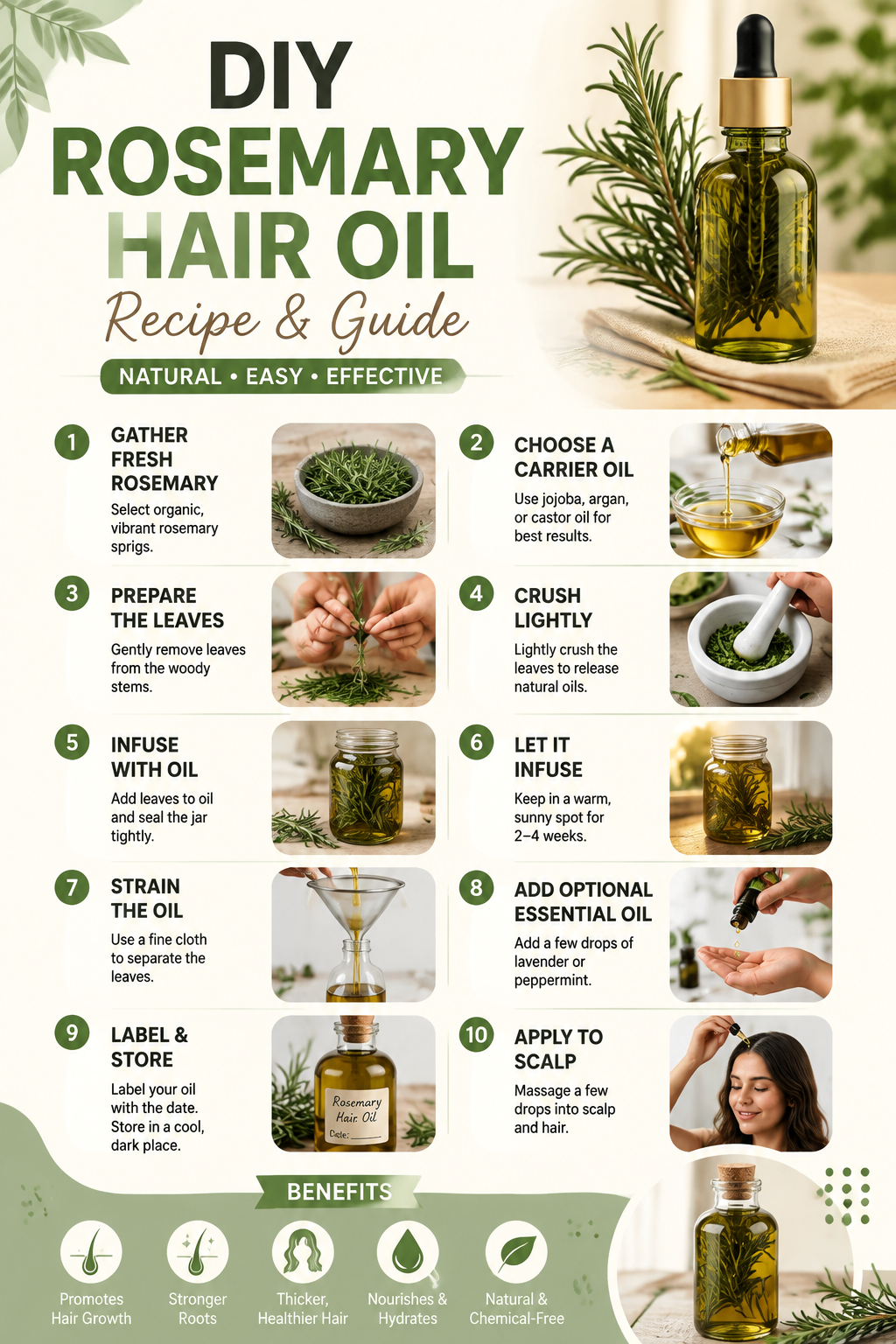
Begin by selecting fresh rosemary sprigs and gently removing the leaves from the woody stems. Preparing the leaves allows more surface area to come into contact with the carrier oil during the infusion process.
Step 2: Lightly Crush the Leaves
Gently crushing the rosemary leaves helps release their natural aroma and botanical compounds. The goal is not to grind the leaves completely, but simply to encourage the infusion process.
Step 3: Combine Rosemary With Your Oil
Place the prepared rosemary into a clean glass jar and cover it with your chosen carrier oil. Make sure the leaves are fully covered to create an even infusion.
Step 4: Allow the Oil to Infuse
The image guide highlights a slow infusion method where the jar is placed in a warm area for several weeks. This allows the rosemary to gradually blend with the oil, creating a fragrant herbal mixture.
Expert Insight
- Always use clean, dry containers when making homemade oils.
- Patience during infusion helps create a more aromatic herbal oil.
- Store finished oil properly to maintain freshness.
Step 5: Strain and Store Your Homemade Oil
Once the rosemary has infused into the oil, strain the mixture using a fine cloth or strainer to remove the plant material. Transfer the finished rosemary hair oil into a clean bottle and add a label with the preparation date.
Step 6: Add Optional Essential Oils
For an extra aromatic experience, some people enjoy adding a few drops of essential oils such as lavender or peppermint. If you choose to include essential oils, use them carefully and make sure they are properly diluted.
How to Use Rosemary Hair Oil in Your Routine
Using rosemary hair oil is simple. Apply a small amount to your scalp and gently massage with your fingertips. A relaxing scalp massage can turn your hair care routine into a calming self-care moment.
Many people prefer applying hair oils before washing their hair, allowing the oil to sit for a period of time before cleansing. The amount and frequency can depend on your hair type, scalp needs, and personal preference.
Pro Tip: Start with a small amount of oil. A little can go a long way, especially when applying products directly to the scalp. Consistency and gentle care are key parts of a balanced hair routine.
Benefits of Adding Herbal Hair Oil to Your Beauty Routine
A rosemary hair oil routine can provide a nourishing experience for anyone interested in natural beauty practices. The combination of plant ingredients and relaxing massage techniques creates a simple ritual focused on caring for your hair and scalp.
- Helps create a nourishing scalp care routine.
- Adds moisture and softness to dry-feeling hair.
- Supports a relaxing self-care experience.
- Encourages mindful, natural beauty habits.
- Provides a fragrant herbal addition to hair care.
Tips for Making the Best Homemade Rosemary Oil
Choose Quality Ingredients
Fresh herbs and quality carrier oils create a better DIY experience. Selecting ingredients carefully can improve the texture, scent, and overall feel of your homemade treatment.
Keep Everything Clean
Clean jars, bottles, and tools are important when preparing homemade beauty products. Proper storage habits help keep your oil fresh for longer.
Make It Part of a Consistent Routine
DIY beauty treatments work best when they become enjoyable habits. Creating a weekly rosemary oil ritual can be a simple way to slow down and focus on personal care.
Quick Points
- Infuse rosemary with a nourishing carrier oil.
- Massage gently into the scalp.
- Store homemade oil in a cool place.
- Enjoy a simple natural hair care ritual.
Final Thoughts on DIY Rosemary Hair Oil
Making DIY rosemary hair oil is a simple and enjoyable way to explore natural hair care. With fresh rosemary, a nourishing carrier oil, and a little patience, you can create a homemade treatment that fits beautifully into your self-care routine.
Whether you are interested in herbal beauty recipes, scalp care ideas, or easy homemade treatments, rosemary oil offers a timeless approach to caring for your hair. Save this recipe and make it part of your next relaxing beauty ritual.
Tags
Rosemary Hair Oil DIY Hair Care Natural Hair Remedies Scalp Care Herbal Beauty Homemade Beauty Recipes