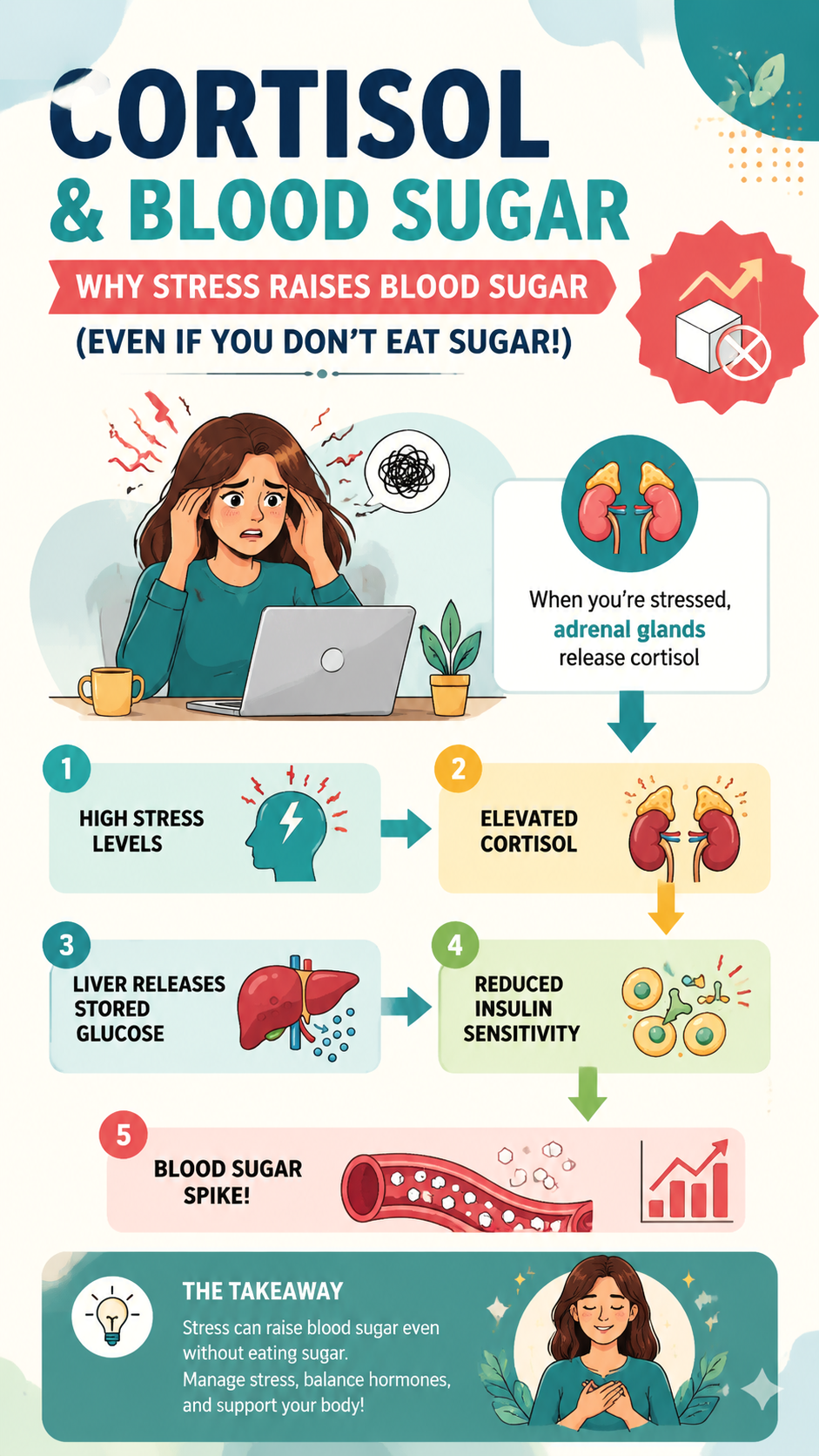
How Cortisol Stress Raise Blood Sugar Even Without Eating Sugar
Have you ever noticed your blood sugar changing during stressful periods, even when your diet has not changed? Many people are surprised to learn that stress can influence glucose levels through the body’s natural hormone response. The connection between cortisol and blood sugar explains why emotional pressure, poor sleep, and ongoing stress can affect energy, cravings, and metabolic balance.
The body is designed to respond to challenges. When stress appears, hormones like cortisol help prepare you for action by making stored energy available. While this response is helpful in short bursts, frequent stress can create ongoing signals that influence blood sugar regulation.
Key Takeaways
- Stress hormones can affect blood glucose levels even without eating sugary foods.
- Cortisol helps release stored energy so the body can respond to challenges.
- Long-term stress may influence insulin sensitivity and metabolic health.
- Sleep, movement, nutrition, and relaxation habits can support healthy cortisol balance.
- Understanding stress and blood sugar connections can help improve wellness decisions.
Understanding the Connection Between Cortisol and Blood Sugar
Cortisol is often called the body’s main stress hormone. It is produced by the adrenal glands and plays an important role in helping the body handle demanding situations. Whether the stress comes from work pressure, emotional challenges, lack of sleep, or physical strain, cortisol helps provide the energy needed to respond.
One way cortisol works is by signaling the liver to release stored glucose into the bloodstream. This process gives the muscles and brain quick access to energy. However, when stress becomes frequent or constant, repeated cortisol increases may contribute to higher blood sugar levels over time.
Important: Blood sugar changes are not only about the foods you eat. Hormones, stress levels, sleep quality, activity patterns, and overall lifestyle can all influence how the body manages glucose.
How Stress Can Raise Blood Sugar Without Eating Sugar
Many people associate blood sugar spikes only with consuming sweets or carbohydrates. While food choices are important, the body has another system that can affect glucose levels: the stress response.
When your brain senses stress, it activates a survival mechanism often called the fight-or-flight response. This response prepares the body for immediate action by increasing alertness and releasing hormones, including cortisol and adrenaline.
The Stress Response Process
- Stress signals begin: The brain recognizes a challenge or threat.
- Cortisol levels increase: The adrenal glands release cortisol to support energy needs.
- Stored glucose is released: The liver releases glucose into the bloodstream.
- The body adjusts insulin response: Ongoing stress may affect how effectively cells respond to insulin.
- Blood sugar may rise: Glucose can remain elevated if stress signals continue.
Why Chronic Stress Has a Bigger Impact
Short-term stress is a normal part of life. A temporary increase in cortisol can help you stay focused and energized. Problems may occur when the body experiences stress repeatedly without enough time to recover.
Chronic stress can keep cortisol levels elevated more often than the body needs. Over time, this may influence appetite, sleep patterns, energy levels, and the way the body handles glucose.
Common Signs Stress May Be Affecting Your Body
- Feeling tired even after resting
- Increased cravings, especially for quick-energy foods
- Difficulty sleeping or waking up feeling refreshed
- Feeling tense, overwhelmed, or constantly alert
- Changes in energy levels throughout the day
The Role of the Liver, Insulin, and Glucose Balance
The liver plays a major role in blood sugar regulation. It stores glucose in the form of glycogen and releases it when the body needs energy. During stressful situations, cortisol can encourage the liver to make more glucose available.
Insulin helps move glucose from the bloodstream into cells where it can be used for energy. When the body becomes less responsive to insulin, glucose may stay in the bloodstream longer.
Supporting Healthy Blood Sugar Regulation
Maintaining balanced blood sugar involves more than avoiding sugar. A complete approach includes healthy eating habits, regular movement, stress management, and adequate recovery.
- Choose balanced meals with protein, fiber, and nutrient-rich foods.
- Stay physically active with activities you enjoy.
- Create a consistent sleep routine.
- Practice relaxation techniques such as deep breathing or mindfulness.
- Take breaks during stressful days to help your nervous system reset.
Expert Insight
Blood sugar health is influenced by many connected systems. Looking beyond food choices and considering stress, sleep, and daily habits can provide a more complete picture of overall wellness.
Simple Lifestyle Habits to Support Cortisol Balance
Prioritize Quality Sleep
Sleep and stress hormones are closely connected. Poor sleep can increase stress signals in the body, while healthy sleep habits support better hormone regulation. Creating a relaxing bedtime routine, limiting distractions before sleep, and maintaining consistent sleep times can be helpful.
Move Your Body Regularly
Physical activity can support insulin sensitivity and help the body manage stress. Walking, strength training, stretching, or other enjoyable movement can all contribute to healthier routines.
Create Stress-Reducing Moments
Small daily practices can make a difference. Taking a few minutes for deep breathing, spending time outdoors, connecting with loved ones, or enjoying calming activities can help support emotional balance.
At a Glance: Cortisol and Blood Sugar Connection
- Stress can influence blood sugar through hormone signals.
- Cortisol helps release stored energy during stressful moments.
- Long-lasting stress may affect glucose balance.
- Healthy habits support overall metabolic wellness.
Conclusion: Understanding Stress Is Part of Blood Sugar Wellness
The relationship between cortisol and blood sugar shows how connected the body’s systems truly are. Even without eating sugary foods, stress hormones can influence glucose availability and the way the body manages energy.
By focusing on balanced nutrition, regular movement, quality sleep, and stress-supporting habits, you can create a foundation for better overall wellness. Understanding how stress affects the body is a powerful step toward making informed health choices.
Small changes practiced consistently can help support a healthier relationship with stress, hormones, and blood sugar balance.
Tags
Cortisol Balance
Blood Sugar Health
Stress Management
Hormone Health
Healthy Lifestyle
Insulin Sensitivity
Wellness Tips