How to Calm Your Mind Simple Stress Relief Tips for Overwhelming Days
Life can sometimes feel like everything is happening at once. Busy schedules, constant notifications, responsibilities, and emotional pressure can leave your mind feeling exhausted and overwhelmed. Learning how to calm your mind when life feels overwhelming is not about removing every challenge. It is about creating small moments of peace, building healthy coping habits, and giving yourself space to breathe.
A calm mind begins with simple daily practices that help you reconnect with yourself. From mindful breathing and journaling to spending time outdoors and creating a peaceful environment, small actions can make a meaningful difference in your emotional wellness routine.
Key Takeaways
- Deep breathing can help slow racing thoughts and encourage relaxation.
- Small breaks and mindful habits can reduce daily stress levels.
- Journaling helps organize emotions and clear mental clutter.
- Healthy routines like hydration, rest, and movement support emotional balance.
- Asking for support can make overwhelming moments easier to manage.
Why Your Mind Feels Overwhelmed
Feeling overwhelmed is a common experience when your brain has too many thoughts, tasks, or emotions to process at the same time. When stress continues for long periods, it can become difficult to focus, relax, or enjoy everyday moments.
Your mind needs regular opportunities to reset, just like your body needs rest after physical activity. Without intentional moments of calm, stress can build up and make even small challenges feel much bigger.
Important: Calming your mind does not require a perfect routine or hours of free time. Consistent small habits often create the biggest improvements in emotional balance and daily well-being.
The Power of Simple Mindfulness Habits
Mindfulness means bringing your attention back to the present moment instead of staying trapped in worries about the past or future. It can be practiced anywhere and does not require special equipment.
Simple mindfulness activities such as noticing your breathing, observing your surroundings, or focusing on your senses can help create a feeling of calm. These small moments teach your brain that it is safe to slow down.
Effective Ways to Calm Your Mind During Stressful Moments
1. Practice Deep Breathing
One of the fastest ways to create a sense of calm is through intentional breathing. When you feel stressed, your breathing often becomes shallow and faster. Slow, controlled breaths can encourage relaxation and help you feel more grounded.
Try the 4-4-6 Breathing Method
- Inhale slowly for 4 seconds.
- Hold your breath for 4 seconds.
- Exhale gently for 6 seconds.
This simple breathing exercise can be used during stressful situations, before sleep, or whenever your thoughts feel difficult to manage.
2. Step Away and Get Fresh Air
Changing your environment can help interrupt stressful thought patterns. A short walk outside, a few minutes in natural light, or simply opening a window can create a refreshing mental reset.
Nature encourages relaxation by giving your mind a break from constant stimulation. Even a brief outdoor moment can help you return to your tasks with a clearer perspective.
3. Reduce Screen Overload
Phones, computers, and endless digital content can contribute to mental fatigue. Taking intentional breaks from screens allows your eyes and brain to rest.
- Create short technology-free moments throughout your day.
- Avoid unnecessary scrolling when you already feel mentally tired.
- Replace screen time with calming activities like reading or stretching.
4. Nourish Your Body
Your physical health and emotional state are closely connected. When you are tired, dehydrated, or not taking care of your basic needs, stress can feel more intense.
Simple habits like drinking enough water, eating nourishing foods, and getting enough rest support a healthier mind. Taking care of your body is an important part of creating emotional stability.
5. Write Down Your Thoughts
Journaling is a powerful way to release mental clutter. When thoughts stay in your mind, they can feel overwhelming. Writing them down creates distance and helps you understand what you are feeling.
Simple Journal Prompts
- What is currently taking up space in my mind?
- What is one thing I can control today?
- What small moment brought me peace?
Creating a Daily Calm Routine
A calming routine does not need to be complicated. The goal is to create repeatable habits that remind your mind and body to slow down.
- Start your morning with a few quiet minutes before checking notifications.
- Add a short mindfulness practice during the day.
- Create a relaxing evening routine to prepare for quality rest.
- Make time for activities that bring genuine joy.
The Importance of Rest and Recharge
Rest is not a reward you earn after completing everything. It is a necessary part of maintaining your energy and emotional health.
Sleep, quiet time, creative hobbies, and moments of relaxation help your mind recover from daily stress. Giving yourself permission to rest can improve focus, patience, and overall mood.
Why This Matters
- A calm mind helps you respond instead of reacting.
- Small daily habits create long-term emotional resilience.
- Taking care of yourself improves your ability to handle challenges.
When to Reach Out for Support
Sometimes stress can feel too heavy to handle alone. Talking with someone you trust can provide comfort, encouragement, and a fresh perspective.
Sharing your thoughts does not mean you are weak. Connection is an important part of emotional wellness, and support from others can make difficult moments feel more manageable.
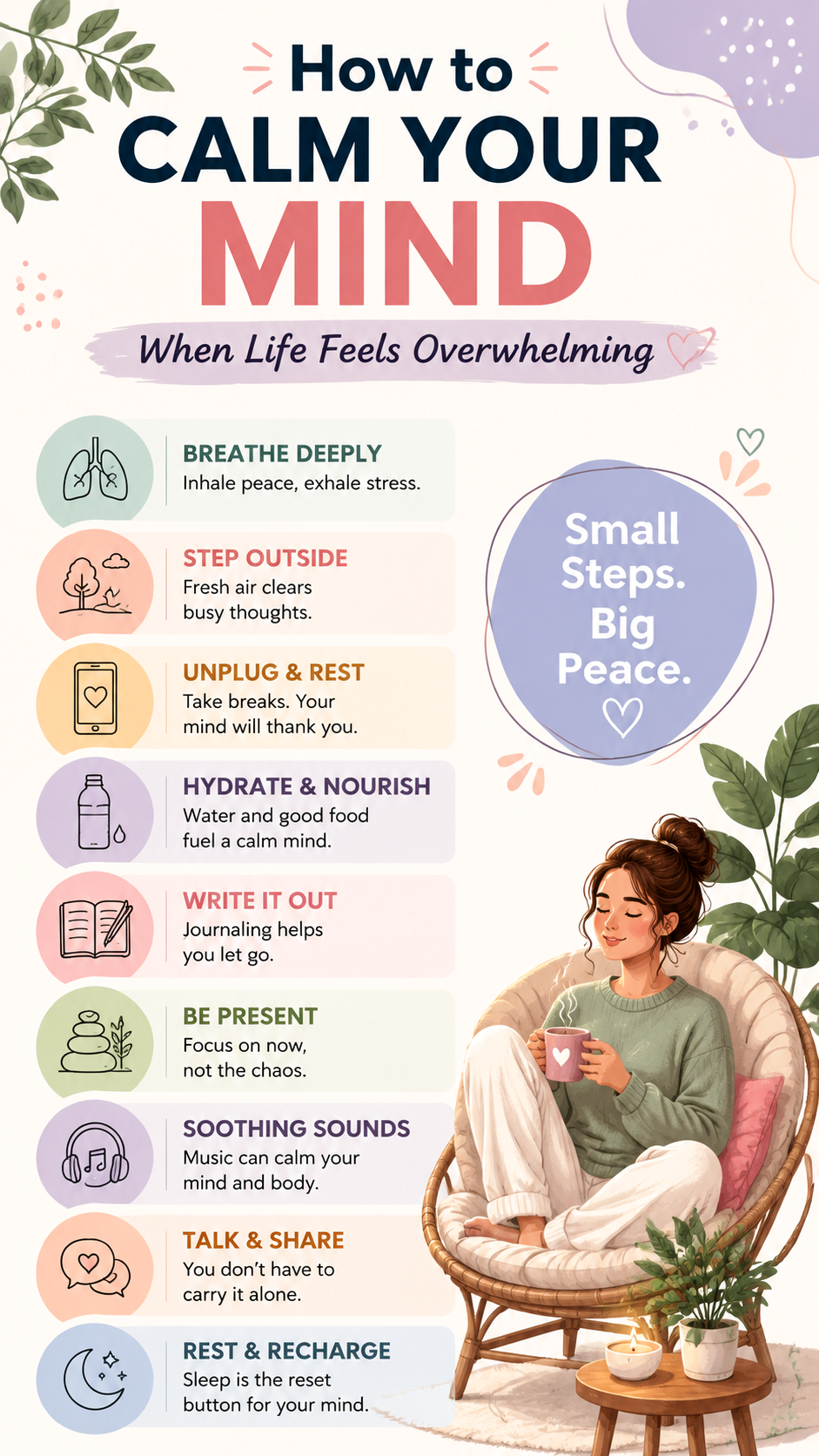
Quick Ways to Find Calm Today
At a Glance
- Take slow, deep breaths.
- Spend a few minutes outside.
- Write down your thoughts.
- Practice mindful moments.
- Give yourself time to rest.
Final Thoughts
Learning how to calm your mind when life feels overwhelming starts with small, intentional choices. You do not need to completely change your lifestyle overnight. A few peaceful breaths, a short break, a moment outdoors, or a simple journal entry can create space for clarity and comfort.
Remember: Peace is often created through small daily actions. Give yourself patience, kindness, and permission to slow down whenever you need it.
By building calming habits into your routine, you can create a stronger connection with yourself and develop healthier ways to handle stressful moments. Your mind deserves care, rest, and moments of peace. 🌿
Tags
Stress Relief
Mindfulness
Self Care
Mental Wellness
Calm Mind
Emotional Balance
Relaxation Tips