How to Handle Being Alone Stay Positive Self-Love, Confidence Mindset Tips
Learning how to handle being alone and stay positive can transform the way you see yourself, your relationships, and your everyday life. Spending time alone does not mean you are unloved, unsuccessful, or missing something important. Sometimes, it is simply an opportunity to slow down, reconnect with yourself, and discover what makes you feel happy and fulfilled. With a healthier mindset, alone time can become a peaceful part of your personal growth journey rather than something you fear.
Whether you are navigating a new chapter in life, adjusting to changes in your friendships, or simply learning to enjoy your own company, small daily habits can make a meaningful difference. The goal is not to pretend that loneliness never hurts. It is to understand your feelings, treat yourself with kindness, and build a life that feels meaningful even when nobody else is around.
Key Takeaways
- Accept your current circumstances without judging yourself for how you feel.
- Replace negative thoughts with kinder, more helpful questions.
- Build enjoyable solo routines through reading, journaling, walking, and creative hobbies.
- Practice positive self-talk instead of becoming your own harshest critic.
- Focus on the habits, choices, and actions you can control.
- Remember that being alone is a situation, not your identity or your worth.
1. Accept the Moment Instead of Fighting Your Feelings
One of the first steps toward handling being alone is learning to accept the moment you are in. It is easy to compare your life with other people’s experiences, especially when social media makes it seem as though everyone is constantly surrounded by friends, enjoying exciting dates, or attending memorable events.
When your own life feels quieter, you might wonder why things are different for you. You may even feel pressure to fix everything immediately. However, constantly fighting your circumstances can make an already difficult moment feel heavier.
Allow Yourself to Feel What You Feel
You do not have to be cheerful every day. Feeling lonely, disappointed, uncertain, or sad does not mean you have failed at self-love. These emotions are part of being human, and acknowledging them can help you understand what you need.
Instead of criticizing yourself for feeling lonely, try saying, “I am having a difficult day, and it is okay to feel this way.” This simple shift creates room for compassion rather than judgment.
Important: Acceptance does not mean giving up on connection or happiness. It means recognizing your present circumstances without treating them as proof that something is wrong with you.
Stop Comparing Your Journey With Others
Everyone has a different timeline. Some people enjoy large social circles, while others prefer a few close relationships. Some seasons of life are full of activity, and others provide more space for reflection and change.
Your current circumstances do not determine what your future relationships will look like. Give yourself permission to move at your own pace instead of measuring your happiness against someone else’s life.
When comparison starts affecting your mood, take a break from social media, focus on your surroundings, or do something that brings you back to the present moment. Your life deserves attention beyond what you see on a screen.
2. Change the Questions You Ask Yourself
The questions you repeatedly ask yourself can influence how you interpret your circumstances. When you feel disconnected from others, your mind may naturally search for explanations. Unfortunately, those explanations can become unfair judgments about your personality, appearance, or worth.
Questions such as “Why am I always alone?” or “Why does nobody care about me?” can reinforce feelings of rejection, especially when you are already having a difficult day. They focus your attention on what feels missing without helping you identify what might make the moment better.
Replace Negative Questions With Helpful Ones
Instead of asking questions that leave you feeling powerless, choose questions that encourage self-awareness and practical action.
- Instead of: Why am I alone? Ask: What would make today feel more meaningful?
- Instead of: Why does nobody understand me? Ask: How can I communicate my feelings more clearly?
- Instead of: Why am I not happy? Ask: What small thing could bring me comfort right now?
- Instead of: Why is my life behind everyone else’s? Ask: What progress have I made in my own journey?
- Instead of: What is wrong with me? Ask: What do I need to feel supported and cared for?
These questions do not magically solve every problem, but they give you a more constructive starting point. They encourage you to look for choices rather than treating loneliness as a personal failure.
Use Journaling to Understand Your Thoughts
Writing down your thoughts can help you recognize patterns that are difficult to notice when everything stays in your head. You do not need an expensive journal or a perfect writing routine. A notebook and a few honest sentences are enough.
At the end of the day, write about what you felt, what triggered those feelings, and what helped you feel a little better. You can also list three things you appreciate, such as a comforting meal, a peaceful walk, or a conversation that made you smile.
Over time, journaling can help you understand your emotional needs and recognize that even difficult days contain small moments of comfort.
3. Learn How to Enjoy Your Own Company
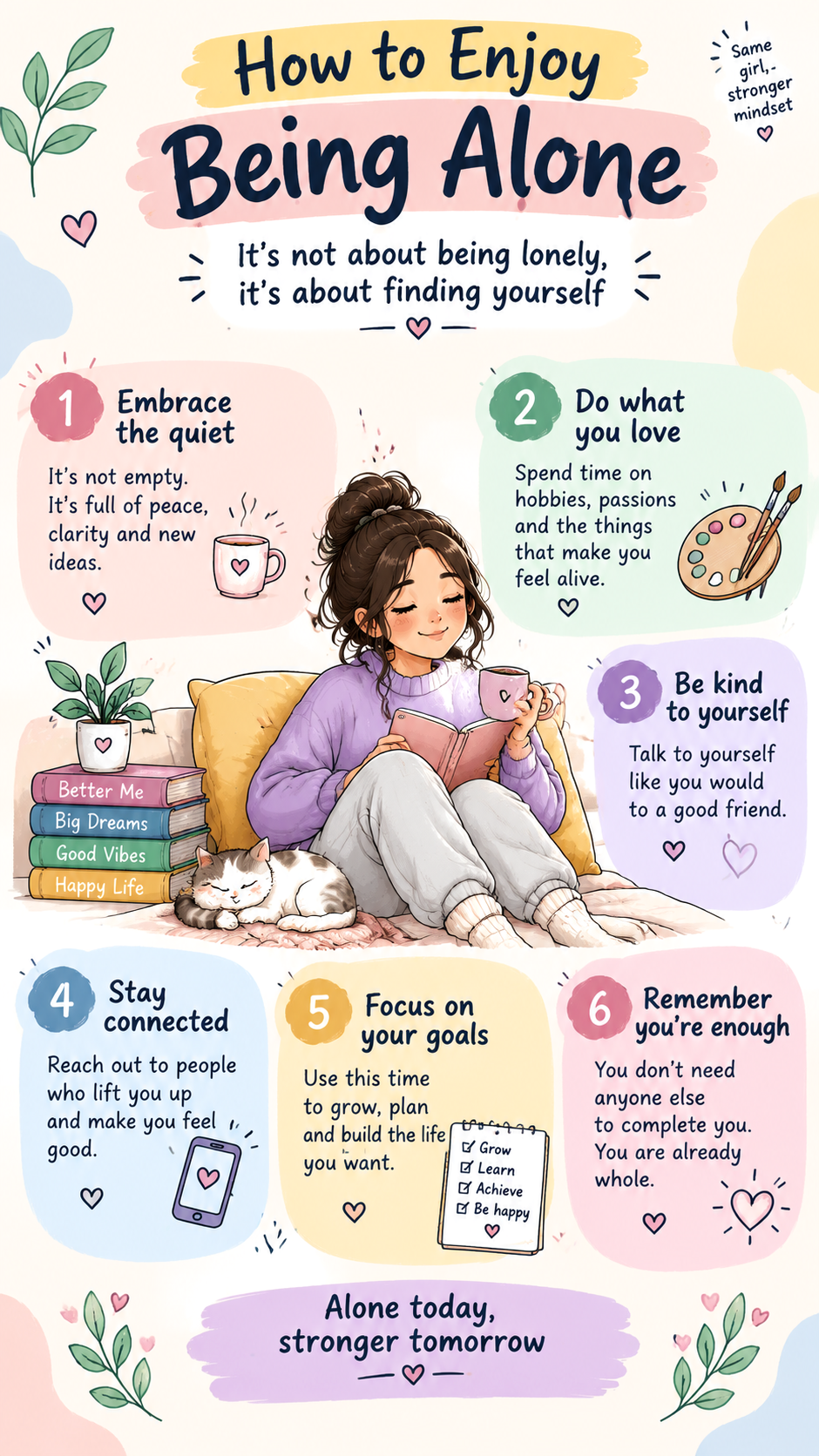
Learning to enjoy your own company is one of the most valuable self-love habits you can develop. Instead of treating time alone as something you must simply endure, begin creating moments that you genuinely look forward to.
You do not have to fill every hour with activities or force yourself to become extremely productive. The purpose is to discover what makes your own space feel comfortable, enjoyable, and personal.
Create a Cozy Reading Routine
Reading can be a relaxing way to spend time alone. Choose books that match your interests, whether you enjoy fiction, personal development, poetry, biographies, or lighthearted stories.
Create a small reading corner with a comfortable pillow, a warm drink, and enough light to read easily. Even ten minutes with a good book can provide a refreshing break from daily distractions.
Do not worry about how quickly you finish a book. The experience matters more than the number of pages you read.
Take Walks and Enjoy Your Surroundings
A walk can help you change your environment, move your body, and reconnect with the present. You might explore a nearby park, walk through a familiar neighborhood, or spend a few minutes outside enjoying the fresh air.
Leave your phone in your pocket when possible and notice the small details around you. Pay attention to the colors of the trees, the warmth of the sunlight, or the sounds of the street.
You do not need a special destination to make a walk worthwhile. Sometimes, simply getting outside is enough to make an ordinary day feel different.
Explore Hobbies That Make You Feel Good
Solo hobbies offer opportunities to express yourself, learn new skills, and experience enjoyment without depending on someone else’s availability. Try activities that interest you rather than choosing hobbies because they look impressive.
- Read a novel or listen to an audiobook.
- Write in a journal or create a personal scrapbook.
- Cook a new recipe or prepare your favorite meal.
- Try painting, drawing, crocheting, or another creative craft.
- Listen to music that matches your mood.
- Watch a comforting movie or an entertaining series.
- Learn a language or practice a skill you have always wanted to develop.
The best activity is one that suits your personality, energy, and interests. You are allowed to enjoy simple pleasures without needing to turn every moment into an achievement.
4. Practice Kind Self-Talk Every Day
The way you speak to yourself matters, especially when you feel lonely or uncertain. If your inner voice constantly tells you that you are not good enough, that nobody will choose you, or that you should be further ahead in life, spending time alone may become emotionally exhausting.
Self-love begins with learning to treat yourself as someone deserving of patience, respect, and understanding. It does not require you to believe that you are perfect. It simply means recognizing that your mistakes and difficult moments do not erase your value.
Become Your Own Supportive Voice
Imagine how you would speak to a close friend who was struggling. You probably would not tell them that they were worthless because they felt lonely or that they should be ashamed of needing connection.
Offer yourself that same understanding. When you make a mistake, focus on what you can learn. When you feel disappointed, acknowledge the feeling without attacking your character.
Try repeating these positive affirmations when you need encouragement:
- I am worthy of love and respect, even when I feel alone.
- I can enjoy my own company while remaining open to meaningful relationships.
- I do not have to figure everything out today.
- My progress does not need to look like anyone else’s.
- I deserve the same kindness I offer to other people.
- I can take one small step toward a better day.
You do not have to believe every affirmation immediately. Start with statements that feel realistic and repeat them consistently. The aim is to build a more balanced relationship with yourself, not to deny your genuine emotions.
Stop Expecting Perfection From Yourself
Personal growth is rarely a straight line. Some days, you might feel confident and peaceful in your own company. Other days, you may wish you had someone to talk to or share an experience with.
Neither experience means you are moving backward. You can appreciate solitude and still want companionship. You can practice self-love and still need reassurance. These feelings can exist together.
Remember: Positive thinking is not about forcing yourself to feel happy all the time. It is about responding to difficult thoughts with honesty, compassion, and a willingness to find a helpful next step.
5. Focus on What You Can Control
When life feels uncertain, it is easy to spend your energy thinking about things outside your control. You might wonder whether someone will contact you, whether a friendship will change, or whether you will eventually find the relationships you want.
These questions are understandable, but constantly trying to predict other people’s decisions can leave you feeling powerless. A more balanced approach is to recognize what you can influence and direct your attention toward those areas.
Identify Your Areas of Control
Consider the everyday choices that can support your well-being:
- Your habits: Create routines that support rest, movement, creativity, and relaxation.
- Your choices: Decide how you want to spend your time and what activities deserve your attention.
- Your effort: Take small steps toward personal goals without demanding immediate results.
- Your boundaries: Protect your time and energy when relationships become consistently draining.
- Your self-talk: Practice responding to negative thoughts with patience and perspective.
- Your connections: Reach out to people you trust and look for opportunities to build new friendships.
You cannot control whether every person understands you or whether every relationship develops as you hoped. You can, however, decide how you care for yourself and how you respond to the circumstances in front of you.
Set Small, Achievable Goals
When your motivation is low, large goals can feel overwhelming. Instead of planning an entire life transformation, choose one or two manageable actions for the day.
You might spend fifteen minutes tidying your room, prepare a nutritious meal, finish a chapter of a book, or take a short walk. These actions may seem small, but they can create a sense of structure and help you feel more engaged with your life.
Pro Tip: Make a short list titled “Things I Can Control.” Include your daily habits, personal boundaries, effort, and responses to challenges. When you begin worrying about what you cannot change, use the list to redirect your attention toward one practical action.
6. Remember That Being Alone Is Not Your Identity
One of the most important reminders is that being alone describes a situation, not the entirety of who you are. It does not define your personality, determine your future, or measure how much love you deserve.
You are more than your relationship status or the number of people you spend time with. You have interests, values, experiences, hopes, and qualities that matter regardless of who happens to be around you today.
Separate Your Circumstances From Your Self-Worth
When you repeatedly tell yourself that you are alone, your mind may begin turning that experience into a permanent label. You might start believing that you are destined to be lonely or that something about you makes meaningful relationships impossible.
Try to describe your circumstances more accurately. Instead of saying, “I am always alone,” say, “I am spending more time by myself right now.” The second statement leaves room for change and does not turn a temporary experience into a judgment about your entire life.
Being comfortable alone also does not mean you must become completely independent or never ask for help. Healthy self-reliance includes understanding your needs and knowing when to seek support.
Stay Open to Meaningful Connections
Learning to enjoy solitude should not become a reason to isolate yourself from people. Humans need connection, and wanting friendship, affection, or companionship is completely natural.
If you want more social interaction, start with manageable steps. Send a message to someone you trust, invite a friend for coffee, join a class, or explore a community connected to one of your interests.
You do not need a large social circle to feel connected. A few relationships built on trust, respect, and shared experiences can provide meaningful support.
Why This Matters
Healthy solitude and meaningful connection can exist together. Learning to care for yourself gives you a stronger foundation for relationships, while reaching out to others helps you build the support and belonging that everyone needs at different points in life.
7. Create a Simple Self-Care Routine for Difficult Days
A self-care routine can provide comfort when your emotions feel unpredictable. You do not need a complicated schedule or expensive products to make your day feel more manageable. A few thoughtful habits can help you feel grounded and supported.
Start Your Morning With Intention
Instead of immediately checking your phone or comparing your life with other people’s updates, give yourself a few quiet moments to begin the day.
Open the curtains, drink some water, stretch gently, and decide on one thing you would like to accomplish. You could also write down a positive intention, such as “Today, I will treat myself with patience.”
A calm morning routine will not eliminate every difficult feeling, but it can help you begin the day with more awareness and purpose.
Make Your Space Feel Comforting
Your surroundings can influence how you experience time alone. Create a space that feels welcoming by making your bed, arranging your favorite books, adding a small plant, or keeping a cozy blanket nearby.
Choose simple details that reflect your personality. A comfortable room can become a place where you read, rest, journal, or enjoy a quiet evening without feeling pressured to do anything extraordinary.
End the Day With Reflection
Before going to sleep, take a moment to reflect on the day without judging it too harshly. Ask yourself what went well, what felt difficult, and what you might need tomorrow.
Write down one thing you did for yourself, even if it was simply taking a break when you felt overwhelmed. Recognizing these small acts of care can help you appreciate your effort.
If the day was particularly difficult, remind yourself that you do not need to solve every problem before resting. Tomorrow offers another opportunity to take a small step forward.
8. Know the Difference Between Solitude and Loneliness
Solitude and loneliness are related, but they are not the same experience. Solitude generally refers to spending time alone, which can feel peaceful, restorative, or enjoyable. Loneliness is the uncomfortable feeling of lacking the connection or closeness you want.
You can spend an entire afternoon alone and feel completely content. You can also feel lonely while surrounded by people if you do not feel understood, accepted, or emotionally connected.
Make Space for Both Independence and Support
Understanding the difference helps you respond to your actual needs. If you enjoy a quiet evening, allow yourself to appreciate it. If you feel disconnected and want companionship, acknowledge that need rather than forcing yourself to pretend you prefer being alone.
When loneliness becomes persistent, consider taking practical steps to strengthen your social connections. Regular conversations, shared activities, volunteering, or joining a group can create opportunities to meet people with similar interests.
If feelings of loneliness, sadness, or hopelessness persist and interfere with daily life, speaking with a qualified mental health professional may help. Seeking support is a positive act of self-care, not a sign of weakness.
9. Try a Seven-Day Challenge to Build a Positive Mindset
If you are unsure where to begin, use this gentle seven-day challenge to practice self-love and become more comfortable spending time alone. Adjust each activity to fit your schedule and energy level.
- Day 1: Practice acceptance. Write down how you feel without criticizing yourself or trying to change every emotion.
- Day 2: Enjoy a solo activity. Read a few pages, take a walk, prepare a favorite meal, or watch something you love.
- Day 3: Practice positive self-talk. Notice one negative thought and replace it with a more balanced, compassionate statement.
- Day 4: Create a cozy space. Spend a few minutes organizing a corner of your room where you can relax.
- Day 5: Focus on your goals. Choose one manageable task that supports your personal growth or well-being.
- Day 6: Connect with someone. Message a friend, call a family member, or explore an activity where you can meet new people.
- Day 7: Reflect and appreciate. Write down what you learned about yourself and which activities helped you feel more positive.
Think of this challenge as an invitation rather than a strict set of rules. Missing a day does not mean you have failed. The purpose is to discover which habits support you and gradually build a routine that feels natural.
Quick Points: Handling Being Alone and Staying Positive
- Accept your feelings: You can have difficult emotions without judging yourself.
- Change your questions: Focus on what could help you today rather than what you believe is wrong with you.
- Enjoy simple pleasures: Make time for books, hobbies, walks, music, and relaxing routines.
- Speak kindly to yourself: Offer yourself the understanding you would give someone you care about.
- Focus on your choices: Build habits that support your well-being and personal goals.
- Stay connected: Enjoy your independence while remaining open to friendship and support.
Conclusion: Learn to Be There for Yourself
Learning how to handle being alone and stay positive is a gradual process of acceptance, self-discovery, and everyday care. You do not have to transform your life overnight or convince yourself that loneliness never hurts. You can begin with small actions that help you feel more comfortable in your own company while building a healthier relationship with yourself.
Accept the moment you are in, change the way you speak to yourself, and make room for activities that bring you genuine enjoyment. Focus on the choices you can control, celebrate small improvements, and remember that your current circumstances do not define your worth.
Most importantly, do not confuse independence with having to handle everything alone. You can learn to enjoy solitude while still asking for help, seeking friendship, and welcoming meaningful relationships into your life.
Some days will feel easier than others, and that is perfectly normal. When you need a reminder, return to this simple thought: you deserve kindness, including from yourself. You can be there for yourself even on the days when no one else is around, and you can continue creating a life filled with purpose, comfort, and connection.
Tags
Self-Love
Positive Mindset
Being Alone
Self-Care Tips
Personal Growth
Self-Acceptance
Emotional Wellness
Inner Peace